Artwork
Elector Johann Georg of Brandenburg (1525-1598)
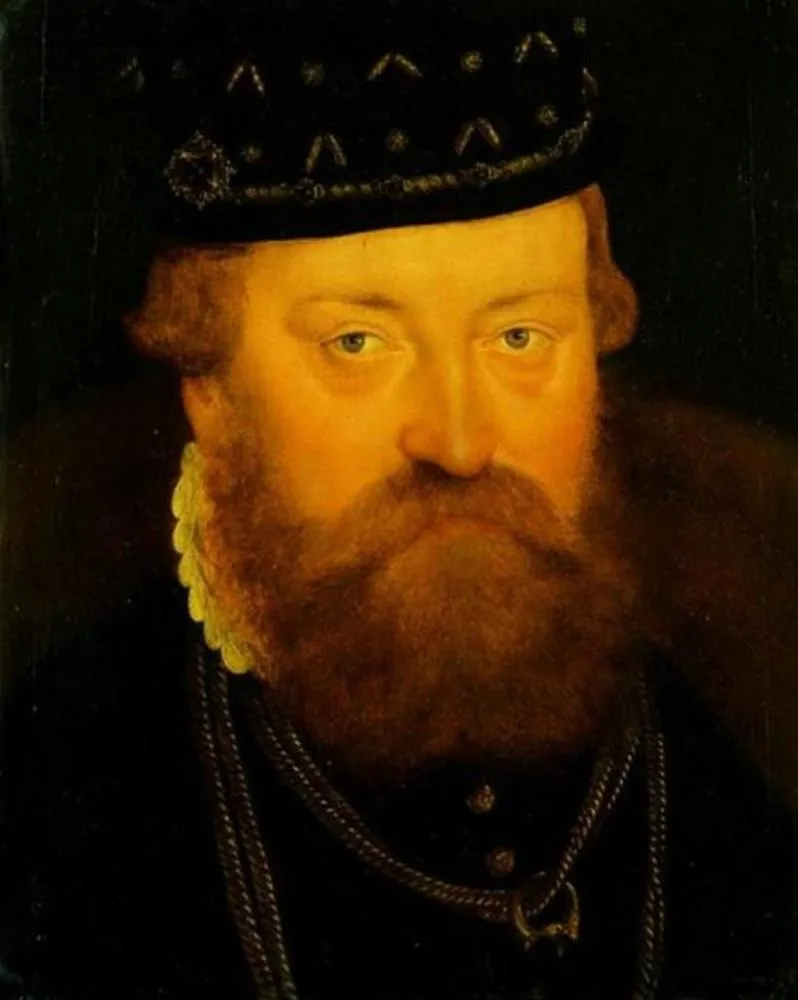
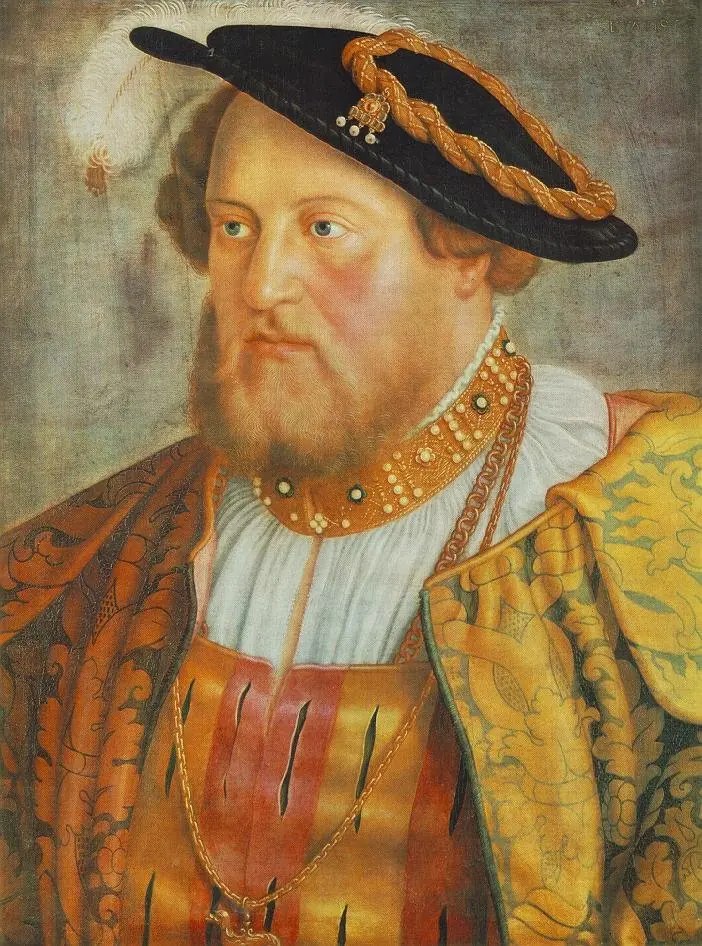
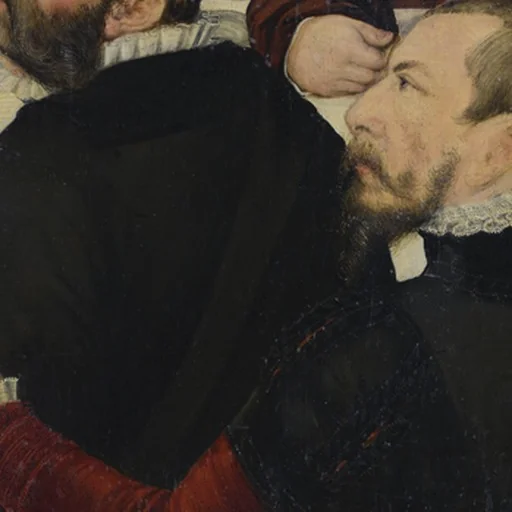
Elector Johann Georg of Brandenburg (1525-1598) is an oil painting by the Northern Renaissance artist Lucas Cranach the Younger. It dates from 1572 and is held in the collection of the Staatliche Kunstsammlungen Dresden. Painted in 1572, this oil-on-panel portrait captures Johann Georg, Elector of Brandenburg, during the early years of his rule.
About this work
The level of detail and realism in the painting is impressive, with the subject's facial features and clothing rendered in meticulous detail.
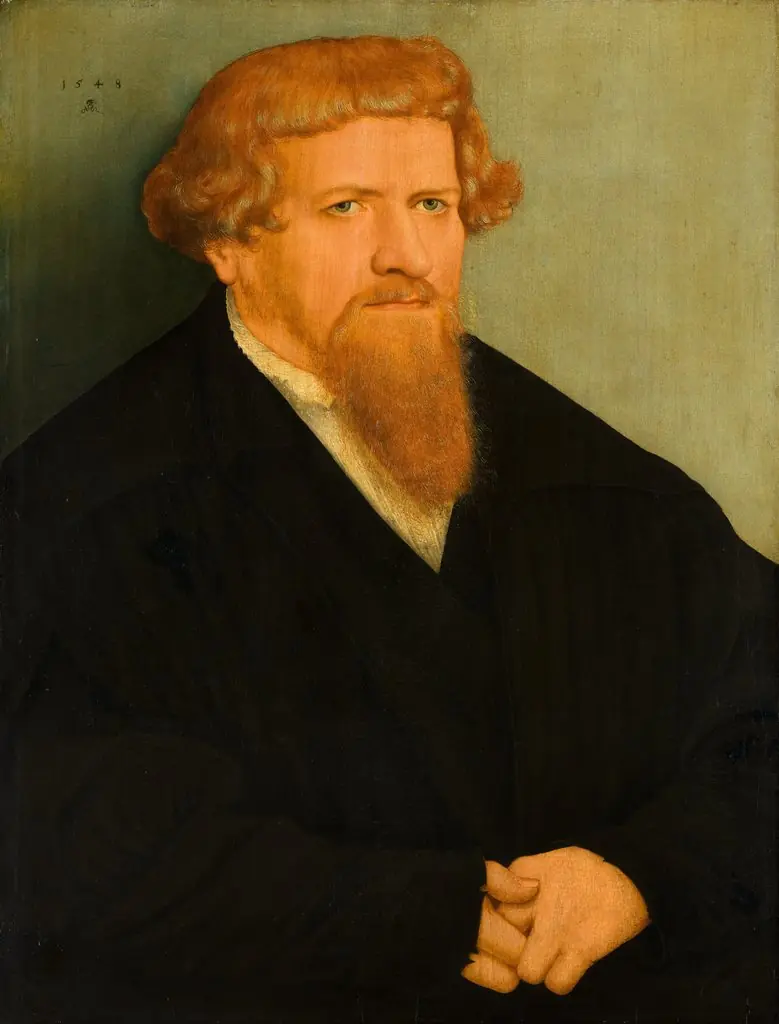
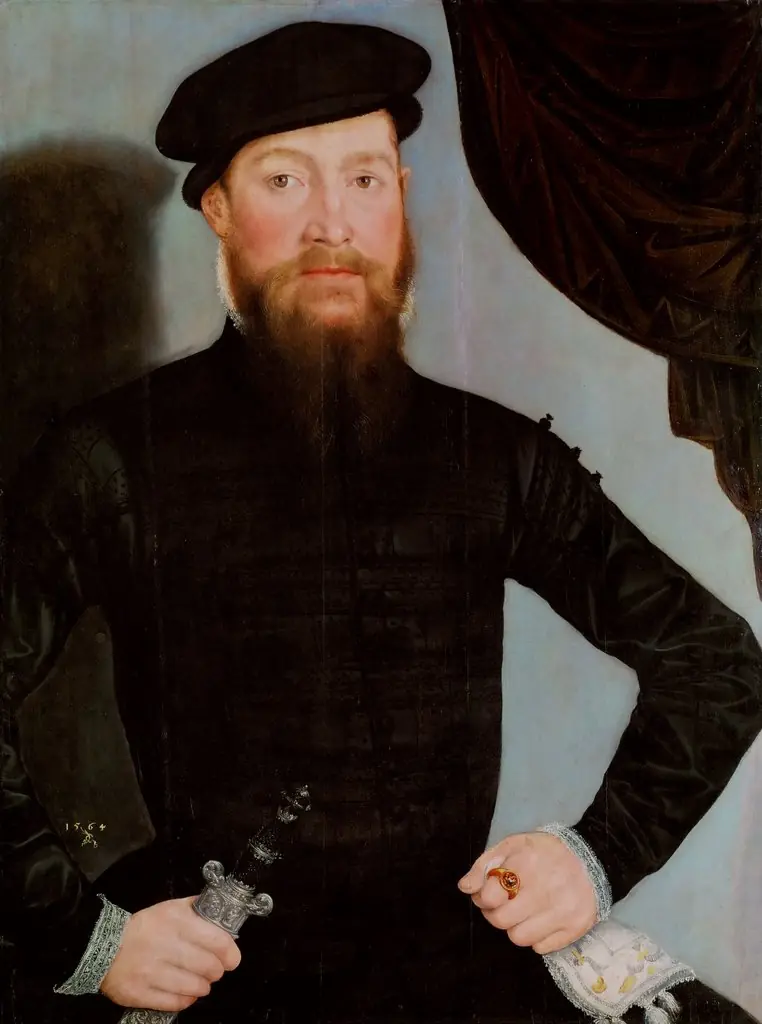
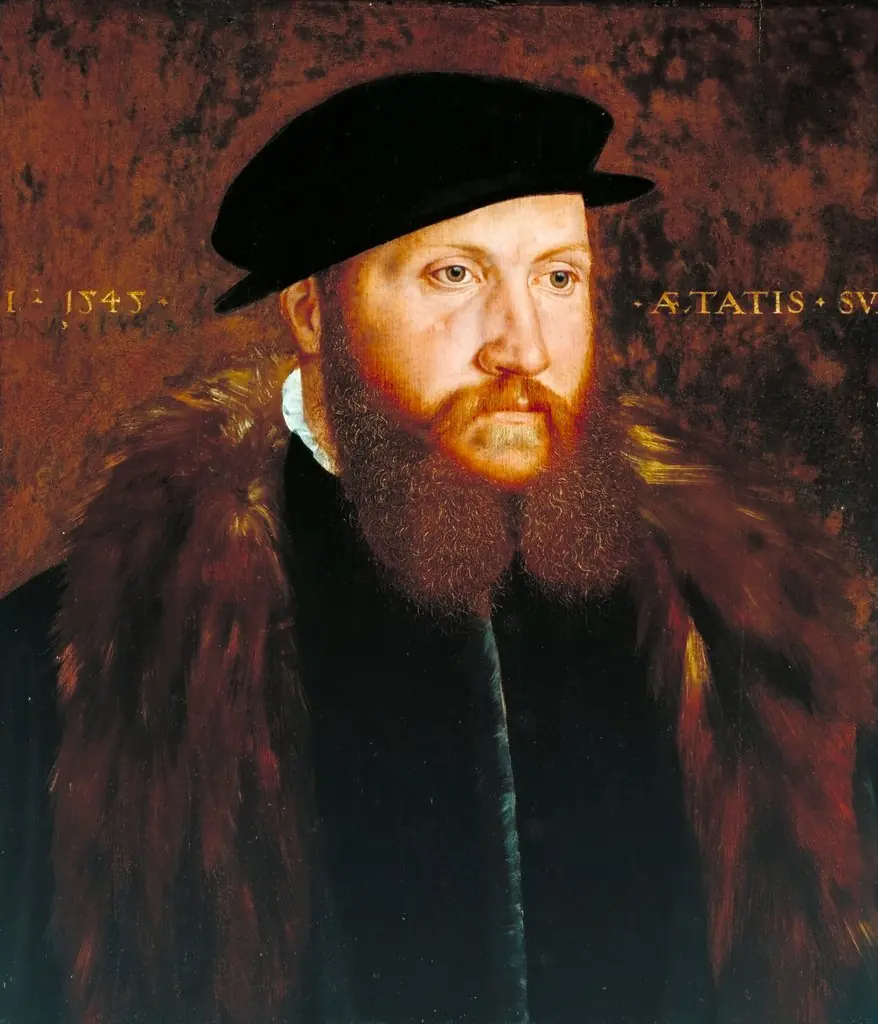
This painting depicts a man with a prominent beard and mustache, wearing a black hat adorned with gold embroidery. He is dressed in a black coat and has a gold chain around his neck. The background of the painting is dark, which helps to accentuate the subject's features.
The man's attire and the style of the painting suggest that it may be a portrait of a noble or high-ranking official from the 16th century. The level of detail and realism in the painting is impressive, with the subject's facial features and clothing rendered in meticulous detail.
If you're interested in learning more about the artist behind this painting, you might want to look up Lucas Cranach the Younger.
Overview
Painted in 1572, this oil-on-panel portrait captures Johann Georg, Elector of Brandenburg, during the early years of his rule. Executed by Lucas Cranach the Younger, it reflects the refined portraiture tradition of his workshop, rooted in the Northern Renaissance. The work is part of the Gemäldegalerie Alte Meister collection, where it remains as a documented example of mid-16th-century German aristocratic representation.
Subject & Meaning
Johann Georg, who became Elector in 1571, is portrayed with the solemn dignity befitting his rank. His dark attire, gold chain, and intricately embroidered hat signify his political and religious authority within the Protestant territories of the Holy Roman Empire. The direct gaze and restrained expression convey authority without ostentation, aligning with the Protestant emphasis on sober leadership and personal responsibility.
Technique & Style
Cranach the Younger employed fine brushwork to render the textures of fabric, metal, and skin with precision. The dark background isolates the figure, drawing attention to the subtle modeling of facial features and the reflective surfaces of the chain and embroidery. The composition follows the Northern Renaissance preference for naturalistic detail, avoiding idealization in favor of a tangible, lifelike presence.
History & Provenance
Commissioned shortly after Johann Georg’s accession, the portrait likely served to affirm his legitimacy and status among peers. It remained within Brandenburg’s collections, eventually entering the Gemäldegalerie Alte Meister in Dresden. Its continuous institutional custody since the 16th century ensures its documented lineage and preservation as a key artifact of Saxon court culture.
Context
Created during the Reformation’s consolidation, the portrait reflects the emerging identity of Protestant rulers who balanced religious reform with political authority. Cranach’s workshop, long associated with Lutheran patrons, produced numerous such images to visually anchor the new political order. This work exemplifies how art functioned as both personal likeness and public statement in early modern Germany.
Legacy
The portrait stands as a representative example of Cranach the Younger’s mature style and the broader tradition of German court portraiture. While not widely reproduced, it remains a reference for scholars studying the visual language of Protestant nobility. Its preservation in a major European collection underscores its enduring role in documenting the material culture of 16th-century governance.
Artist & collection
Artist
Lucas Cranach the Younger (German: Lucas Cranach der Jüngere, IPA: ; 4 October 1515 – 25 January 1586) was a German Renaissance painter and portraitist, the son of Lucas Cranach the Elder and brother of Hans Cranach.