Artwork
Otto Heinrich d. Großmütige, Neffe Ludwigs V. geboren 1502, gestorben 1559
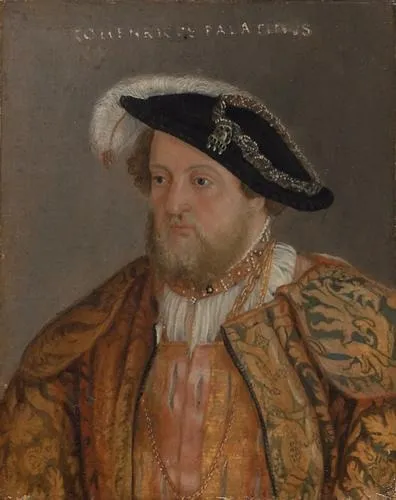
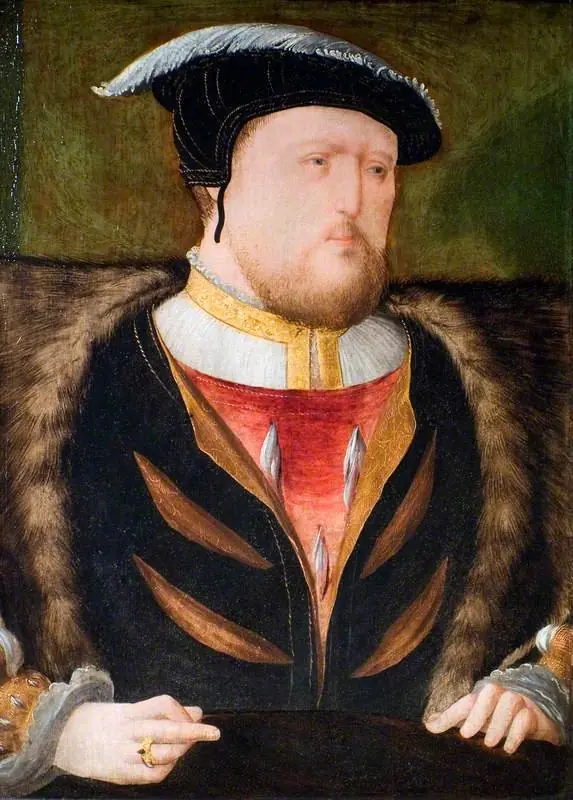
Otto Heinrich d. Großmütige, Neffe Ludwigs V. geboren 1502, gestorben 1559 is an unspecified painting by Unknown. It dates from 1550 and is held in the collection of the Kunsthistorisches Museum. This portrait depicts Otto Heinrich, Duke of Palatinate, a nobleman born in 1502 and deceased in 1559.
About this work
Overview
This portrait depicts Otto Heinrich, Duke of Palatinate, a nobleman born in 1502 and deceased in 1559. Rendered in oil on panel, the work presents him in formal attire, emphasizing his status through rich textures and precise detail. The composition is tightly focused, with no distracting elements in the background, directing attention solely to the figure and his regalia.
Subject & Meaning
Otto Heinrich, nephew of Emperor Louis V, is portrayed as a figure of political and social authority. His attire—black hat with white feather, gold chain, and brown jacket embroidered in gold—signals his rank and wealth. The absence of symbolic objects or landscape suggests a deliberate emphasis on personal dignity and inherited status rather than narrative or allegory.
Technique & Style
The artist employs careful modeling to define the contours of the face and fabric, using subtle gradations of light and shadow to enhance volume.
The artist employs careful modeling to define the contours of the face and fabric, using subtle gradations of light and shadow to enhance volume. The gold embroidery and metallic chain are rendered with precision, suggesting the use of fine brushes and layered glazes. The flat, uniform background isolates the subject, a common practice in 16th-century German portraiture to highlight individual presence.
History & Provenance
The painting likely originated in the Palatinate court during Otto Heinrich’s lifetime, possibly commissioned to affirm his position within the Holy Roman Empire’s aristocracy. Its survival through centuries indicates it remained in family or regional collections, though specific ownership records before modern institutional acquisition remain undocumented.
Context
Created during the Reformation era, this portrait reflects the continued importance of visual representation among German nobility despite religious upheaval. Unlike religious imagery, secular portraiture served to assert lineage and authority. The emphasis on material wealth in dress aligns with broader trends among Protestant elites who used art to project legitimacy without overt religious symbolism.
Legacy
The portrait endures as a representative example of mid-16th-century German court painting. It contributes to the understanding of how noble identity was visually constructed outside Italy, where portraiture often carried more humanist or mythological references. Its restrained elegance contrasts with later Baroque flamboyance, preserving a quieter, more dignified aesthetic of early modern nobility.
Artist & collection

 Domestic Scene
 Giacomo and Cardinal Marco, investing Andrea, Abbot of San Zeno, with his Benefice
 The Nymph of Fontainebleau
 Portrait of a Woman
 Madonna and Child with Saints in the Enclosed Garden
 Venus and Minerva
 Family Group of Four on Sofa
 Wall painting from Room H of the Villa of P. Fannius Synistor at Boscoreale
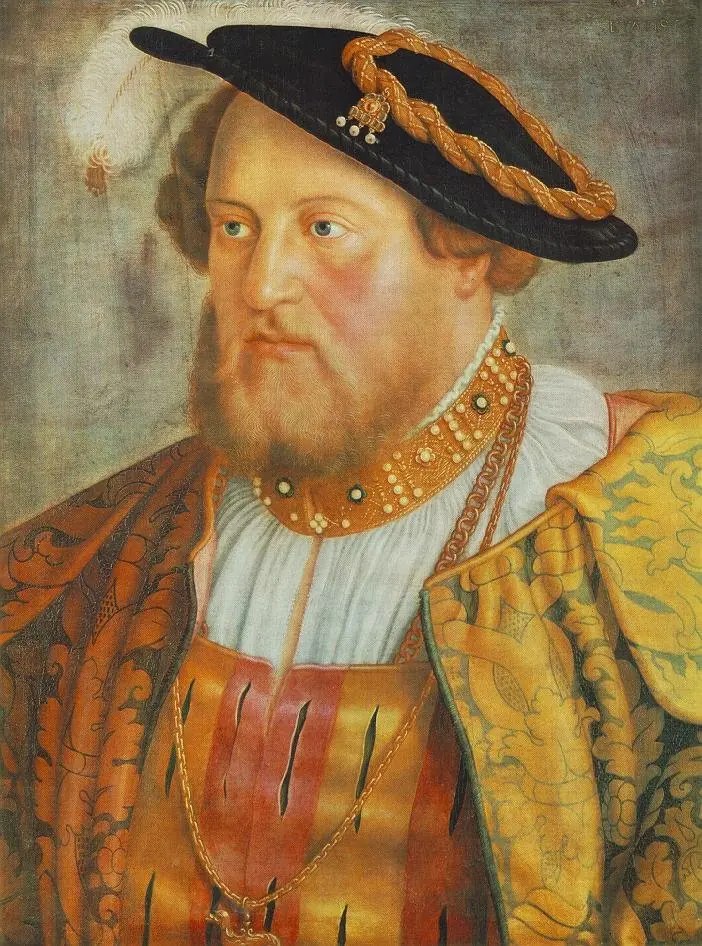 Portrait of Ottheinrich, Prince of Pfalz
 Louis X, Duke of Bavaria
 Elector Johann Georg of Brandenburg (1525-1598)
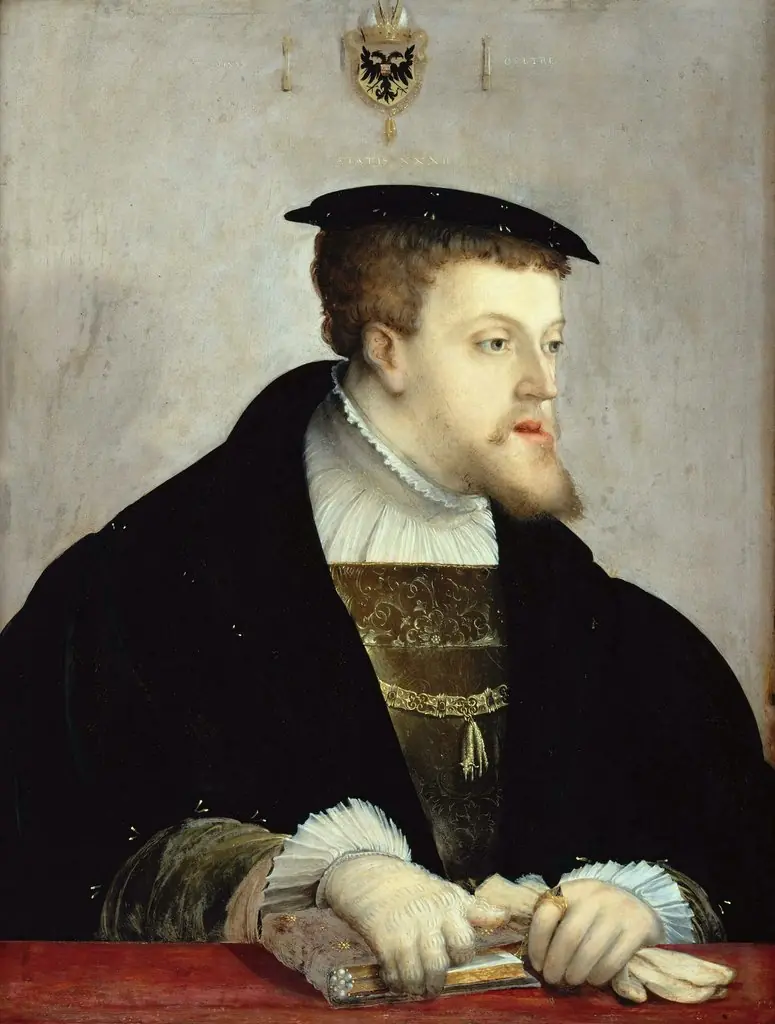 Portrait of Charles V (1500-1558)
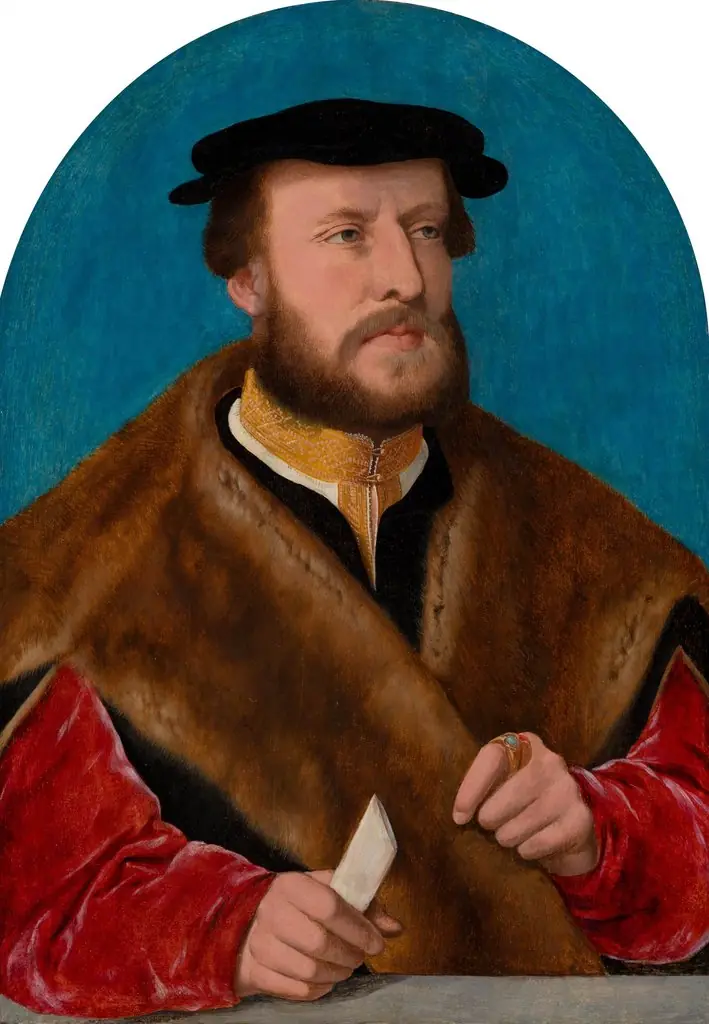 Portrait of Jakob Omphalius
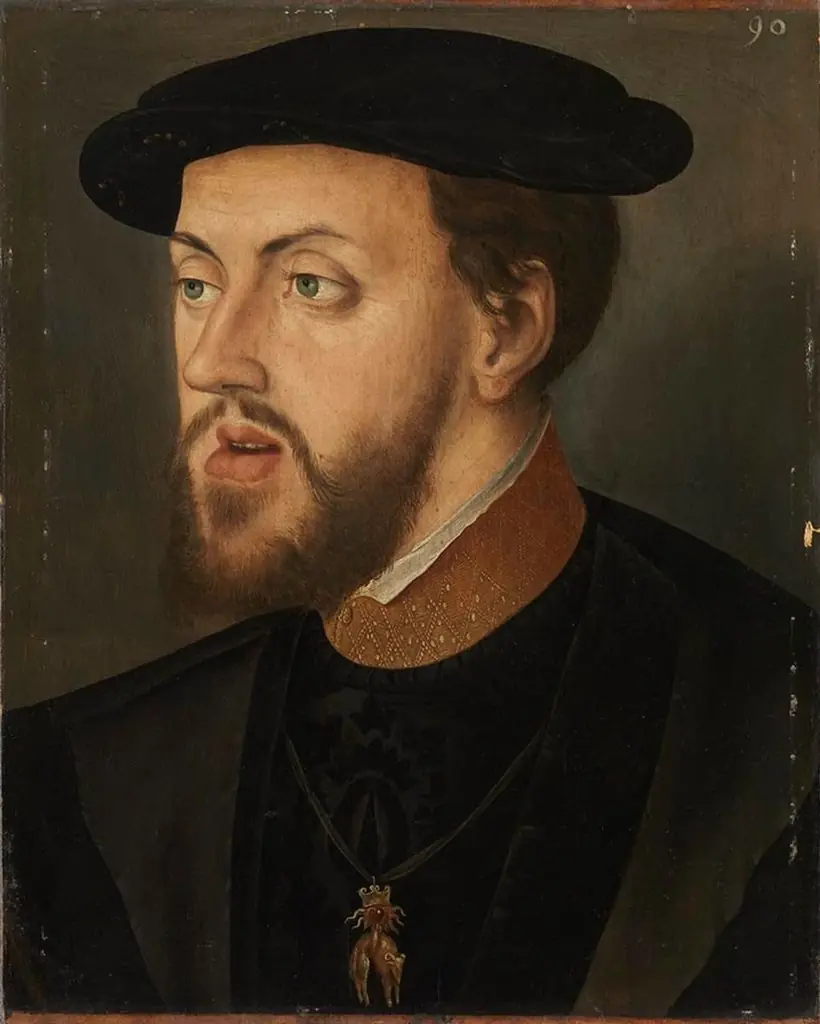 Emperor Charles V
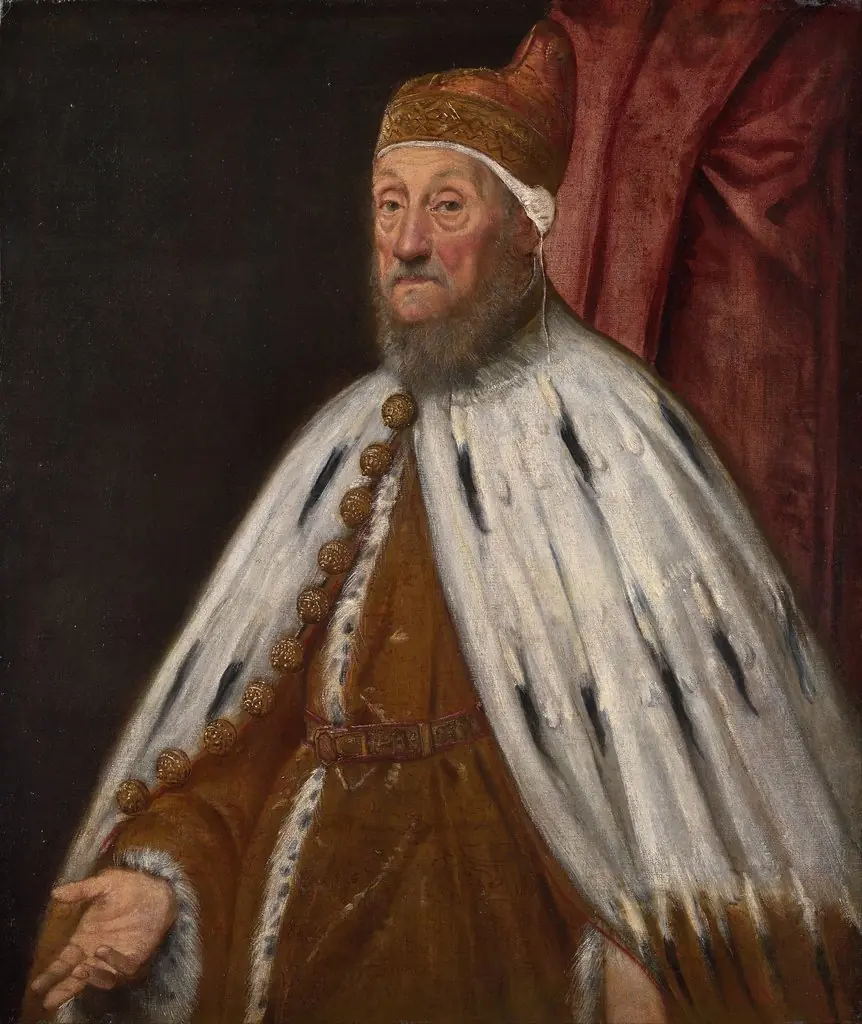 Doge Pietro Loredano
 Sigismund II. August, King of Poland
 Kaiser Maximilian II. (1527-1576) als etwa Vierzigjähriger
 Portrait of James I with The Three Brothers
 Portrait of Fabrizio Salvaresio
 Henry VIII (1491–1547)