Artwork
New ABC Booklet: V
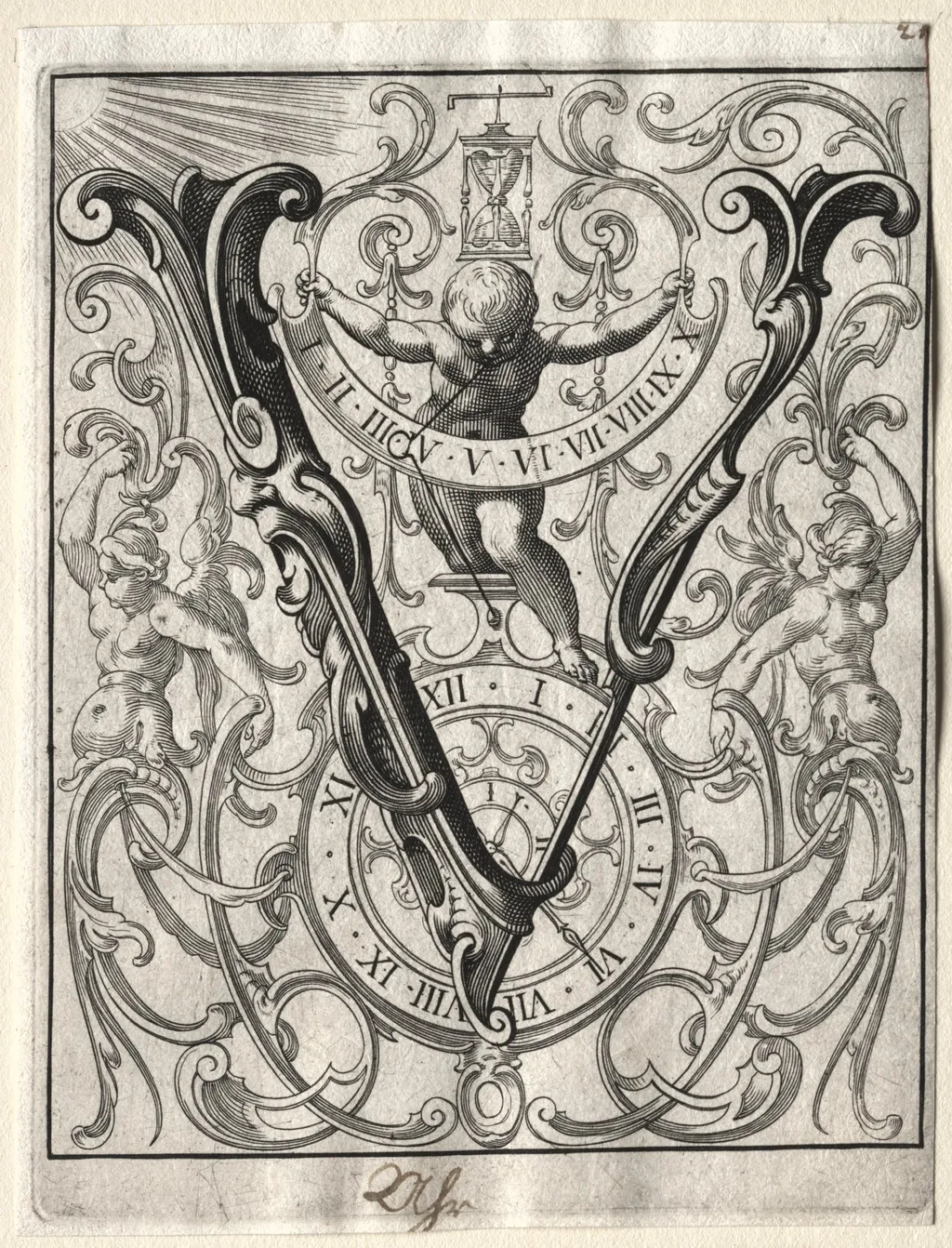
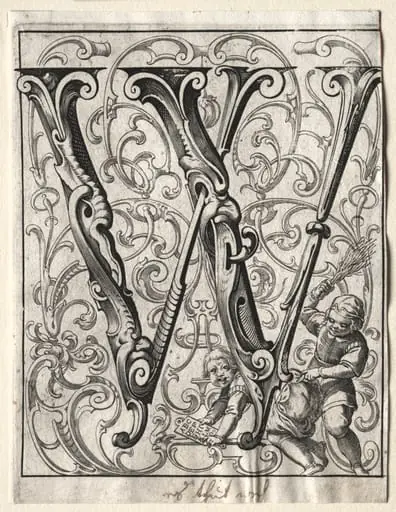
New ABC Booklet: V is a print by the Baroque artist Lucas Kilian. It dates from 1627 and is held in the collection of the Cleveland Museum of Art.
About this work
Overview
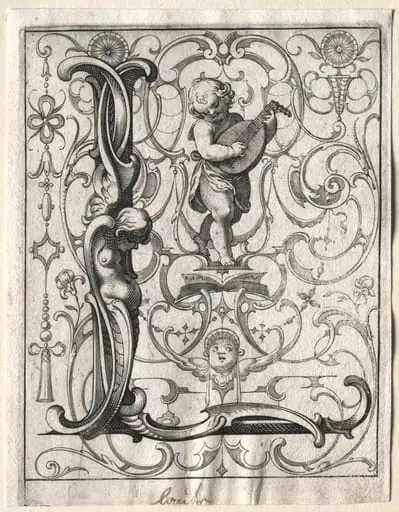
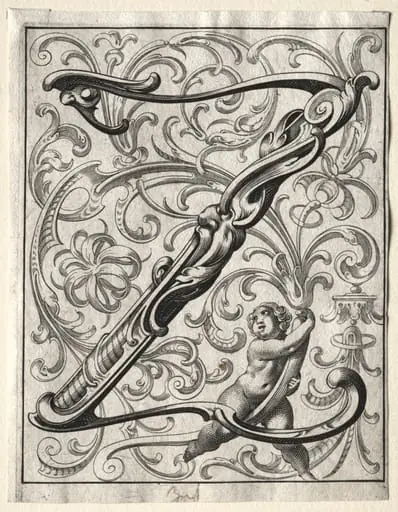
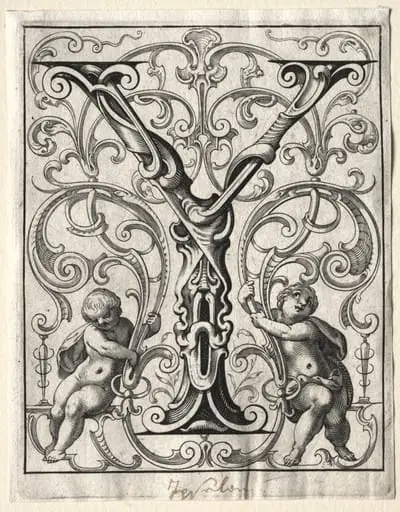
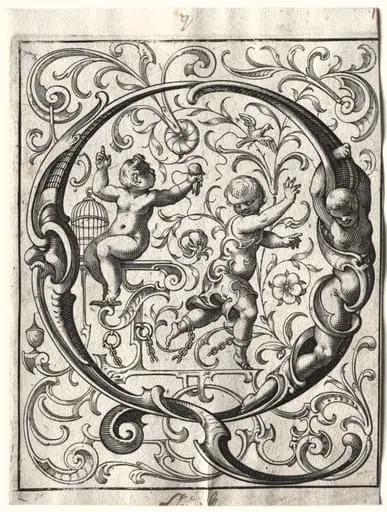
Created in 1627 by Lucas Kilian of Augsburg, this engraving is one plate from an educational alphabet series. Kilian, trained in the workshop of his stepfather, specialized in detailed prints for instructional and devotional use. The work exemplifies the integration of literacy and symbolism in early 17th-century printed materials, produced for a literate, often religiously oriented audience.
Subject & Meaning
Surrounding it are Roman numerals—likely I, V, X—arranged as if growing from the form, linking alphabetic instruction with numerical symbolism.
The letter V is rendered as a decorative frame enclosing a crown surmounted by a cross, suggesting a fusion of royal and sacred authority. Surrounding it are Roman numerals—likely I, V, X—arranged as if growing from the form, linking alphabetic instruction with numerical symbolism. This visual metaphor may have aimed to teach both letter recognition and moral or theological concepts tied to power and faith.
Technique & Style
Executed in fine-line engraving, the plate displays meticulous detail: scrolling vines, tiny leaves, and repetitive ornamental motifs fill every contour of the V. The black-and-white tonality enhances contrast, guiding the eye through dense patterns. Kilian’s precision reflects the technical standards of Augsburg’s print workshops, where clarity and ornamentation served pedagogical ends.
History & Provenance
The engraving was produced as part of a broader series of alphabet prints circulating in German-speaking regions during the early Baroque period. It entered the collection of The Cleveland Museum of Art through documented acquisitions of early modern European prints, preserving its role as an artifact of educational publishing rather than fine art alone.
Context
In early 17th-century Germany, printed ABC books often combined literacy with religious instruction, especially in Protestant communities. The use of Roman numerals and regal imagery aligned with broader cultural efforts to link learning with civic and divine order. Kilian’s work fits within this tradition, reflecting the era’s emphasis on structured, symbol-laden pedagogy.
Legacy
Though not widely known outside print history circles, Kilian’s alphabet plates contributed to the standardization of visual learning tools in early modern Europe. Their survival in museum collections underscores their value as evidence of how education, art, and belief were interwoven in printed culture before the rise of mass schooling.
Artist & collection
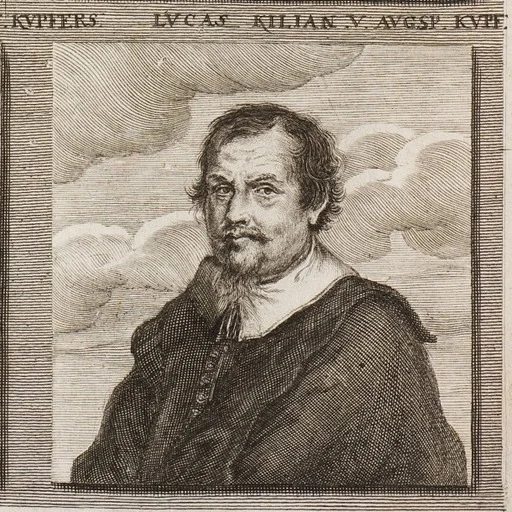
Artist
Lucas Kilian (Lucas Kilianus Augustanus; 1579–1637) was a German engraver and etcher from the Kilian family of engravers in Augsburg.