Artwork
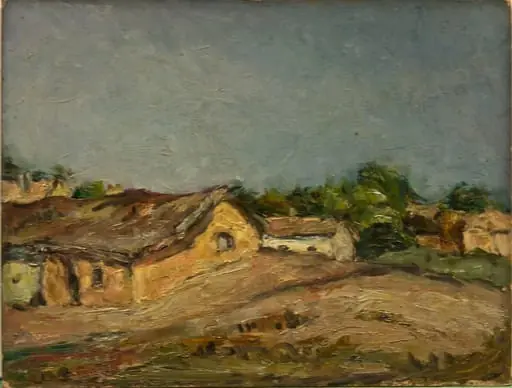
Peisaj cu casă din Moldova
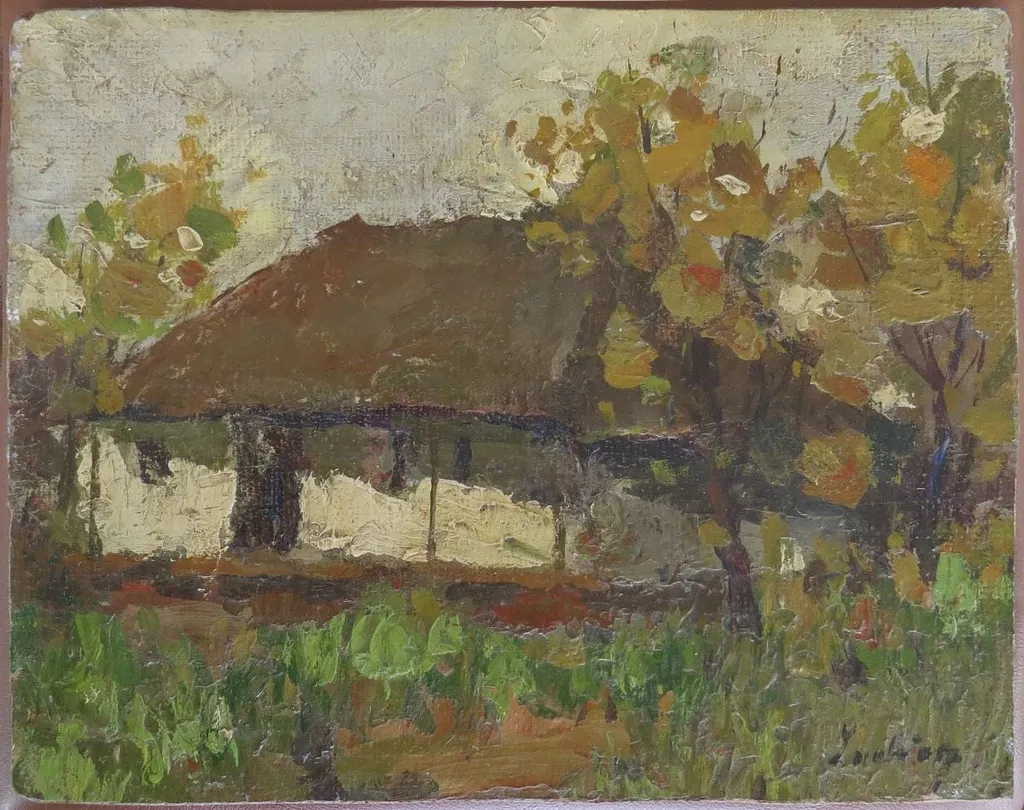
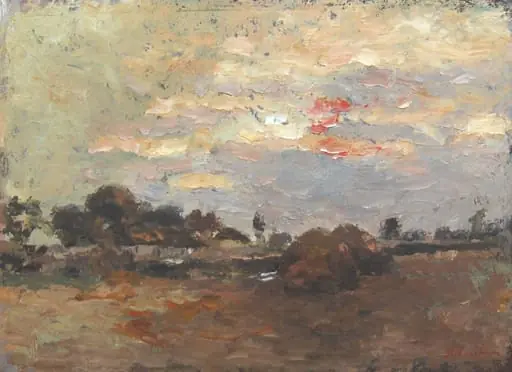
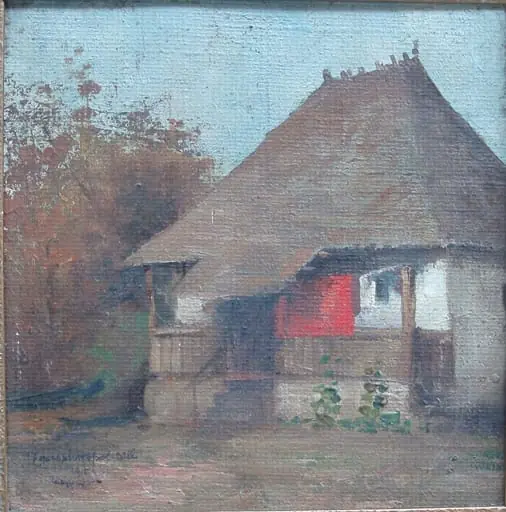
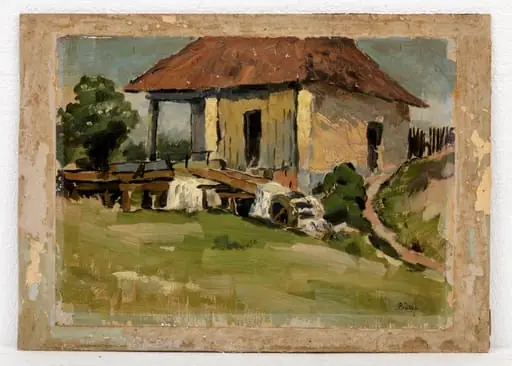
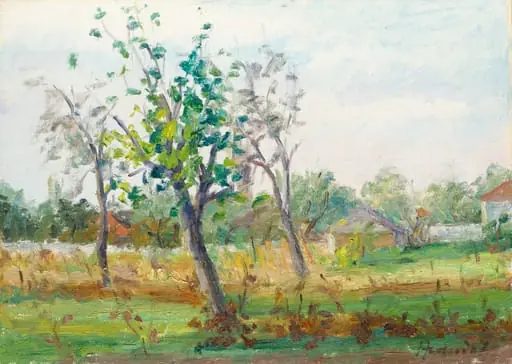
Peisaj cu casă din Moldova is a print by the Art Nouveau artist Ștefan Luchian. It dates from 1902 and is held in the collection of the Ipotești Memorial - Mihai Eminescu National Center.
About this work
Overview
The work is part of the Museum of Ethnography’s collection and reflects the artist’s interest in rural Romanian life.
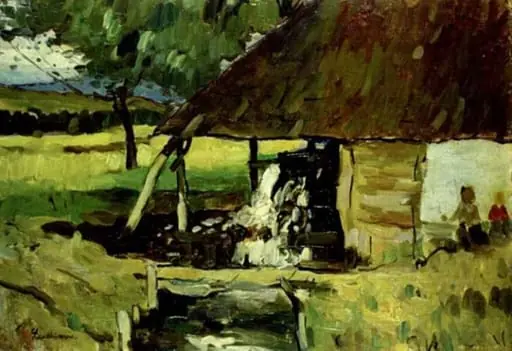
Painted around 1902 by Ștefan Luchian, this landscape depicts a modest dwelling in Moldova. The work is part of the Museum of Ethnography’s collection and reflects the artist’s interest in rural Romanian life. Its unfinished appearance and vigorous handling suggest a focus on immediate perception rather than polished detail, aligning with broader trends in late 19th-century European painting that valued emotional resonance over academic refinement.
Subject & Meaning
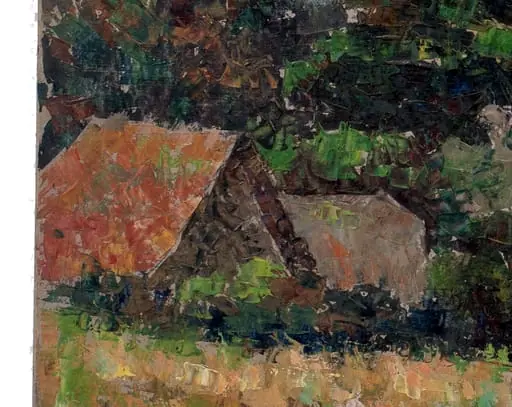
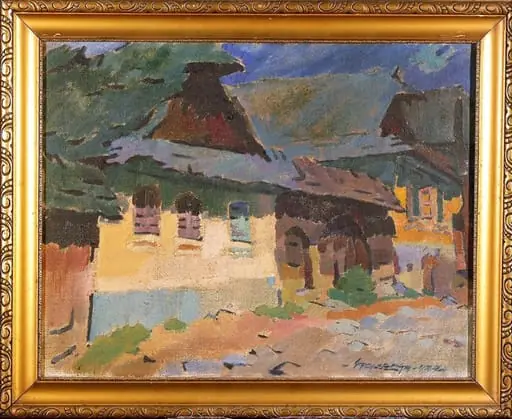
The painting centers on a weathered house with a steep, dark roof, nestled among sparse vegetation. The structure, unadorned and worn, evokes the quiet endurance of rural existence. Surrounding trees and uneven grass suggest a landscape shaped by seasonal change and human use. There is no narrative or idealization—only the presence of a home embedded in its environment, conveying a sense of quiet resilience.
Technique & Style
Luchian applied paint with thick, irregular brushstrokes, creating a tactile surface that emphasizes texture over smoothness. Colors—muted greens, browns, and sudden bursts of ochre and orange—are layered without blending, producing a visual tension. The impasto technique gives the scene a raw, almost sculptural quality, as if the land itself were being modeled in pigment rather than merely depicted.
History & Provenance
The painting entered the Museum of Ethnography’s holdings in the early 20th century, likely through institutional acquisition or donation. Its preservation reflects early efforts to document vernacular Romanian culture through visual art. While little is documented about its early ownership, its placement in an ethnographic context signals its value as a record of rural life rather than a purely aesthetic object.
Context
Created during a period when Romanian artists were turning toward local subjects and rejecting academic conventions, this work aligns with a national movement to capture the authenticity of peasant life. Luchian’s approach—expressive, unidealized—echoes contemporaneous developments in French and German art, where emotion and materiality took precedence over classical harmony.
Legacy
Though not widely exhibited outside Romania, the painting contributes to Luchian’s reputation as a pioneer of modern Romanian painting. Its emphasis on texture and emotional tone influenced later generations of artists seeking to express national identity through direct, unpolished visual language. The work remains a quiet but significant example of early 20th-century Romanian modernism.
Artist & collection

Artist
Ștefan Luchian was a Romanian painter, famous for his landscapes and still life works.
Museum
Ipotești Memorial - Mihai Eminescu National Center
Continue through works from the same source collection.