Artwork
Potecă spre cimitir
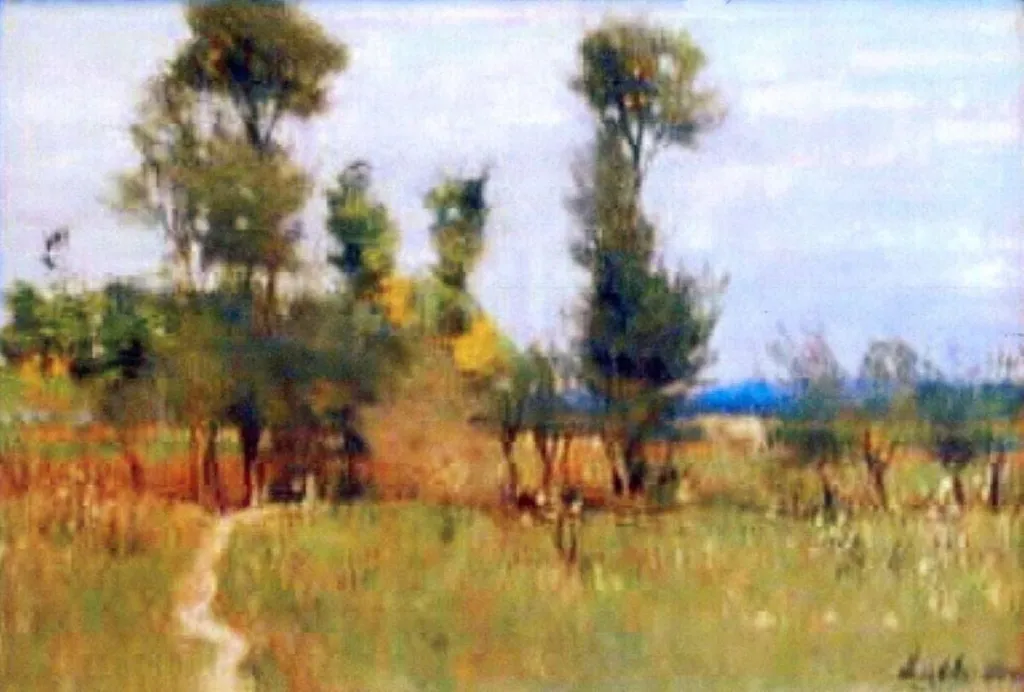
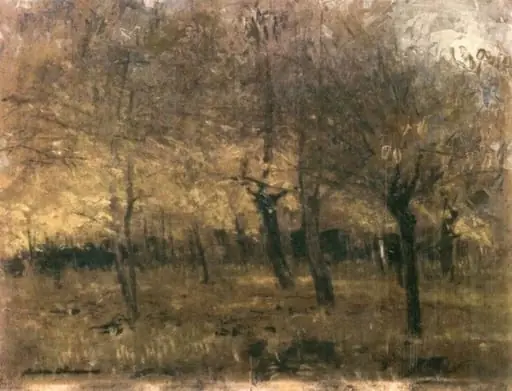
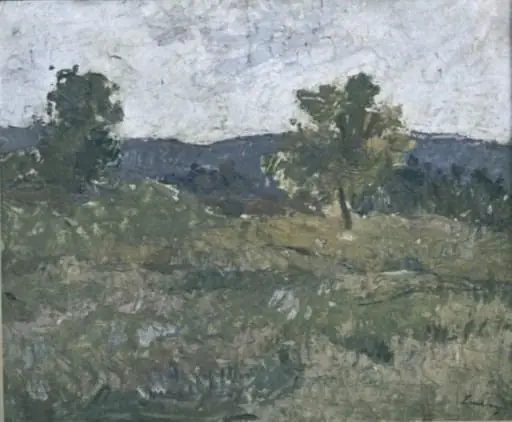
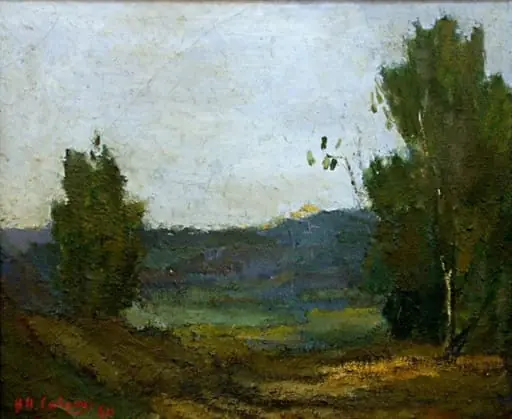
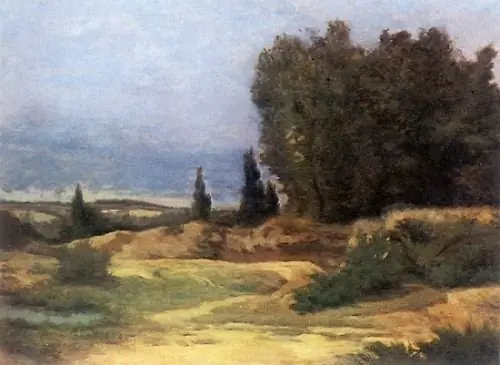
Potecă spre cimitir is a print by the Art Nouveau artist Ștefan Luchian. It dates from 1902 and is held in the collection of the Museum of Art Cluj-Napoca.
About this work
Overview
Unlike dramatic or narrative scenes, it focuses on subtle natural rhythms, using subdued tones and gentle transitions to evoke stillness.
Potecă spre cimitir, painted around 1902 by Ștefan Luchian, is a quiet landscape depicting a rural path leading toward a cemetery. The work is held in the collection of the Museum of Ethnography in Bucharest. Unlike dramatic or narrative scenes, it focuses on subtle natural rhythms, using subdued tones and gentle transitions to evoke stillness. The composition invites slow observation rather than immediate interpretation.
Subject & Meaning
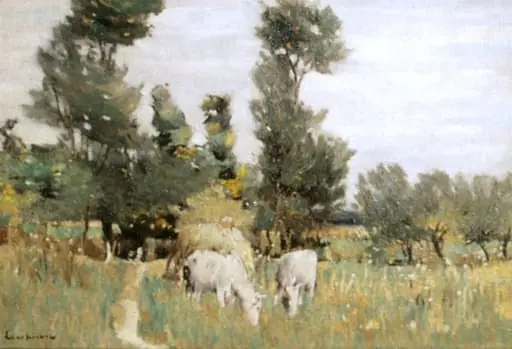
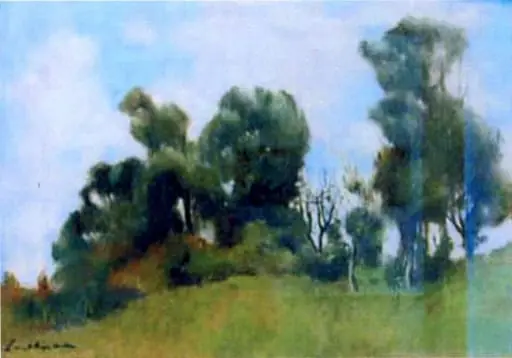
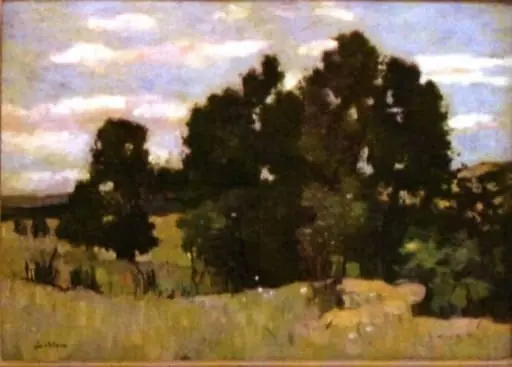
The painting presents a path winding through open fields and wooded edges toward a distant cemetery, its presence implied rather than emphasized. There is no human figure, yet the route suggests movement and inevitability. The absence of overt symbolism allows the scene to function as a meditation on transition—between life and death, solitude and nature—without moralizing or sentimentalizing the subject.
Technique & Style
Luchian employed soft, blended brushwork and a restrained palette of grays, greens, and earth tones to dissolve hard edges and unify the landscape. The brushstrokes are deliberate but unobtrusive, avoiding texture for the sake of texture. Light is diffused, creating a hazy atmosphere that unites foreground and background, reinforcing the painting’s meditative tone through visual harmony rather than contrast.
History & Provenance
Created in the early 20th century, the painting entered the Museum of Ethnography’s collection shortly after its completion. Its placement there, rather than in a fine arts institution, reflects its alignment with cultural documentation of Romanian rural life. While not widely exhibited during Luchian’s lifetime, it has remained a consistent part of the museum’s holdings, valued for its quiet representation of local topography and mood.
Context
Luchian worked during a period when Romanian artists were redefining national identity through depictions of everyday landscapes. Unlike urban or historical subjects favored by some contemporaries, he turned to rural solitude and natural cycles. Potecă spre cimitir aligns with this trend, offering a personal, introspective view of the Romanian countryside that resonated with broader cultural interests in authenticity and place.
Legacy
The painting endures as a quiet example of Luchian’s mature style, admired for its restraint and emotional nuance. It has influenced later Romanian landscape painters who sought to convey inner atmosphere through minimal means. While not widely reproduced, it remains a touchstone in discussions of Romanian modernism’s quieter, contemplative currents.
Artist & collection

Artist
Ștefan Luchian was a Romanian painter, famous for his landscapes and still life works.