Artwork
Genre Scene (Couple in the Interior)
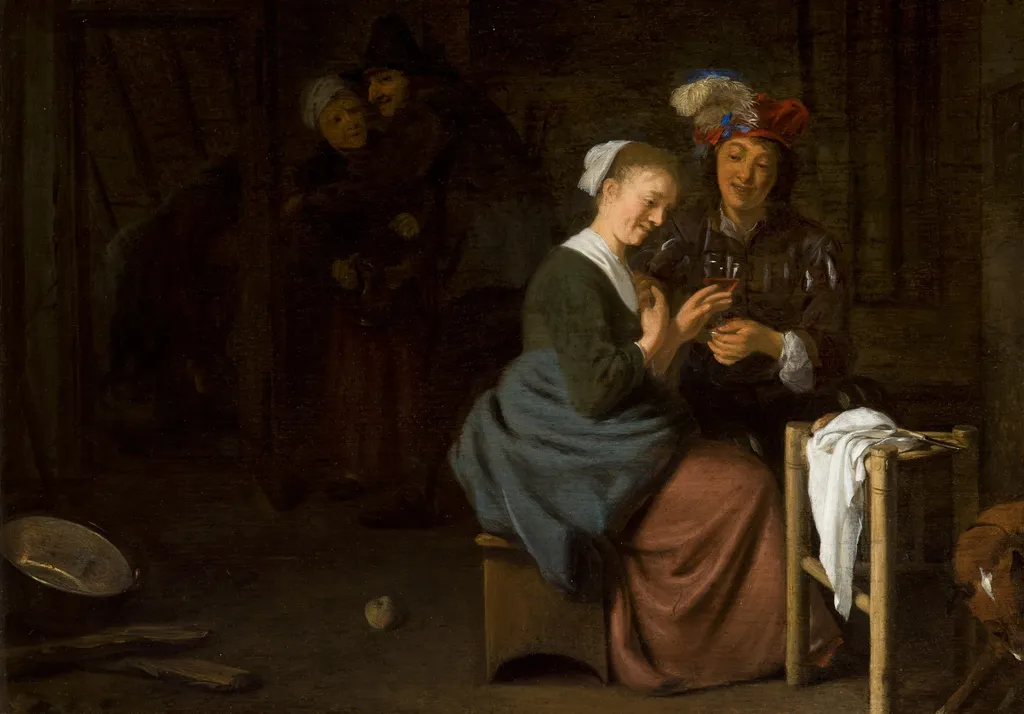
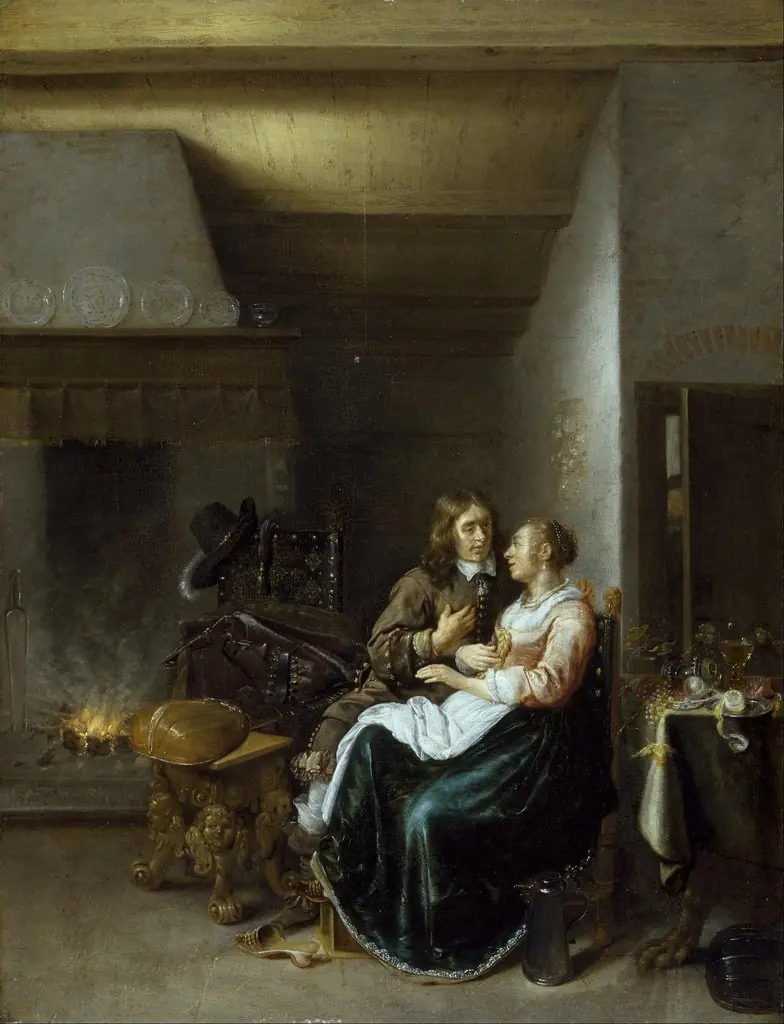
Genre Scene (Couple in the Interior) is an oil painting by the Dutch Golden Age artist Ludolf de Jongh. It dates from 1657 and is held in the collection of the National Museum in Kraków.
About this work
Overview
Ludolf de Jongh painted this interior genre scene around 1657, during the height of the Dutch Golden Age. Though active in Rotterdam as a merchant and civic official, he devoted significant attention to painting scenes of domestic life. His work reflects the era’s fascination with ordinary moments, rendered with quiet precision and attention to material detail.
Subject & Meaning
The woman, seated with a glass of wine, engages the man, who wears a feathered hat and dark coat.
The painting captures a private moment between a man and woman in a modest interior. The woman, seated with a glass of wine, engages the man, who wears a feathered hat and dark coat. Their interaction suggests familiarity, perhaps conversation or shared contemplation. No overt narrative is given; the meaning lies in the stillness and unspoken connection between them, typical of Dutch genre painting’s emphasis on subtle human behavior.
Technique & Style
De Jongh employs warm, muted earth tones to ground the scene, contrasting the couple’s clothing—blue dress, red hat—against a dark, indistinct background. Brushwork is restrained, favoring clarity over flourish. Light falls softly on the figures, drawing focus to their gestures and expressions. The composition isolates the pair, enhancing the sense of intimacy while leaving surrounding space ambiguous, a hallmark of his interior scenes.
History & Provenance
The painting dates from de Jongh’s mature period, when he balanced civic duties with artistic practice. While its early ownership is undocumented, it aligns with the collector tastes of mid-17th-century Dutch urban elites who favored domestic scenes. It entered institutional collections in the modern era, preserved as an example of regional genre painting from Rotterdam’s artistic milieu.
Context
In 17th-century Holland, genre painting flourished alongside economic prosperity and a growing middle class. Scenes of domestic life, like this one, appealed to viewers seeking reflection on their own environments. De Jongh’s work fits within this trend, avoiding moralizing or theatricality in favor of restrained observation, distinguishing it from more dramatic Flemish counterparts.
Legacy
De Jongh’s genre scenes, though less widely known than those of Vermeer or Steen, contributed to the codification of Dutch interior painting. His focus on quiet interaction, subtle lighting, and restrained detail influenced regional artists and helped define the visual language of domestic intimacy in Dutch art. His dual role as civic figure and painter reflects the broader integration of art into daily urban life.
Own this work as a print
Artist & collection

Artist
Ludolf de Jongh or Ludolf Leendertsz. de Jongh (Overschie, 1616 – Hillegersberg, 1679) was a Dutch painter, known for his genre scenes, hunting scenes, history paintings, landscapes, cityscapes, and portraits. He was…

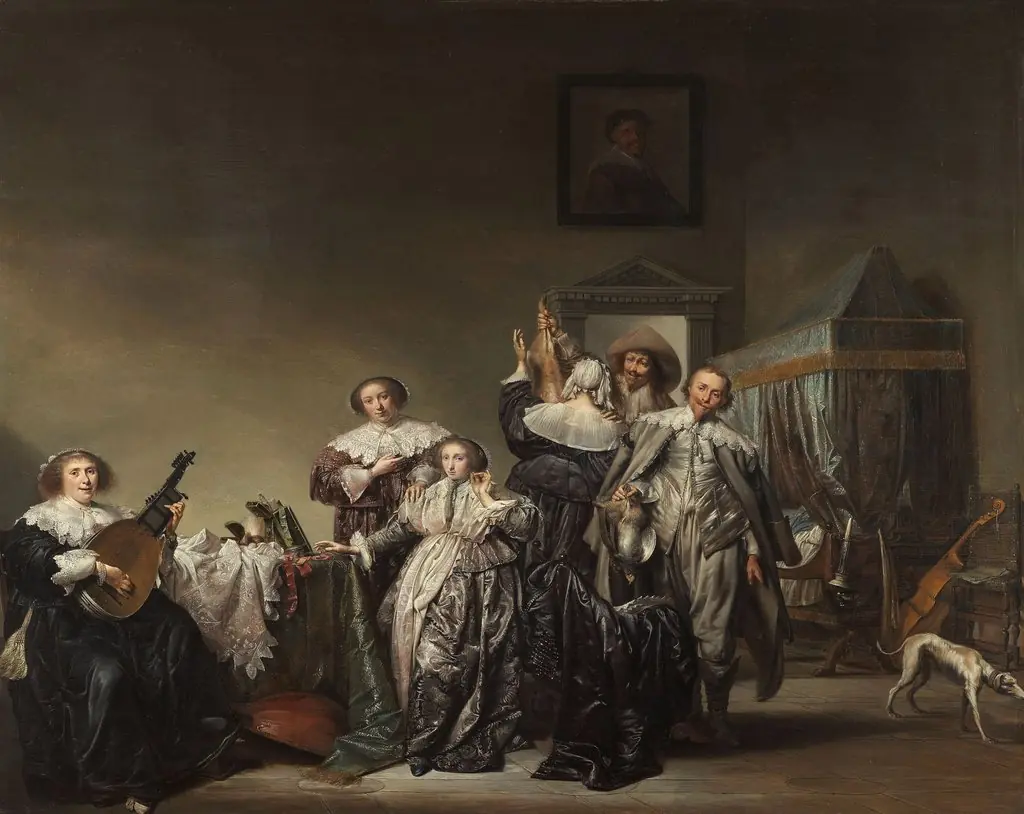 Gallant Company
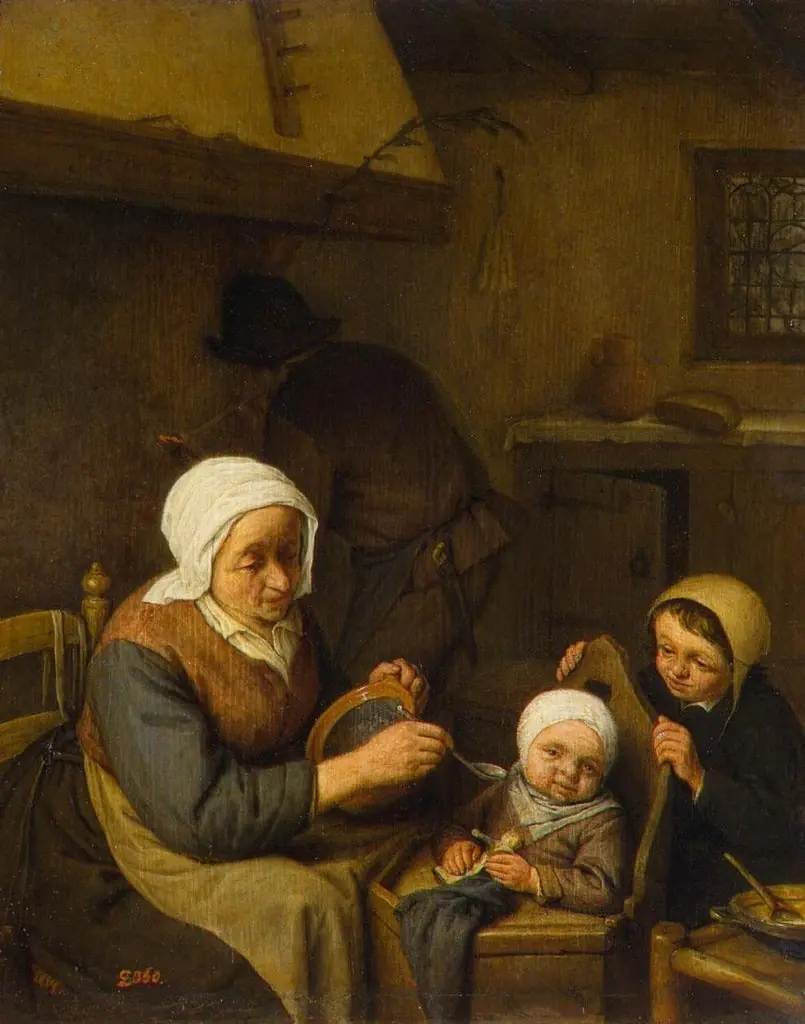 Peasant Family
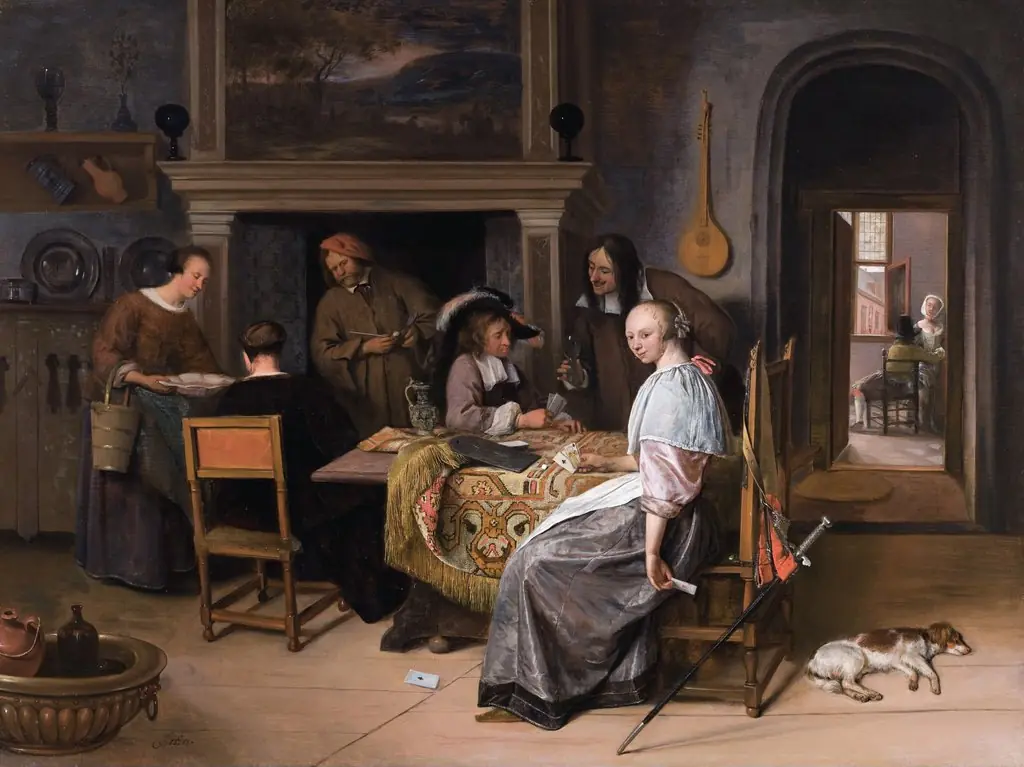 The Card Players in an Interior
 Interior of a Tavern
 Peasant Interior with an Old Flute Player
 Et interiør med håndværkere og bønder der spiser og drikker
 Distinguished company in a room
 Distinguished Company in a Room
 A young Woman Writing Music
 The Tailor’s Workshop
 Card Game
 A Couple in an Interior