Artwork
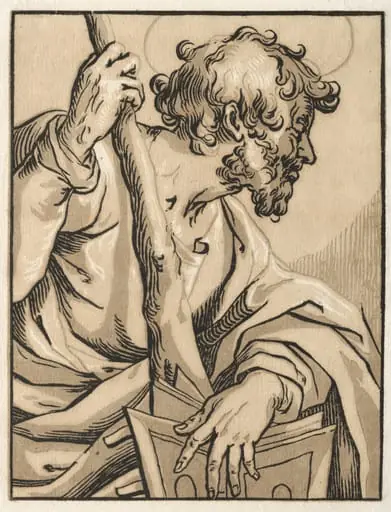
St. Matthias
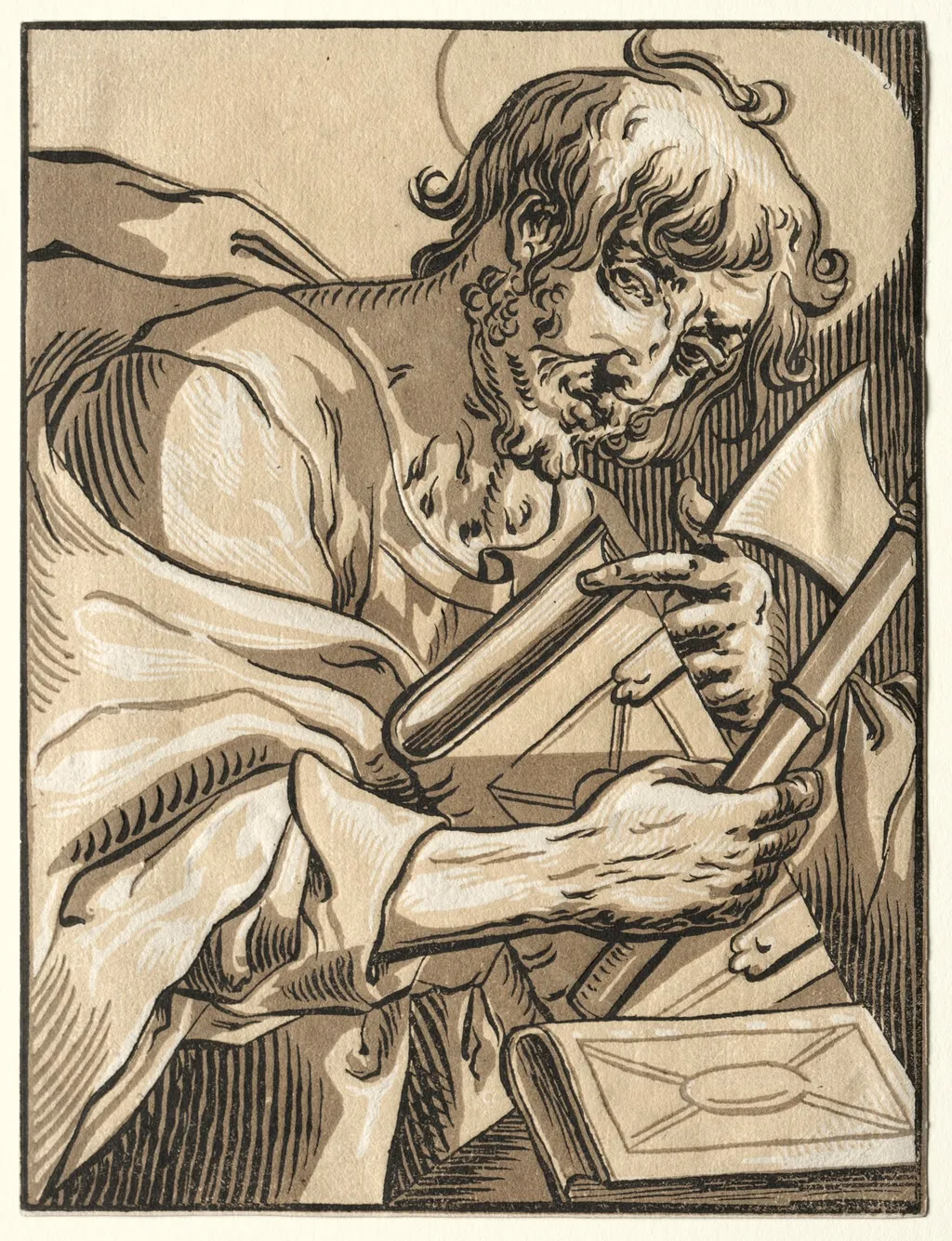
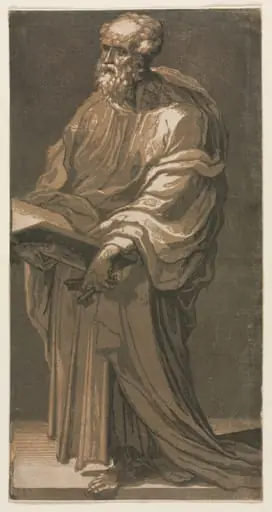
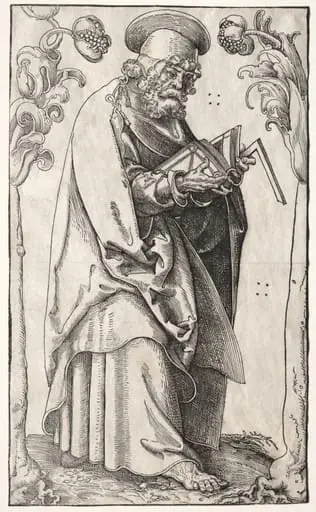
St. Matthias is a print by the Baroque artist Ludolph Büsinck. It dates from 1626 and is held in the collection of the Cleveland Museum of Art. St.
About this work
Overview
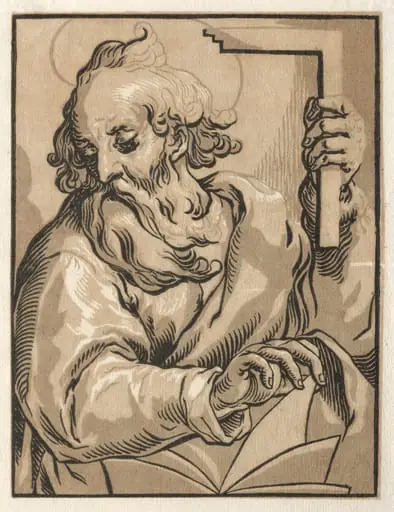
St. Matthias is a chiaroscuro woodcut print created by German artist Büsinck in Paris between 1623 and 1630. The work is characterized by its use of layered blocks to achieve depth through contrasting light and dark tones.
Subject & Meaning
The print depicts Saint Matthias, identifiable by his brown robes, book, and axe. These attributes symbolize his role as an apostle and martyr, with the axe referencing his method of execution.
Technique & Style
Büsinck employed the chiaroscuro technique, carving separate wood blocks for each tone and printing them in layers. This innovative method, learned during his time in France, enhances the image's visual depth and dimensionality.
History & Provenance
Produced in Paris, this print is part of Büsinck's output based on drawings by painter George Lallemand. Lallemand's specially constructed presses facilitated mass production of Büsinck's chiaroscuros, a unique focus for a mid-17th-century French workshop.
Context
As one of the few 17th-century artists working in chiaroscuro woodcuts, Büsinck introduced this technique to France. His collaboration with Lallemand contributed to the dissemination of chiaroscuro prints in the region.
Artist & collection

Artist
Ludolph Büsinck (c.1600–1669) was a German painter and wood-engraver, born at Hann.