Artwork
Bodegón con granadas y manzanas cajas de dulces y otros recipientes
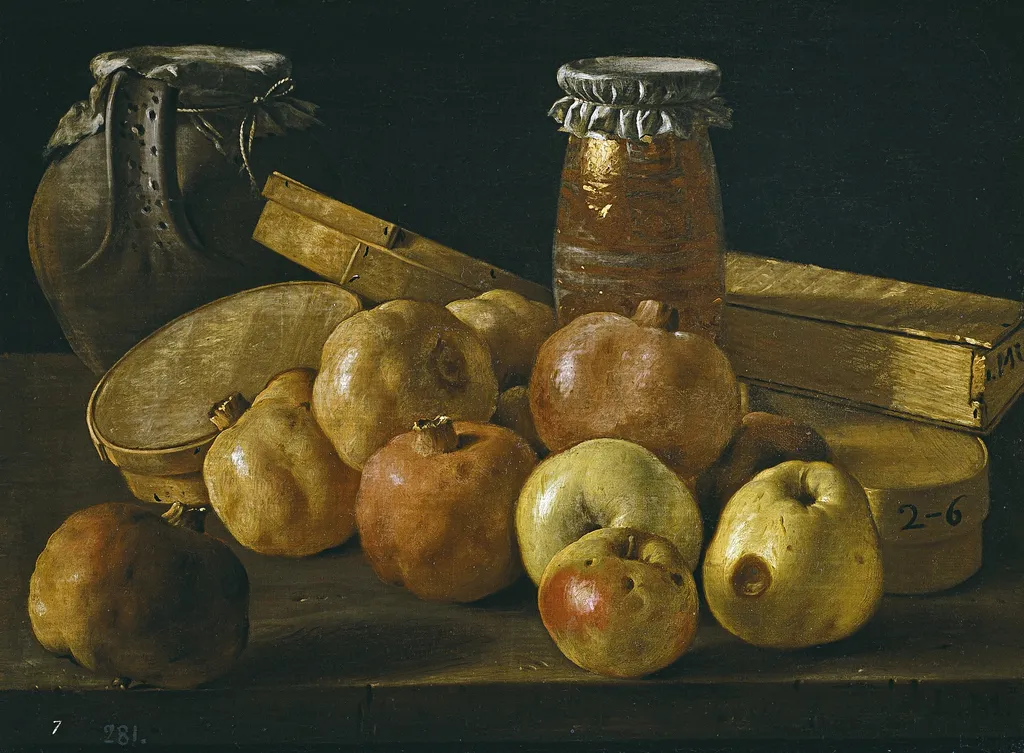
Bodegón con granadas y manzanas cajas de dulces y otros recipientes is an oil painting by the Rococo painting artist Luis Egidio Meléndez. It dates from 1751 and is held in the collection of the Museo del Prado.
About this work
Overview
Executed in oil on canvas, the work reflects Meléndez’s dedication to the genre of bodegón, a Spanish tradition focused on humble, domestic items.
Painted in 1751 by Spanish artist Luis Egidio Meléndez, this still life presents a modest assemblage of everyday objects: fruits, candy boxes, and ceramic and wooden vessels. Executed in oil on canvas, the work reflects Meléndez’s dedication to the genre of bodegón, a Spanish tradition focused on humble, domestic items. Its quiet arrangement and precise observation distinguish it within 18th-century Spanish painting, and it remains part of the Museo del Prado’s permanent collection.
Subject & Meaning
The composition centers on seasonal produce—apples, pomegranates, and pears—spilling from a wooden crate, alongside sealed candy boxes and two ceramic jars. These items suggest domestic abundance and the sensory pleasures of food, yet their presentation avoids ornamentation. The arrangement implies a momentary pause in daily life, emphasizing texture and materiality over symbolic allegory. The objects are neither sacred nor luxurious, grounding the scene in the ordinary rhythms of Spanish household existence.
Technique & Style
Meléndez employs subtle chiaroscuro to define form, with light glancing across the glossy skin of fruit and the matte surfaces of clay and wood. Shadows deepen the spatial depth, isolating each object against a dark, neutral background. Brushwork is restrained yet precise, capturing the irregularities of natural surfaces—cracks in pomegranate rinds, the weave of a basket, the glaze on pottery. The style avoids theatricality, favoring quiet realism over decorative flourish.
History & Provenance
Commissioned as part of a series of still lifes for Prince Ferdinand of Spain, the painting was likely intended for private contemplation rather than public display. It remained within royal collections until the 19th century, when it entered the Museo del Prado. Unlike many contemporary works, it was not widely reproduced or exhibited during Meléndez’s lifetime, contributing to its relative obscurity until modern scholarship revived interest in his oeuvre.
Context
In mid-18th-century Spain, still-life painting was considered a lesser genre compared to religious or historical subjects. Meléndez worked within this hierarchy, yet his attention to detail and tonal harmony elevated his work beyond mere imitation. His paintings reflect Enlightenment-era values of observation and empirical study, aligning with broader intellectual currents that valued the tangible world over idealized forms.
Legacy
Meléndez’s still lifes, including this one, are now recognized as among the most refined in Spanish art. His ability to convey weight, texture, and light without sentimentality influenced later realist traditions. Though largely overlooked during his lifetime, his work has since become a touchstone for studies of material culture and the quiet aesthetics of everyday objects in 18th-century Europe.
Own this work as a print
Artist & collection
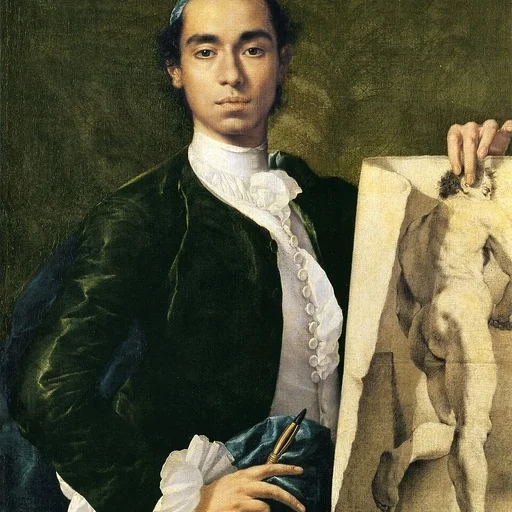
Artist
Luis Egidio Meléndez (1716–1780) was a Spanish painter. Though he received little acclaim during his lifetime and died in poverty, Meléndez is recognized as one of the greatest Spanish still-life painters of the 18th…

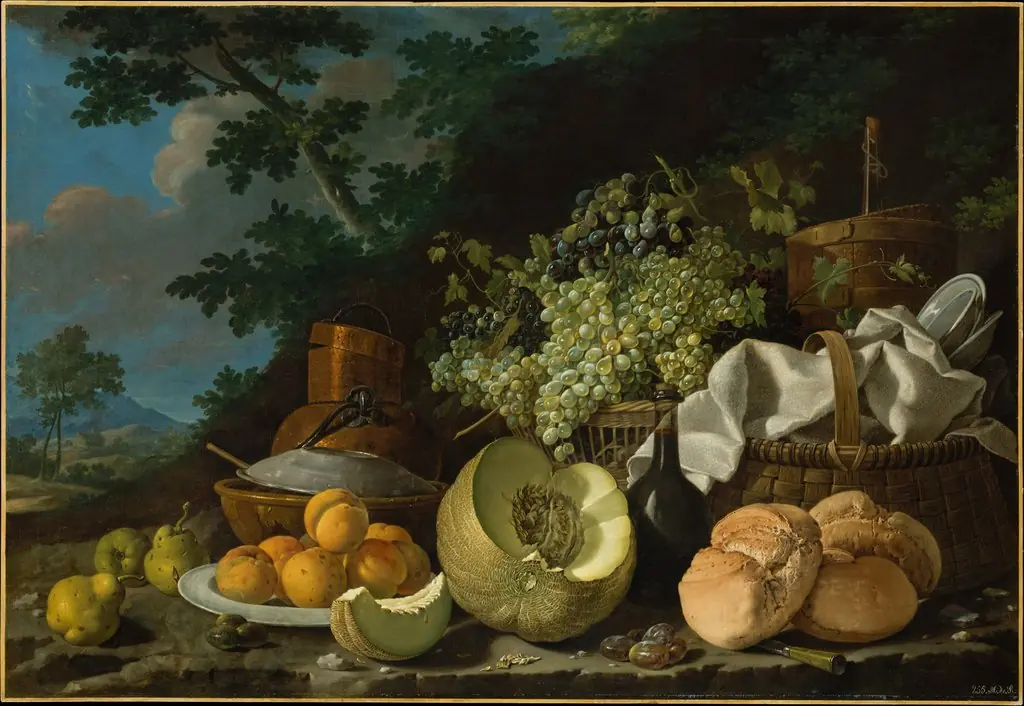 The Afternoon Meal (La Merienda)
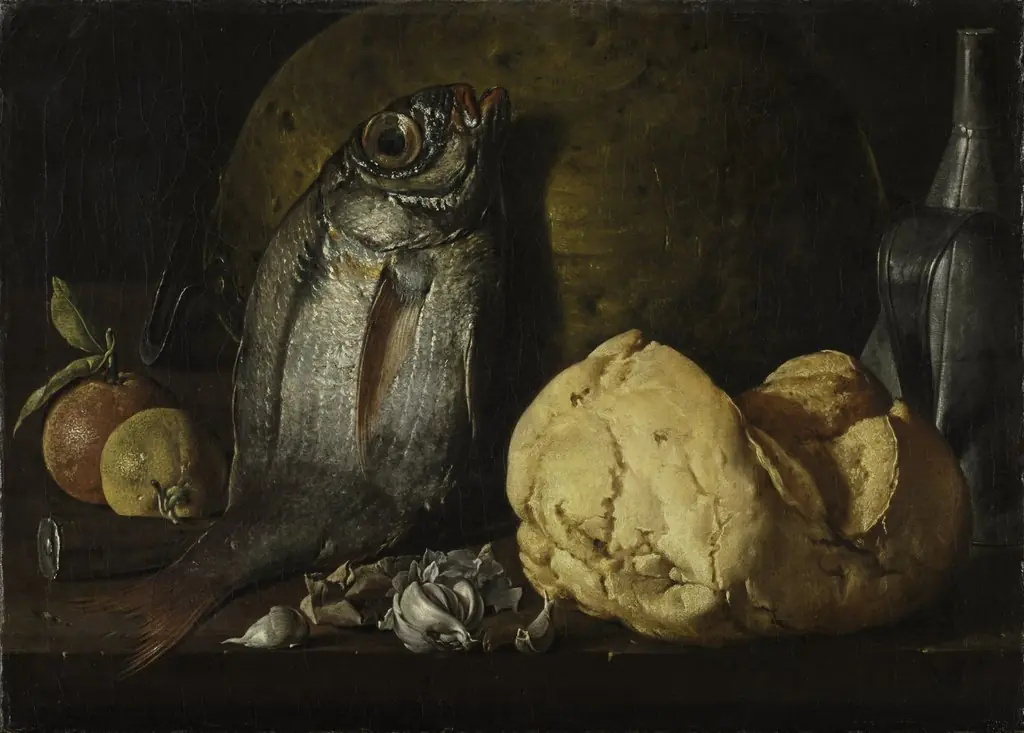 Still Life with Fish, Bread, and Kettle
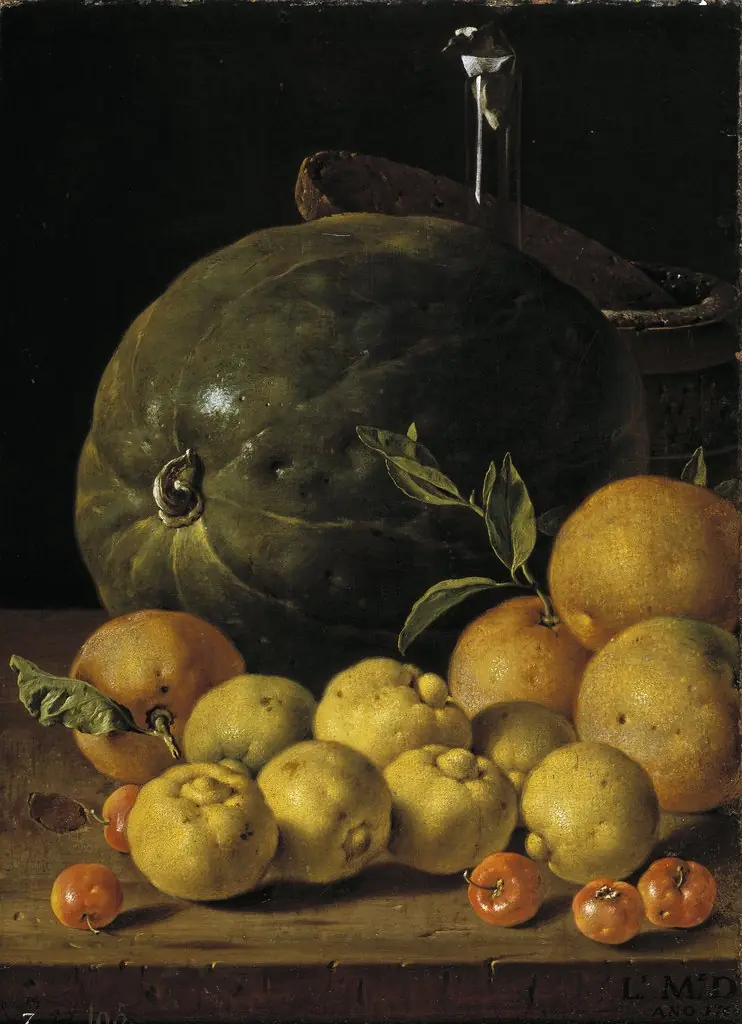 Still Life with Limes Oranges Haw Berries and Watermelon
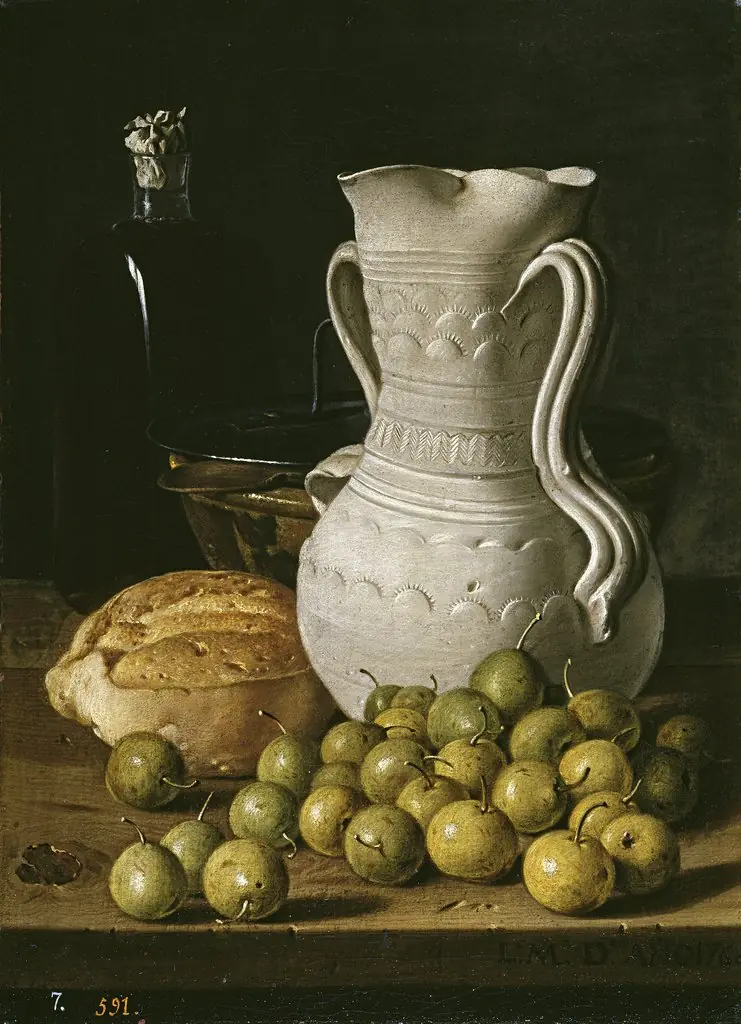 Still Life with Small Pears Bread Flask Bowl and Dry Leaves
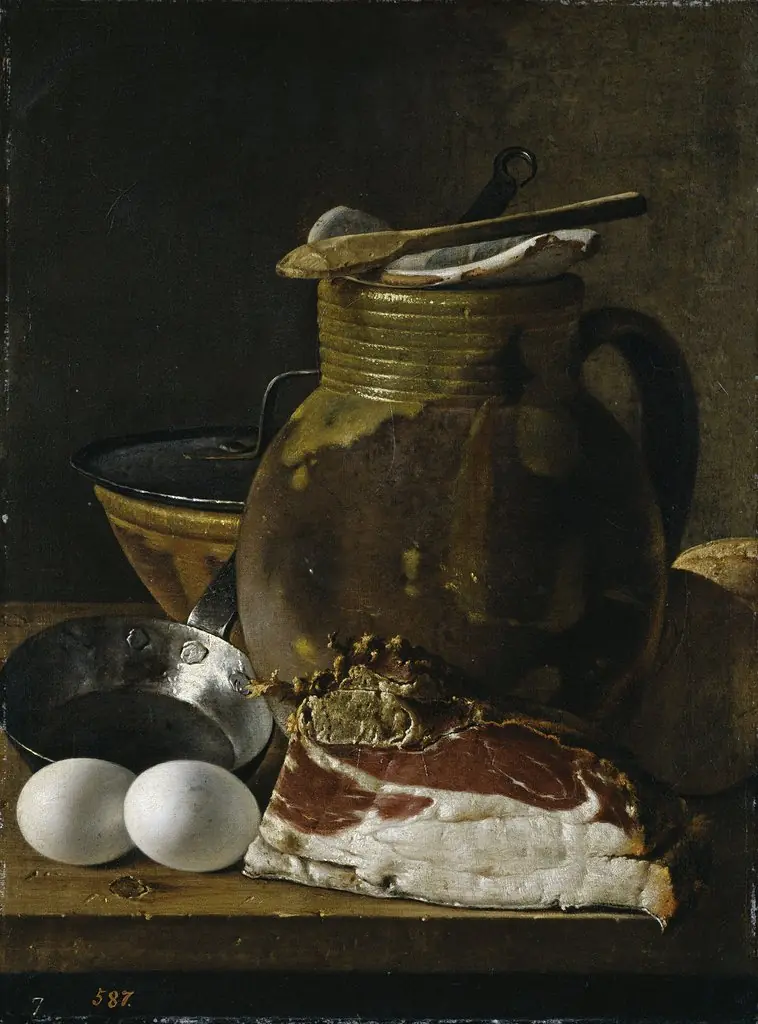 Still Life with Ham Eggs and Vessels
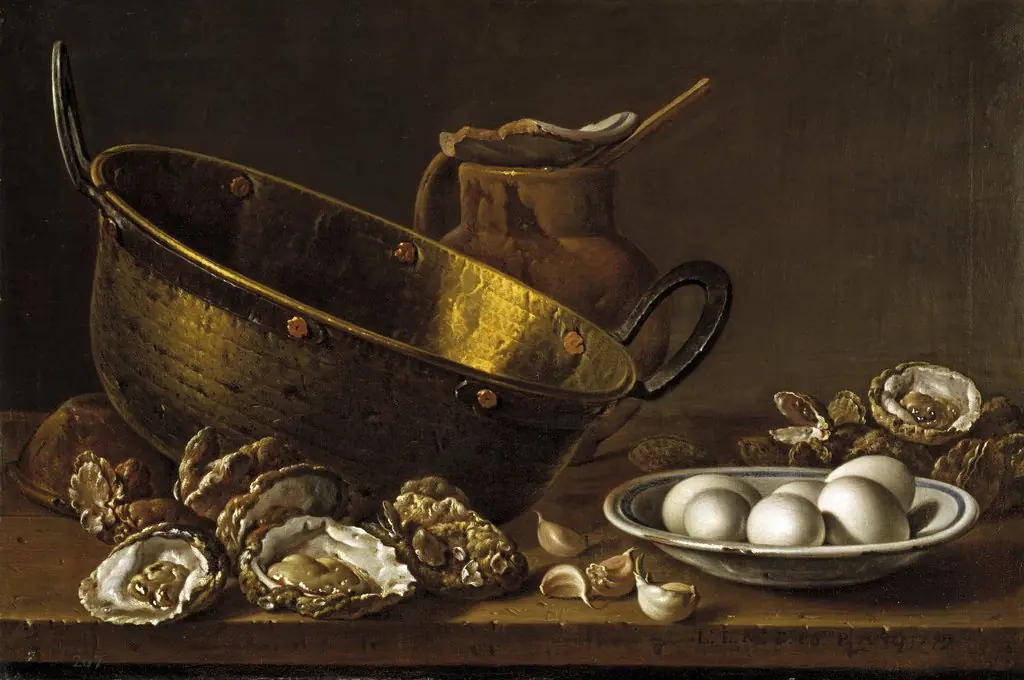 Still Life with Oysters Garlic Eggs Pot and Pan
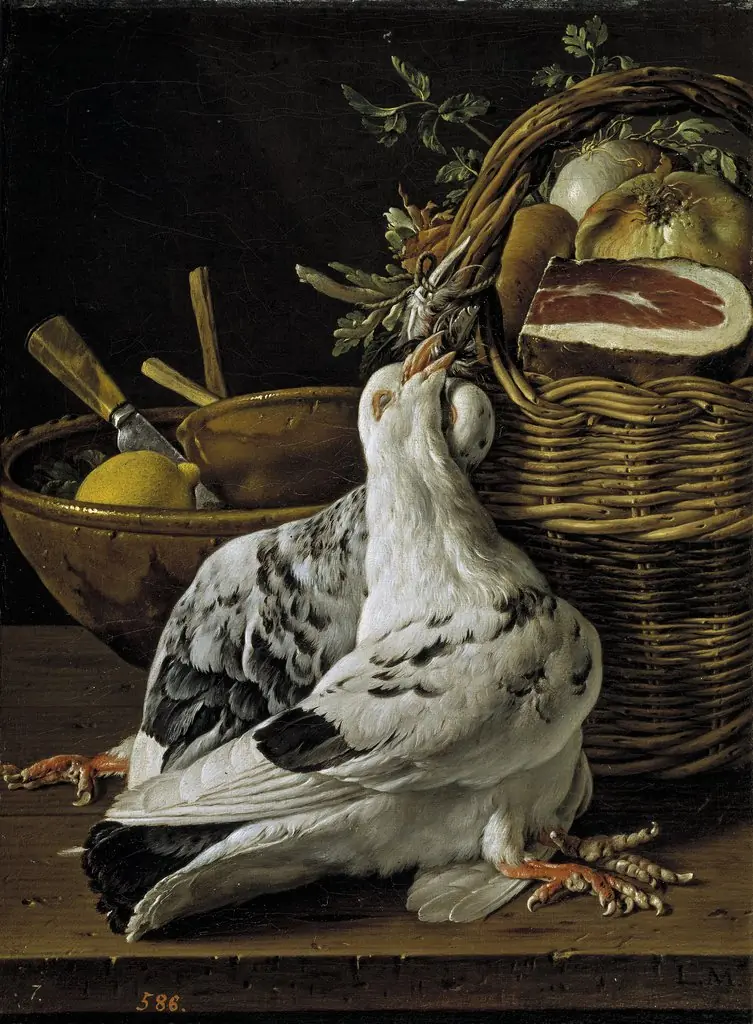 Bodegón con pichones cesta de comida y cuencos
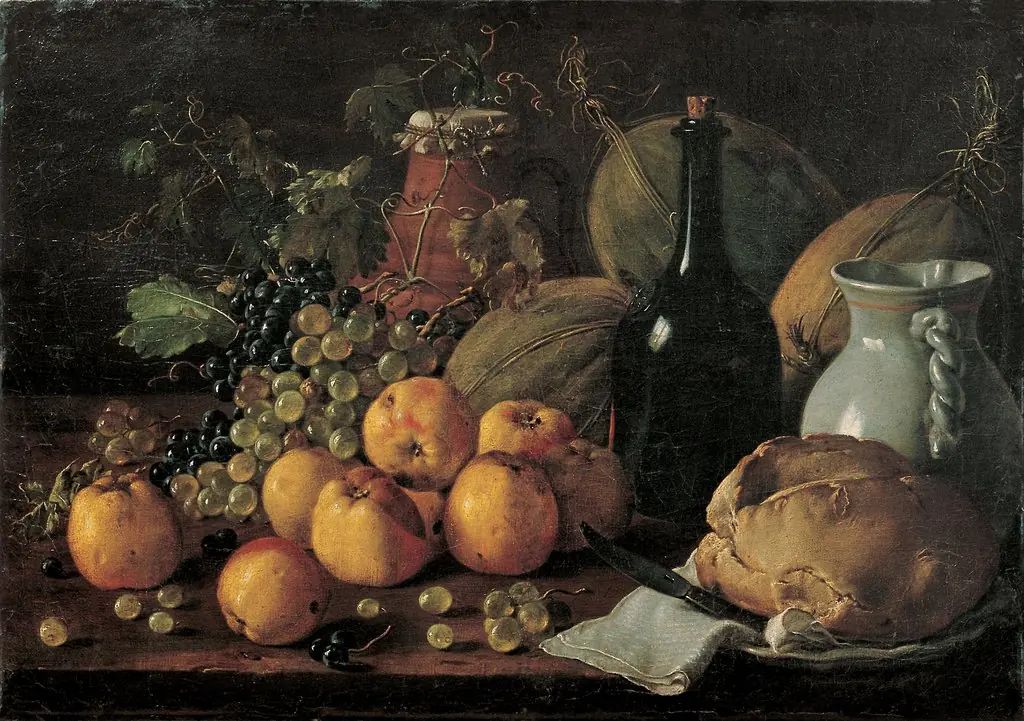 Still Life with Apples, Grapes, Melons, Bread, Jug and Bottle
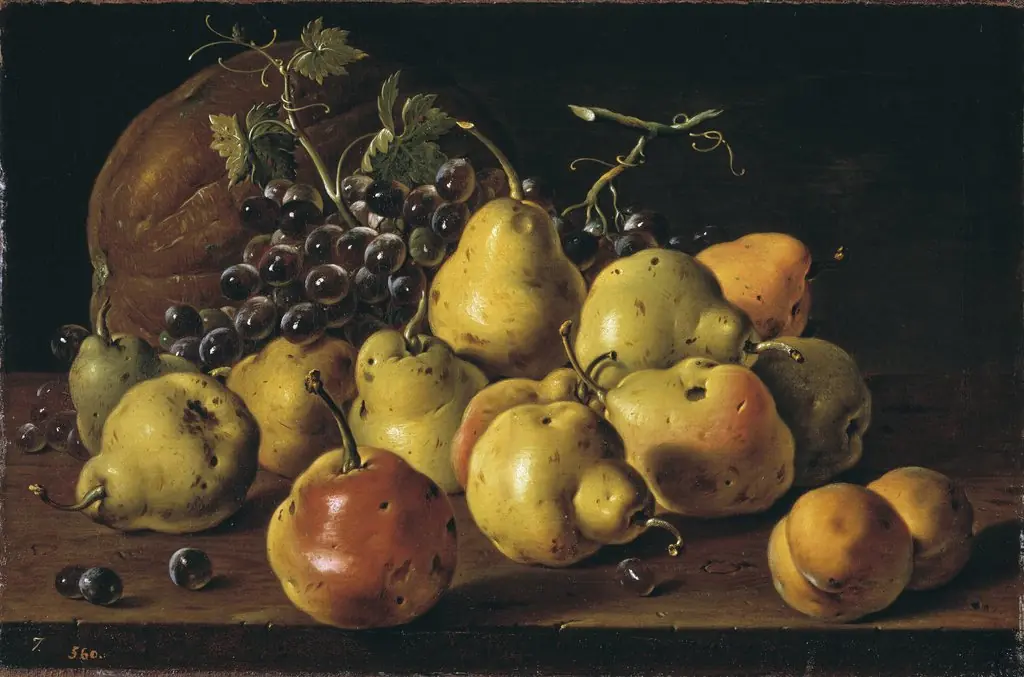 Bodegón con peros y melocotones uvas y melón
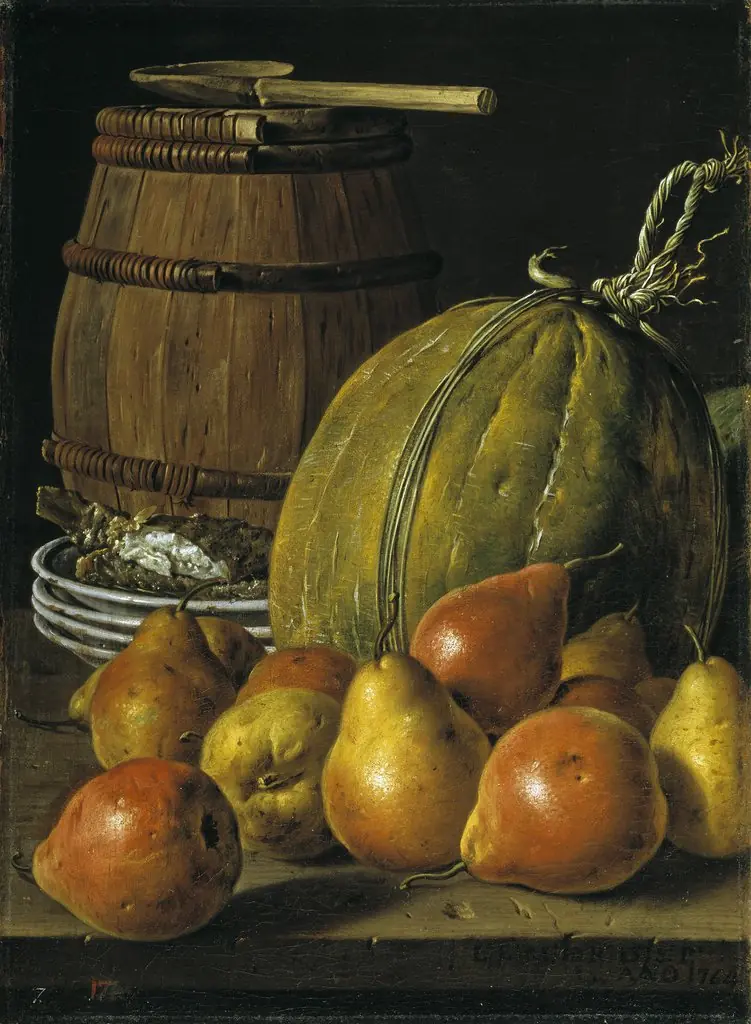 Bodegón con peras melones platos y barril
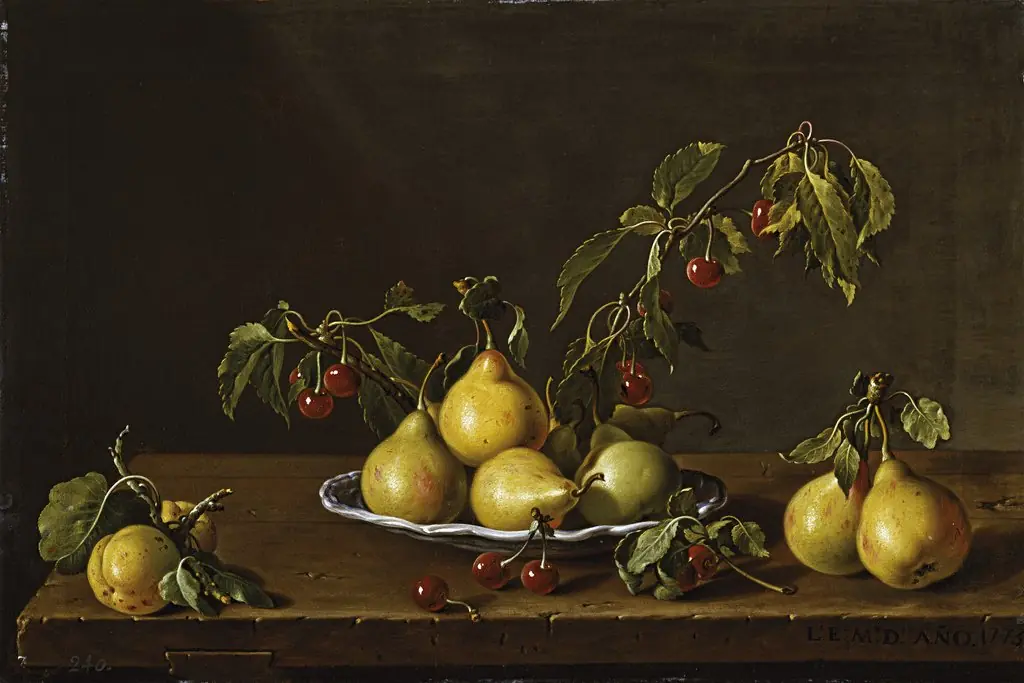 Still Life with Plate of Pears and Morello Cherries
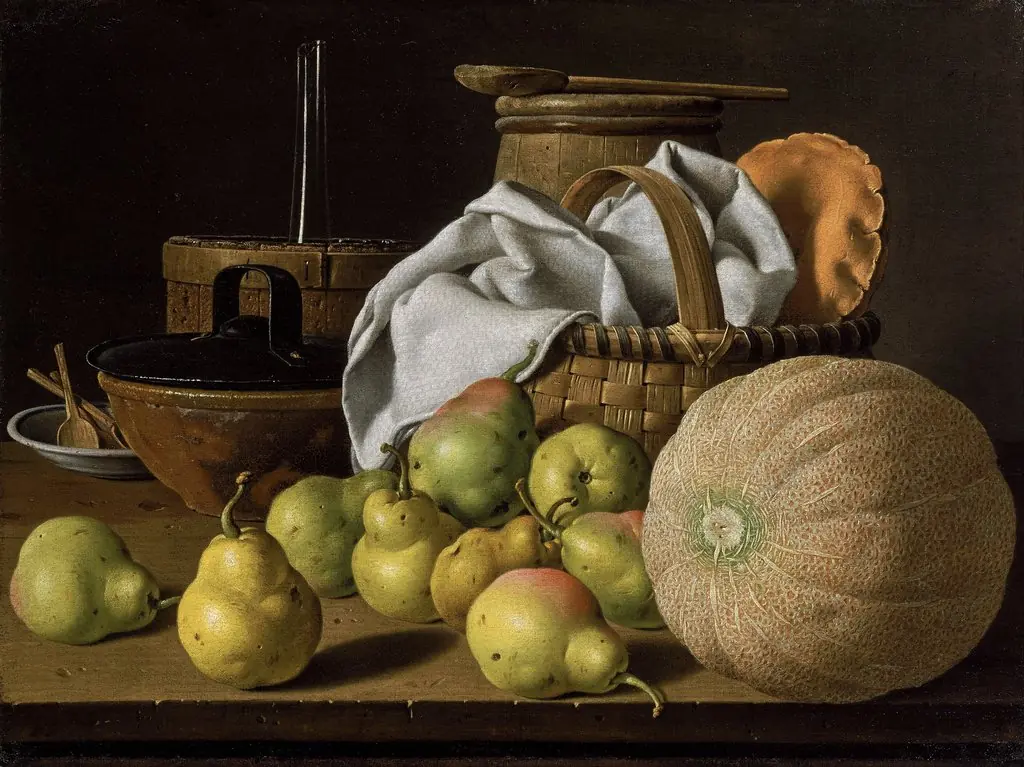 Still Life with Melon and Pears
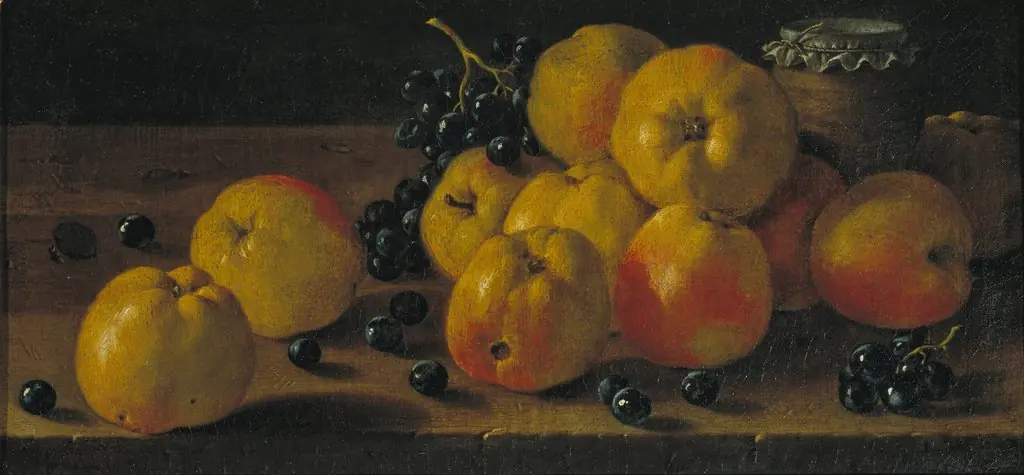 Still Life with Apples, Grapes and a Pot of Jam
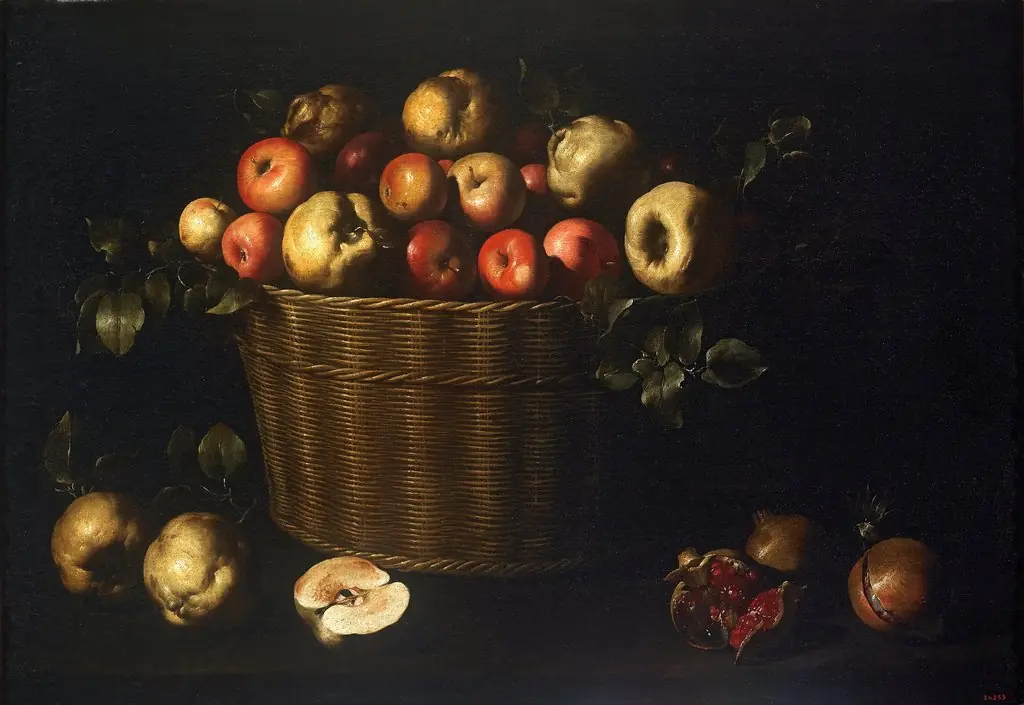 Basket with Apples, Quinces and Pomegranates
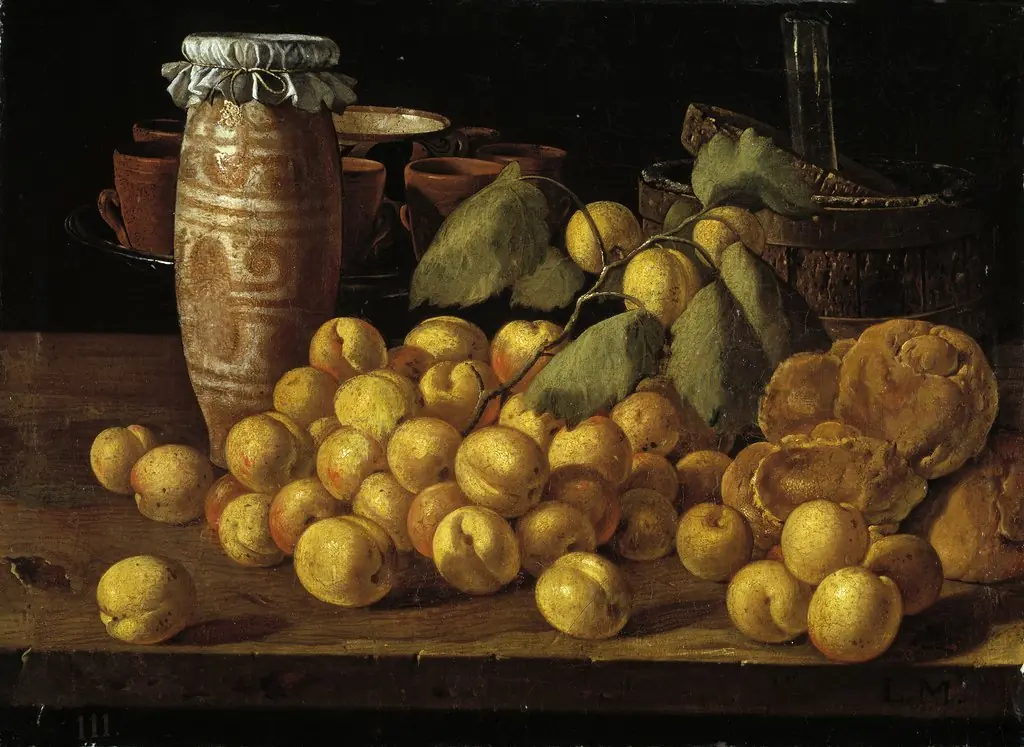 Still Life with Apricots Buns and Vessels
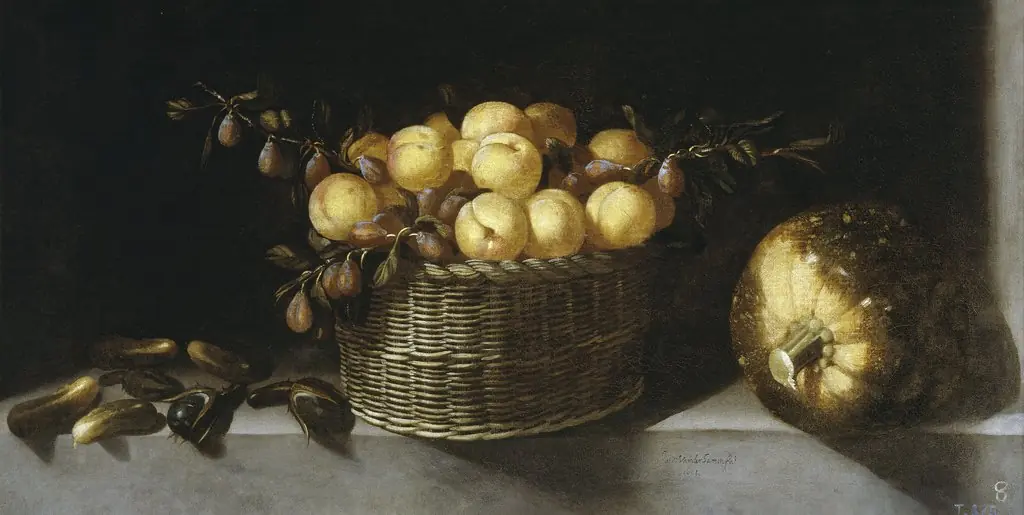 Still Life with Fruit and Vegetables
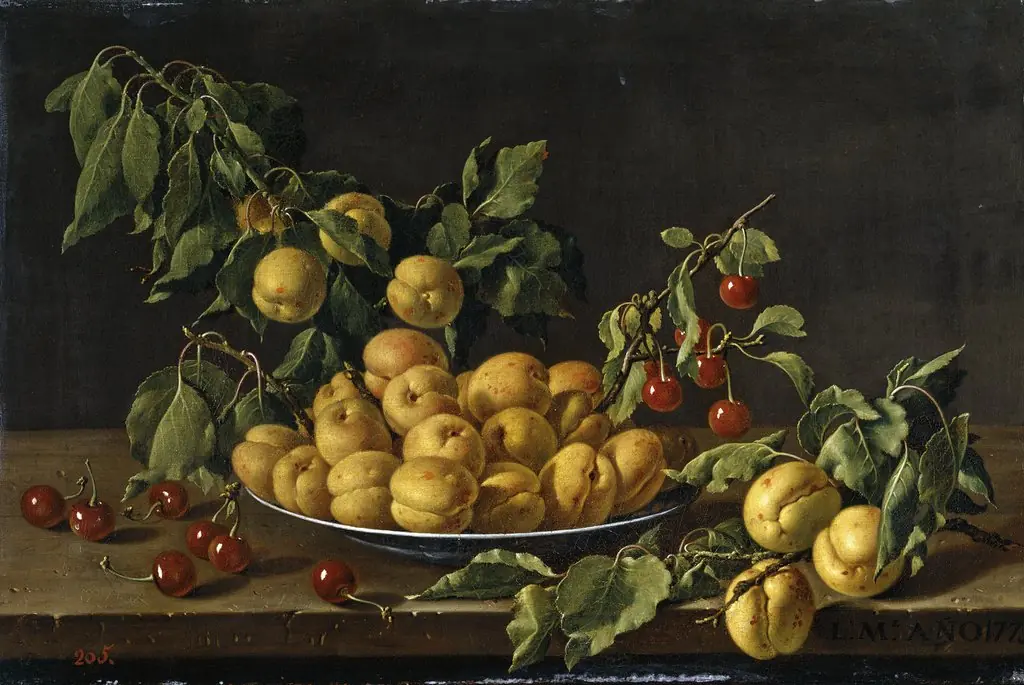 Still Life with Plate of Apricots and Morello Cherries
 Still Life with Apples