Artwork
Still Life with Fish, Bread, and Kettle
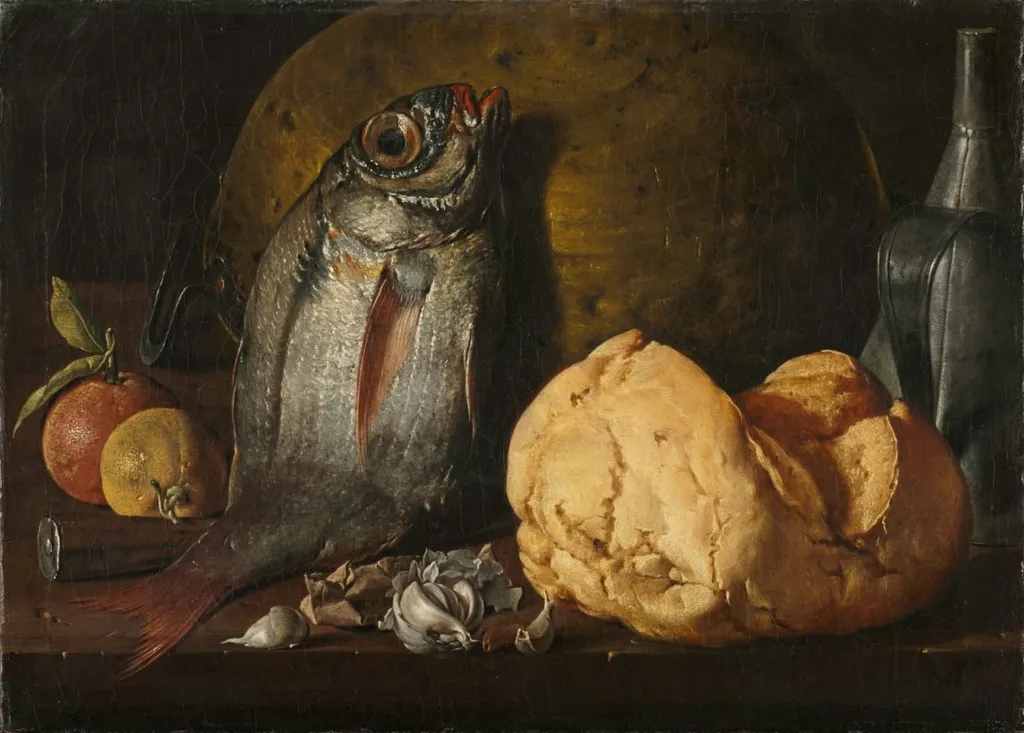
Still Life with Fish, Bread, and Kettle is an unspecified painting by the Rococo painting artist Luis Egidio Meléndez. It dates from 1772 and is held in the collection of the Cleveland Museum of Art. Luis Meléndez, active in Madrid during the mid-to-late 18th century, turned from portrait work to still life in the 1760s.
About this work
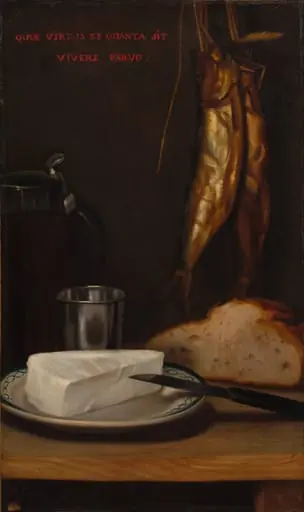
This painting shows a simple wooden table with fish, bread, and a small metal kettle.
This painting shows a simple wooden table with fish, bread, and a small metal kettle. Light hits the fish scales just right, making them shimmer. The bread looks fresh. The kettle’s dark shape contrasts with the bright food.
Meléndez painted everyday food with care. He used soft shadows to make things feel real. His colors stay muted, but the fish still pop.
See how the light plays on the fish scales? Compare it to Luis Meléndez (Spanish, 1716–1780).
Overview
Luis Meléndez, active in Madrid during the mid-to-late 18th century, turned from portrait work to still life in the 1760s. Though he gained recognition as Spain’s most accomplished still-life painter of his time, he lived in financial hardship throughout his life. This painting, featuring humble kitchen items, reflects his dedication to observing ordinary objects with quiet precision.
Subject & Meaning
The composition presents everyday sustenance—fish, bread, and a metal kettle—arranged on a plain wooden surface. These items carry no symbolic or religious overtones; instead, their value lies in their material presence. Meléndez elevates the mundane by rendering each object with attention to texture and form, suggesting dignity in the ordinary without embellishment.
Technique & Style
Meléndez employed subtle gradations of light and soft shadows to create a sense of tangible volume. His palette remains restrained, dominated by earth tones, yet the fish’s scales catch the light with remarkable clarity, suggesting moisture and surface sheen. The kettle’s dark, matte form anchors the scene, contrasting with the brighter, more reflective surfaces of the bread and fish.
History & Provenance
Painted during Meléndez’s mature period, this work likely originated as part of a series commissioned for Spanish royal collections. Though his paintings were appreciated by patrons, Meléndez received little financial reward. The painting’s survival and continued attribution to him reflect its technical authority, even as his personal circumstances remained difficult.
Context
In 18th-century Spain, still life was considered a lesser genre compared to history or portraiture. Meléndez’s focus on domestic food items aligned with a growing interest in natural observation, yet his work stood apart for its lack of theatricality. Unlike Italian or Dutch still lifes, his compositions avoid abundance or allegory, favoring quiet realism.
Legacy
Meléndez’s influence endures in his uncompromising attention to detail and his rejection of decorative excess. His approach to still life—grounded in direct observation and restrained color—foreshadowed later realist traditions. Though largely overlooked during his lifetime, his works are now recognized for their quiet rigor and profound sensitivity to material presence.
Artist & collection
Artist
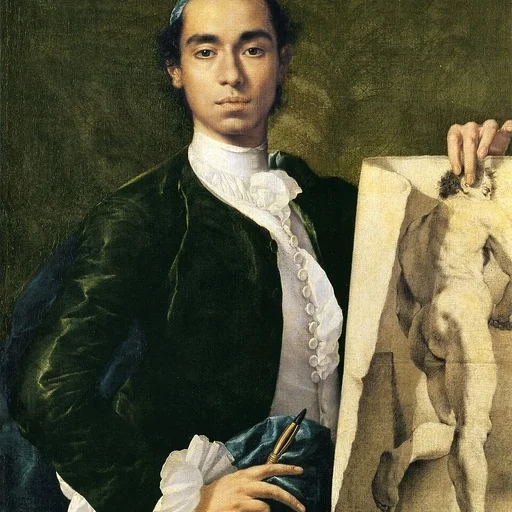
Luis Egidio Meléndez (1716–1780) was a Spanish painter. Though he received little acclaim during his lifetime and died in poverty, Meléndez is recognized as one of the greatest Spanish still-life painters of the 18th…

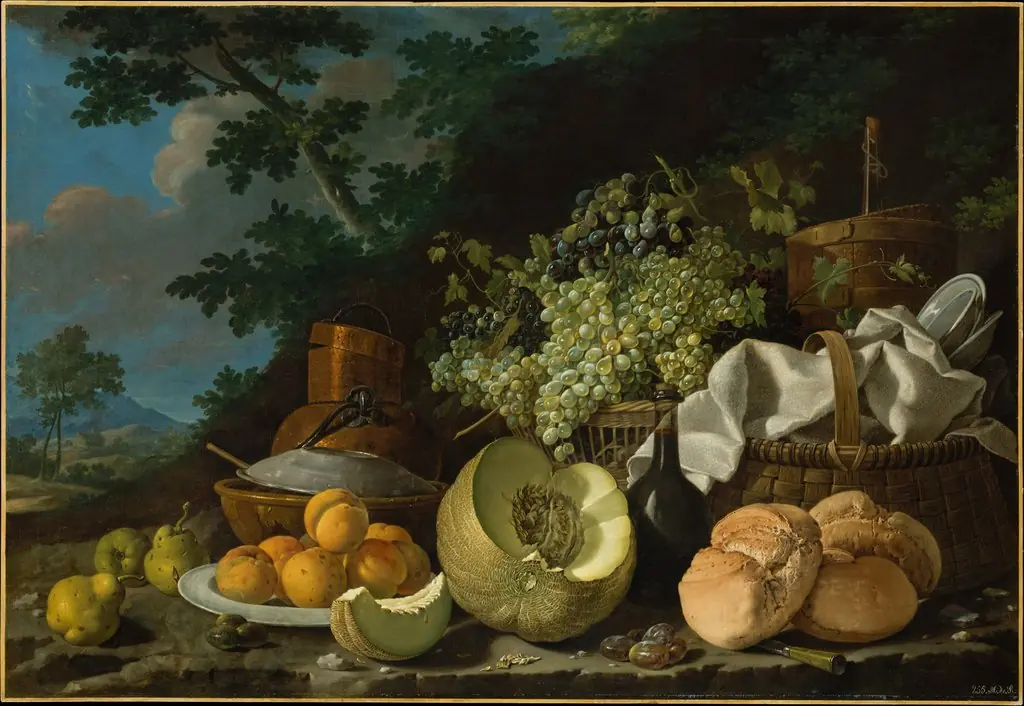 The Afternoon Meal (La Merienda)
 Still Life with Fish, Bread, and Kettle
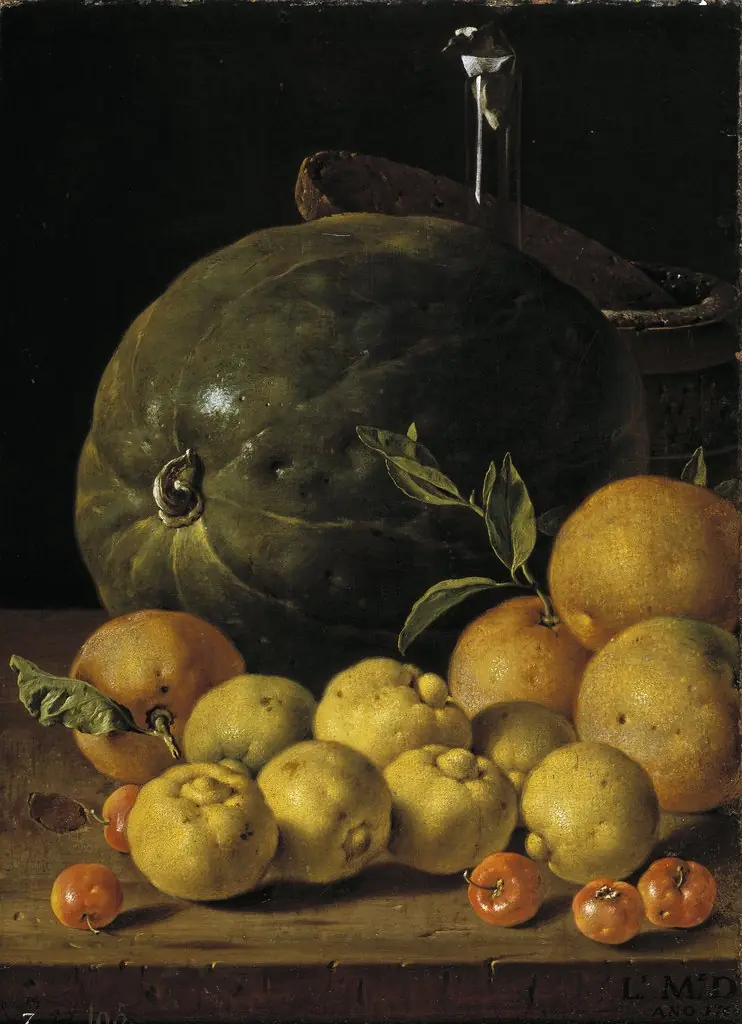 Still Life with Limes Oranges Haw Berries and Watermelon
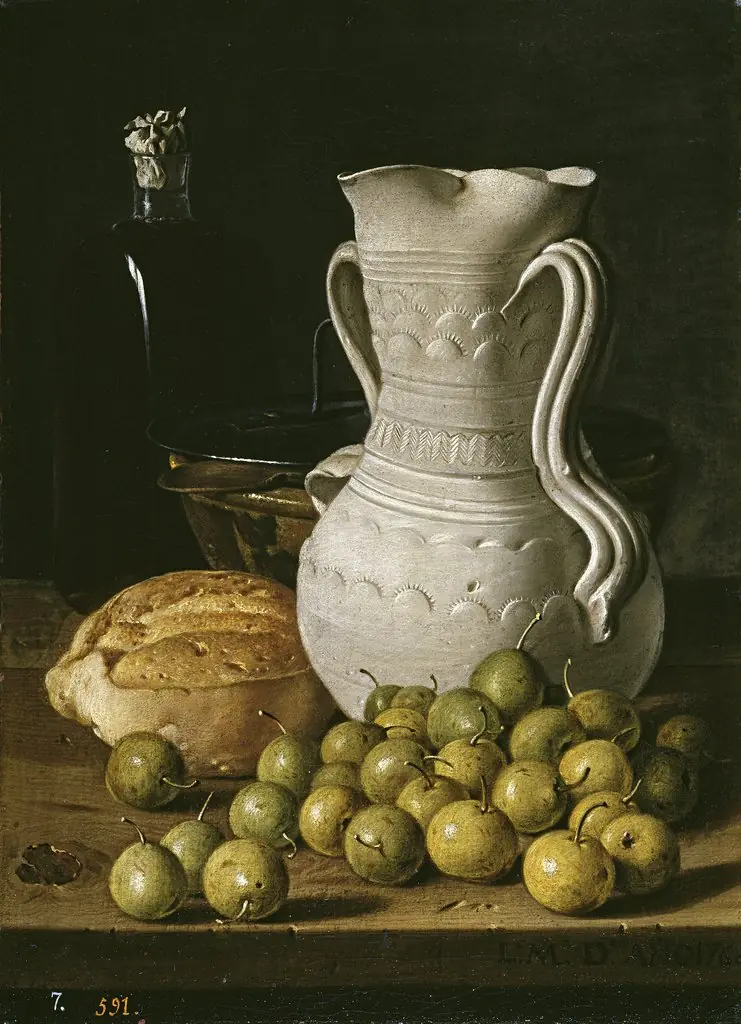 Still Life with Small Pears Bread Flask Bowl and Dry Leaves
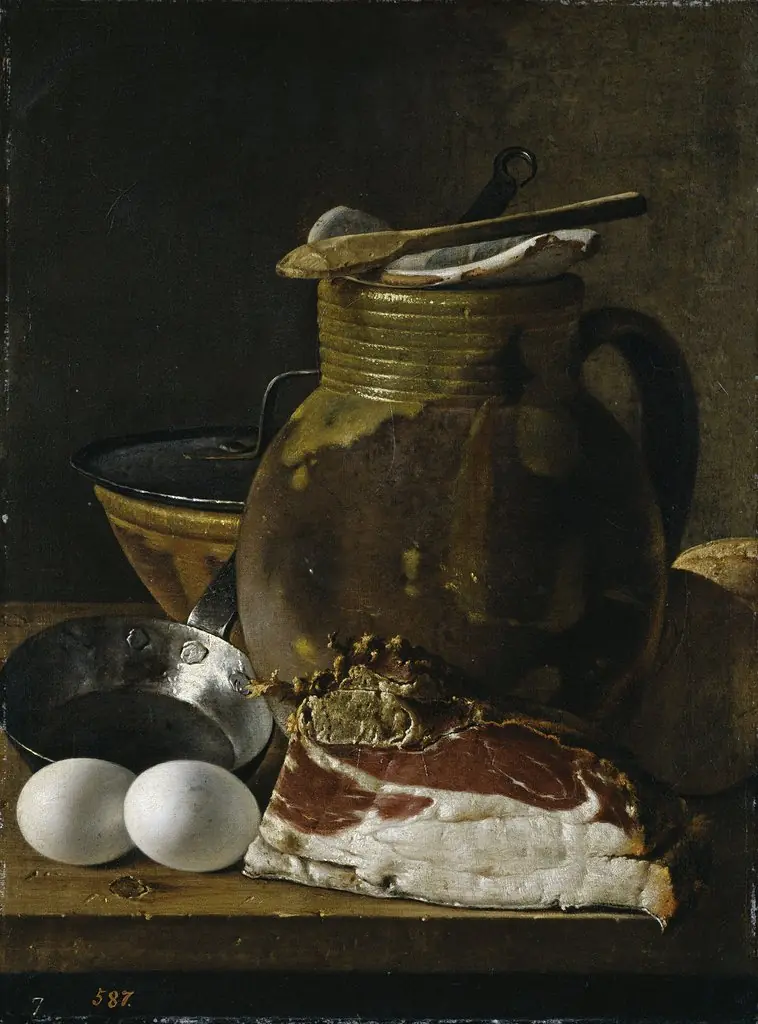 Still Life with Ham Eggs and Vessels
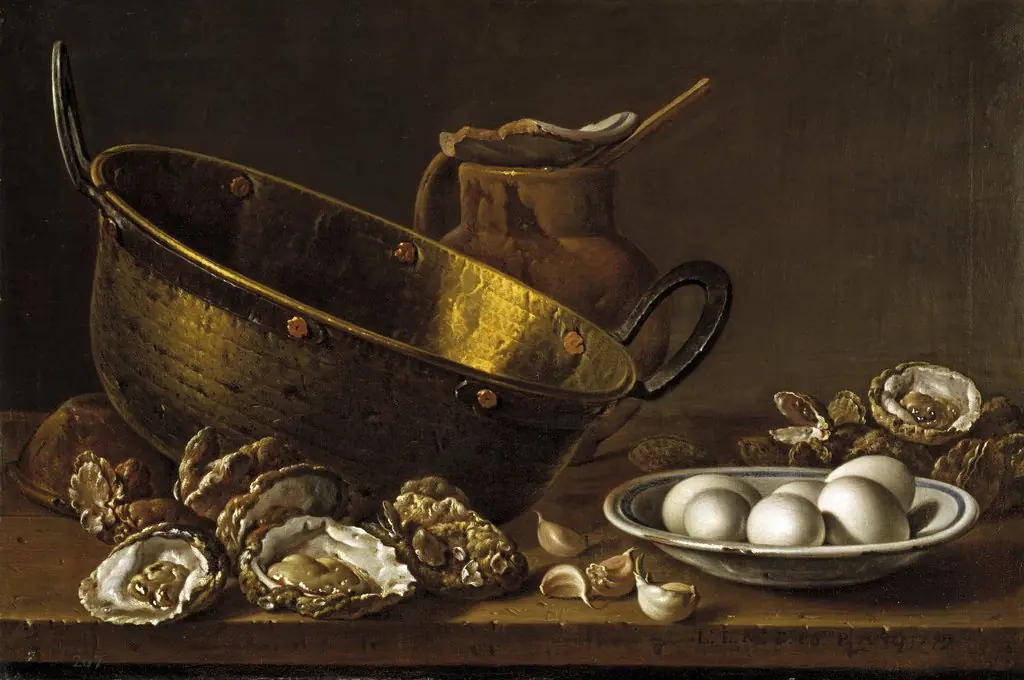 Still Life with Oysters Garlic Eggs Pot and Pan
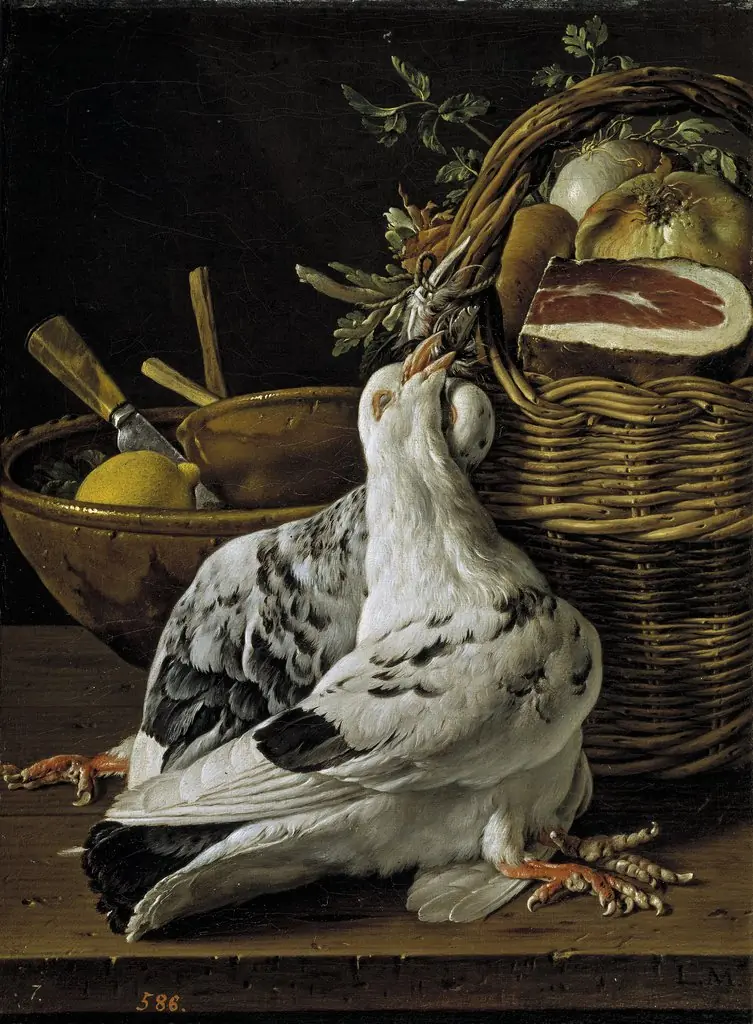 Bodegón con pichones cesta de comida y cuencos
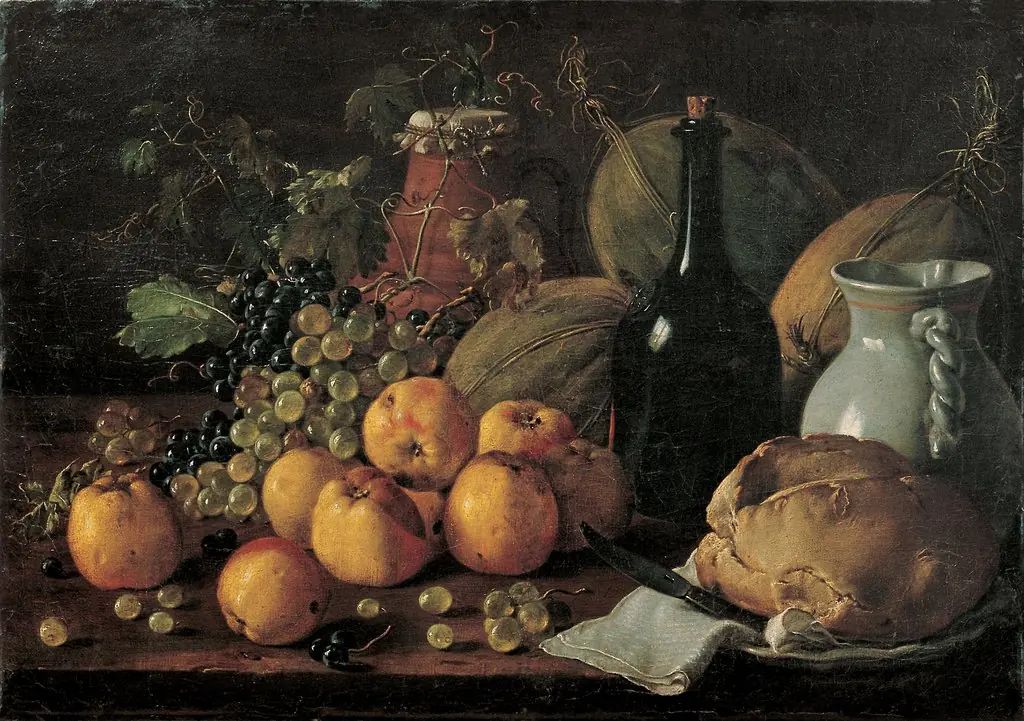 Still Life with Apples, Grapes, Melons, Bread, Jug and Bottle
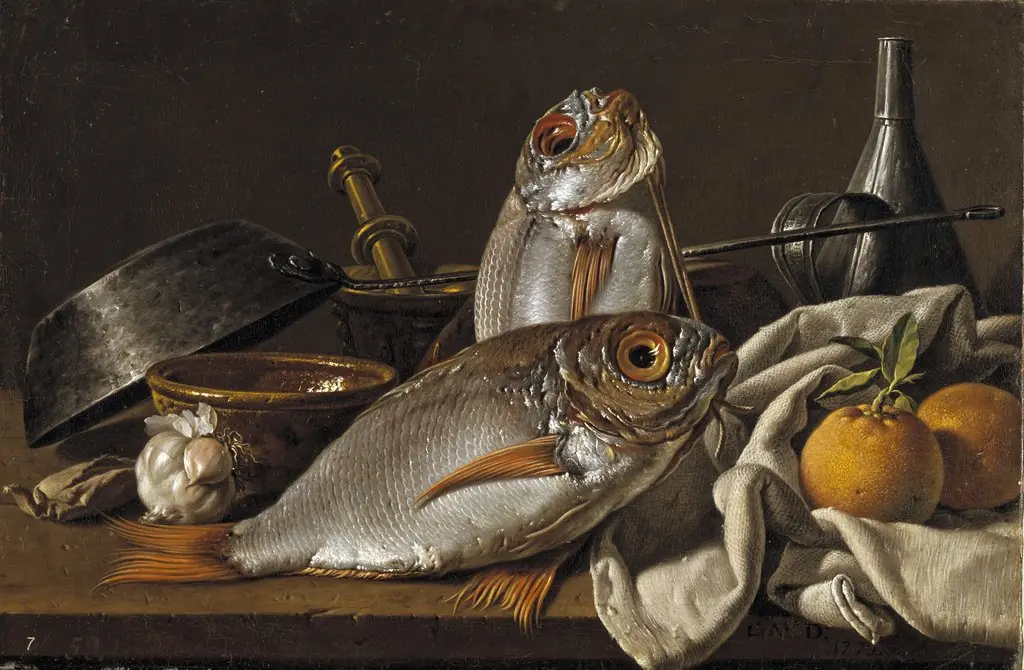 Still Life with Breams, Oranges, Garlic, Condiments, and Kitchen Utensils
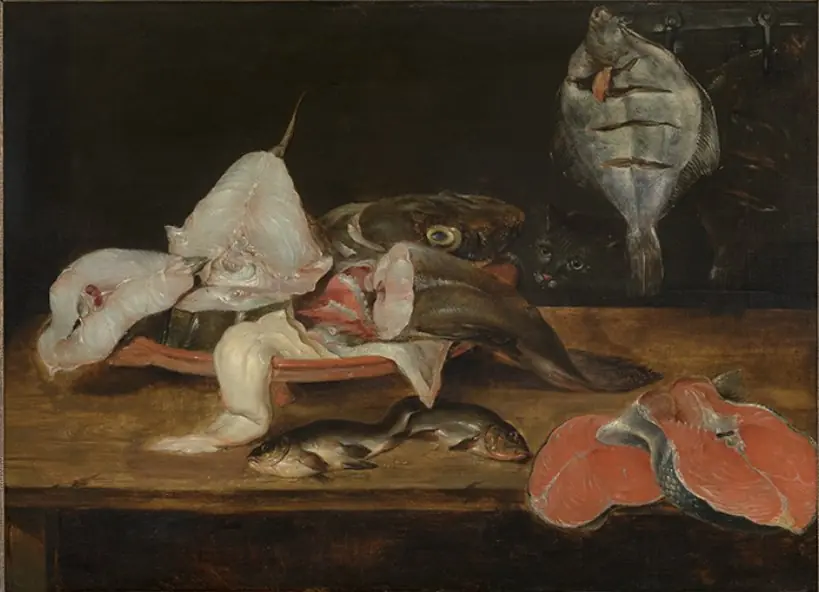 Stilleven met vis
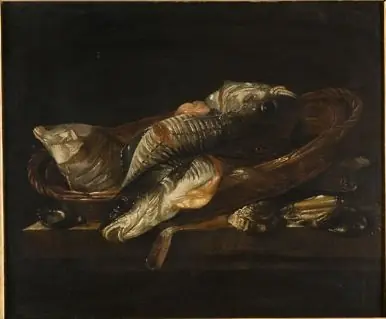 Stilleven met vissen
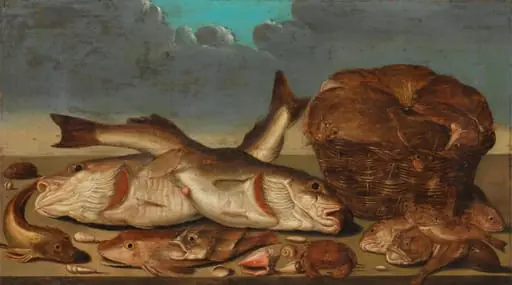 Still Life with Fish
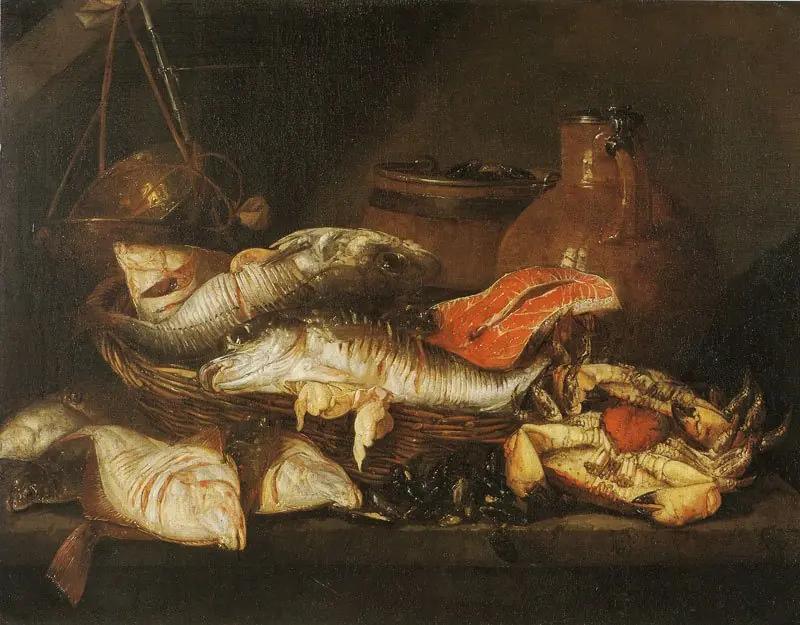 Fish in a Basket near a Scale
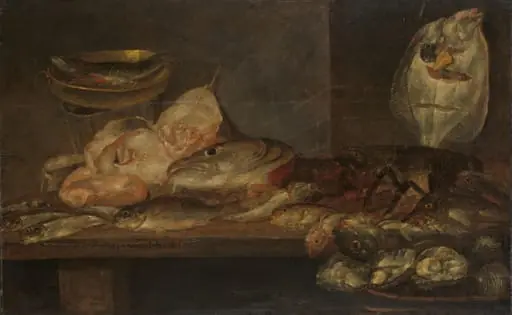 Still Life with Fish and a Lobster and Oysters on a Table nearby
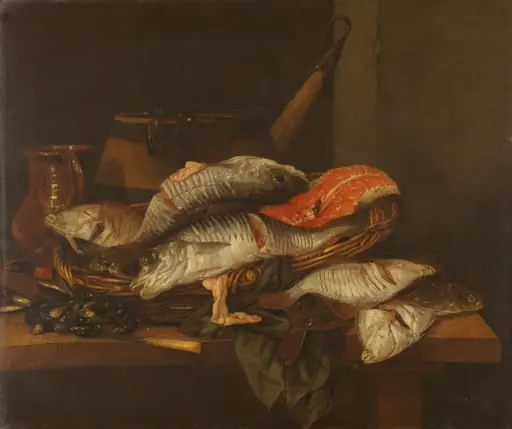 Still Life with Fish
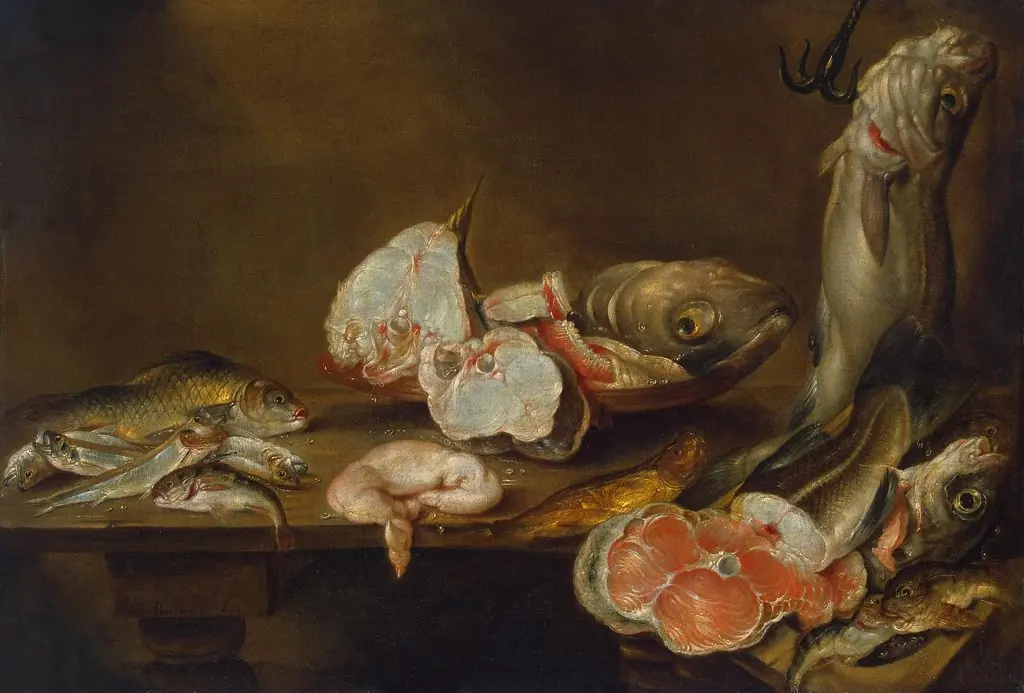 Fish and Dead Game
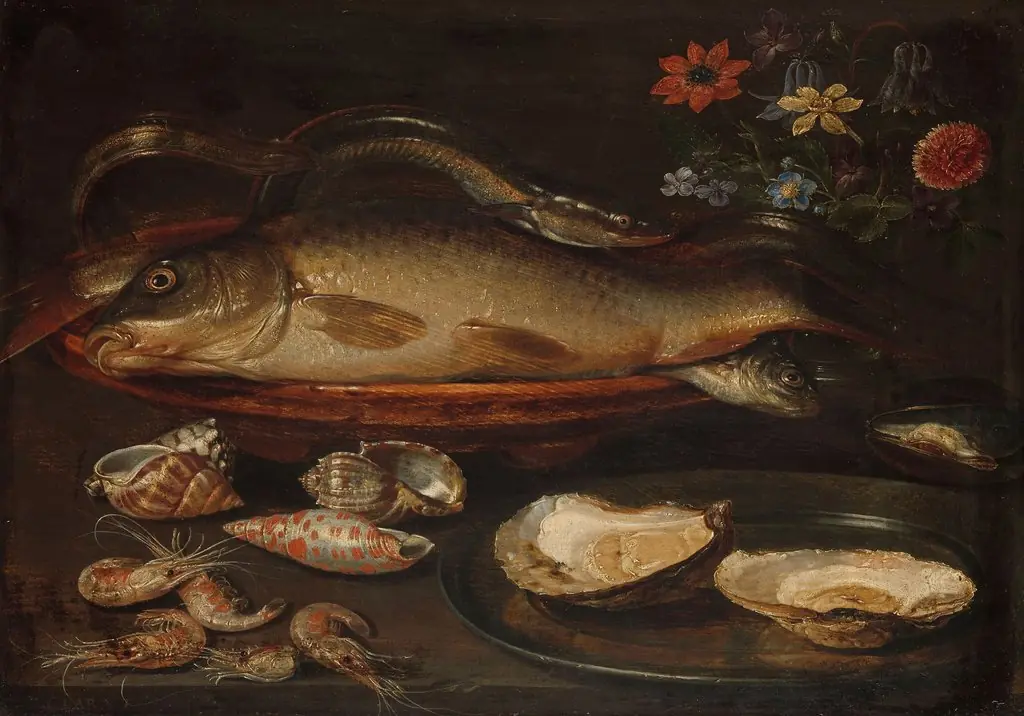 Still life with fish, oysters and shrimps
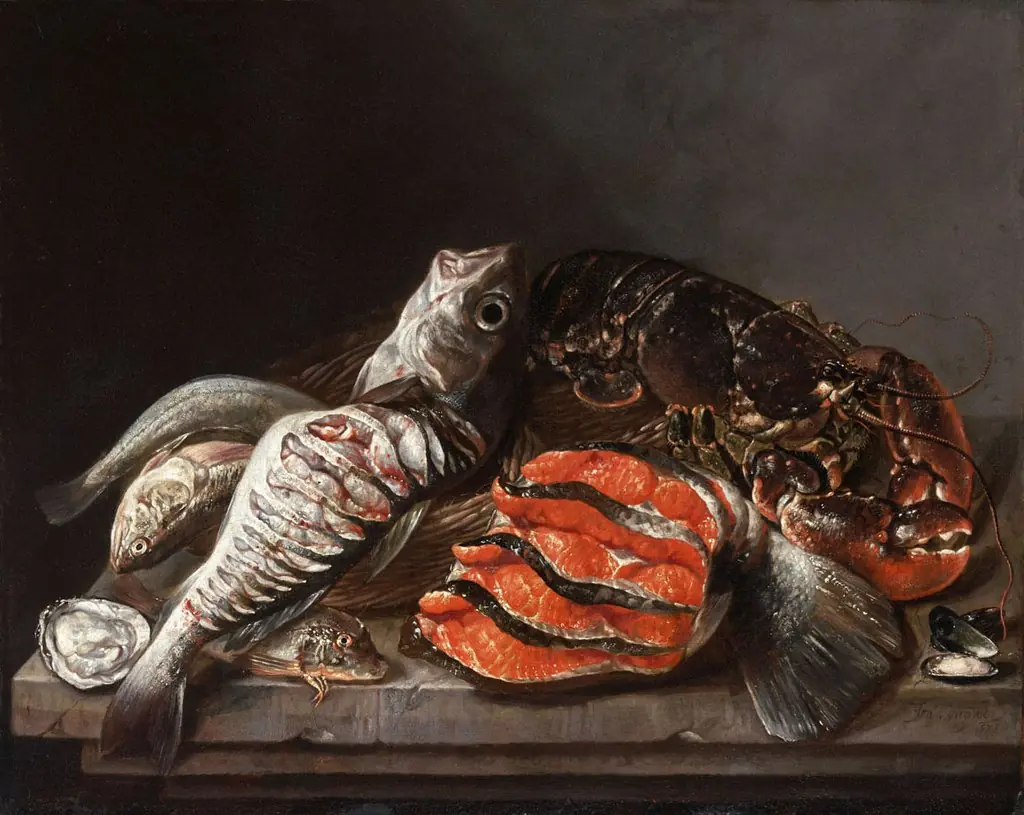 Fish (Still Life)
 Still Life with Herring, Bread, and Cheese