Artwork
Dumblain Abbey
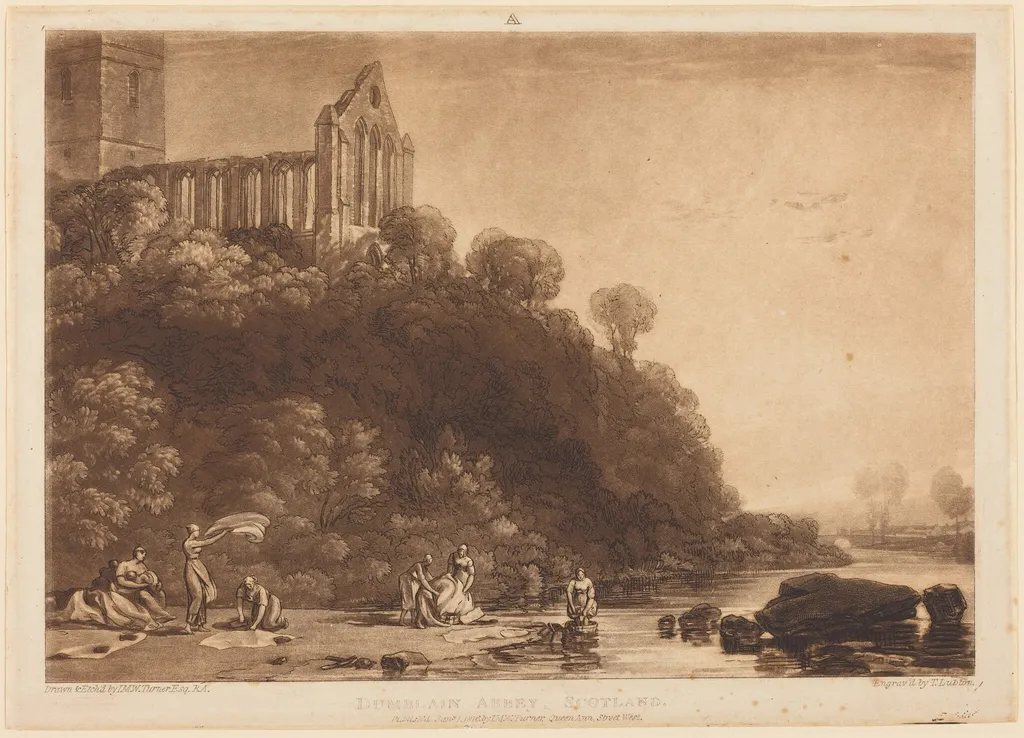
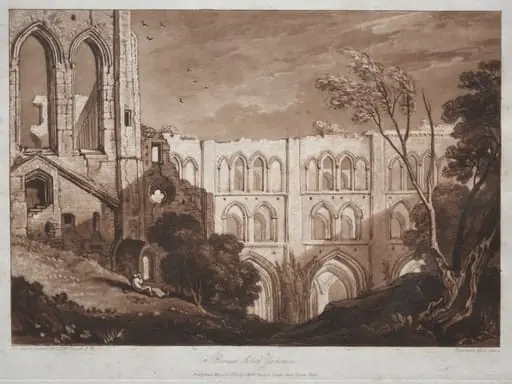
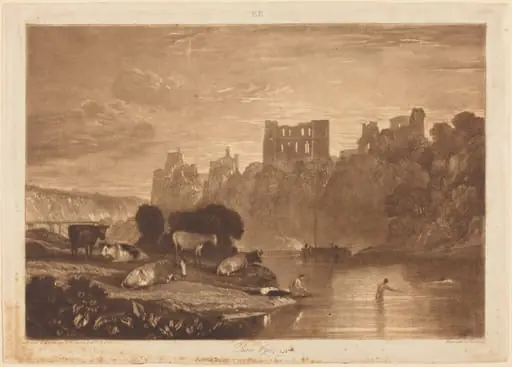
Dumblain Abbey is an ink print by the Romanticist artist Thomas Goff Lupton. It dates from 1816 and is held in the collection of the National Gallery of Art.
About this work
Overview
Thomas Goff Lupton’s 1816 print, titled Dumblain Abbey, combines etching with mezzotint to render a tranquil, slightly melancholic landscape.
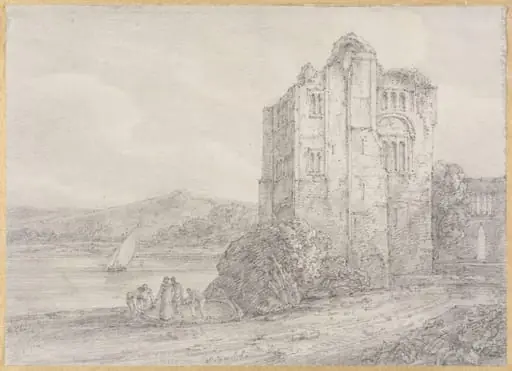
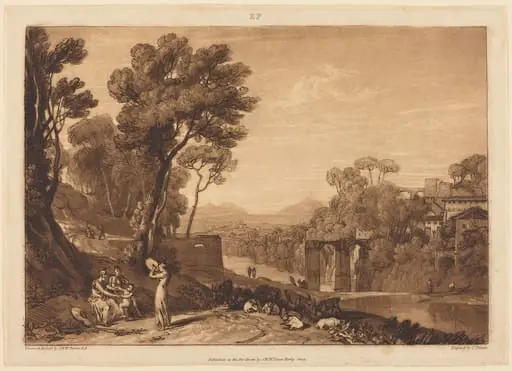
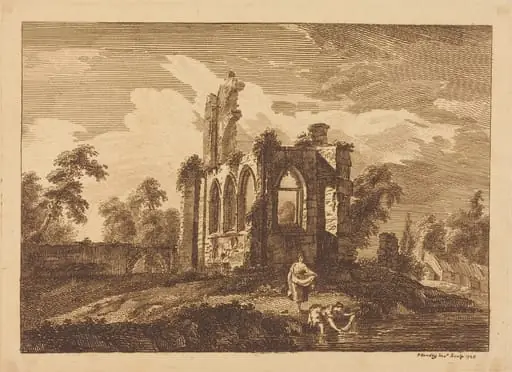
Thomas Goff Lupton’s 1816 print, titled Dumblain Abbey, combines etching with mezzotint to render a tranquil, slightly melancholic landscape. The composition centers on a ruined stone church perched atop a hill, its silhouette framed by dense, dark foliage. A shallow river winds through the foreground, its banks dotted with a small group of women in loose garments, lending a human presence to the otherwise desolate setting.
Subject & Meaning
The image juxtaposes the decay of the abbey’s architecture with the gentle activity of the women, suggesting a dialogue between past grandeur and present simplicity. Their relaxed postures—one holding a cloth, another kneeling—impart a sense of quiet contemplation, while the surrounding nature reinforces a mood of serene reflection rather than overt narrative drama.
Technique & Style
Lupton employs the fine line work of etching for the detailed architectural elements and the atmospheric depth of mezzotint for the surrounding trees and sky. The gradations of tone create a dramatic chiaroscuro, emphasizing the contrast between the dark forest and the illuminated ruins, and giving the scene a dreamlike, almost theatrical quality.
History & Provenance
Created in 1816, Dumblain Abbey reflects Lupton’s interest in historic and picturesque subjects popular in early‑19th‑century British printmaking. The work was likely produced for the burgeoning market of collectors drawn to romanticized ruins, though specific ownership records prior to its inclusion in museum collections remain limited.
Context
The early 1800s saw a revival of interest in medieval architecture and the sublime in nature, themes that Lupton’s print embodies. By integrating human figures into a ruinous landscape, the piece aligns with contemporary Romantic sensibilities that valued the emotional resonance of decay and the restorative power of the natural world.
Artist & collection