Artwork
Newark Castle
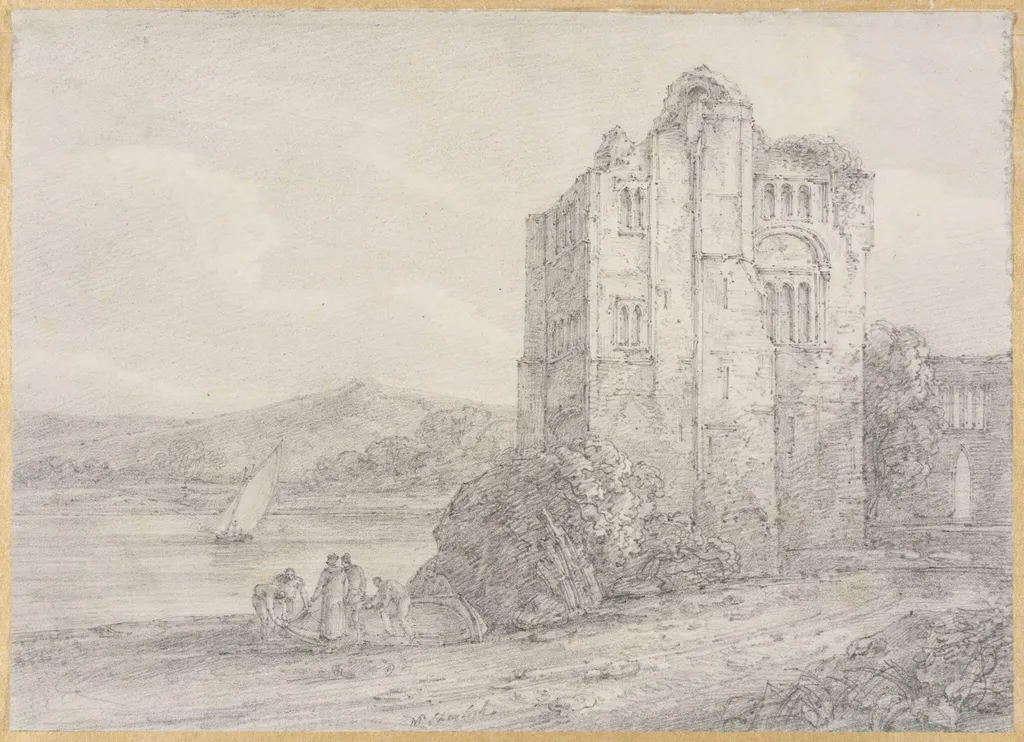
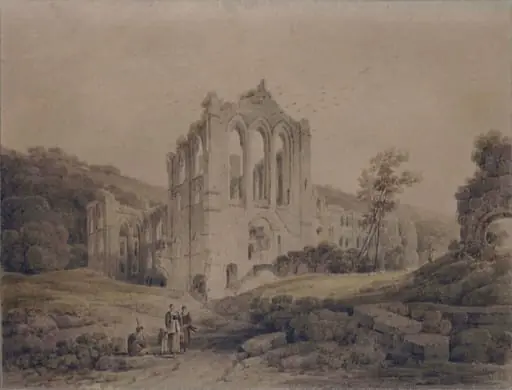
Newark Castle is a drawing by the Romanticist artist Sherlock. It dates from 1810 and is held in the collection of the Victoria and Albert Museum.
About this work
Overview
This 1810 drawing records the ruined Newark Castle in Nottinghamshire. Rendered in monochrome, the work captures the castle’s stone remnants, a prominent tower, and surrounding landscape, presenting a historic site through the artist’s eye.
Subject & Meaning
The composition juxtaposes the decayed fortress with a tranquil riverside scene. Figures seated on rocks and a distant sailboat introduce a human element, suggesting the passage of time and the castle’s lingering presence within everyday life.
Technique & Style
Executed with black ink, the artist employs cross‑hatching to model light and shadow on stone and water. Layered lines convey texture, while the contrast between dense shading and open space defines the forms of the tower, windows, and surrounding terrain.
History & Provenance
Created in the early nineteenth century, the drawing reflects contemporary interest in documenting England’s medieval architecture. Its provenance traces back to regional collections that preserve visual records of historic sites.
Context
During the period, antiquarian sketches served both scholarly and aesthetic purposes, providing visual references for ruins that were increasingly romanticized. Newark Castle, already in a state of decay, was a frequent subject for such studies.
Artist & collection
Artist
Sherlock kept a pocketful of stubby pencils and drew wherever he happened to be—on napkins, ledgers, or the back of a sermon hand-out—because the world kept showing him things he couldn’t un-see.

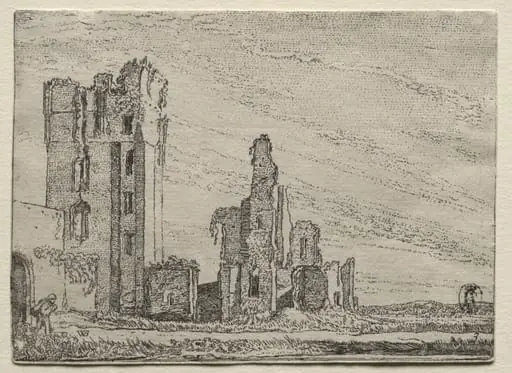 Ruins of the Castle Huys Te Kleef near Haarlem
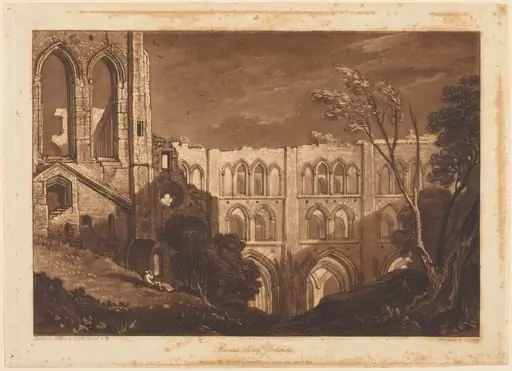 Rivaux Abbey
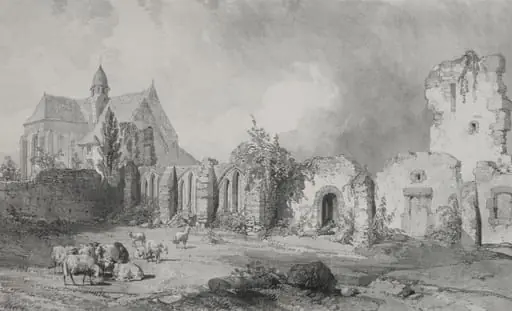 Voyages pittoresques et romantiques dans l'ancienne France. Bretagne: Abbaye de Relec
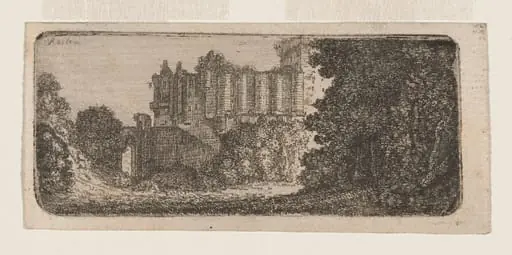 Roslin Castle III
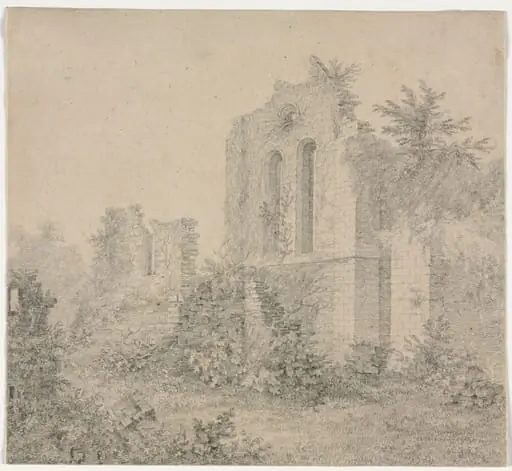 Ruins of an Abbey
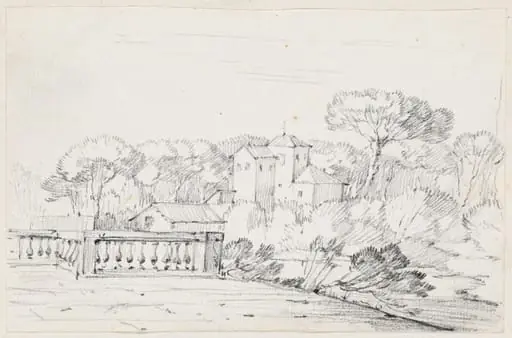 Terrace by a River with a Villa and Trees Beyond
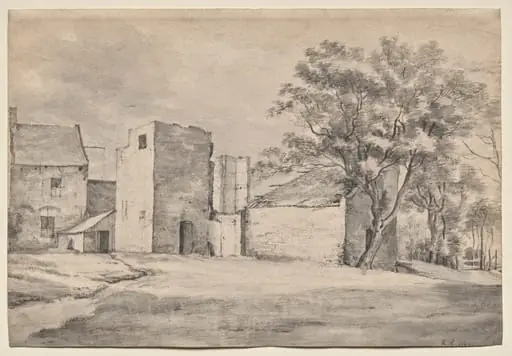 The Ruin of Huis 't Sant at Katwijk aan Zee
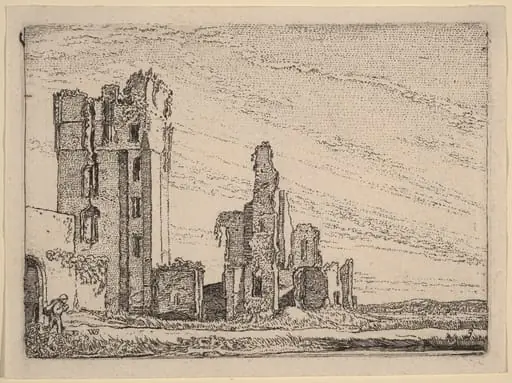 Two Ruins (Huys te Kleef near Haarlem)
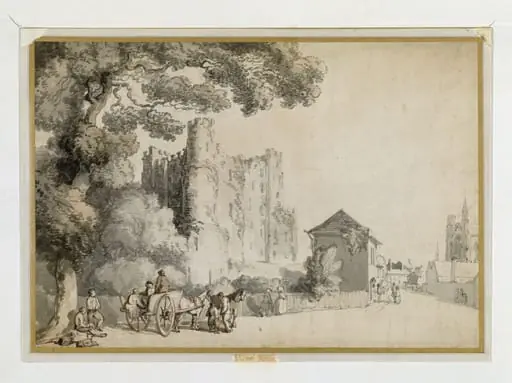 Boley Hill and Castle, Rochester, with the "Justice Tree"
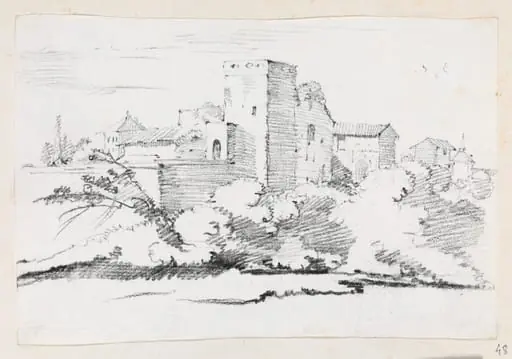 Buildings behind the Vatican
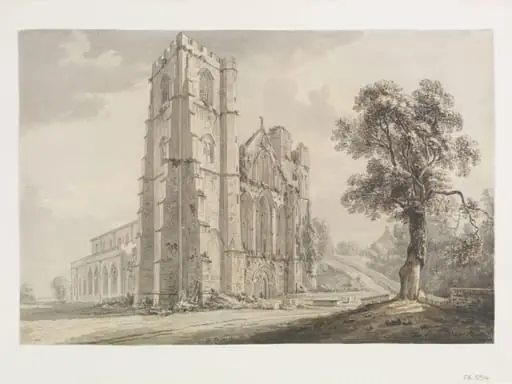 Llandaff Cathedral
 Rievaulx Abbey, Yorkshire