Artwork
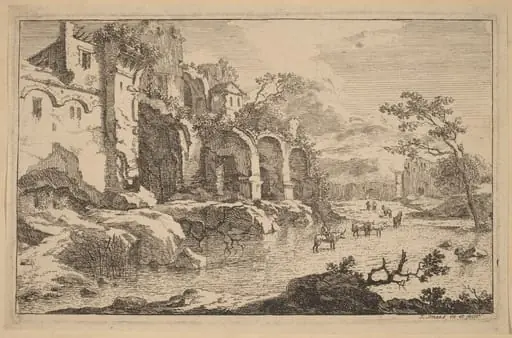
Ruins with Two Women Washing Clothes in a River
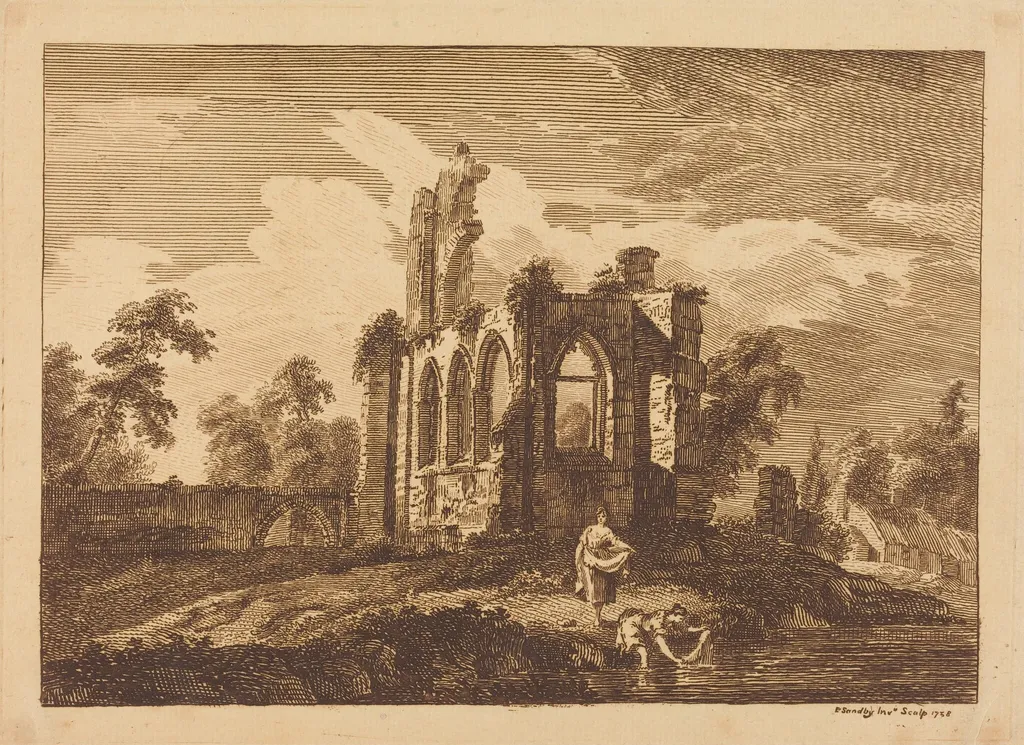
Ruins with Two Women Washing Clothes in a River is an ink print by the Romanticist artist Paul Sandby. It dates from 1758 and is held in the collection of the National Gallery of Art.
About this work
Overview
Paul Sandby’s 1758 etching titled *Ruins with Two Women Washing Clothes in a River* presents a quiet river scene framed by decaying architecture. The composition juxtaposes the labor of two women engaged in washing cloth with the silent testimony of ancient ruins, offering a modest yet detailed view of rural life within a landscape setting.
Subject & Meaning
The work captures a moment of domestic routine: two women bent over a river, their hands immersed in water as they cleanse fabric. The surrounding ruins introduce a temporal layer, suggesting the continuity of everyday tasks across generations and hinting at the passage of history amid ordinary labor.
Technique & Style
Executed in the etching medium, the image relies on fine lines and tonal washes to render texture and depth. Sandby’s handling reflects the eighteenth‑century British taste for topographical accuracy combined with picturesque qualities, balancing precise architectural detail with a softened, atmospheric treatment of the natural setting.
History & Provenance
Created by Sandby, an English landscape artist and cartographer, the print predates his election to the Royal Academy in 1768, where he joined as a founding member alongside his brother Thomas. The piece exemplifies his early output before his institutional recognition, aligning with the period’s growing interest in documented scenery.
Context
During the mid‑1700s, British art saw a surge in works that combined travel‑inspired observation with aesthetic idealization. Sandby’s etching fits within this trend, offering a topographical record that also satisfies the era’s fascination with the picturesque—scenes that evoke both natural beauty and the melancholy of ruin.
Artist & collection
Artist
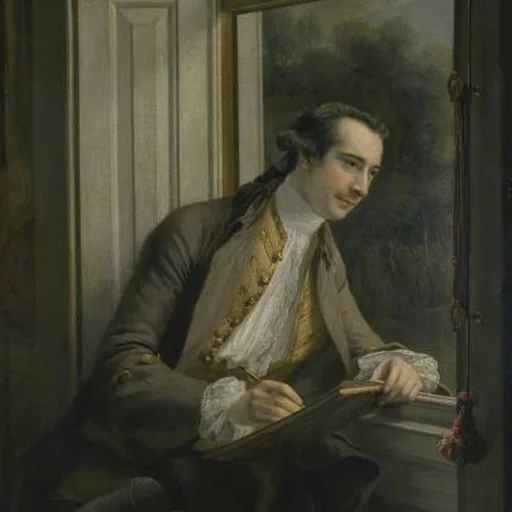
Paul Sandby, (1731 – 7 November 1809) was an English mapmaker and painter who specialised in landscape art. Along with his older brother Thomas Sandby, he was one of the founding members of the Royal Academy in 1768.

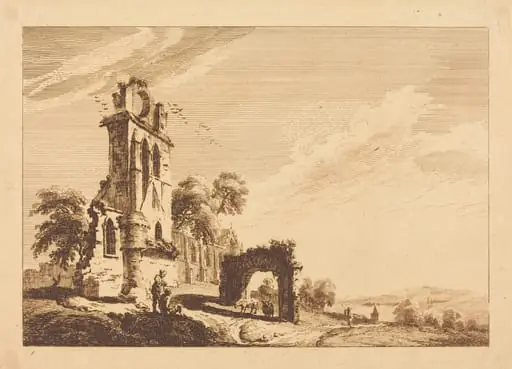 Ruined Abbey
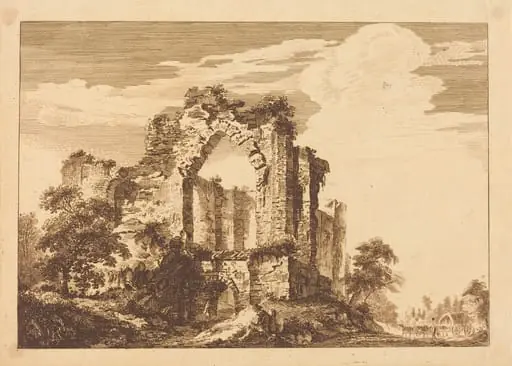 Ruins with a Seated Man, and a Covered Wagon in the Distance
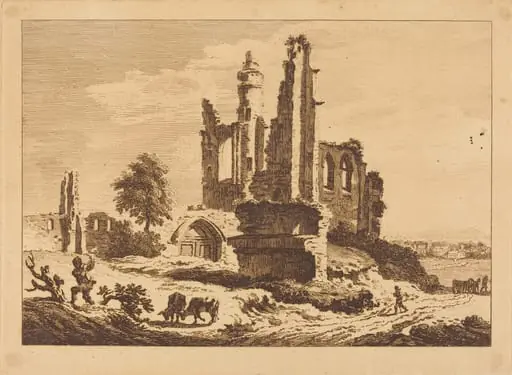 Ruined Abbey with Cattle and a Man Chopping Wood
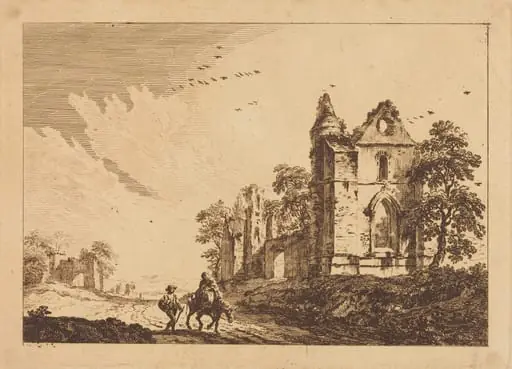 Ruined Abbey with Travelers on the Road
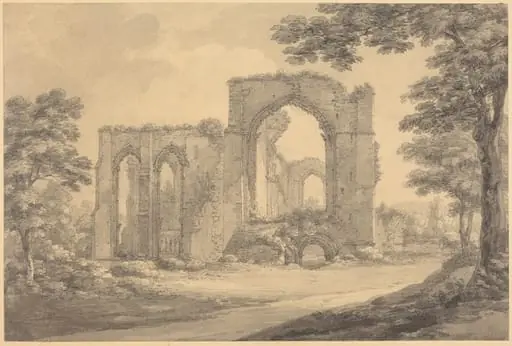 Furness Abbey
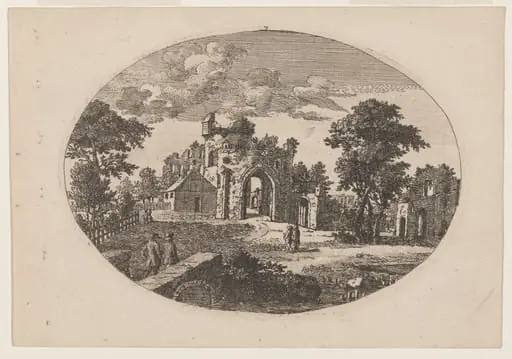 Ruins near a Stream, a Distant Building at the Foot of a Mountain
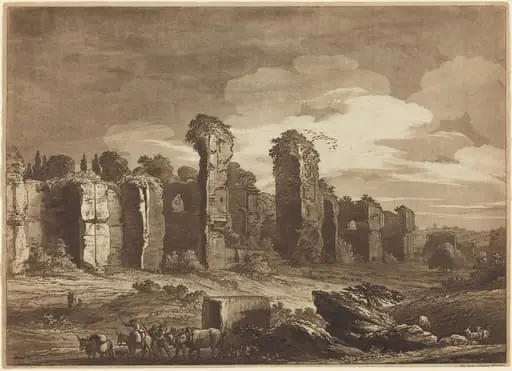 View of the Remains of Caracalla's Baths, Taken from the Jesuits Gardens at Rome
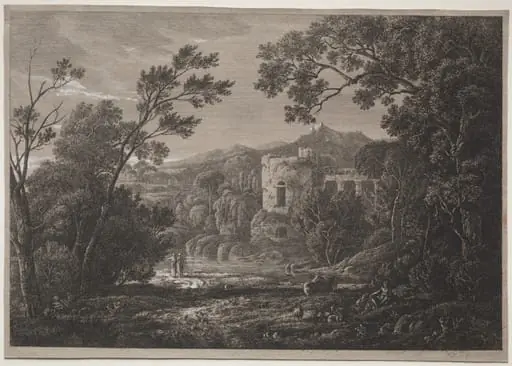 An Italian View
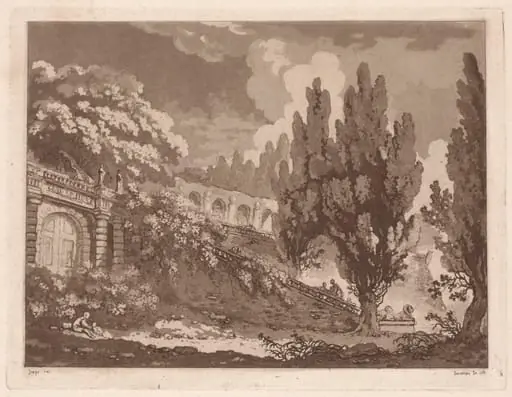 Stairs in an Italian Garden
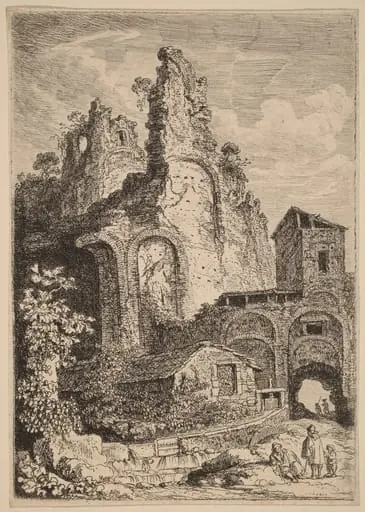 The Old Palace at Tivoli
 Building in Ruins at the Side of a River
 Ruins by a River with a Man in a Boat