Artwork
Fabrica de cherestea
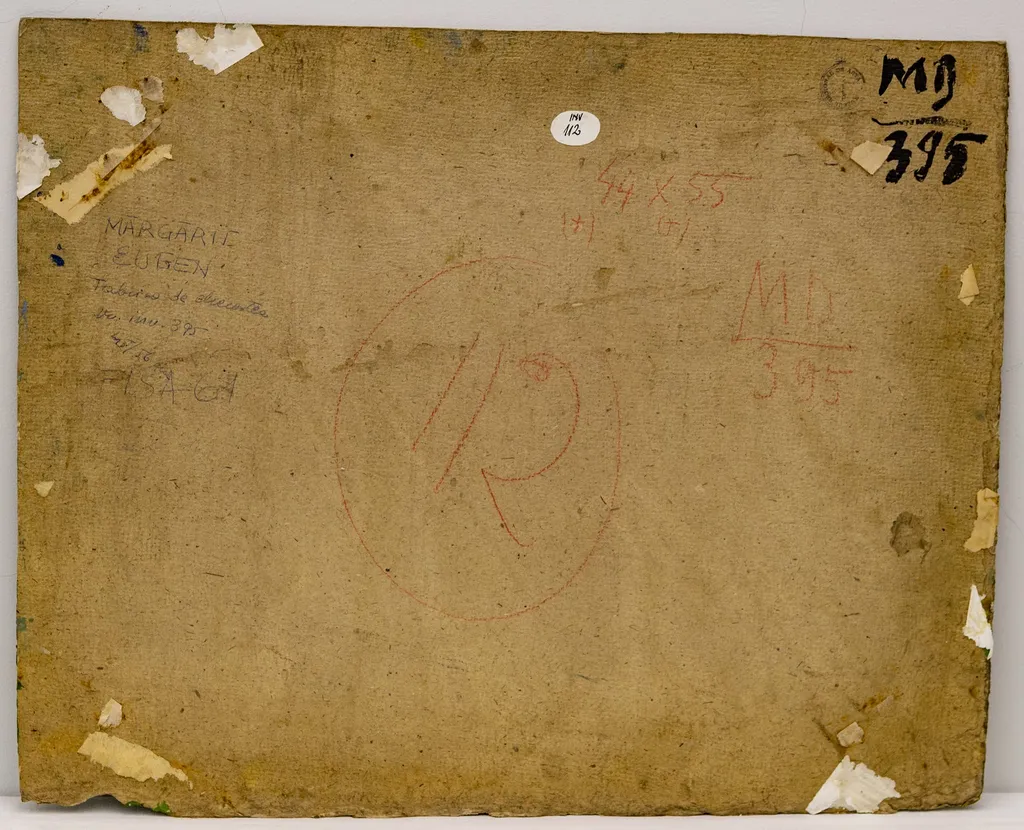
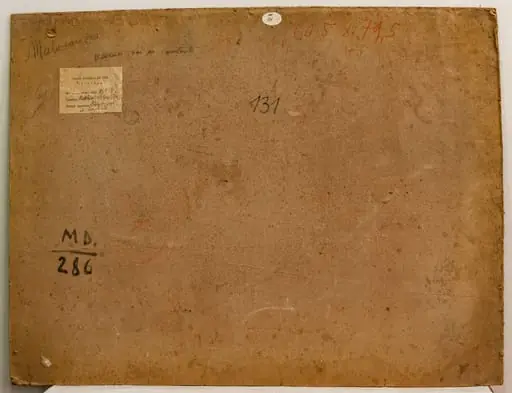
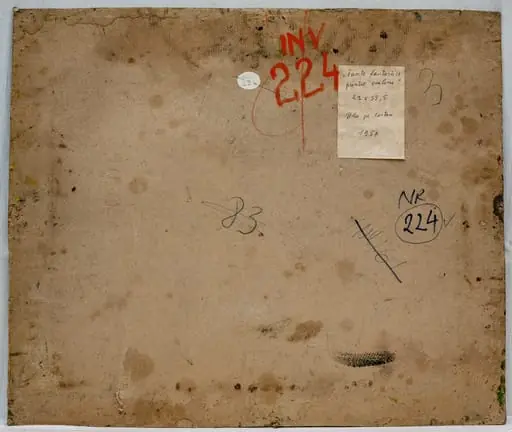
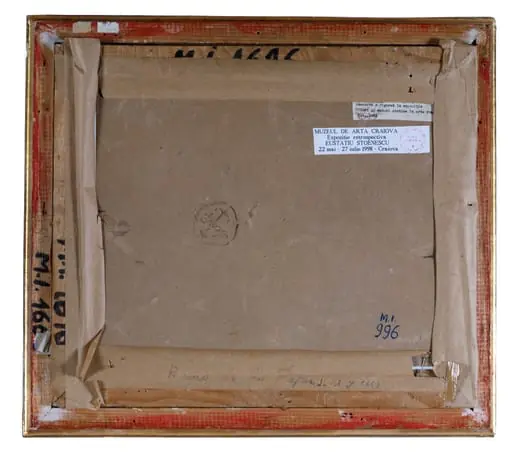
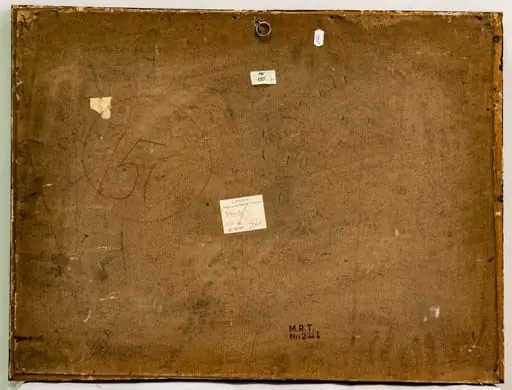
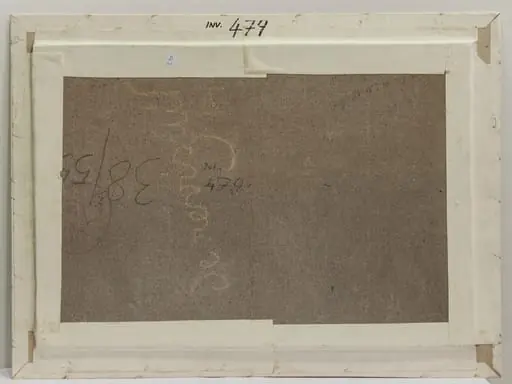
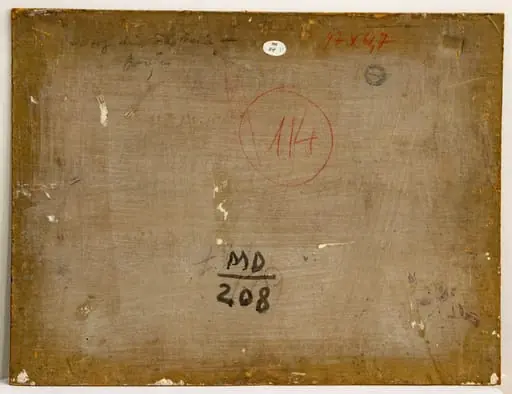
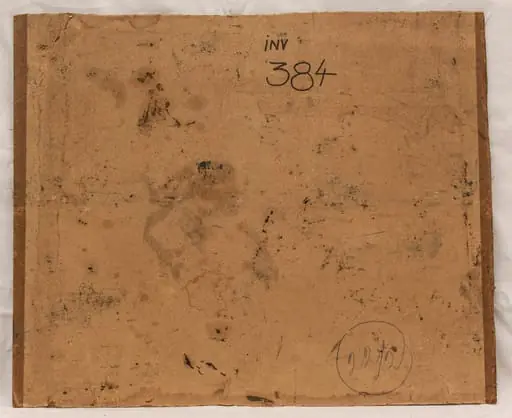
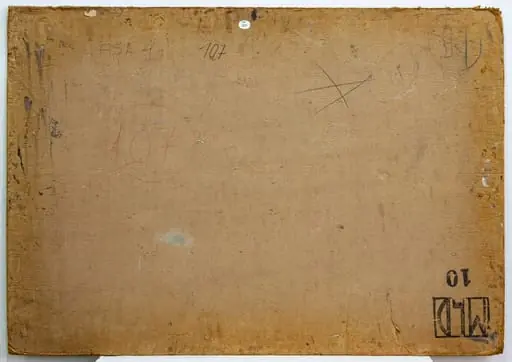
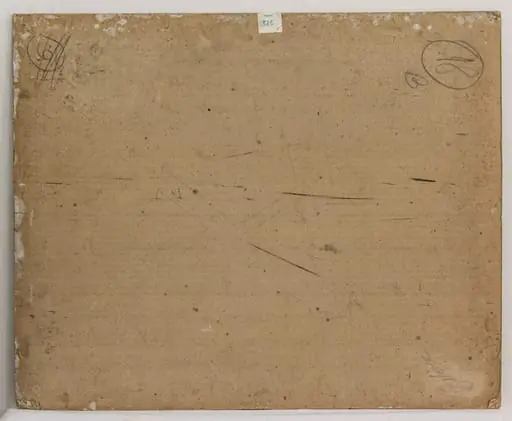
Fabrica de cherestea is a print by Eugen Mărgărit. It is held in the collection of the Gavrila Simion Eco-Museum Research Institute Tulcea. This image captures the reverse side of a cardboard support, likely used as a backing for a painted or printed work.
About this work
Overview
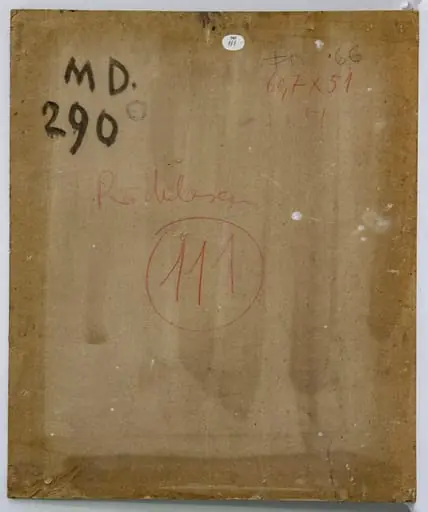
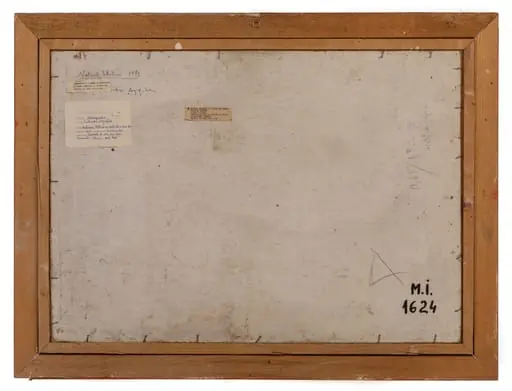
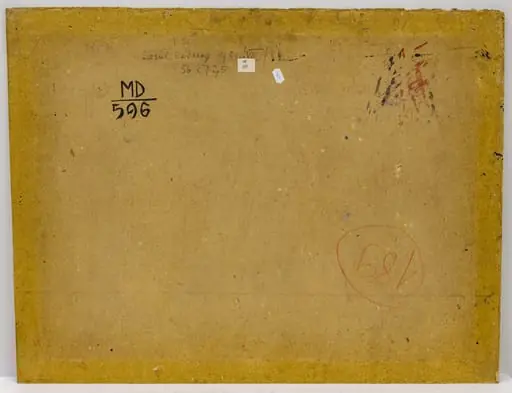
This image captures the reverse side of a cardboard support, likely used as a backing for a painted or printed work. The surface bears signs of wear: tears, adhesive residues, and layered markings. Handwritten notations, a stamped label, and a circled letter suggest institutional or archival handling. Its condition implies prolonged use, possibly in storage or during transit, rather than display.
Subject & Meaning
The object holds no pictorial subject but functions as a metadata carrier. The markings—'MJ' and '395,' '1/2,' 'MARGARIT EUGEN,' and a circled 'P'—likely denote catalog identifiers, ownership, or conservation codes. The red 'P' may indicate a provenance tag or processing step. These traces transform the cardboard into a silent witness to the object’s institutional journey.
Technique & Style
The markings are applied with varied tools: ink pen, adhesive sticker, and possibly pencil. The handwriting is informal, unpolished, suggesting practical rather than artistic intent. The red circle and scribbled annotations appear hastily drawn, consistent with field or workshop notation. The cardboard’s rough texture remains unaltered, preserving its utilitarian character.
History & Provenance
The presence of 'MARGARIT EUGEN' and the numbered labels implies this backing was once part of a collection, possibly managed by an individual or institution associated with that name. The '1/2' sticker may indicate a paired set or partial restoration. The wear and layered additions suggest multiple handling events over time, tracing a path through storage, repair, or cataloging phases.
Context
Such backings were commonly used in early-to-mid 20th-century art conservation to stabilize fragile works. The annotations reflect pre-digital archival practices, where physical labels and handwritten notes were primary means of tracking objects. Similar examples appear in museum storage archives, where utility outweighed aesthetic consideration.
Legacy
Though devoid of artistic content, this object preserves the invisible labor of art stewardship. Its markings offer fragments of a larger system of cataloging and care, revealing how institutions managed collections before standardized digital records. It stands as a quiet testament to the behind-the-scenes work that preserves cultural heritage.
Artist & collection
Artist
Eugen Mărgărit’s studio smelled like turpentine and old newspapers, the walls crowded with half-finished landscapes and stacks of woodblock prints.
Museum
Gavrila Simion Eco-Museum Research Institute Tulcea
Continue through works from the same source collection.