Artwork
Lacul Babadag
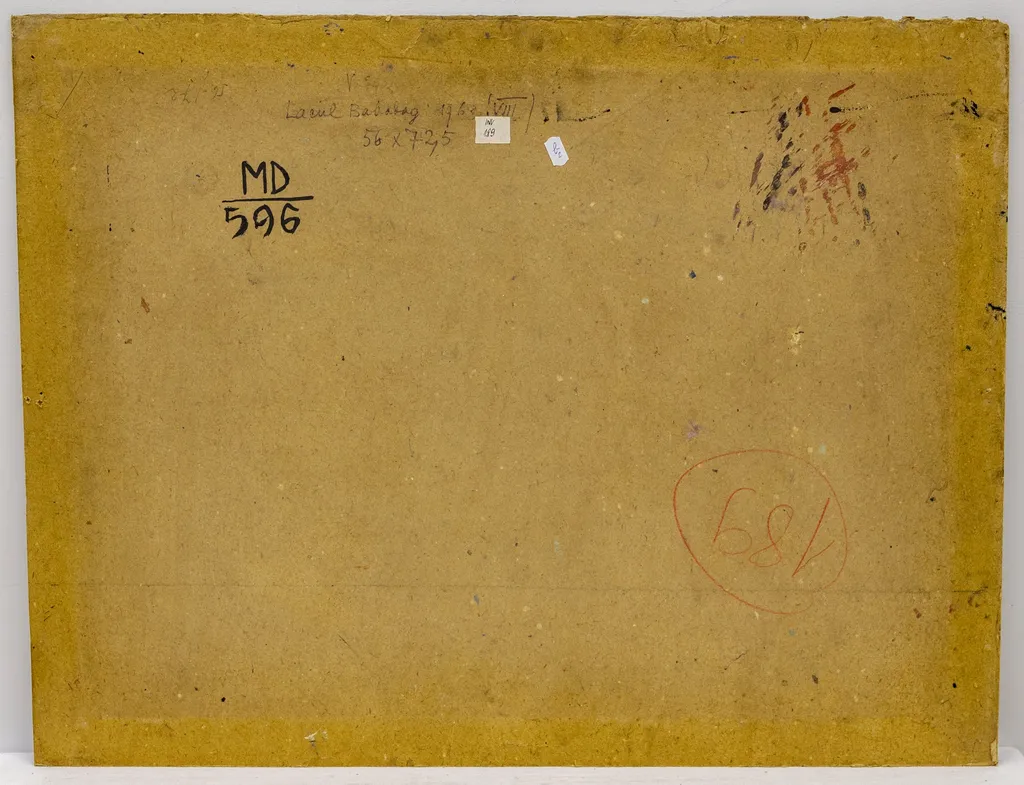
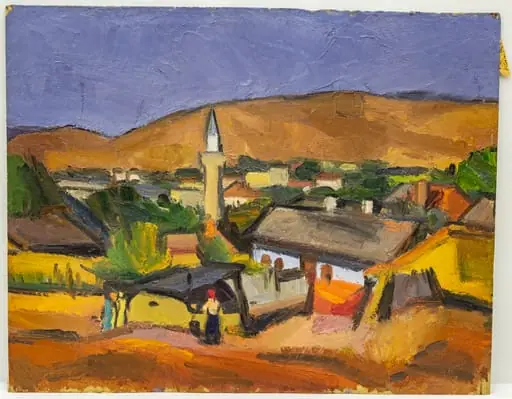
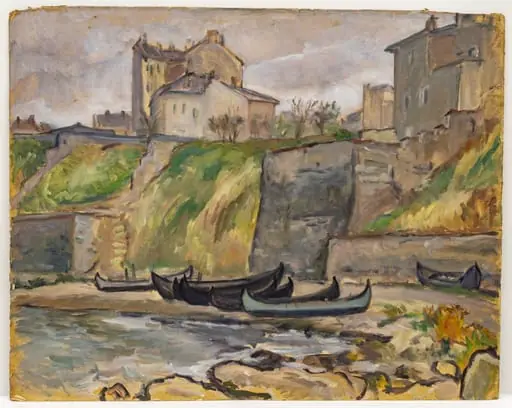
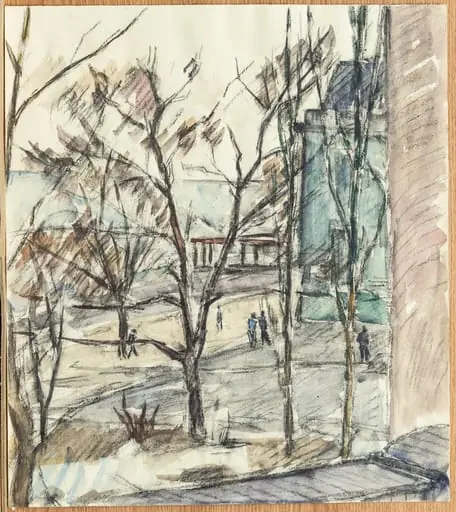
Lacul Babadag is a print by Vărzaru Mircea. It is held in the collection of the Gavrila Simion Eco-Museum Research Institute Tulcea.
About this work
Overview
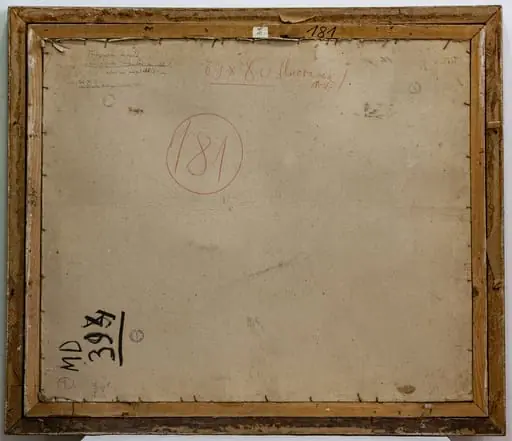
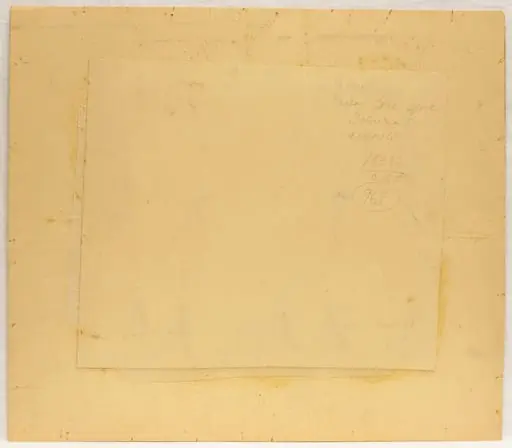
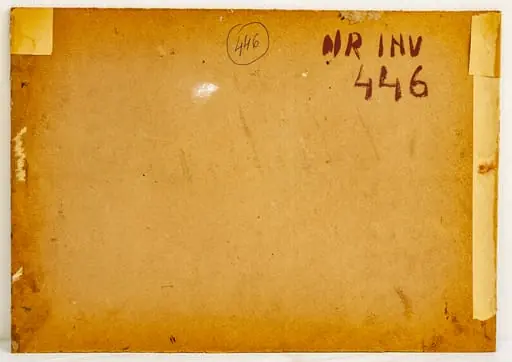
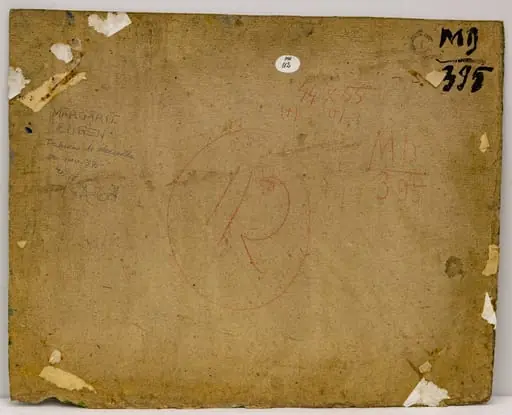
Handwritten annotations in black and red, including identifiers like 'MD 596,' suggest it was part of a cataloged collection.
This fragment consists of a severely degraded sheet of yellowed paper, once bearing a printed image titled *Lacul Babadag*. The visual content has largely faded, leaving only traces of ink and faint smudges. Handwritten annotations in black and red, including identifiers like 'MD 596,' suggest it was part of a cataloged collection. The work survives more as a relic of its production than as a legible image.
Subject & Meaning
The title references Lacul Babadag, a lake in Romania, implying the original image depicted a landscape. The faint red-brown mark in the upper right may have once represented a figure or structure, possibly a tree, building, or figure in the scene. Without the full image, the intended narrative or topographical detail is lost, leaving only the suggestion of a rural or natural setting.
Technique & Style
The work likely originated as a chiaroscuro print, a method using multiple woodblocks to create tonal gradations through layered ink. This technique was common in early modern European printmaking to simulate light and shadow. The current state—faded and worn—indicates the paper and pigments were vulnerable to time, light, and handling, typical of fragile early prints.
History & Provenance
The handwritten notations, particularly 'MD 596,' suggest institutional cataloging, possibly from a museum or private collection. The sheet’s condition implies prolonged exposure to environmental factors or physical stress. Its survival as a fragment, rather than a complete print, points to neglect or accidental damage over decades, though its annotations preserve a trace of its documented past.
Context
In the 19th or early 20th century, European artists and collectors often documented Eastern European landscapes as part of ethnographic or topographical studies. *Lacul Babadag* may have been one such record, produced for academic or travel-oriented audiences. The use of chiaroscuro printing reflects a desire to elevate documentary imagery with artistic technique, even in modestly circulated prints.
Legacy
Though visually diminished, this fragment endures as evidence of printmaking practices and the fragility of cultural records. It stands as a reminder of how easily visual history can be lost to time, and how cataloging—however minimal—can preserve the memory of what once existed. Its survival invites reflection on preservation, not just of objects, but of context.
Artist & collection
Artist
This Romanian artist made prints and paintings of eastern landscapes and village scenes in the mid-20th century.
Museum
Gavrila Simion Eco-Museum Research Institute Tulcea
Continue through works from the same source collection.