Artwork
Târg la Sibiu
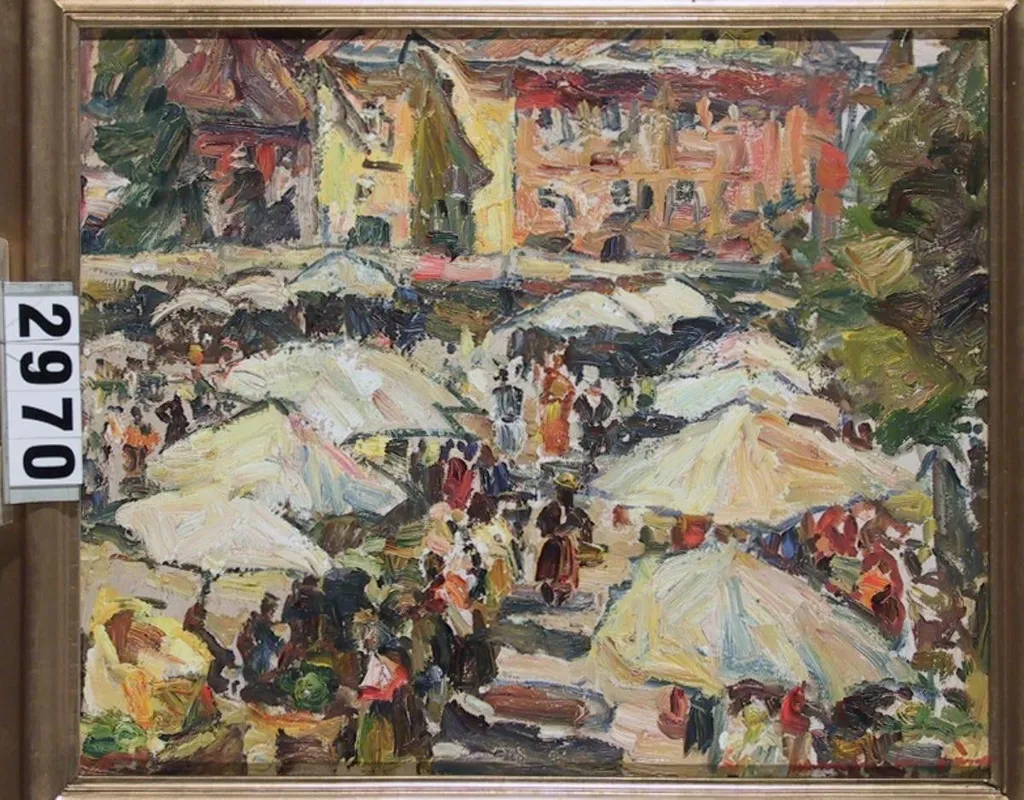
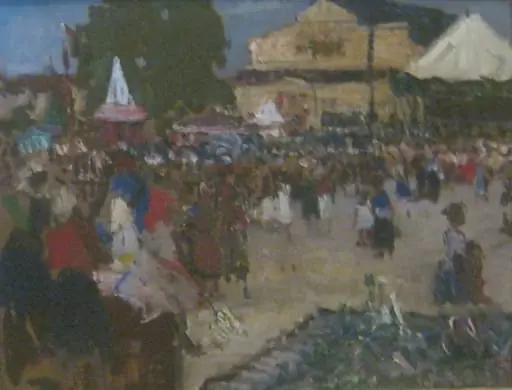
Târg la Sibiu is a print by Rudolf Schweitzer-Cumpăna. It dates from 1936 and is held in the collection of the Brukenthal National Museum.
About this work
Overview
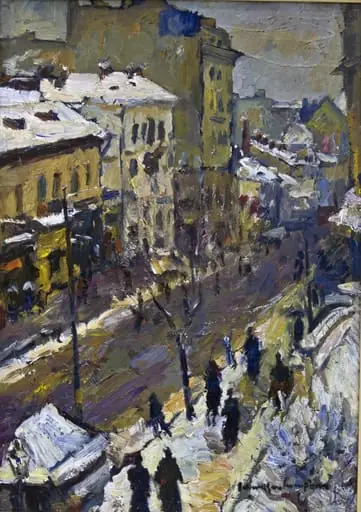
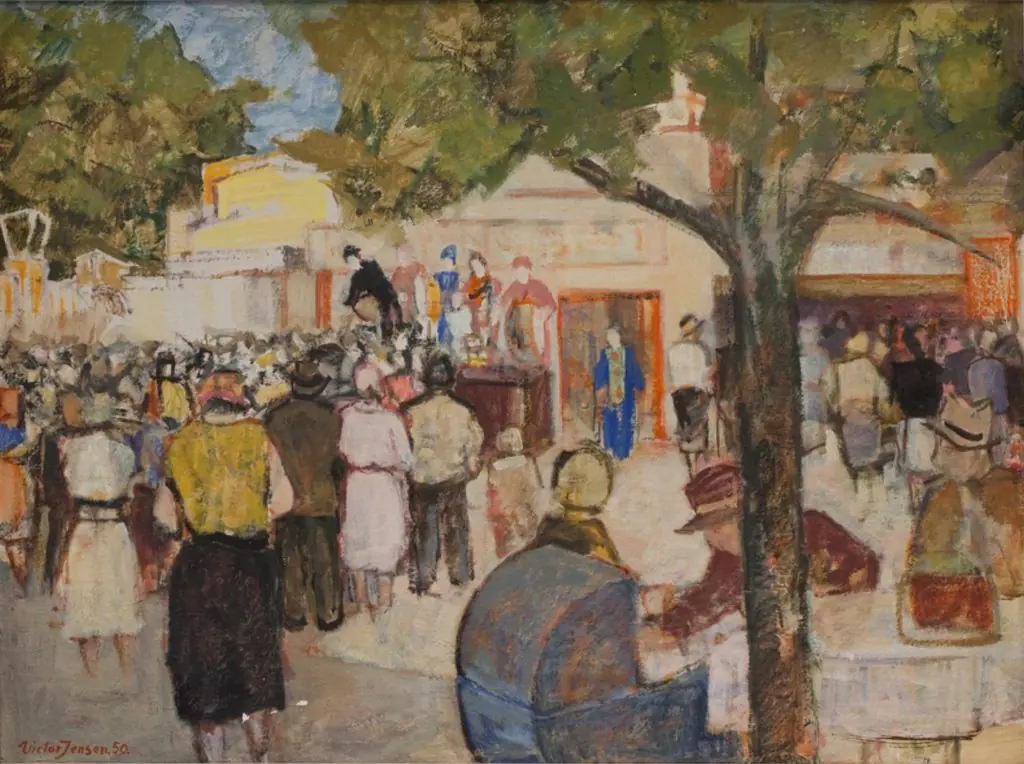
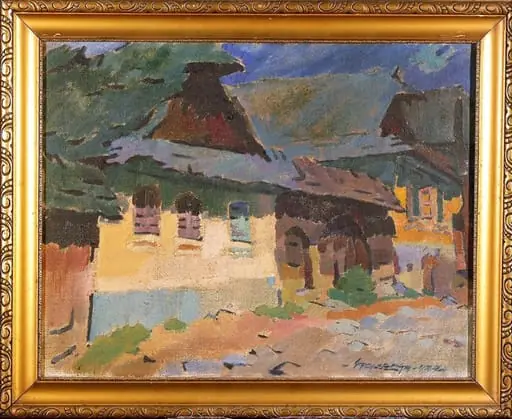
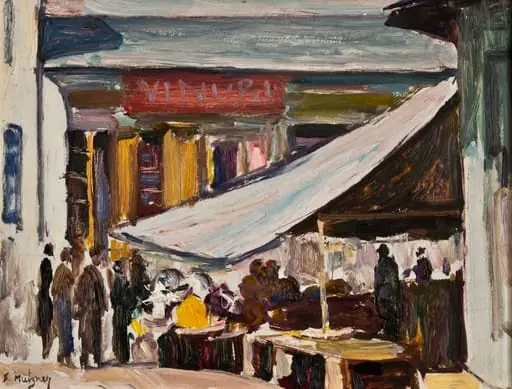
Painted around 1936 by Rudolf Schweitzer-Cumpăna, Târg la Sibiu depicts a bustling outdoor market in Sibiu, Romania. The composition captures a fleeting moment of daily commerce, with figures moving among stalls and umbrellas under an open sky. The work avoids idealized detail, favoring a spontaneous, energetic rendering that emphasizes motion and atmosphere over precision.
Subject & Meaning
The scene portrays a local market, a common social and economic hub in interwar Transylvania. The figures, loosely rendered, suggest ordinary people engaged in trade, conversation, and movement. The absence of a central focal point reinforces the sense of unscripted daily life, reflecting the artist’s interest in authentic, unposed moments rather than staged narratives.
Technique & Style
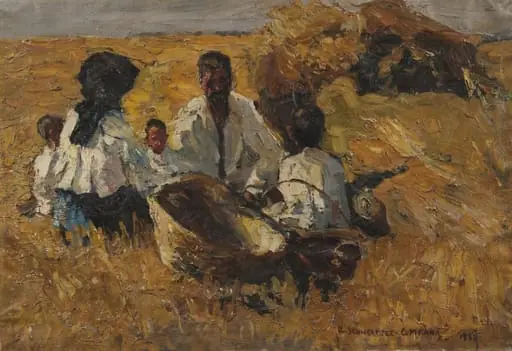
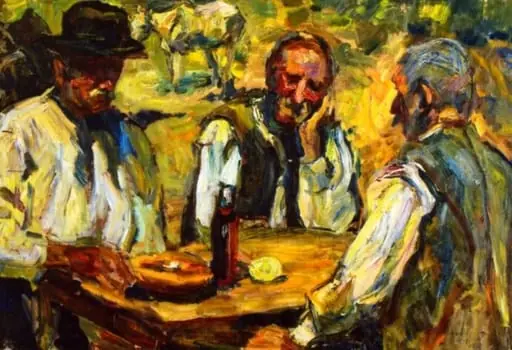
Schweitzer-Cumpăna applied paint with thick, textured strokes, using a palette dominated by vivid yellows, reds, and greens.
Schweitzer-Cumpăna applied paint with thick, textured strokes, using a palette dominated by vivid yellows, reds, and greens. The brushwork is deliberate in its roughness, rejecting smooth blending in favor of visible, energetic marks. This impasto approach, combined with blurred forms and loose outlines, conveys immediacy and sensory richness, aligning with expressive modernist tendencies of the period.
History & Provenance
Created during a period of cultural revitalization in Romania, the painting emerged from Schweitzer-Cumpăna’s engagement with regional life and modernist experimentation. It remained within Romanian collections after its completion, with no documented international exhibitions during the artist’s lifetime. Its preservation reflects its significance as a regional record of interwar visual culture.
Context
In the 1930s, Romanian artists increasingly turned to local subjects as part of a broader national identity project. Schweitzer-Cumpăna’s focus on market life aligned with this trend, drawing from both folk traditions and European modernism. The work stands apart from academic realism, embracing a more personal, expressive mode that mirrored broader shifts in interwar art across Eastern Europe.
Legacy
Târg la Sibiu is recognized as a representative example of Schweitzer-Cumpăna’s mature style and his contribution to Romanian modernism. While not widely reproduced, it continues to be studied for its informal composition and emotional resonance. The painting’s unpolished aesthetic has influenced later generations interested in capturing the vitality of everyday scenes without romanticization.
Artist & collection
Artist
Rudolf Schweitzer-Cumpăna was a Romanian painter. Born in Pitești into an ethnic German family, he finished high school in his native town before attending the Royal Academy of Arts at Berlin from 1904 to 1909, studying…