Artwork
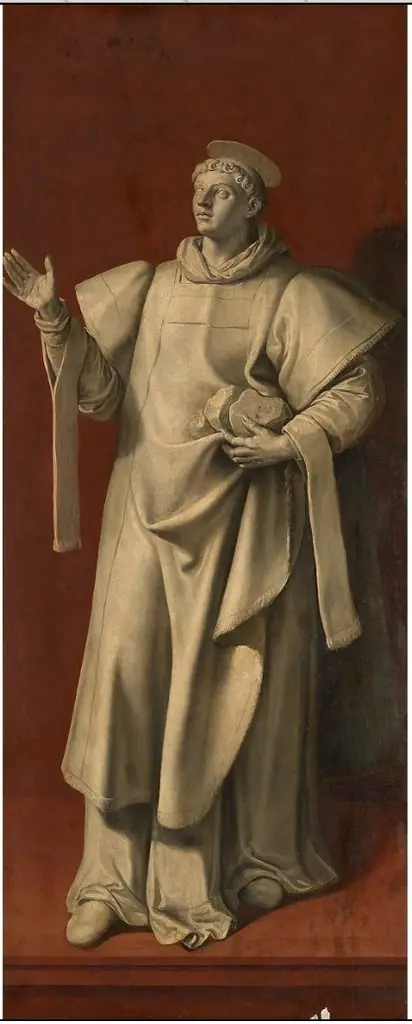
Maarten de Vos. De Heilige Paulus te Ephese Detail
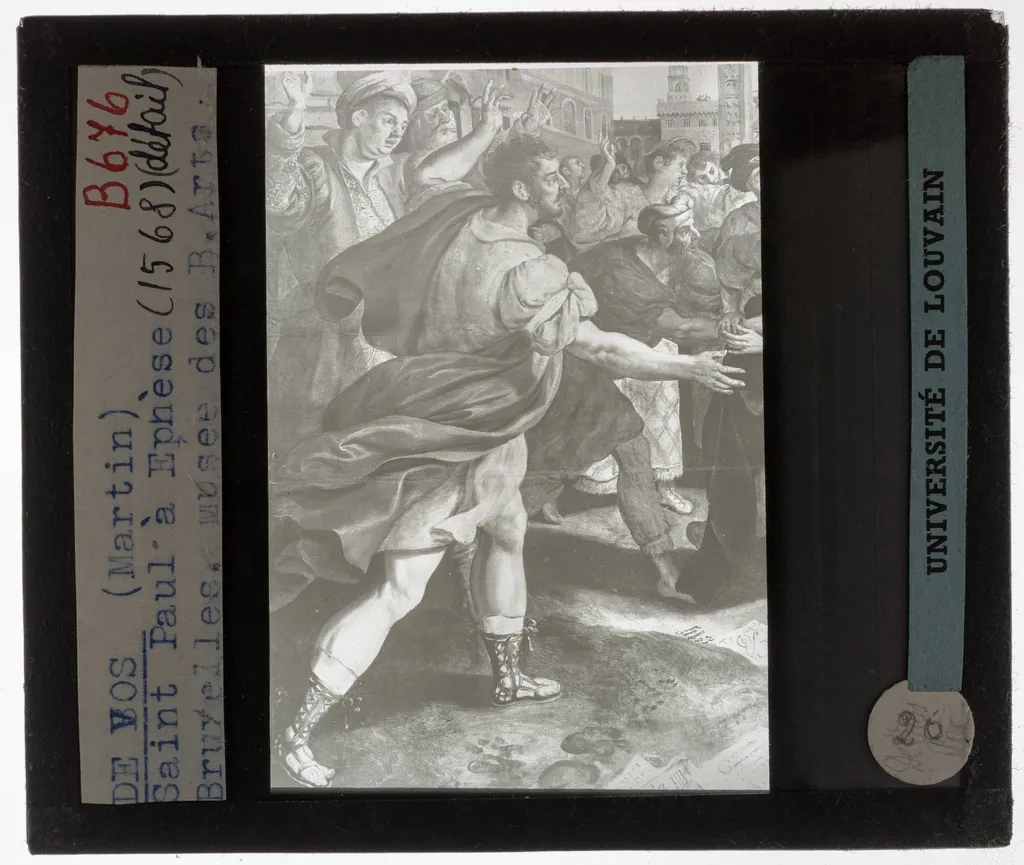
Maarten de Vos. De Heilige Paulus te Ephese Detail is an unspecified painting by the Mannerist artist Maerten de Vos. It dates from 1568 and is held in the collection of the Catholic University of Leuven. Maarten de Vos’s 1568 oil on panel presents Saint Paul in Ephesus.
About this work
The style is Mannerism, which means figures look a little stretched and dramatic.
You see a man in a pale robe kneeling on sandy ground. He’s holding a book and looking up, as if talking to someone above. The background is dark, but light falls on his face and hands.
This is Saint Paul in Ephesus, painted in 1568 by Maarten de Vos. The style is Mannerism, which means figures look a little stretched and dramatic. The light on the saint’s face makes him stand out from the shadows.
Look up how Mannerism differs from earlier Renaissance art.
Overview
Maarten de Vos’s 1568 oil on panel presents Saint Paul in Ephesus. The figure kneels on a sandy ground, draped in a light‑coloured robe, clutching a book and gazing upward. A stark contrast of illumination highlights his face and hands against a deep, shadowy backdrop, drawing attention to his devotional posture.
Subject & Meaning
The work depicts the apostle Paul during his missionary activity in Ephesus, a moment traditionally associated with his preaching and theological reflection. The open book signifies his epistolary contributions, while his upward glance suggests a dialogue with the divine, underscoring themes of revelation and spiritual authority.
Technique & Style
Executed in the Mannerist idiom, the composition features elongated proportions and a heightened sense of drama. De Vos employs chiaroscuro to model the saint, using a focused light source that isolates the figure from the surrounding gloom, a hallmark of the period’s departure from balanced Renaissance naturalism.
History & Provenance
The painting entered the collection of the Royal Museums of Fine Arts of Belgium in Brussels, where it is catalogued under inventory number 4310. It has been documented in the museum’s records since the late 19th century and is referenced in the institution’s online catalogue.
Context
Created during the late Renaissance, the work reflects the religious climate of the Counter‑Reformation, when depictions of saints were intended to inspire piety and reinforce Catholic doctrine. De Vos, active in Antwerp, incorporated the expressive gestures and complex compositions favored by Flemish Mannerist painters.
Legacy
The painting remains a representative example of Flemish Mannerism, illustrating the transition from High Renaissance harmony to a more stylised, emotionally charged visual language. It continues to be studied for its treatment of light, figure elongation, and its role in the visual culture of post‑Council of Trent art.
Artist & collection
Artist
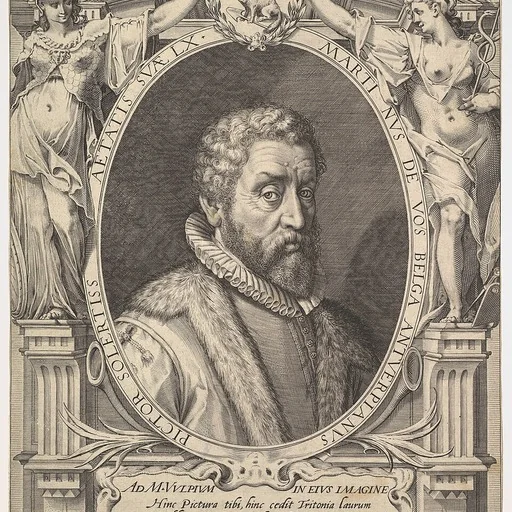
Maerten de Vos, Maerten de Vos the Elder or Marten de Vos (1532 – 4 December 1603) was a Flemish painter, known mainly for his history and allegorical paintings and portraits.
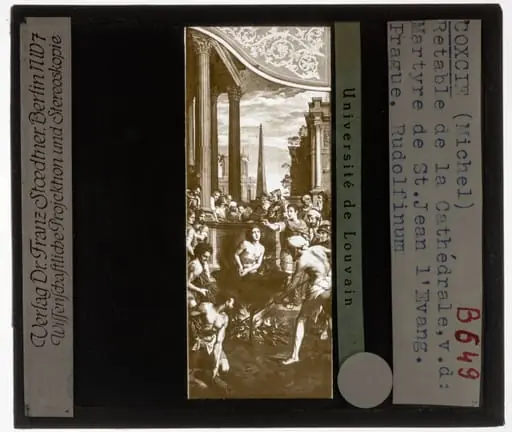 Michiel Coxie I. Triptiek Zijpaneel: Martelaarschap van Johannes de Evangelist
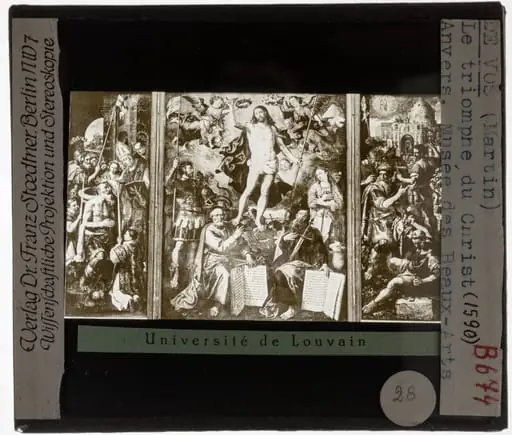 Maarten de Vos. Altaarstuk van de gilde van de oude voetboog
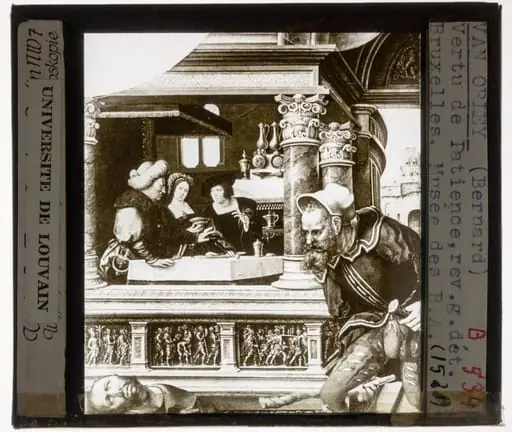 Bernard van Orley. Triptiek met de deugd van het Geduld Paneel links, achterzijde: De arme Lazarus aan de deur van de slechte rijke, detail bovenaan
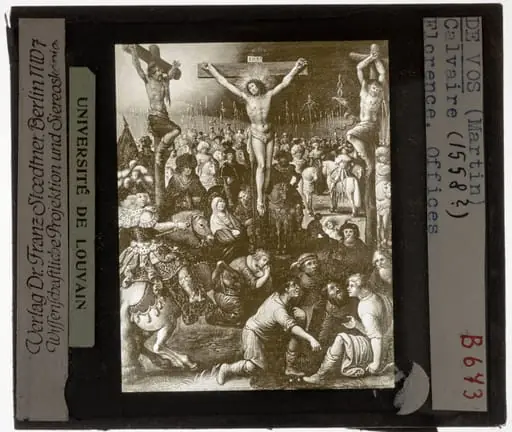 Maarten de Vos. Calvarie
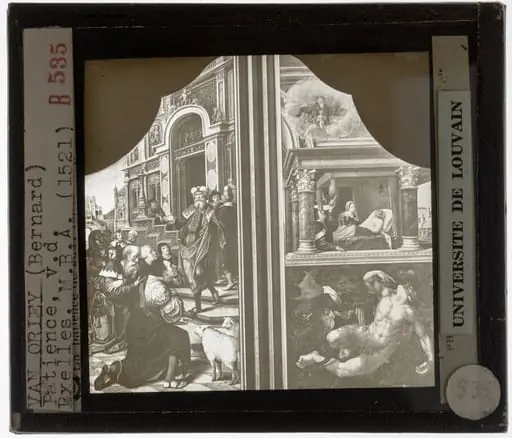 Bernard of Orley. Triptych with the Virtue of Patience Panel right, front and back
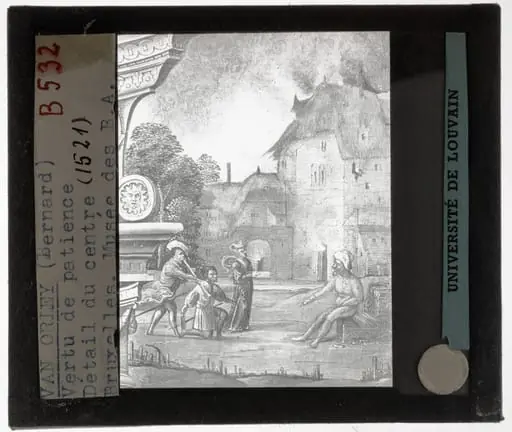 Bernard van Orley. Triptiek met de deugd van het Geduld Centraal paneel: Het feestmaal van Jobs kinderen, detail rechts boven
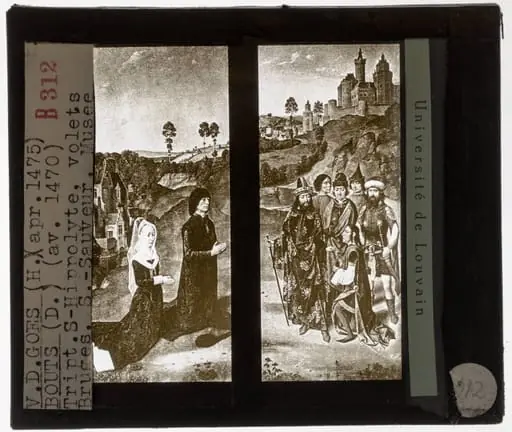 Dirk Bouts (en atelier). Hugo van der Goes. Anoniem. Triptiek met de Marteldood van de Heilige Hippolytus Zijpanelen, voorzijde
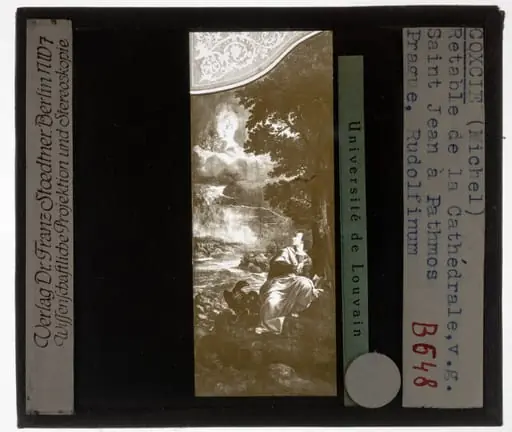 Michiel Coxie I. Triptiek Zijpaneel: Johannes de Evangelist in Patmos
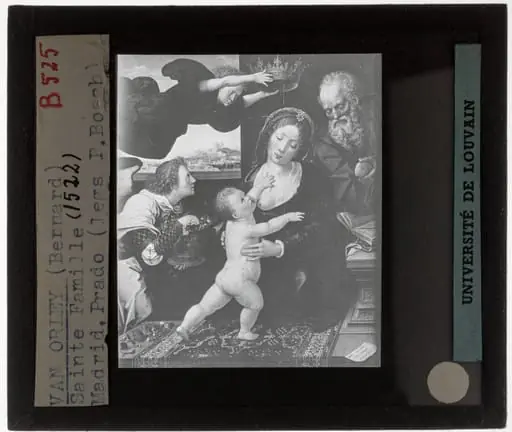 Bernard of Orley. Holy Family
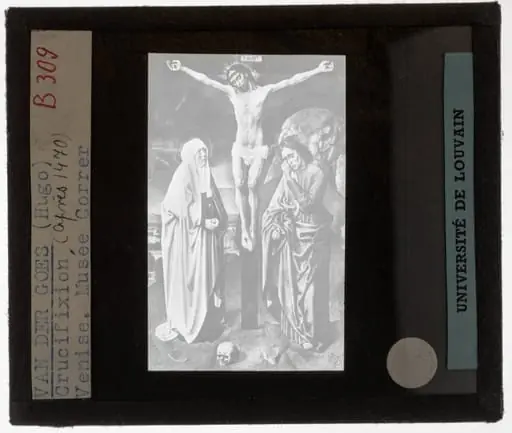 Hugo van der Goes. Kruisiging