Artwork
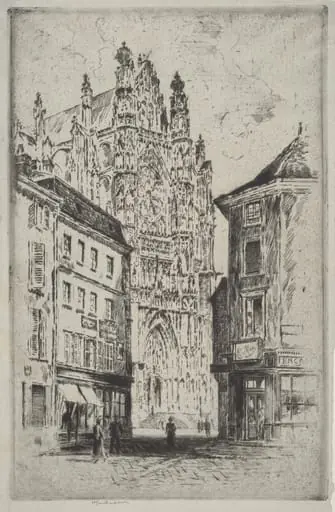
San Maclou, Rouen
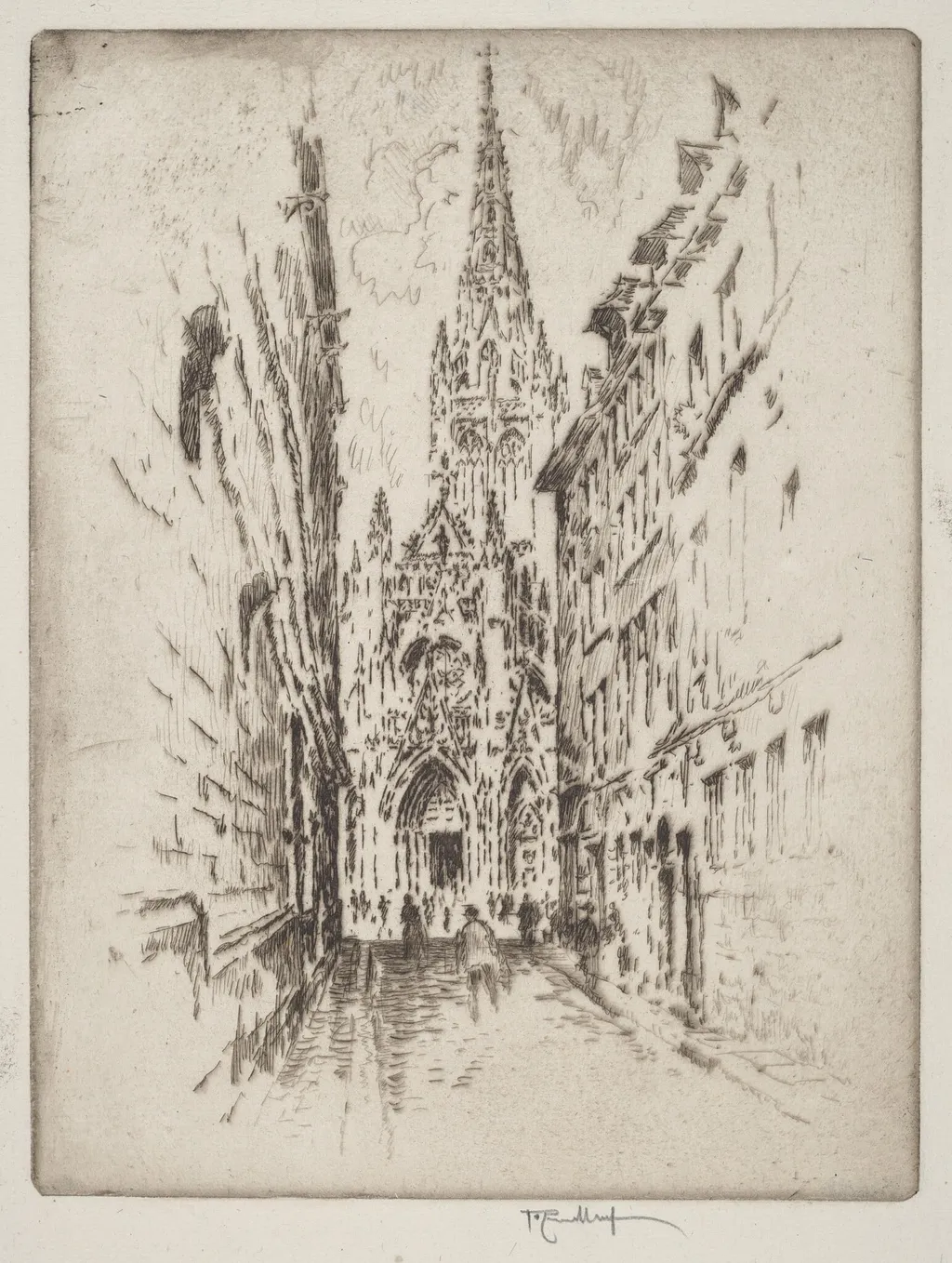
San Maclou, Rouen is an ink print by Joseph Pennell. It dates from 1907 and is held in the collection of the National Gallery of Art.
About this work
Overview
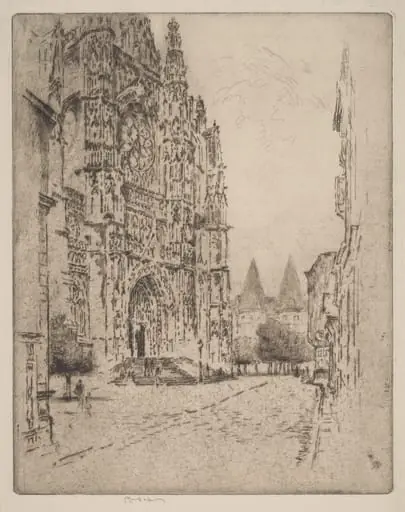
Joseph Pennell’s 1907 etching captures the Church of Saint-Maclou in Rouen, France, viewed through a narrow, enclosed street.
Joseph Pennell’s 1907 etching captures the Church of Saint-Maclou in Rouen, France, viewed through a narrow, enclosed street. The composition emphasizes verticality and depth, drawing the eye toward the building’s ornate Gothic façade. Pennell, an American artist known for his urban and architectural subjects, produced this work during a period of extensive travel across Europe, documenting historic structures with a focus on atmosphere and structure rather than idealized detail.
Subject & Meaning
The Church of Saint-Maclou, a 15th-century structure, stands as both religious monument and urban anchor. Pennell frames it not as a solitary relic but as part of a lived cityscape, flanked by leaning trees that frame and partially obscure the architecture. The composition suggests the weight of history pressing into daily life, with the building emerging from shadow and foliage as a quiet, enduring presence rather than a celebrated monument.
Technique & Style
Pennell employed etching to achieve a dense, tactile surface, using bitten lines to create deep shadows and textured contrasts. The rough, incised marks convey immediacy, as if drawn on-site with urgency. Influenced by Whistler’s tonal subtleties, he avoided clean outlines, instead building form through layered, irregular strokes that mimic the grain of stone and the irregularity of urban decay.
History & Provenance
Created during Pennell’s prolonged stays in Europe, the etching belongs to a series documenting French and British cities in the early 20th century. It was likely made during one of his sketching trips to Normandy, where he recorded architectural details with a focus on their interaction with light and space. The work entered public collections through acquisitions by institutions interested in American printmaking and European topographical studies.
Context
At the turn of the century, many artists turned to etching as a means of capturing the changing face of European cities. Pennell’s work aligned with a broader movement that valued the authenticity of urban decay and the quiet dignity of historic structures amid modernization. His focus on Rouen’s medieval core reflected a growing interest in preserving visual records of architecture threatened by industrial expansion.
Legacy
Pennell’s etchings, including this one, contributed to the revival of etching as a serious artistic medium in America. His approach—combining documentary precision with expressive mark-making—influenced later generations of printmakers interested in urban landscapes. The work remains a quiet testament to the endurance of Gothic architecture and the artist’s commitment to observing, rather than romanticizing, the built environment.
Own this work as a print
Artist & collection
Artist
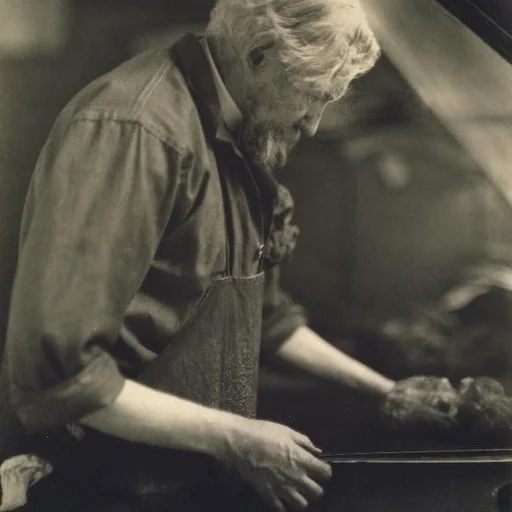
Joseph Pennell (July 4, 1857 – April 23, 1926) was an American draftsman, etcher, lithographer, and illustrator for books and magazines.

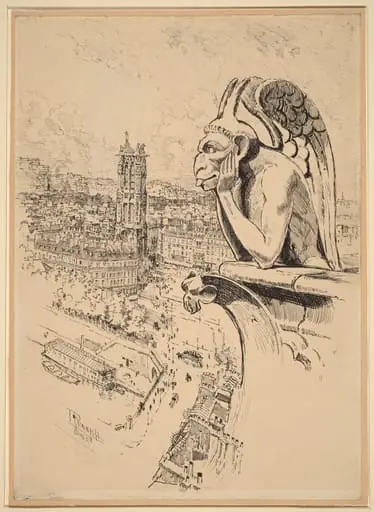
 Flower Market and Butter Tower, Rouen
 Towers of the Bishop's Palace, Beauvais
 The Transept, Beauvais
 Gothic Night
 The West Front, Amiens
 Amiens Cathedral (Cathedrale d'Amiens - Jour d'inventaire)
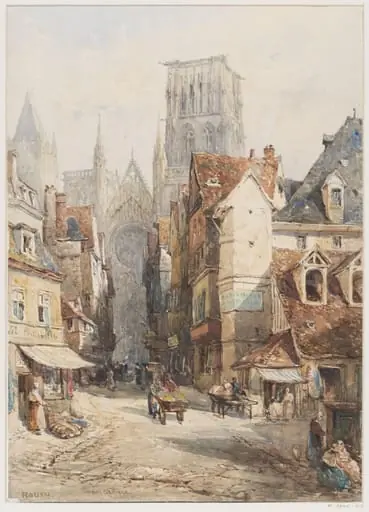 Rouen. The South Porch and Towers of the Cathedral, seen from Rue du Bac
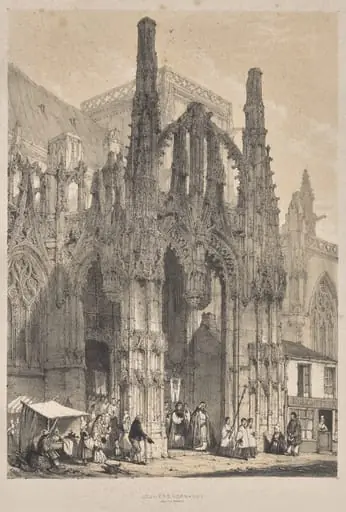 Architecture of the Middle Ages: Louviers, Normandy, South Porch