Artwork
River Song, No. 8
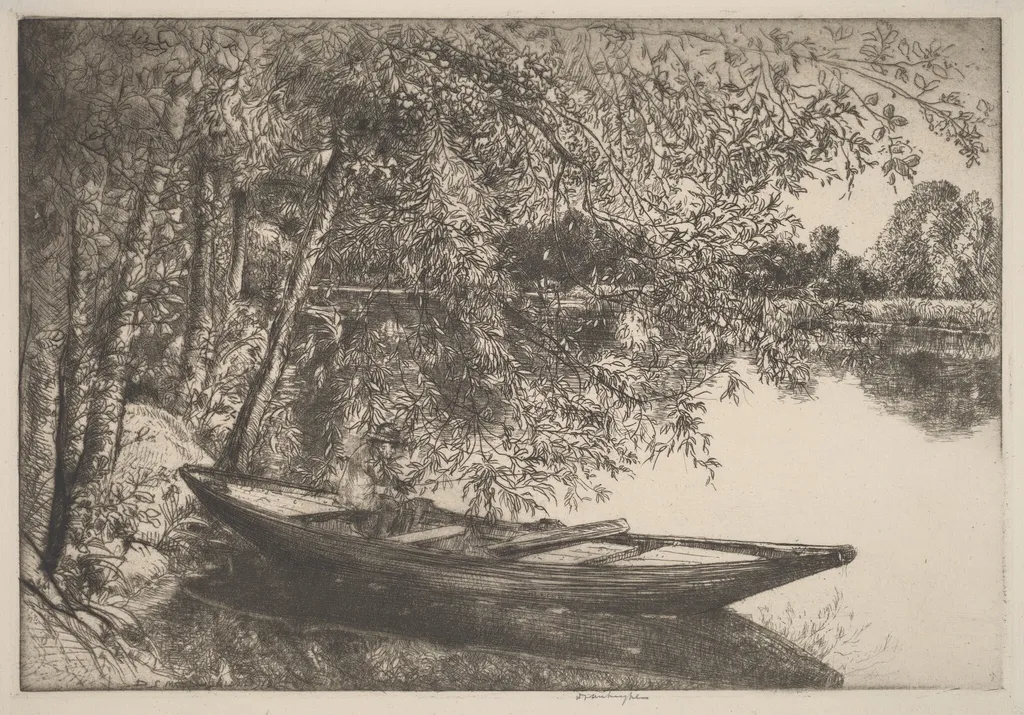
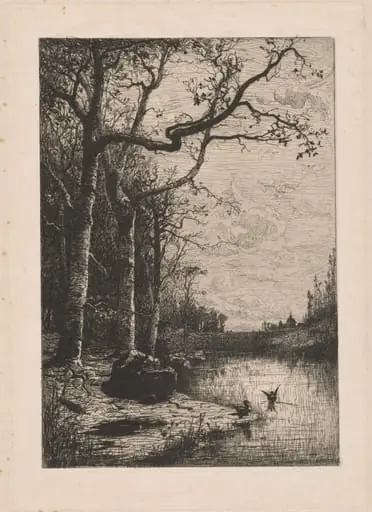
River Song, No. 8 is an ink print by Donald Shaw MacLaughlan. It dates from 1918 and is held in the collection of the National Gallery of Art. River Song, No.
About this work
Overview
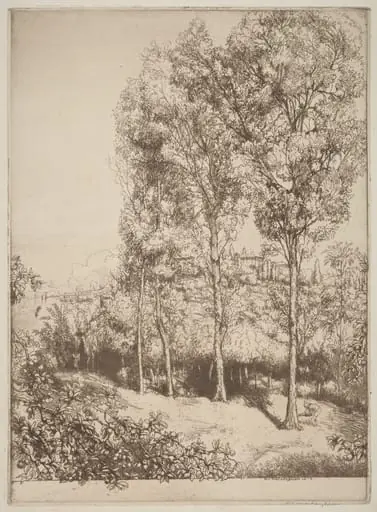
River Song, No. 8 is a 1918 etching by Donald Shaw MacLaughlan, part of a series exploring natural landscapes through printmaking. The work captures a quiet riverside scene with careful attention to tonal variation and surface texture. Unlike painted compositions, this piece relies on the precision of incised lines to suggest form and atmosphere, emphasizing stillness over movement.
Subject & Meaning
The stillness of the water and the enclosed composition suggest a moment suspended in time, evoking solitude rather than drama.
The scene centers on a wooden boat resting near a riverbank, angled slightly toward the right edge of the frame. Surrounding vegetation grows thickly, its branches dipping toward the water’s surface. There is no human presence, and the absence of narrative detail invites quiet reflection. The stillness of the water and the enclosed composition suggest a moment suspended in time, evoking solitude rather than drama.
Technique & Style
MacLaughlan employed etching to achieve fine gradations of light and shadow, using dense line work to render foliage and the boat’s weathered wood. The medium’s capacity for intricate detail allows the texture of bark, reeds, and ripples to emerge without color. The tonal range is restrained, dominated by deep grays and blacks, enhancing the mood of quiet intimacy characteristic of early 20th-century printmaking traditions.
History & Provenance
Created in 1918, the work belongs to a small series of etchings MacLaughlan produced during his time in the northeastern United States. While little documentation survives about its early ownership, it was included in regional exhibitions of American prints in the 1920s. The piece remains within private collections, with no known institutional holdings prior to the late 20th century.
Context
In the aftermath of World War I, many American artists turned to intimate natural subjects as a counterpoint to global turmoil. MacLaughlan’s etchings reflect this trend, aligning with contemporaries like James McNeill Whistler and Mary Cassatt who favored quiet, contemplative scenes. His focus on water, light, and vegetation situates him within a broader revival of printmaking as a serious artistic medium in early 20th-century America.
Legacy
River Song, No. 8 is representative of MacLaughlan’s contribution to American printmaking, though he remains less widely known than his peers. The work exemplifies how etching could convey emotional depth through restraint. While not widely reproduced, it continues to be studied for its technical discipline and its quiet resonance within the canon of early modern American prints.
Own this work as a print
Artist & collection

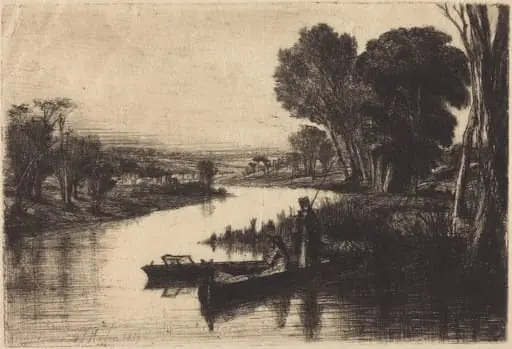 Thames Fishermen
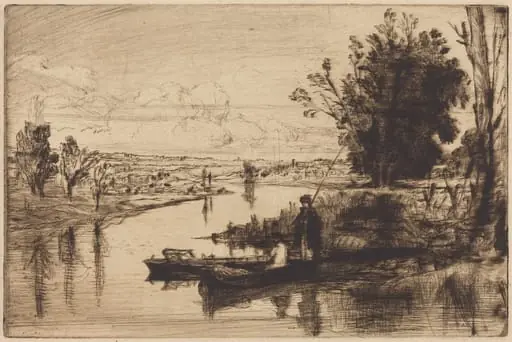 Thames Fishermen
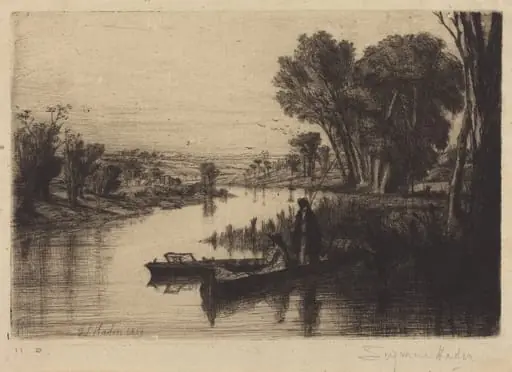 Thames Fishermen
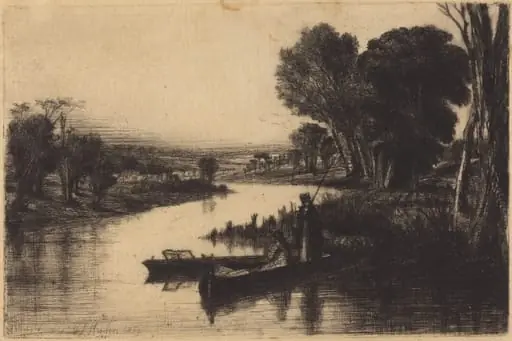 Thames Fishermen
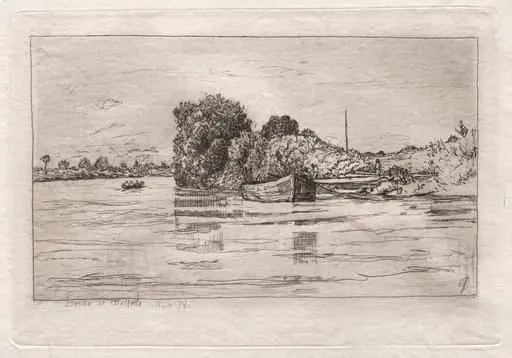 Danube at Walhalla
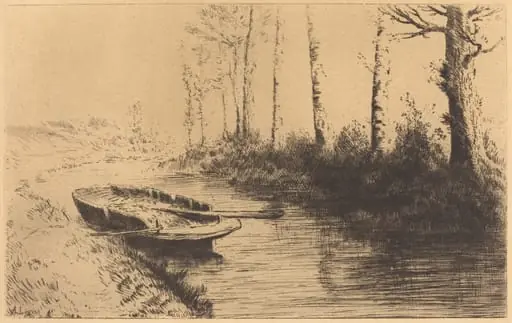 Canal Seen by Morning Light (Le canal: Effet du matin)
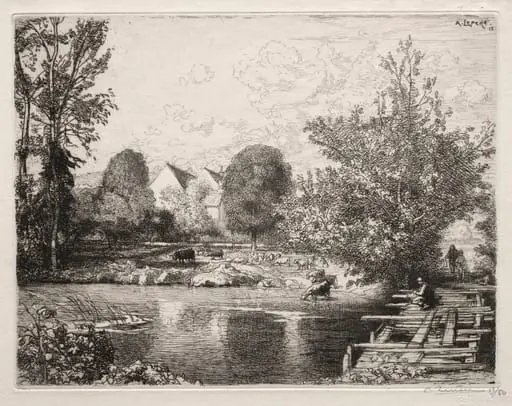 The Old Footbridge
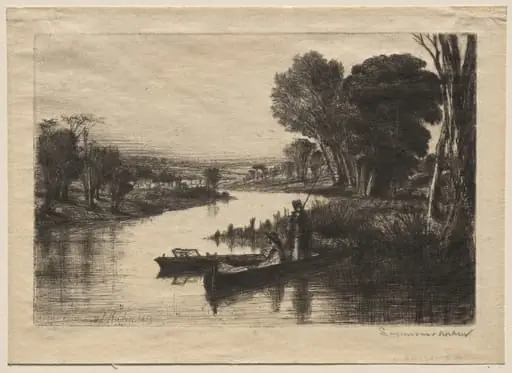 Thames Fishermen (First Plate)
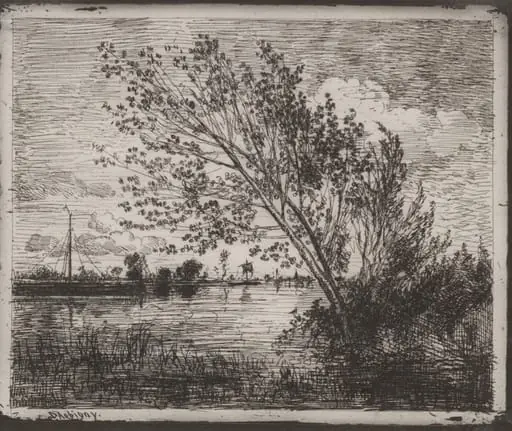 A Cluster of Alders
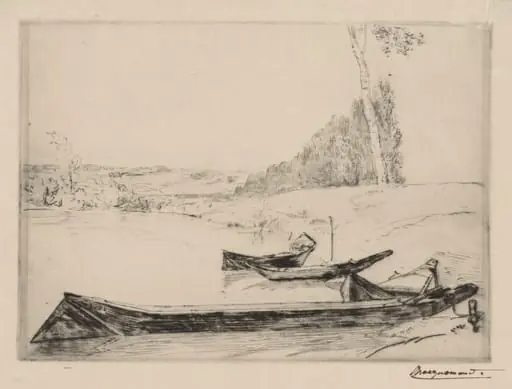 Small ferry-boats on the banks oft he Seine
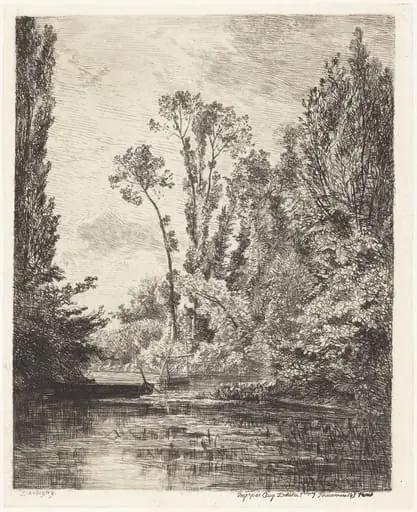 The Virgin Islands in Bezons (Les Iles vierges a Bezons)
 The Marshes of Burbanche (Marais de la Burbanche)