Artwork
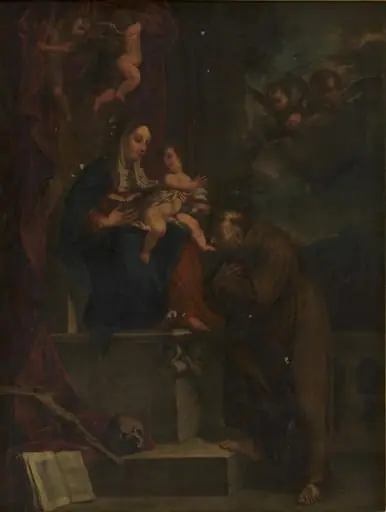
Saint Didacus Brings the Stillborn Girl to Life
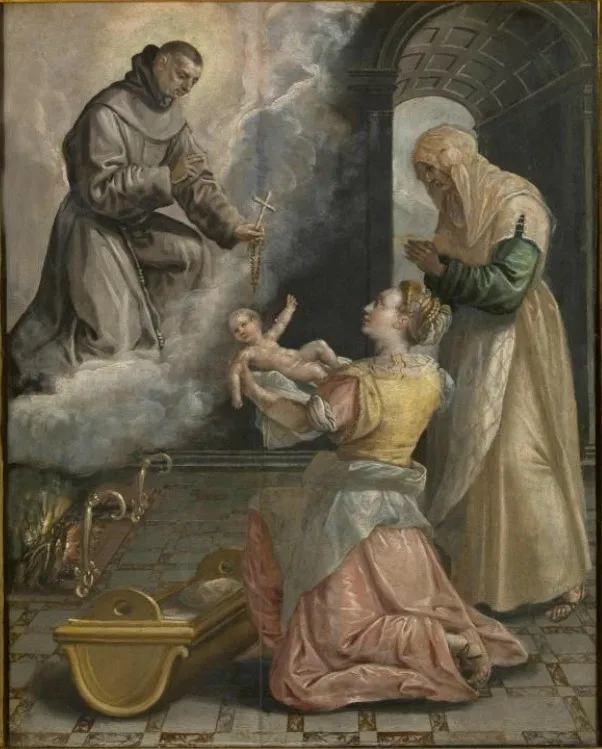
Saint Didacus Brings the Stillborn Girl to Life is an oil painting by the Flemish Baroque painting artist Maerten de Vos. It dates from 1596 and is held in the collection of the Royal Museum of Fine Arts Antwerp.
About this work
Overview
It is part of the collection at the Royal Museum of Fine Arts Antwerp, where it remains a key example of Flemish religious painting from the period.
Painted in 1596 by Maerten de Vos, this oil-on-panel work illustrates a miracle attributed to Saint Didacus, a Franciscan lay brother. Created during the late Renaissance in the Spanish Netherlands, the piece reflects the enduring demand for devotional imagery after the iconoclastic upheavals of the previous decades. It is part of the collection at the Royal Museum of Fine Arts Antwerp, where it remains a key example of Flemish religious painting from the period.
Subject & Meaning
The scene captures the moment Saint Didacus, depicted as a kneeling monk with a rosary, revives a stillborn infant. The mother, cradling the child, and a witness stand below, their expressions conveying shock and awe. The miracle underscores the saint’s sanctity and the power of prayer, reinforcing Catholic teachings on intercession and divine grace. The composition emphasizes spiritual intervention over earthly chaos, aligning with Counter-Reformation ideals.
Technique & Style
De Vos employs chiaroscuro to model forms and direct focus toward the central figures, enhancing emotional gravity. The monk’s robes flow with soft, rhythmic folds, contrasting with the detailed textures of the women’s garments and the tiled floor. The baby, wrapped in plain white linen, becomes a quiet focal point. The background, with its doorway and fireplace, grounds the miracle in a domestic setting, lending intimacy to the supernatural event.
History & Provenance
Commissioned during a period of renewed religious patronage in Antwerp, the painting likely originated for a Franciscan church or private chapel. De Vos, a prolific artist after Frans Floris’s decline, produced numerous altarpieces for local institutions. The work entered the Royal Museum of Fine Arts Antwerp’s collection in the 19th century, where it has remained as part of its core holdings of Flemish religious art from the late 1500s.
Context
Created after the Beeldenstorm, when religious imagery was destroyed, this painting reflects the Catholic Church’s effort to restore devotional art. Flemish artists like de Vos responded to the Council of Trent’s call for clarity and emotional resonance in sacred scenes. The work’s domestic setting and humanized figures align with contemporary trends favoring accessible, emotionally engaging narratives over grand allegory.
Legacy
Though less widely known today than some contemporaries, de Vos’s work contributed to the continuity of Flemish religious painting into the Baroque era. This piece exemplifies how artists adapted to post-iconoclastic demands, blending narrative clarity with technical precision. Its preservation in Antwerp underscores its role in sustaining regional artistic identity amid broader religious and political change.
Artist & collection
Artist
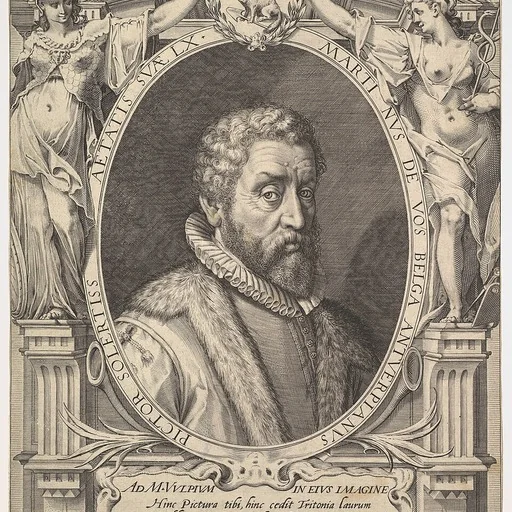
Maerten de Vos, Maerten de Vos the Elder or Marten de Vos (1532 – 4 December 1603) was a Flemish painter, known mainly for his history and allegorical paintings and portraits.

 The Mystic Marriage of Saint Catherine
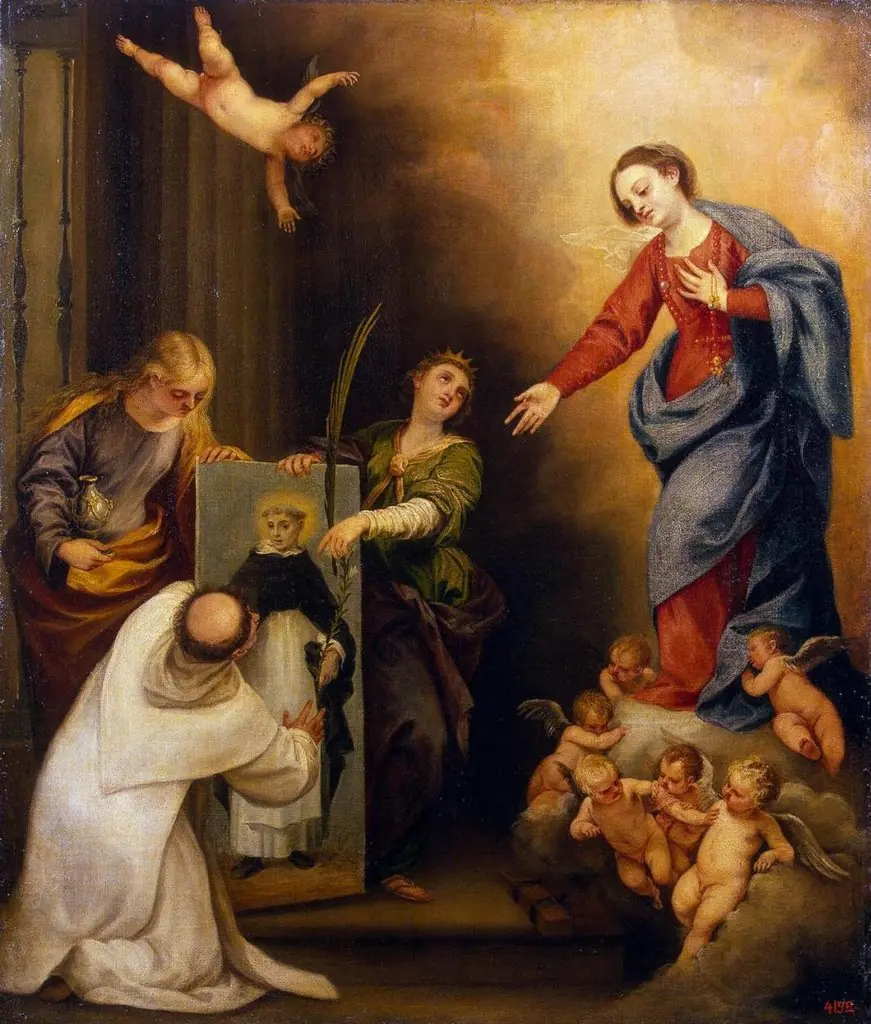 Appearance of Virgin to a Dominican Monk in Soriano
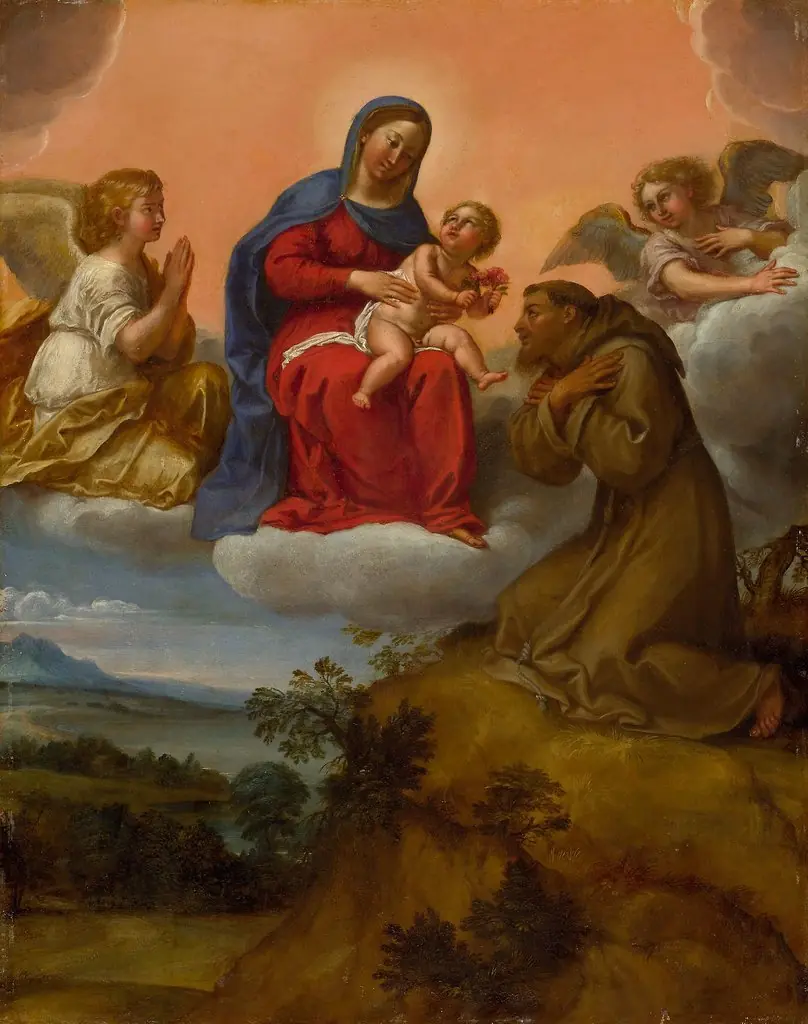 Virgin and Child Adored by Saint Francis
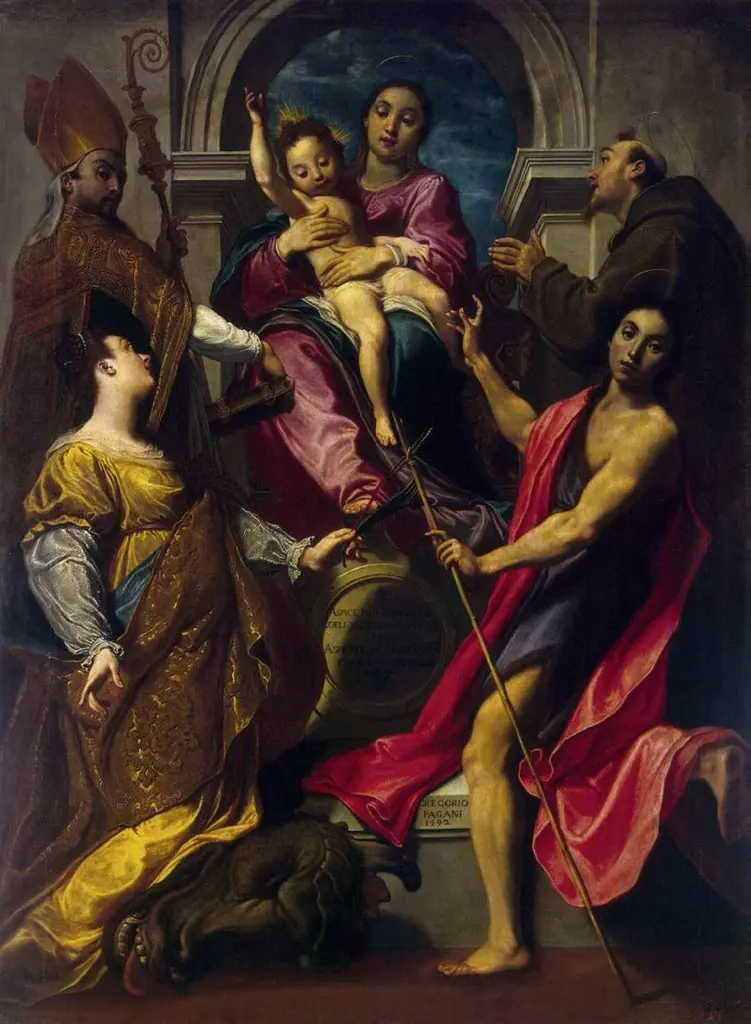 Madonna and the Child with St Francis of Assisi, St John the Baptist, St Gregory the Great and St Margaret of Cortona
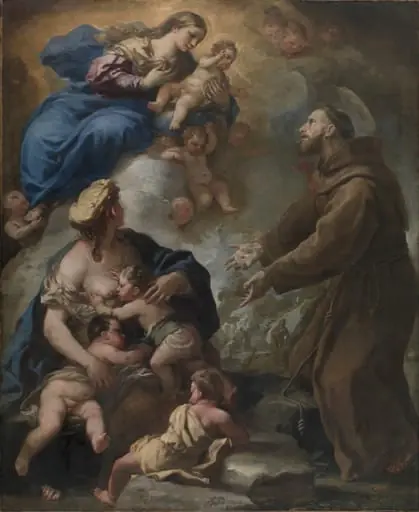 The Virgin and Child Appearing to Saint Francis of Assisi
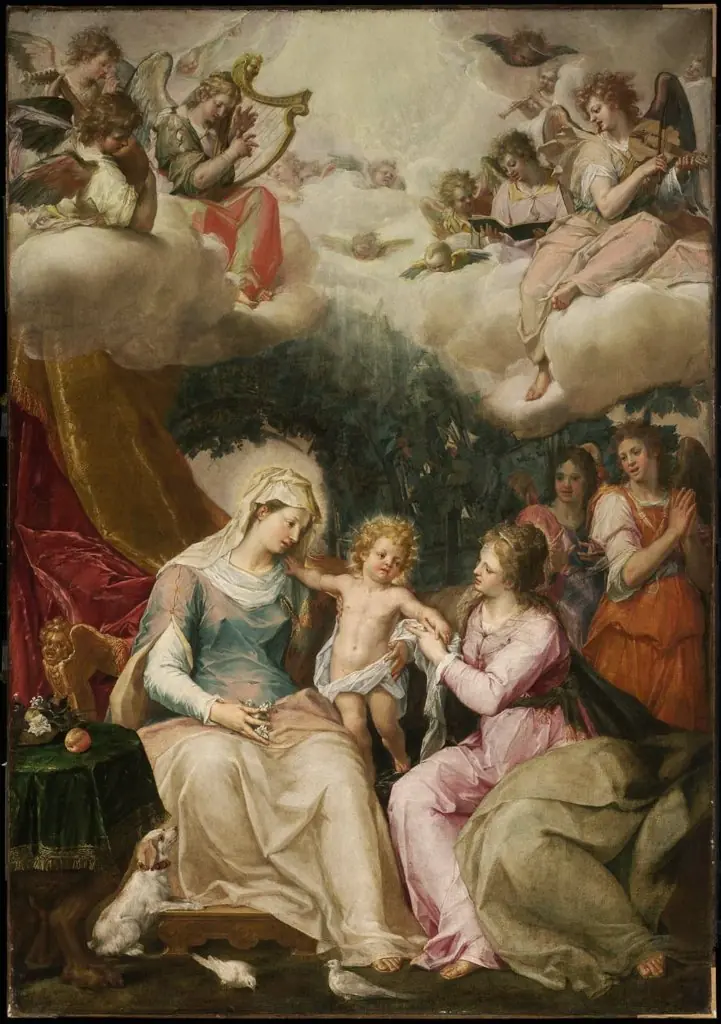
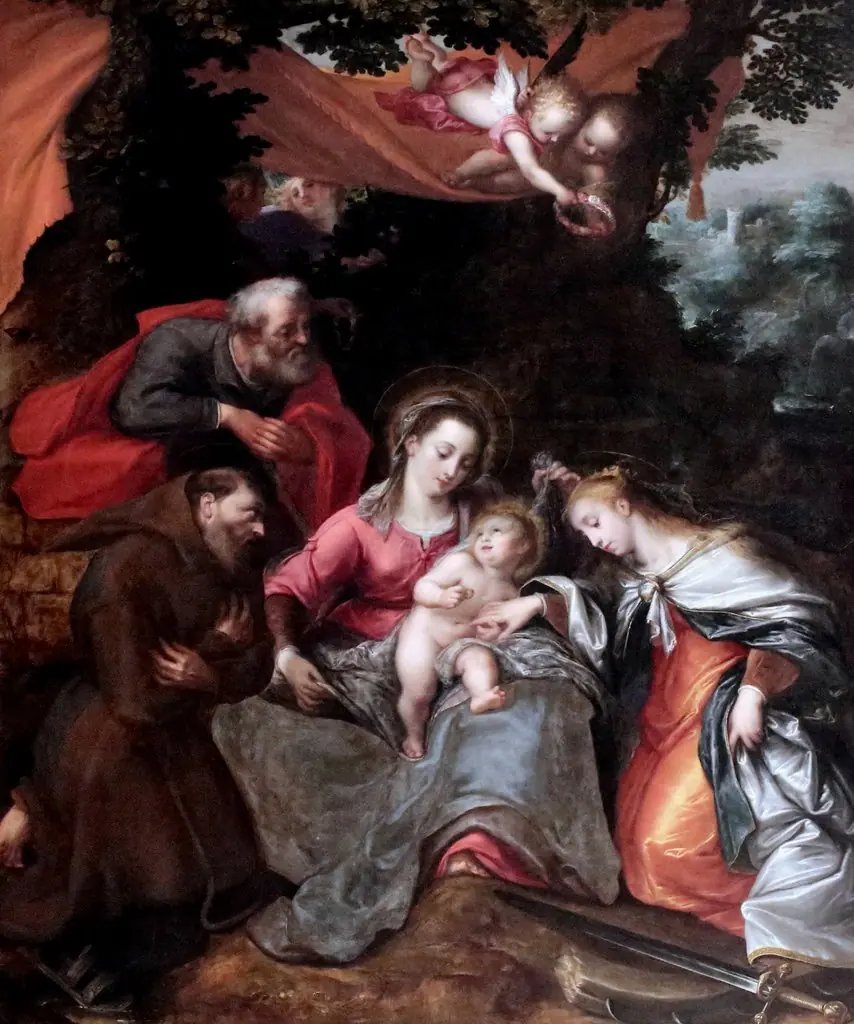 The Mystic Marriage of St. Catherine
 Mary, Jesus and St Francis