Artwork
Christos purtându-și crucea
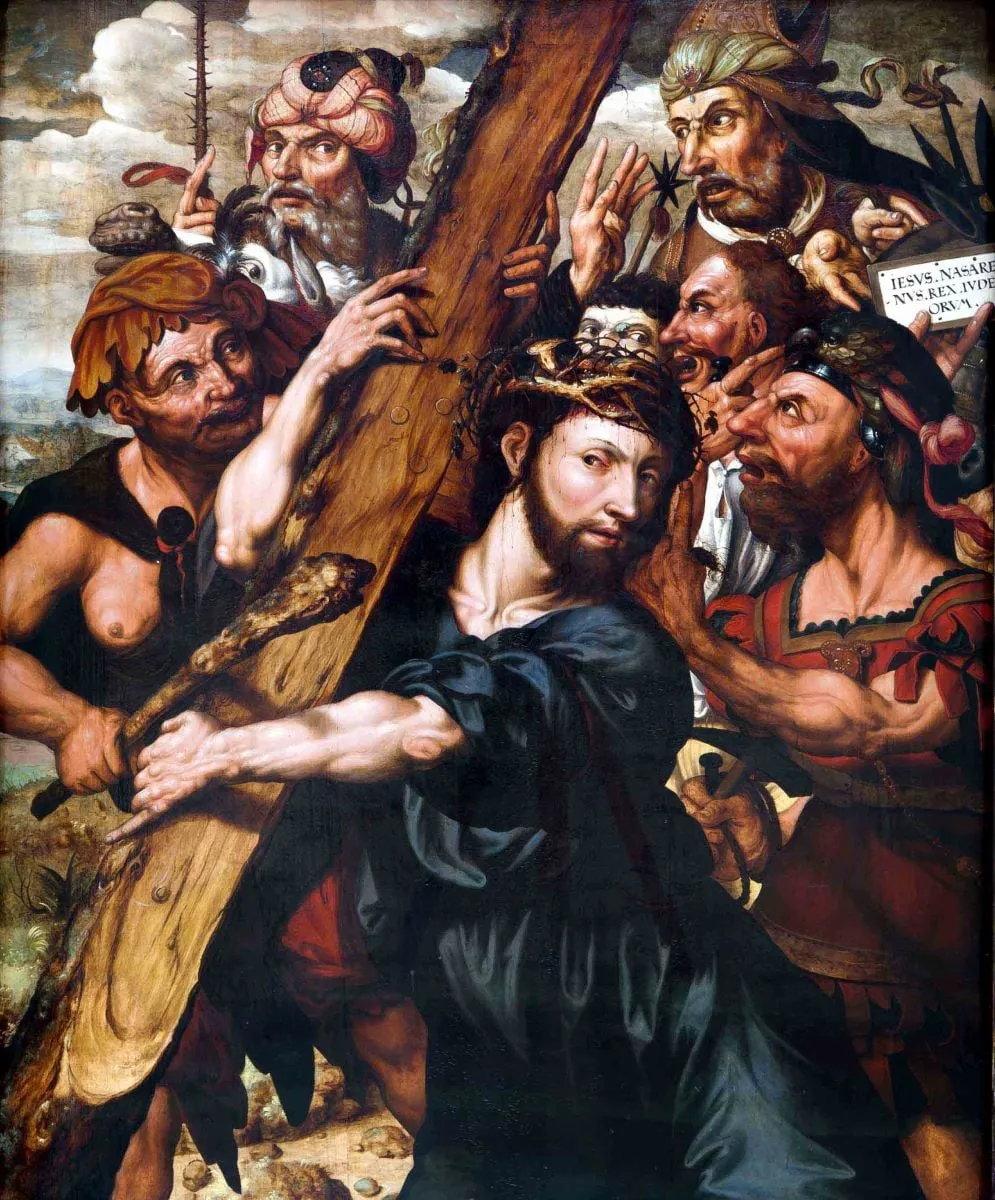
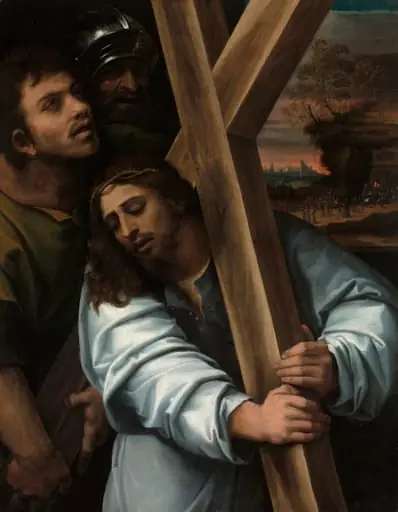
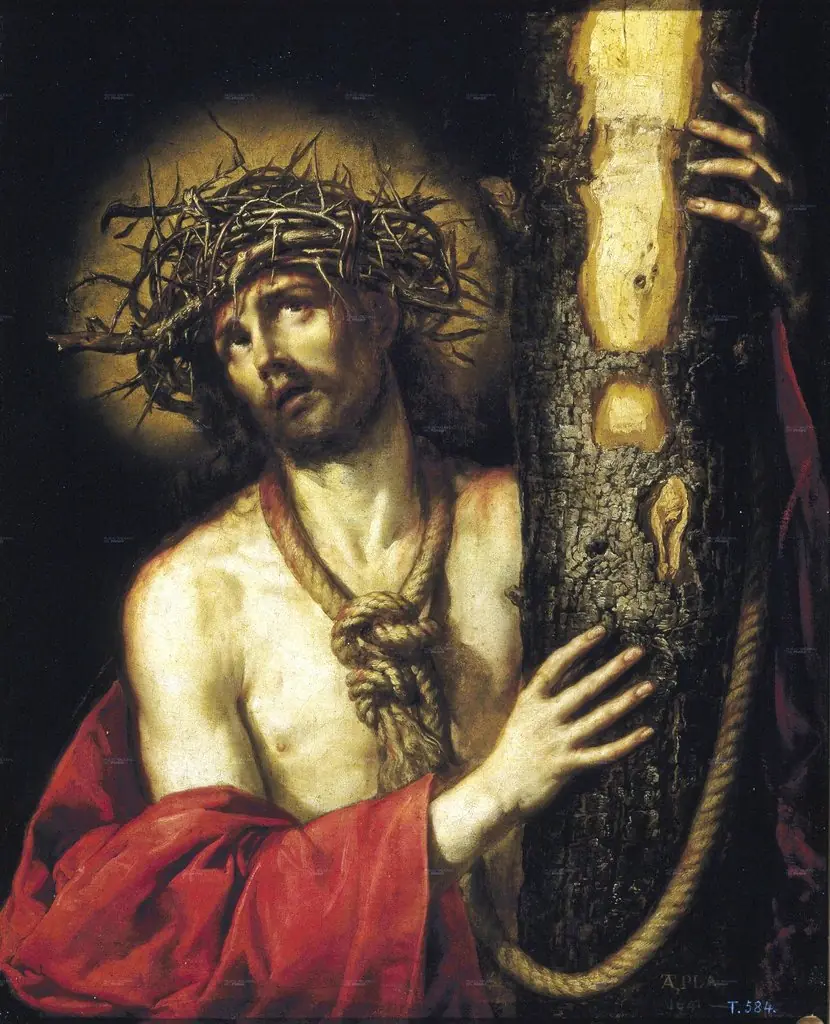
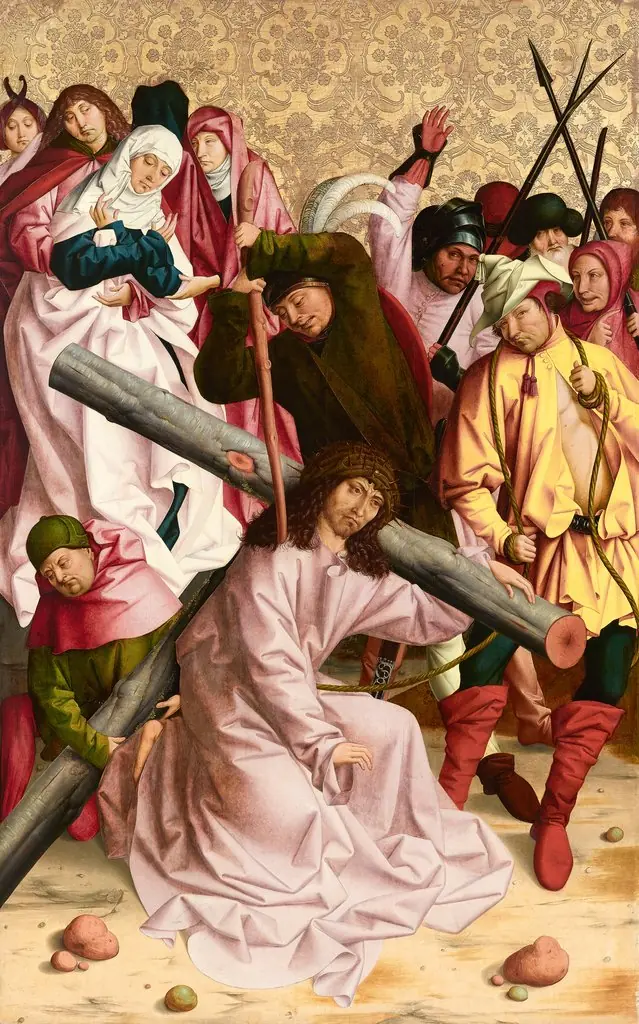
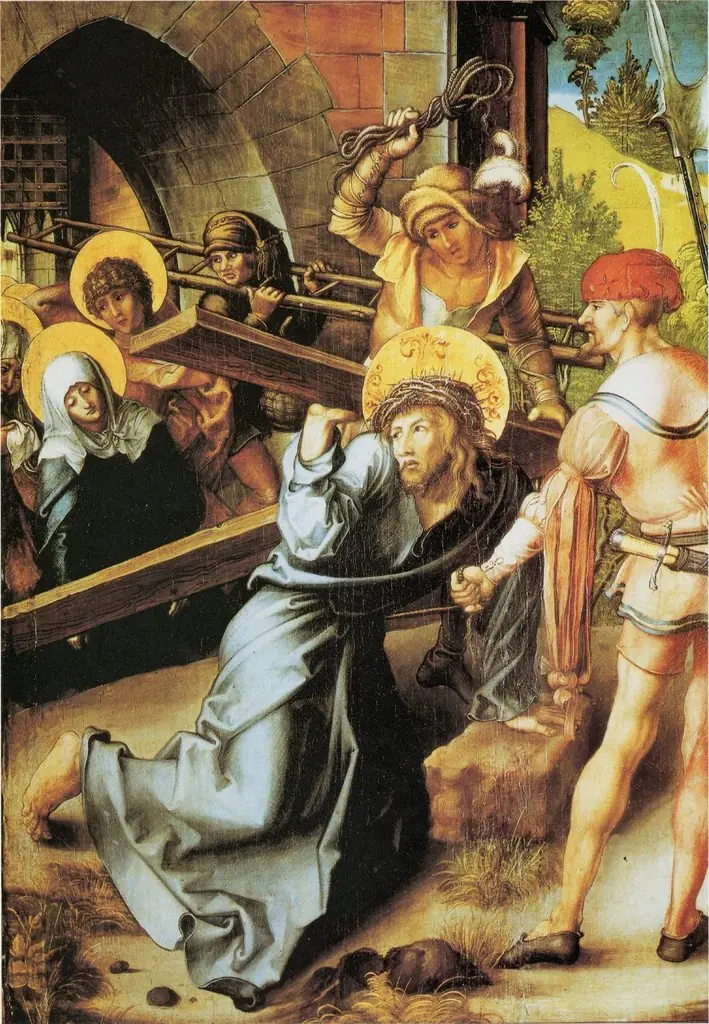
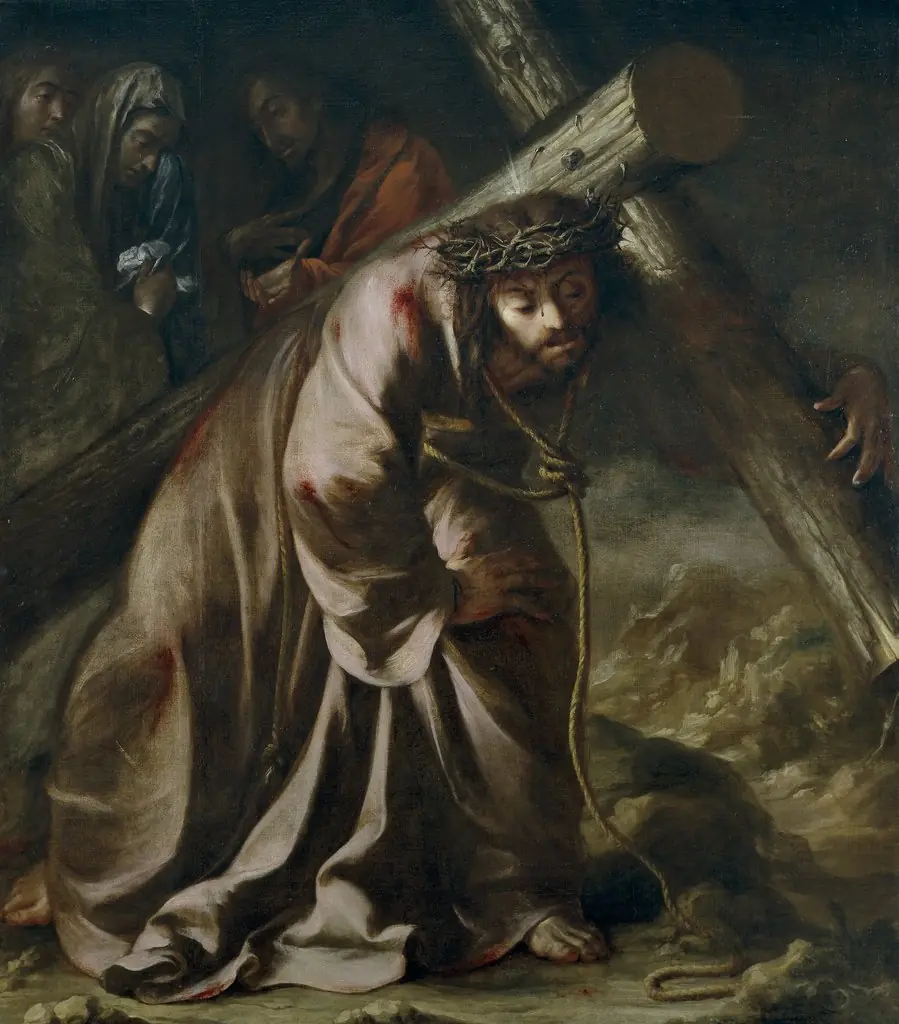
Christos purtându-și crucea is an unspecified painting by the Byzantine icon painting artist Maestrul lui „Ecce homo” din Augsburg. It is held in the collection of the National Museum of Art of Romania. An anonymous artist from Augsburg created this devotional image depicting Christ bearing the cross, likely in the early 17th century.
About this work
Overview
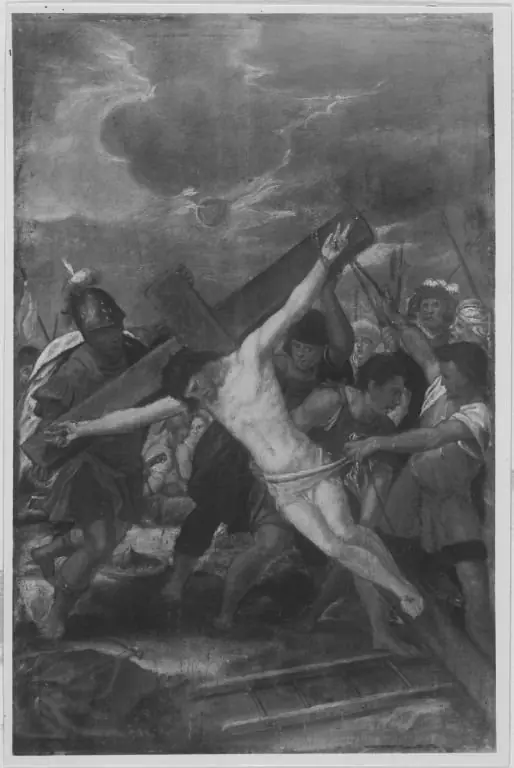
An anonymous artist from Augsburg created this devotional image depicting Christ bearing the cross, likely in the early 17th century. Rendered with intense chiaroscuro, the composition emphasizes physical strain and emotional gravity. The work was intended for private or liturgical contemplation, reflecting a period when religious art increasingly emphasized human suffering and visceral realism.
Subject & Meaning
The scene captures Christ at the moment of greatest physical burden, his face contorted with exertion and pain. A soldier in red, positioned behind him, applies force to propel the figure forward, underscoring the brutality of the journey. The image invites viewers to witness Christ’s endurance, aligning with Counter-Reformation ideals that stressed empathy with divine suffering.
Technique & Style
The artist employs stark chiaroscuro to model form and heighten emotional tension. Light falls sharply across Christ’s body and the cross, while deep shadows swallow the background, isolating the figures. Brushwork is controlled yet expressive, conveying texture in fabric, skin, and wood without overt detail, focusing instead on weight and movement.
History & Provenance
The painting’s origin is traced to Augsburg, a center of Catholic artistic production in southern Germany during the early 1600s. Its provenance is undocumented prior to its current location, but its style and technique align with regional devotional works commissioned for churches or private chapels. It now resides in the Museum of Ethnography.
Context
Created during a time when Catholic regions responded to Protestant reform with emotionally charged religious imagery, this work reflects broader trends in Counter-Reformation art. Artists across Europe turned to dramatic lighting and physical realism to evoke piety and compassion, moving away from idealized forms toward more immediate, human depictions of sacred events.
Legacy
Though unsigned and unrecorded in major artist catalogs, the painting survives as an example of regional German devotional art from the early Baroque period. Its preservation in a museum setting allows continued study of how local workshops interpreted theological themes through heightened naturalism and emotional intensity.
Artist & collection
Artist
Maestrul lui „Ecce homo” din Augsburg
This anonymous painter from late medieval Augsburg made scenes of Christ’s suffering in sharp, angular folds of color.