Artwork
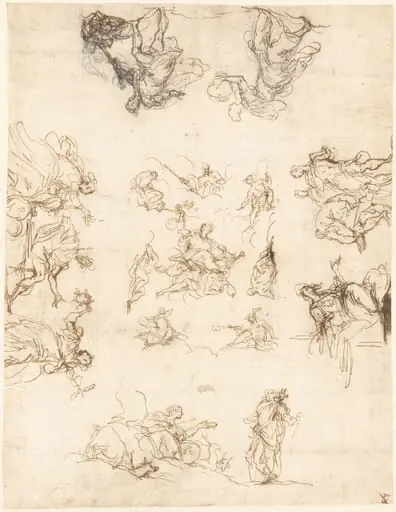
Apollo in his chariot, design for a ceiling painting
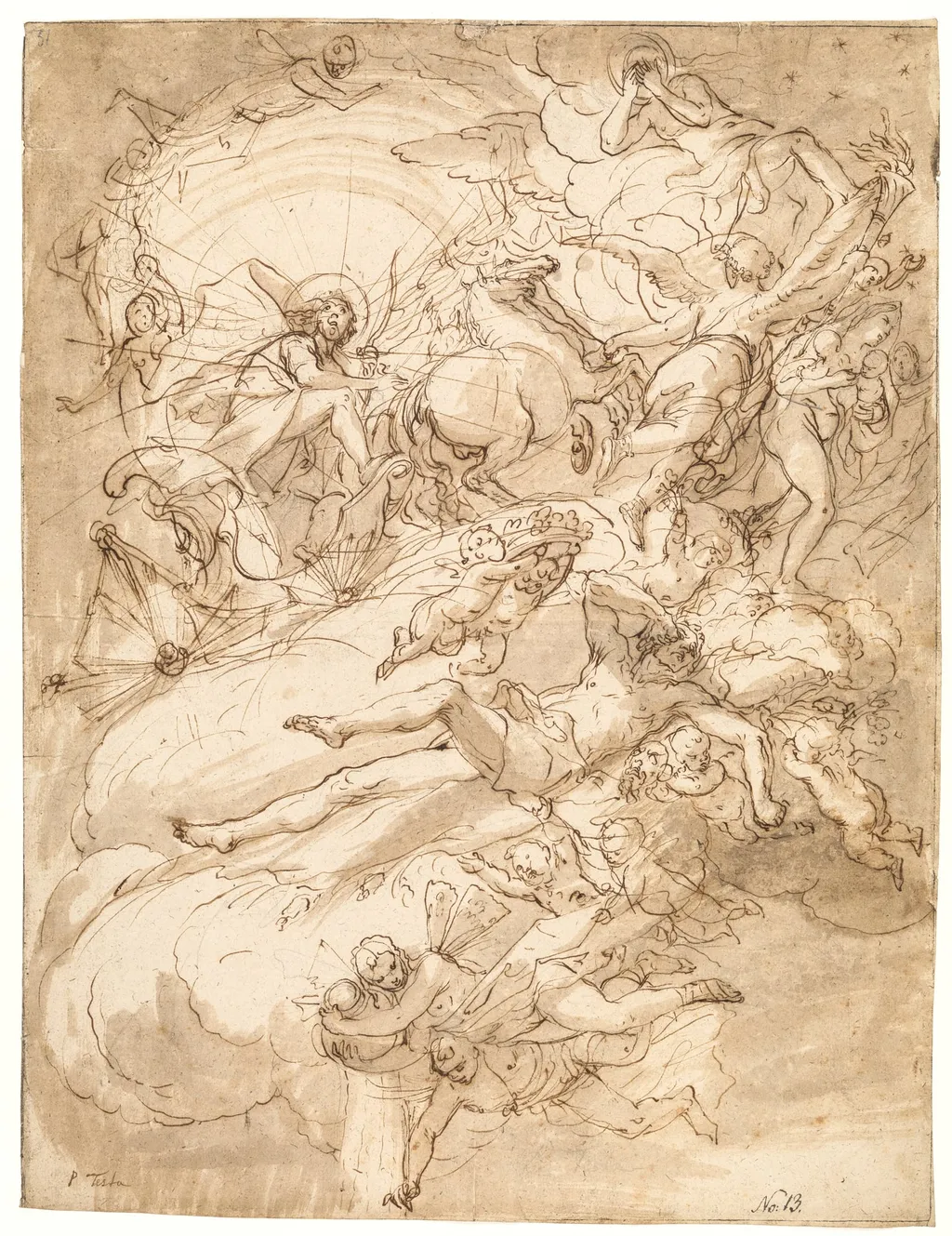
Apollo in his chariot, design for a ceiling painting is an unspecified painting by the Byzantine icon painting artist Unknown. It dates from 1750 and is held in the collection of the Statens Museum for Kunst. This ink sketch, dated around 1750, was conceived as a preparatory design for a ceiling composition depicting Apollo in his chariot.
About this work
Overview
This ink sketch, dated around 1750, was conceived as a preparatory design for a ceiling composition depicting Apollo in his chariot. Executed with rapid, fluid strokes, it captures movement rather than finish, emphasizing energy over detail. The work is held in the collection of the Museum of Ethnography, though its subject is drawn from classical mythology rather than ethnographic tradition.
Subject & Meaning
Their entangled forms suggest divine motion through the heavens, conveying the god’s passage as a force of cosmic transition.
The scene illustrates Apollo, god of the sun, ascending in his chariot, surrounded by a throng of mythological figures—nymphs, winged attendants, and personifications of the hours or winds. Their entangled forms suggest divine motion through the heavens, conveying the god’s passage as a force of cosmic transition. The lack of clear hierarchy among the figures reinforces the sense of celestial chaos rather than orderly procession.
Technique & Style
The artist employed loose, gestural ink lines, smudged and layered to evoke motion and volume without defined contours. Figures emerge from dense clusters of strokes, their limbs and wings dissolving into the background. The absence of shading or polished detail reflects a working sketch’s immediacy, prioritizing compositional flow over finish, typical of preparatory studies for large-scale decorative projects.
History & Provenance
Created circa 1750, the sketch was likely made by a studio artist commissioned for a ceiling decoration, though the final mural was never executed. It entered the Museum of Ethnography’s collection in the late 19th century, possibly as part of a broader acquisition of decorative arts and design materials. Its attribution to a specific artist remains uncertain, and it has been cataloged primarily for its stylistic value.
Context
In mid-18th-century Europe, ceiling paintings often depicted mythological themes to glorify patrons or evoke grandeur. This sketch reflects the continued influence of Baroque dynamism, even as Rococo elegance gained favor. Its rough execution suggests it was made quickly for approval or as a compositional tool, revealing how artists translated monumental ideas into preliminary forms before scaling them up.
Legacy
Though not a finished work, the sketch endures as a vivid example of artistic process in the 18th century. It demonstrates how movement and emotion were conveyed through spontaneity rather than polish. Its preservation in an ethnographic museum underscores a broader 19th-century interest in documenting artistic practice as cultural artifact, beyond finished masterpieces.
Artist & collection

 Domestic Scene
 Giacomo and Cardinal Marco, investing Andrea, Abbot of San Zeno, with his Benefice
 The Nymph of Fontainebleau
 Portrait of a Woman
 Madonna and Child with Saints in the Enclosed Garden
 Venus and Minerva
 Family Group of Four on Sofa
 Wall painting from Room H of the Villa of P. Fannius Synistor at Boscoreale
 The Apotheosis of San Vitale
 The Apotheosis of San Vitale
 Cloud-Borne Saints above a Lake
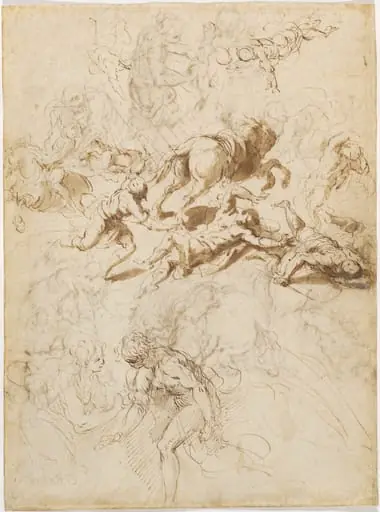 The Conversion of Saint Paul; Adam and Eve
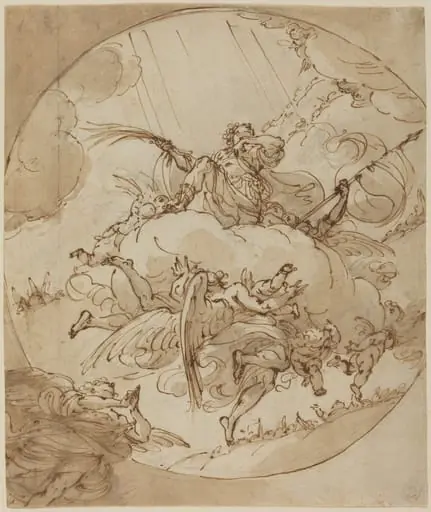 The Apotheosis of San Vitale
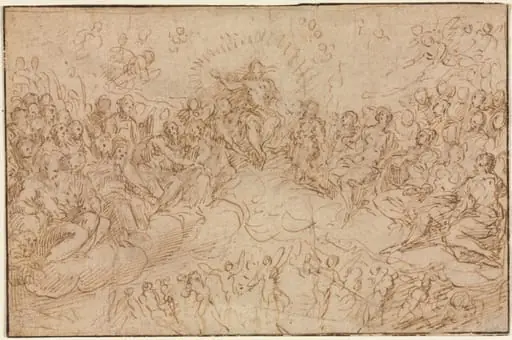 The Last Judgment
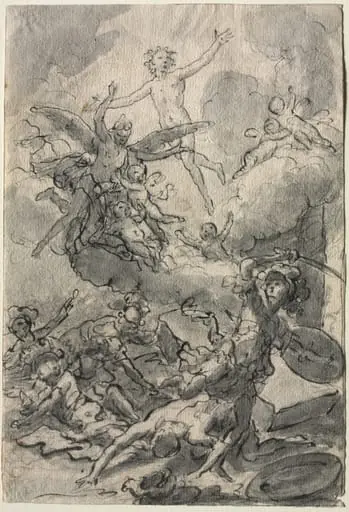 The Resurrection
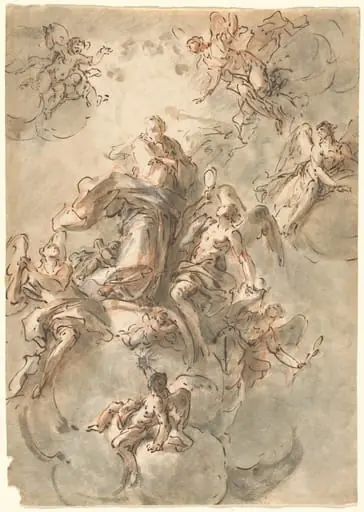 Virgin of the Immaculate Conception
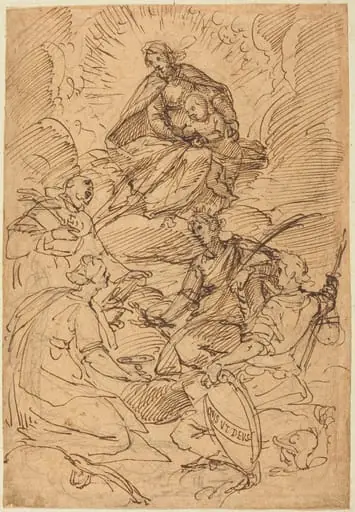 The Madonna and Child in Glory Adored by Saints
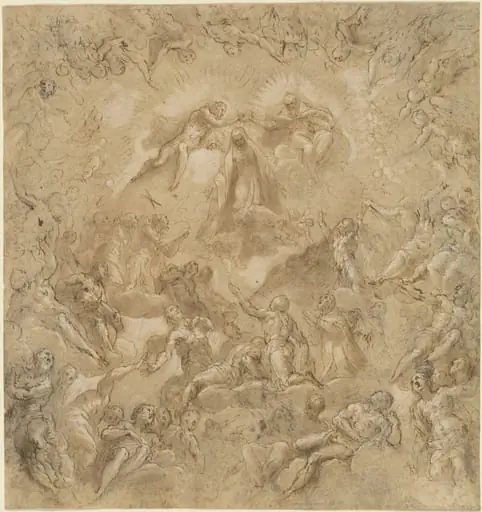 The Coronation of the Virgin
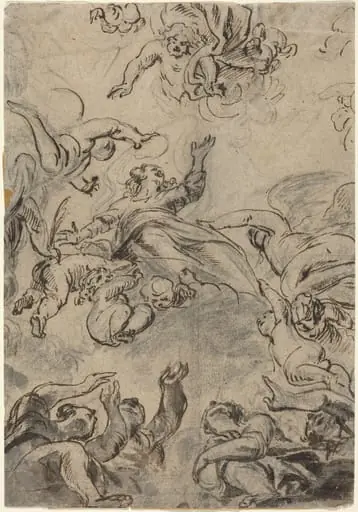 The Assumption of the Virgin
 A Compartmented Ceiling with Allegories and Myths