Artwork
The Last Judgment
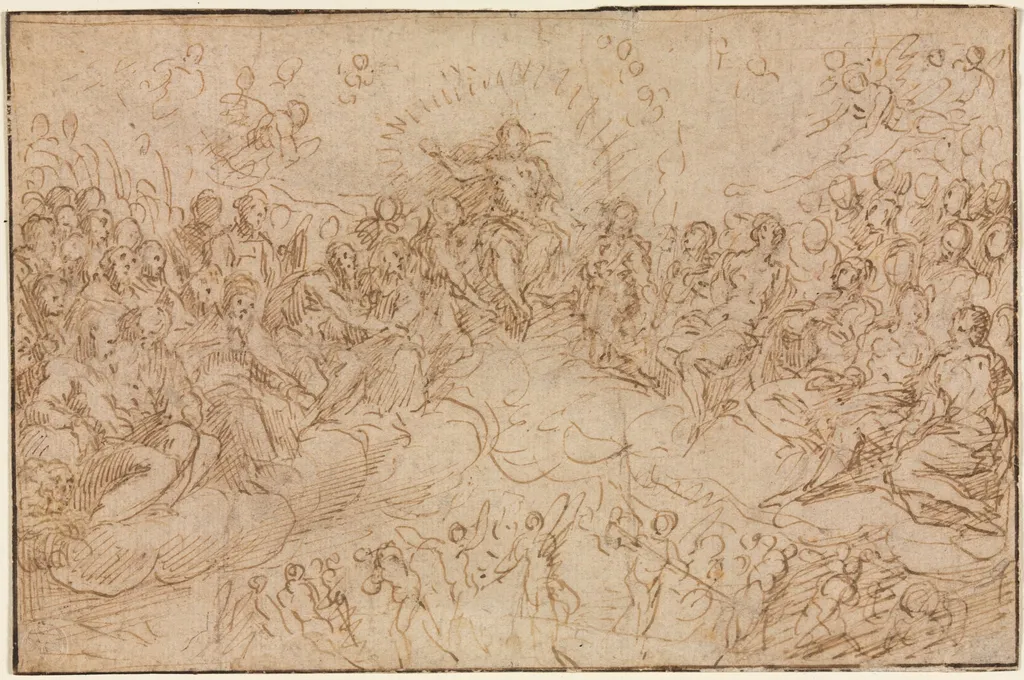
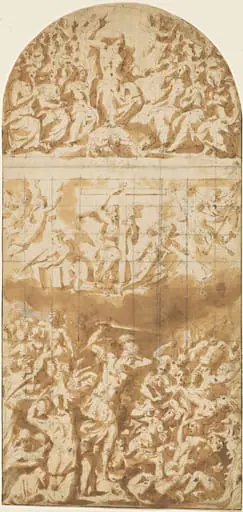
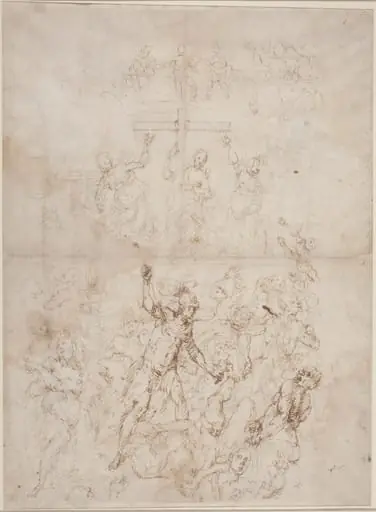
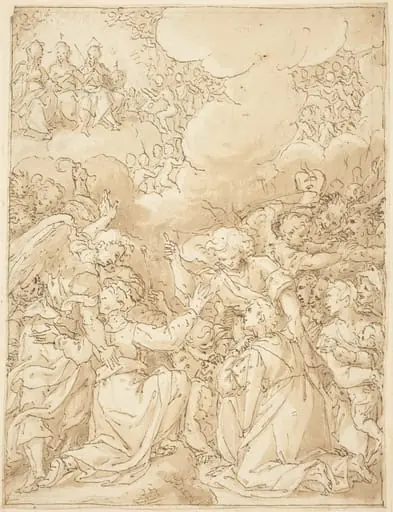
The Last Judgment is a drawing by the Renaissance artist Jean Cousin. It dates from 1504 and is held in the collection of the Cleveland Museum of Art.
About this work
Overview
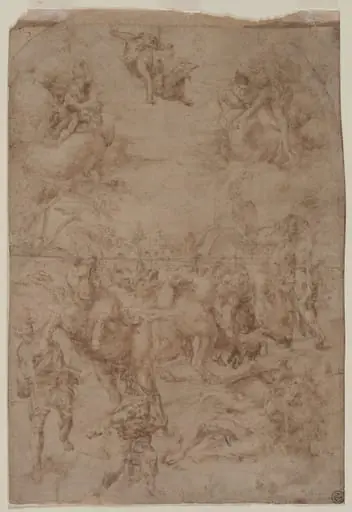
Created around 1504, this drawing by Jean Cousin depicts the resurrection of the dead as described in the Christian Last Judgment.
Created around 1504, this drawing by Jean Cousin depicts the resurrection of the dead as described in the Christian Last Judgment. Executed in a rapid, energetic style, it captures a dense assembly of figures emerging from the earth. The work is held in the collection of the Cleveland Museum of Art and stands as an example of early 16th-century French draftsmanship focused on movement rather than polished finish.
Subject & Meaning
The scene illustrates the moment of resurrection, when souls rise to face divine judgment. Figures are shown in varied states of ascent—some reaching upward with open arms, others contorted in effort or despair. The absence of clear hierarchy among the bodies suggests a universal, chaotic awakening, emphasizing the overwhelming scale of the event rather than individual salvation or damnation.
Technique & Style
Cousin employed swift, fluid lines with minimal refinement, prioritizing dynamism over anatomical precision. Overlapping forms and irregular proportions contribute to a sense of urgent motion. The drawing’s sketchlike quality reveals a focus on gesture and energy, characteristic of preparatory studies in Renaissance practice, where the immediacy of thought often outweighed final polish.
History & Provenance
The drawing entered the Cleveland Museum of Art’s collection as part of its holdings of Renaissance works on paper. Its origin traces to France in the early 1500s, likely created as a study for a larger composition, though no finished painting or fresco by Cousin on this theme is known to survive. Its preservation offers rare insight into the artist’s working process.
Context
During the early Renaissance, French artists like Cousin engaged with Italian themes but often retained a more expressive, less idealized approach. This drawing reflects a broader trend in Northern Europe where rapid sketches served as tools to explore complex narratives, balancing religious subject matter with a tactile, physical rendering of human form in motion.
Legacy
Though not widely reproduced, the drawing exemplifies how Renaissance draftsmen used quick studies to capture spiritual intensity through bodily expression. It contributes to understanding the role of preliminary work in religious art, revealing how energy and emotion could be conveyed without finished detail, influencing later generations of artists seeking raw, unfiltered composition.
Artist & collection

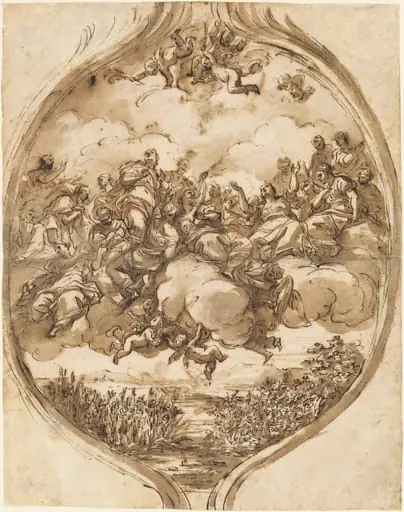 Cloud-Borne Saints above a Lake
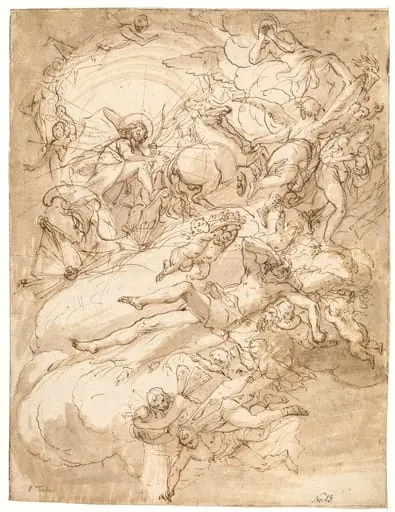 Apollo in his chariot, design for a ceiling painting
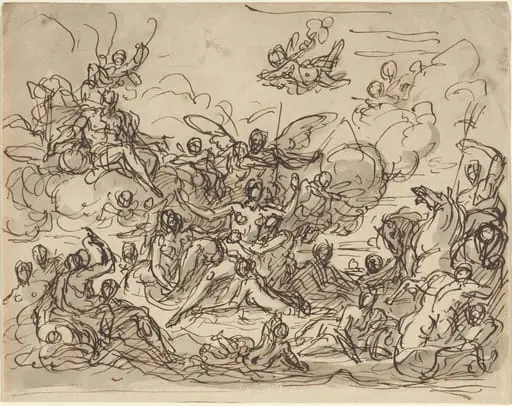 Birth of Venus
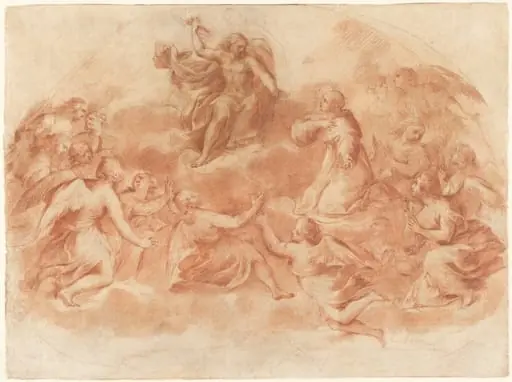 Christ in Glory with Angels and a Saint Kneeling in Adoration
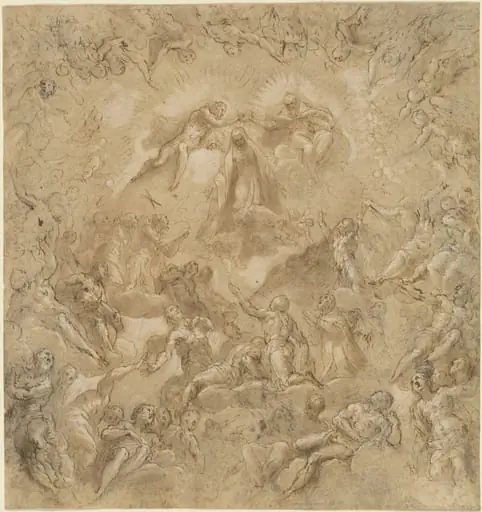 The Coronation of the Virgin
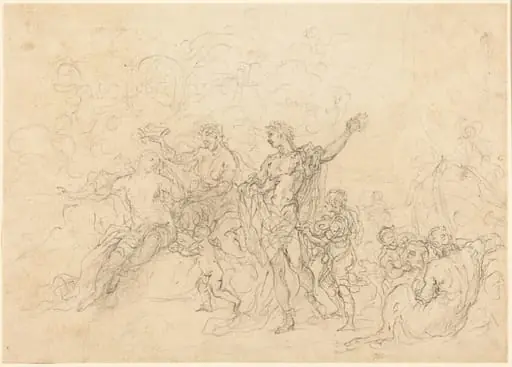 The Marriage of Bacchus and Ariadne
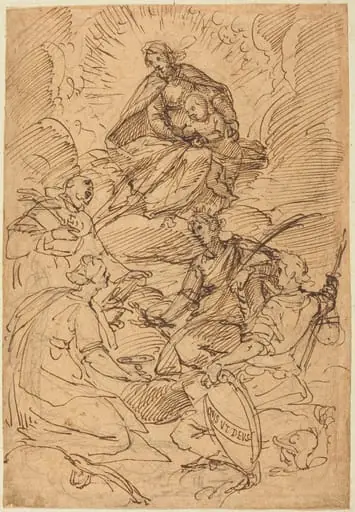 The Madonna and Child in Glory Adored by Saints
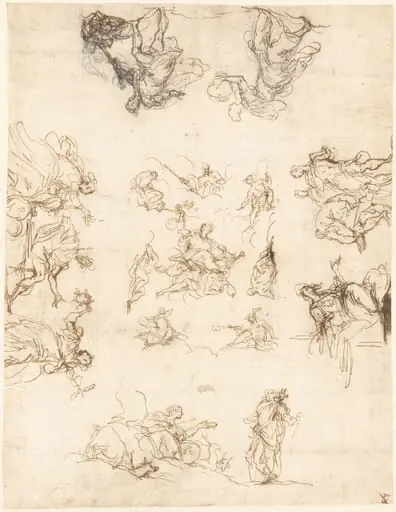 A Compartmented Ceiling with Allegories and Myths
 The Conversion of St. Paul