Artwork
Endpaper with Animals
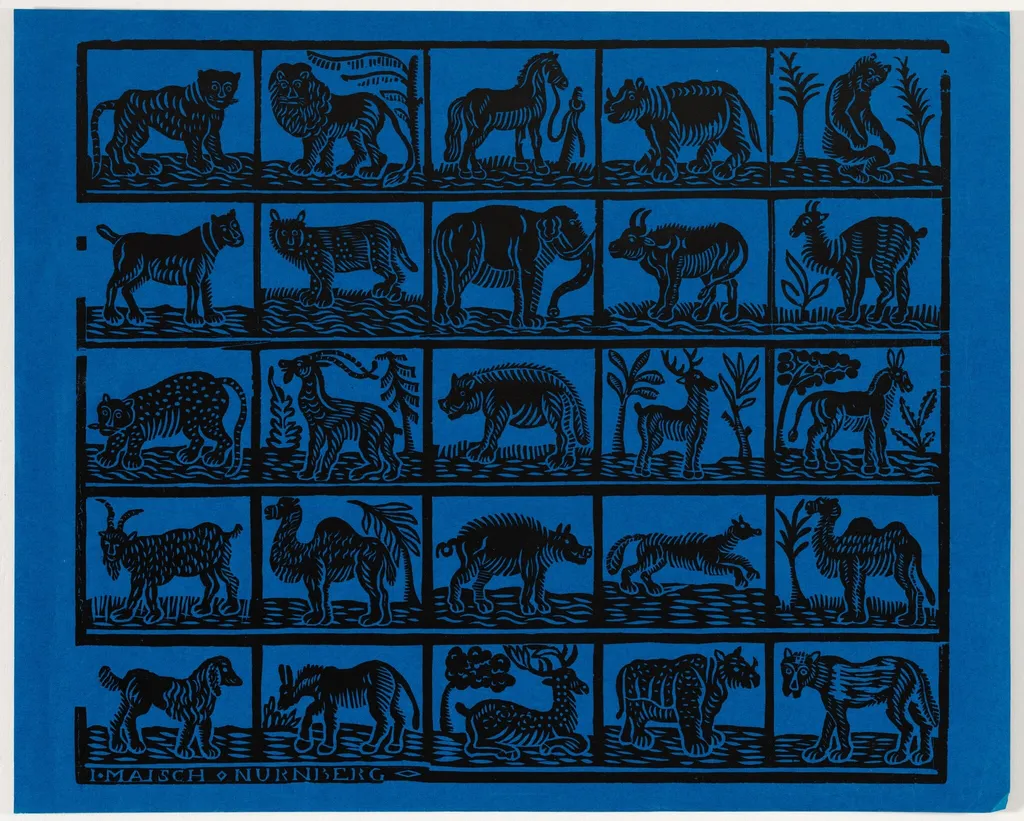
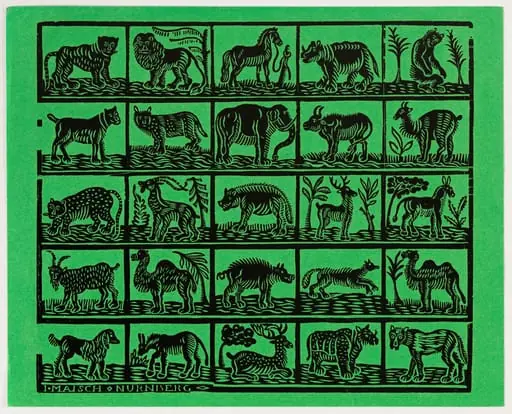
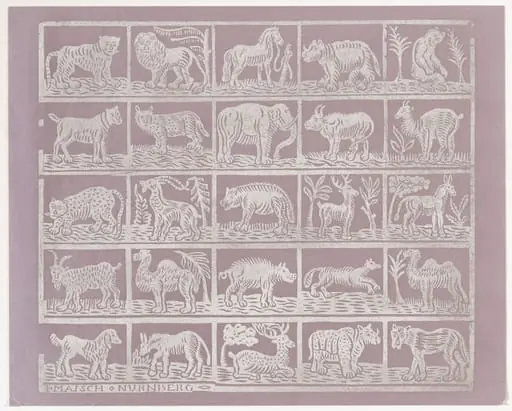
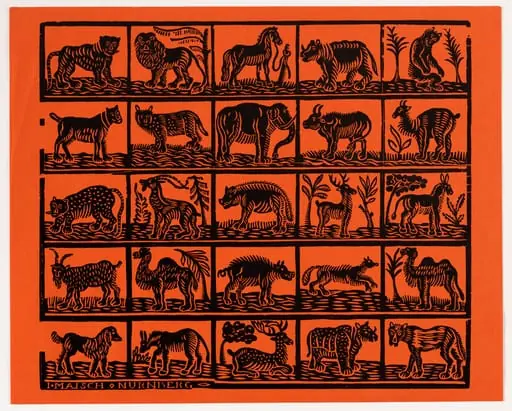
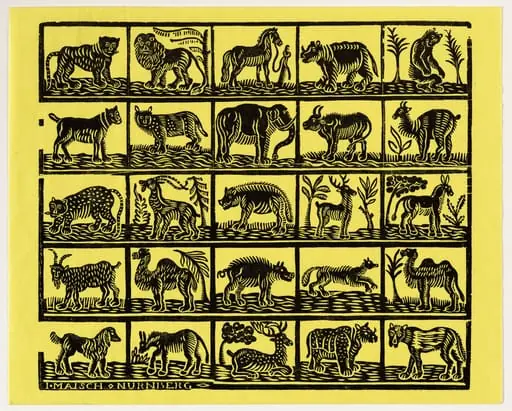
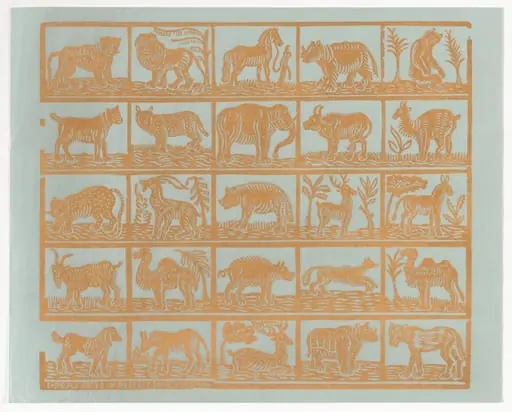
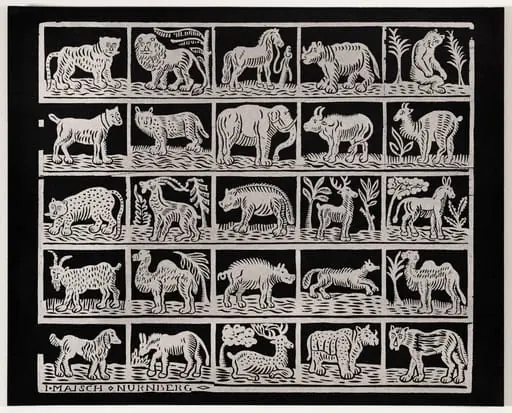
Endpaper with Animals is an ink print by the Romanticist artist Johann Maisch. It dates from 1824 and is held in the collection of the National Gallery of Art.
About this work
Overview
Johann Maisch’s 1824 woodcut titled Endpaper with Animals presents a repetitive tableau of animal silhouettes arranged in a regular grid. Each figure—ranging from tigers and lions to cows and deer—is rendered in solid black against a vivid blue paper, creating a stark visual contrast that emphasizes the graphic quality of the design.
Subject & Meaning
The work functions as a decorative pattern rather than a narrative scene, offering a catalogue of fauna that reflects 19th‑century interests in natural history and exotic species. By placing each creature in its own square, the print treats the animals as typological examples, inviting comparison across domestic and wild forms.
Technique & Style
Executed as a woodcut, the image was carved into a wooden block, inked, and pressed onto blue paper, producing bold, uniform lines. The relief process yields crisp, stamp‑like outlines that give the silhouettes a graphic immediacy, while the limited palette of black on blue underscores the print’s ornamental intent.
History & Provenance
Endpaper with Animals is a restrike, meaning it was reproduced after the original block was created in 1824. Such prints were commonly used for book endpapers or decorative inserts, and the surviving examples are typically found in private collections or museum holdings that focus on early 19th‑century printmaking.
Context
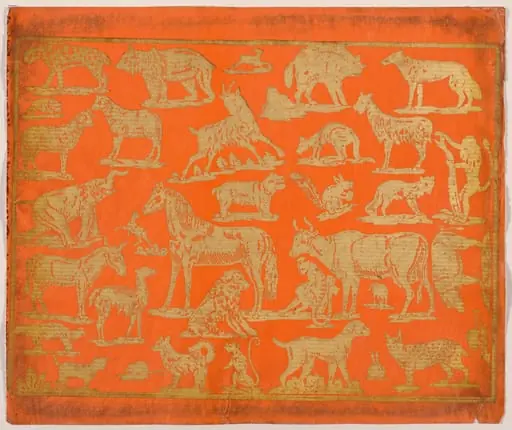
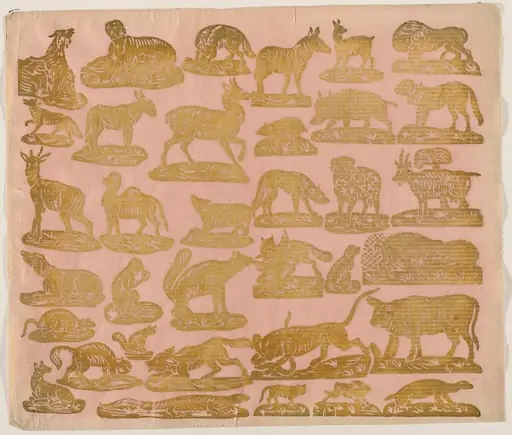
The piece belongs to a period when European printers produced patterned endpapers for binding, often incorporating exotic motifs to appeal to a growing middle‑class market. Maisch’s work aligns with contemporaneous trends in natural‑history illustration, where scientific curiosity merged with decorative arts.
Own this work as a print
Artist & collection