Artwork
Endpaper with Animals
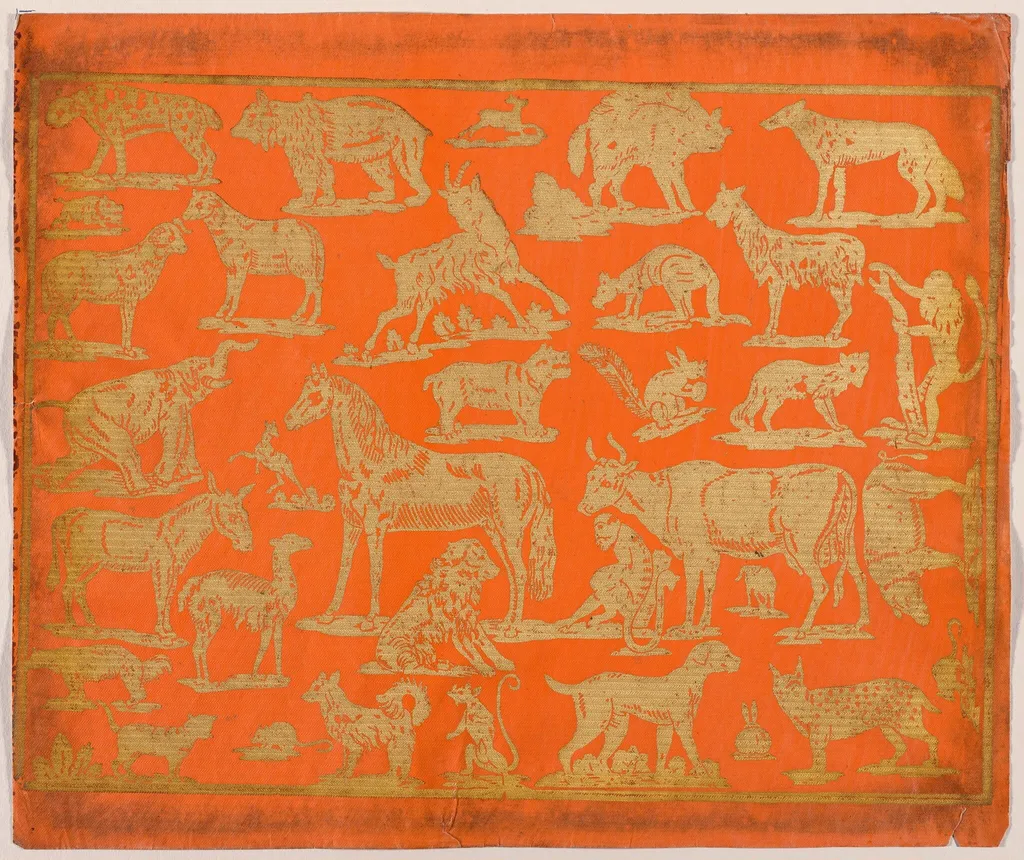
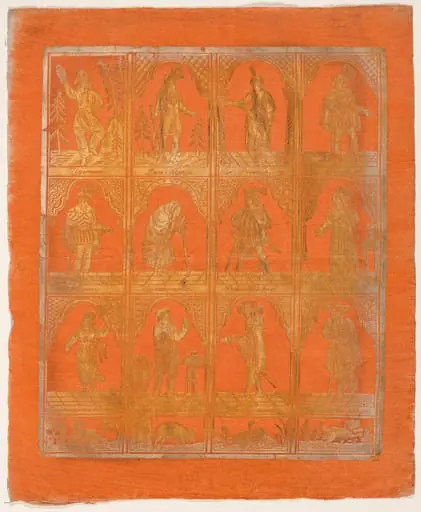
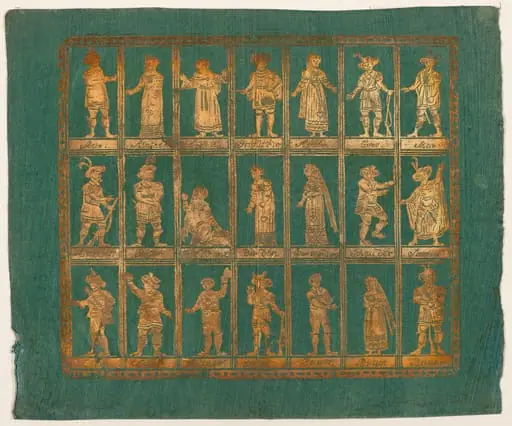
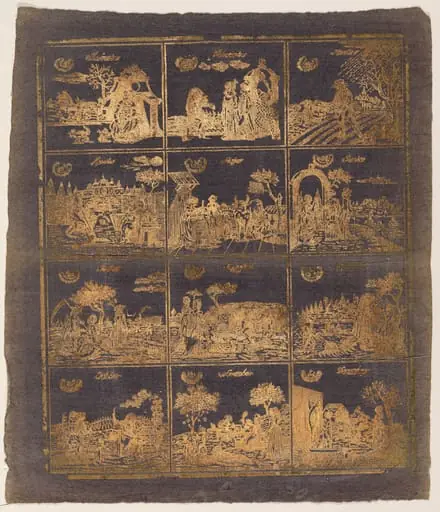
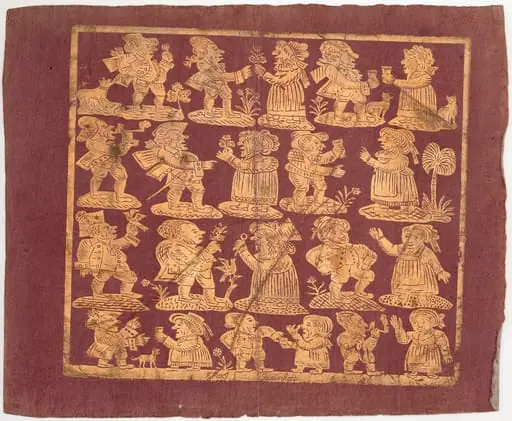
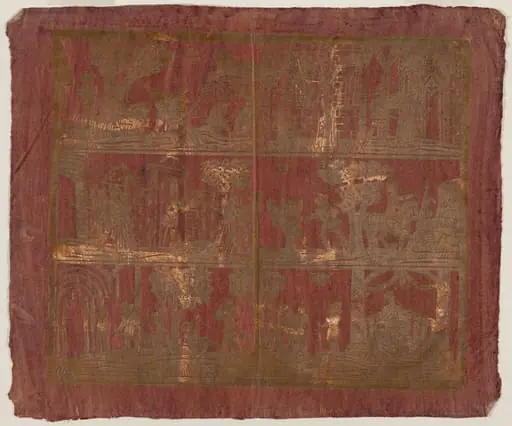
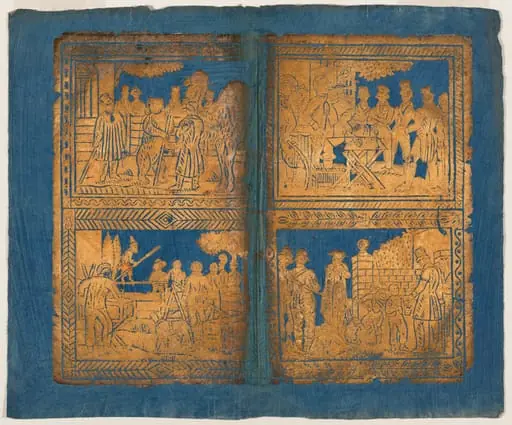
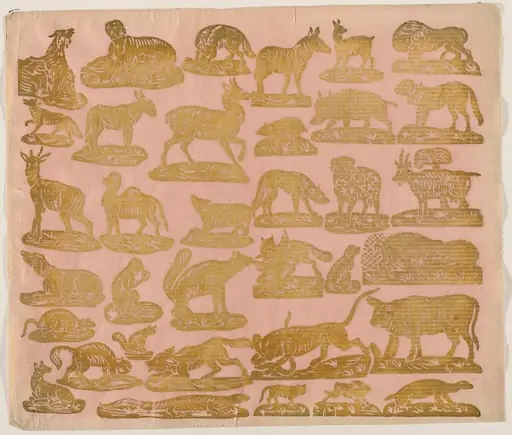
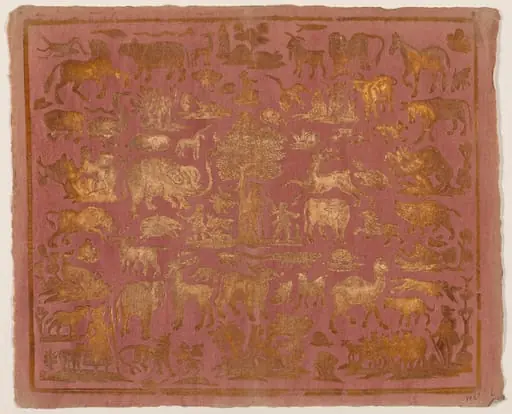
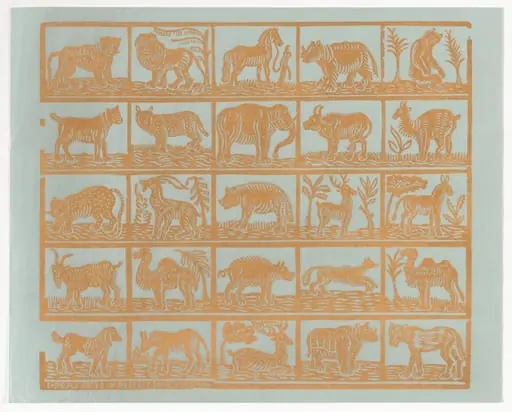
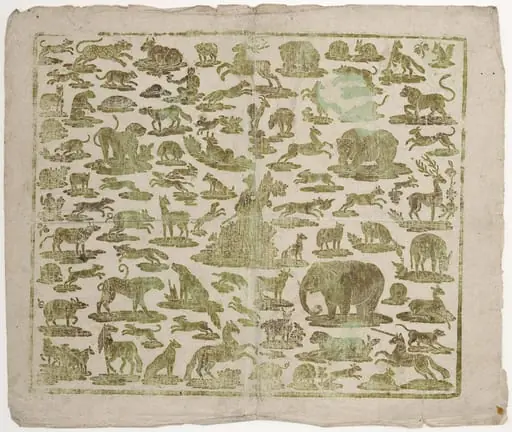
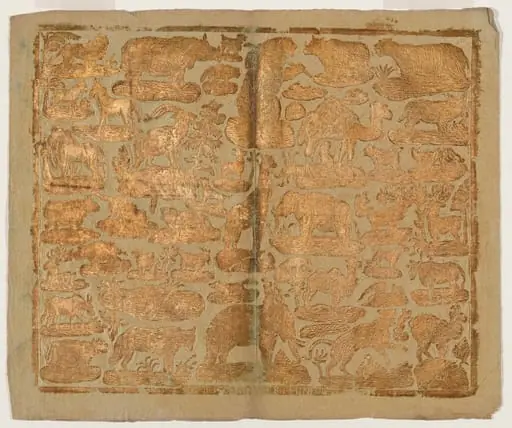
Endpaper with Animals is an ink print by the Baroque artist German 18th Century. It dates from 1750 and is held in the collection of the National Gallery of Art. The work is a woodcut print executed with metallic gold ink on a hand‑washed orange sheet of paper.
About this work
Overview
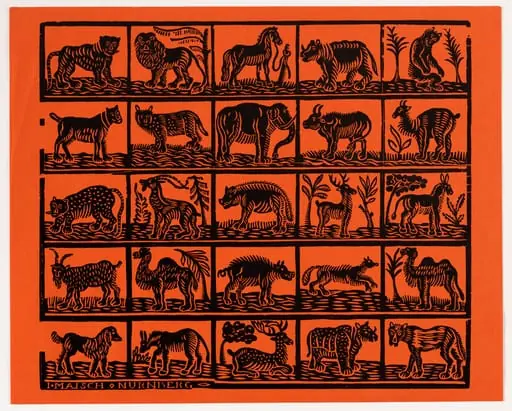
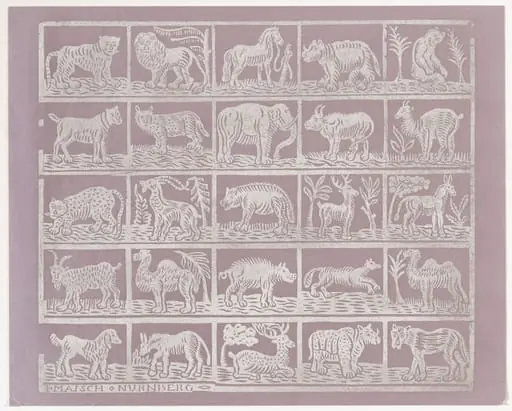
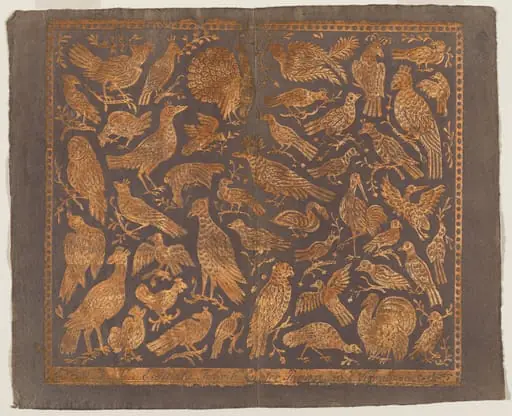
The work is a woodcut print executed with metallic gold ink on a hand‑washed orange sheet of paper. The composition fills the surface with a dense array of animal figures—deer, wolves, and birds—rendered in fine, sharply cut lines that give the gold a luminous, metallic sheen against the vivid background.
Subject & Meaning
The print depicts a lively tableau of wildlife in motion: deer sprint, wolves hunt, and birds soar, their bodies interlocking in a rhythmic pattern that suggests a natural cycle of pursuit and coexistence. The arrangement of figures facing one another or away creates a dynamic interplay, inviting contemplation of predator‑prey relationships.
Technique & Style
Created by carving the design into a wood block, the artist applied gold metallic ink to the incised surfaces before pressing the block onto the orange paper. The thin, precise cuts produce crisp outlines, while the metallic pigment catches light, emphasizing the contrast between the warm paper and the shimmering figures.
History & Provenance
The piece is identified as an endpaper, a decorative element traditionally used to bind the interior of a book. Its hand‑washed orange paper and use of gold ink indicate a high‑quality production, likely intended for a luxury volume or as a standalone decorative print.
Context
Woodcut printing, a relief technique dating back to early printmaking, was often employed for book illustrations and decorative borders. The choice of gold metallic ink aligns with historic practices of enhancing visual impact in illuminated manuscripts and deluxe publications.
Legacy
While specific attribution remains uncertain, the work exemplifies the enduring appeal of woodcut’s tactile line work combined with the opulence of metallic pigments, reflecting a continued fascination with integrating fine art techniques into functional book design.
Artist & collection
Artist
This artist kept meticulous endpapers—like secret notebooks—filled with tiny gold figures standing in a row.