Artwork
Endpaper with Animals
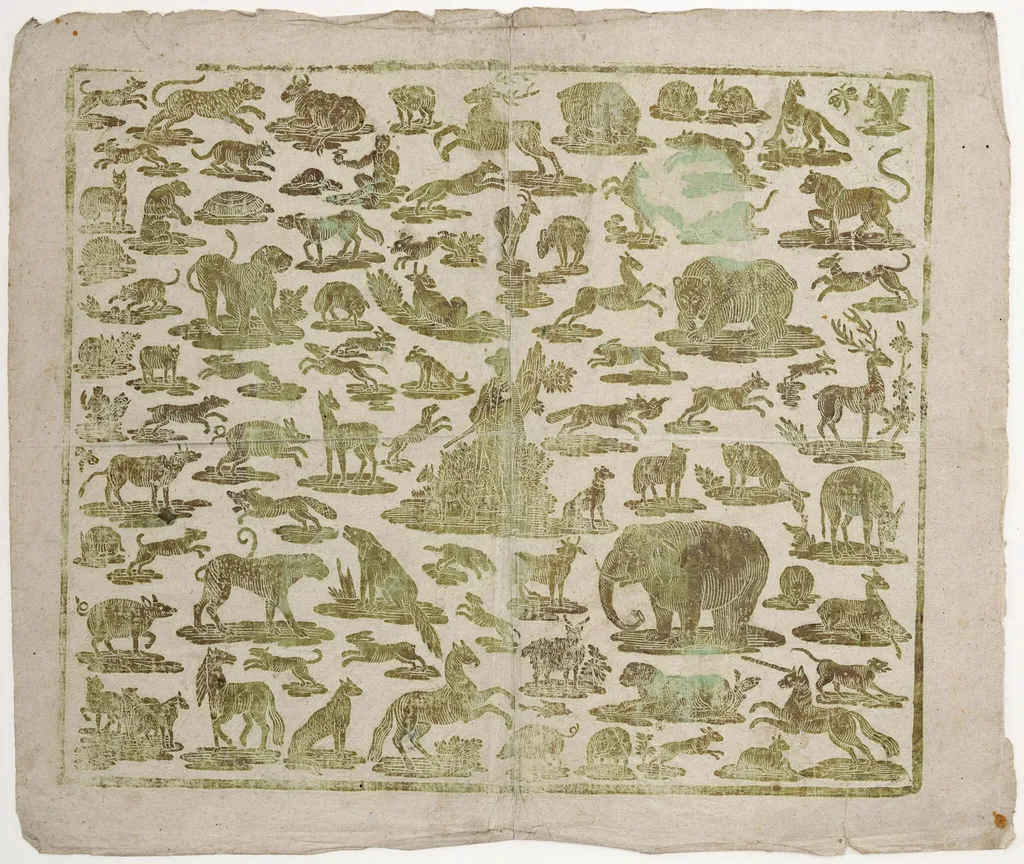
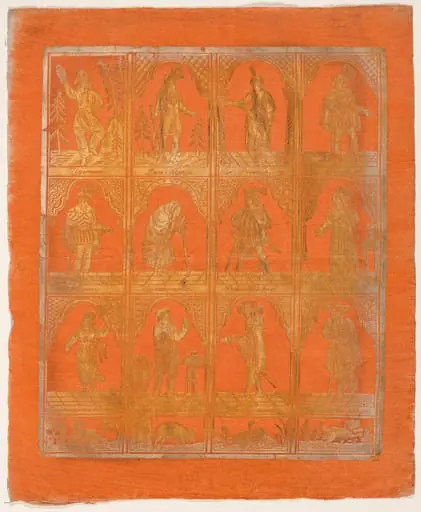
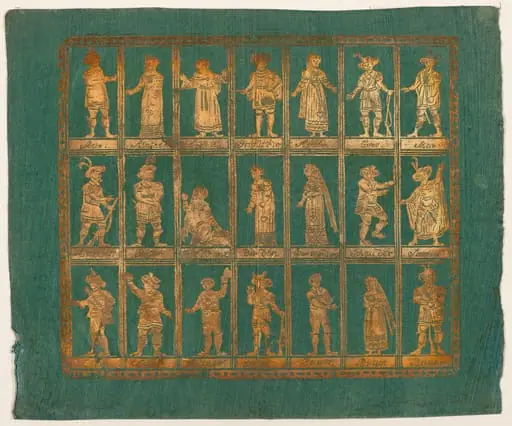
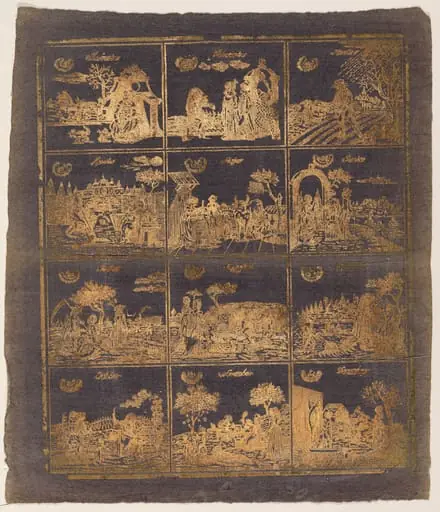
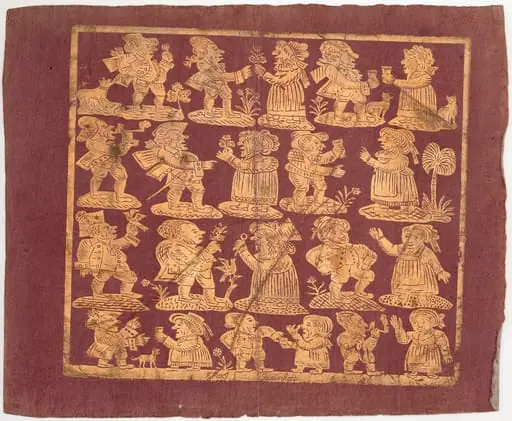
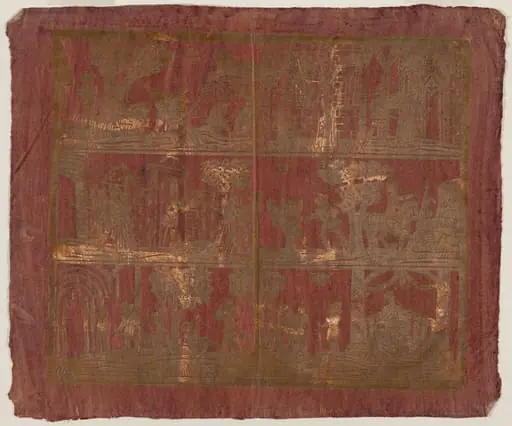
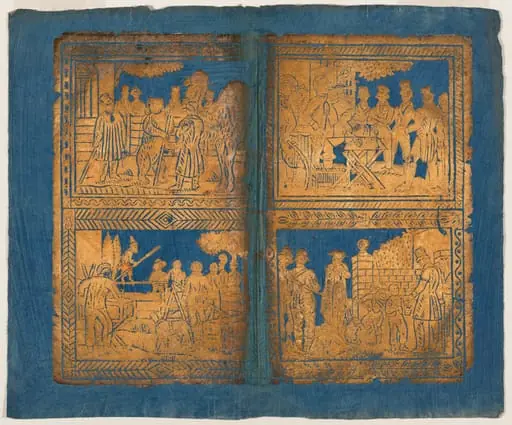
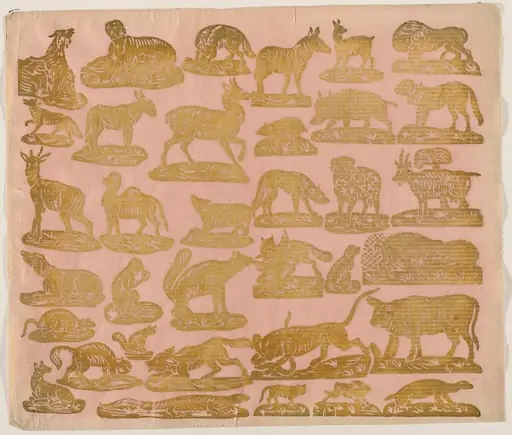
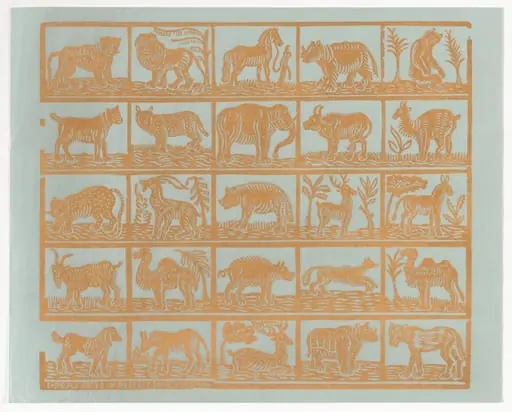
Endpaper with Animals is an ink print by the Romanticist artist German 18th Century. It dates from 1790 and is held in the collection of the National Gallery of Art. This endpaper is a woodcut print featuring a dense arrangement of small animals rendered in gold ink on white paper.
About this work
Overview
Designed as a decorative interior page, likely for a bound volume, it uses the woodcut technique to produce repeated, intricate forms.
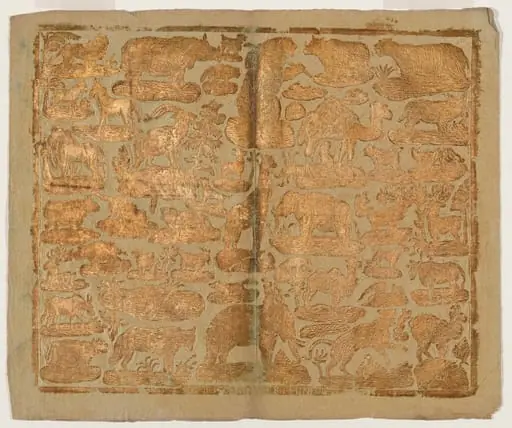
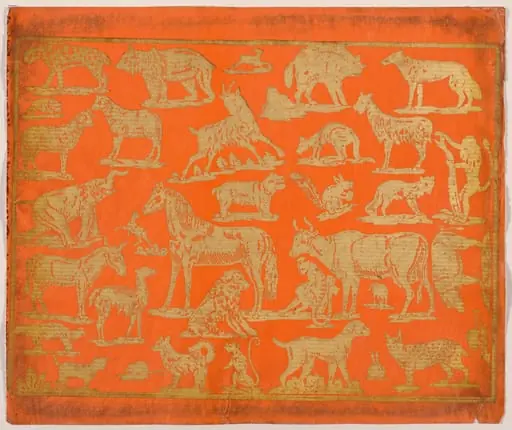
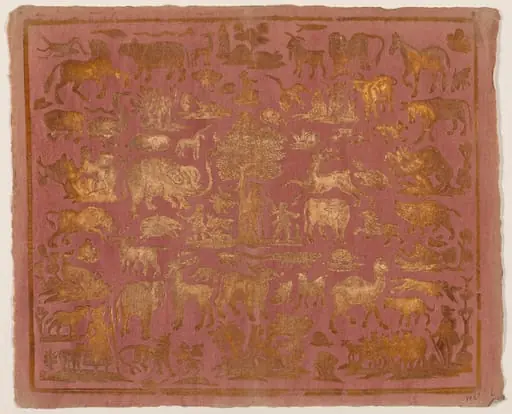
This endpaper is a woodcut print featuring a dense arrangement of small animals rendered in gold ink on white paper. Designed as a decorative interior page, likely for a bound volume, it uses the woodcut technique to produce repeated, intricate forms. The gold pigment contrasts vividly with the pale ground, emphasizing the delicate outlines and subtle postures of the creatures. Its layout suggests it was intended to be folded or attached to a book’s inner cover, serving both ornamental and structural purposes.
Subject & Meaning
The scene depicts domestic and pastoral animals—cats, dogs, and rabbits—each rendered with individualized gestures: alert, resting, or in motion. No narrative or symbolic hierarchy is evident; instead, the animals exist in a quiet, rhythmic coexistence across the surface. Their placement on clouds and grass patches implies a dreamlike, weightless space, possibly evoking a sense of harmony or whimsy rather than allegory. The absence of human figures reinforces a focus on the natural world in miniature.
Technique & Style
Executed as a woodcut, the image was carved from a wooden block, inked, and pressed onto paper. Fine lines define each animal’s form, with minimal shading and clear contours typical of the medium. The use of gold pigment, applied over the printed impression, adds luminosity and texture, distinguishing it from standard monochrome prints. The composition avoids perspective, favoring a flat, patterned arrangement that suits its function as a decorative surface rather than a pictorial scene.
History & Provenance
The piece originates from a bookbinding tradition in which endpapers served both protective and aesthetic roles. While its exact origin and date are unrecorded, similar gold-decorated woodcut endpapers appear in European and East Asian manuscripts from the 16th to 18th centuries. Its survival suggests it was part of a valued volume, possibly a devotional or literary text. The intact condition implies careful handling and storage, though its specific provenance remains undocumented.
Context
In bookbinding practices of the early modern period, decorative endpapers were common in luxury volumes, often using printed or hand-painted designs to signal craftsmanship. Gold leaf or pigment was reserved for high-status objects, indicating this endpaper belonged to a refined edition. The choice of animals, rather than floral or geometric motifs, reflects a personal or regional preference, possibly tied to folk imagery or domestic symbolism in the culture of its origin.
Legacy
This endpaper exemplifies the quiet artistry of functional book decoration, a category often overlooked in art history. Its survival offers insight into how everyday book objects were elevated through skilled craftsmanship and material choice. Though not widely reproduced or studied, it contributes to understanding the intersection of print, ornament, and material culture in pre-industrial bookmaking traditions.
Artist & collection
Artist
This artist kept meticulous endpapers—like secret notebooks—filled with tiny gold figures standing in a row.