Artwork
Endpaper with Animals
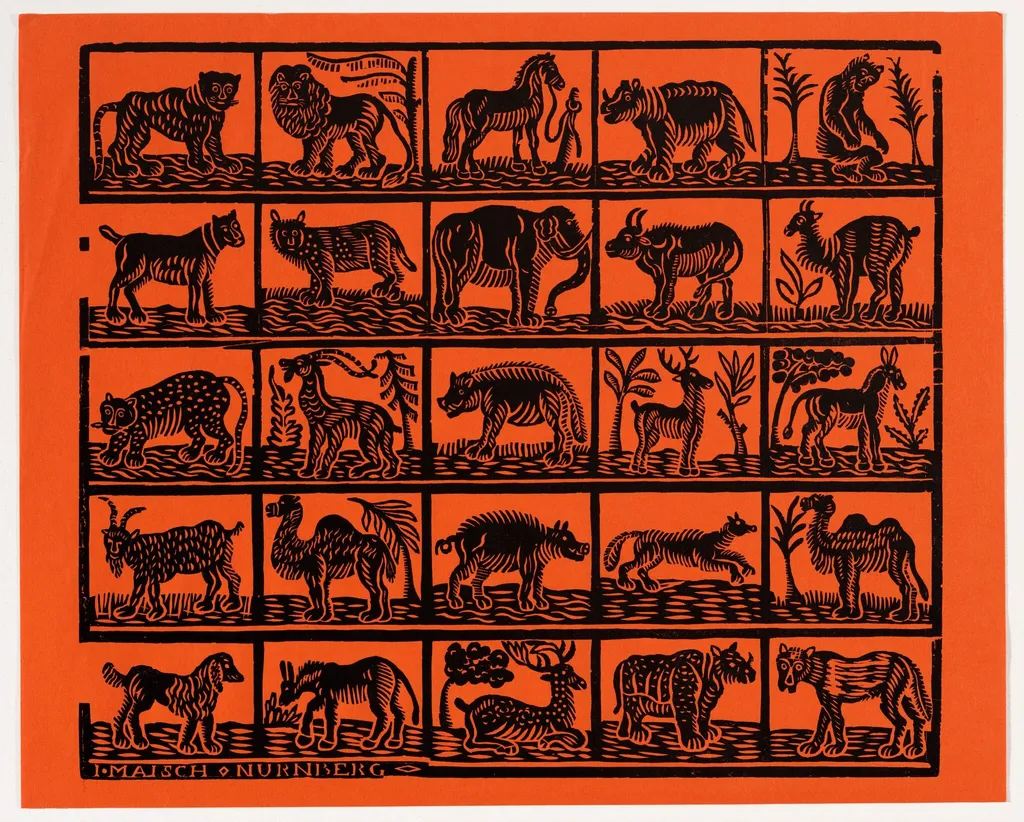
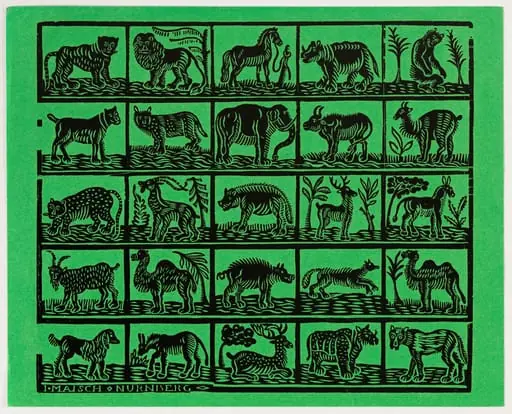
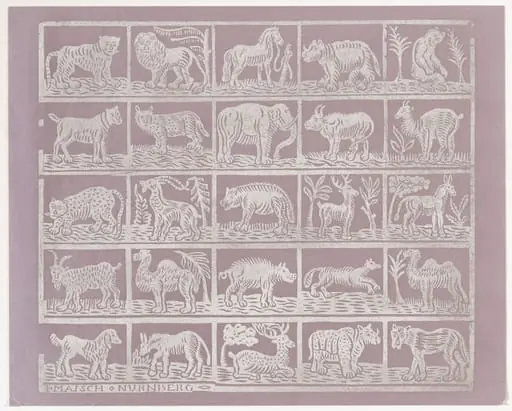
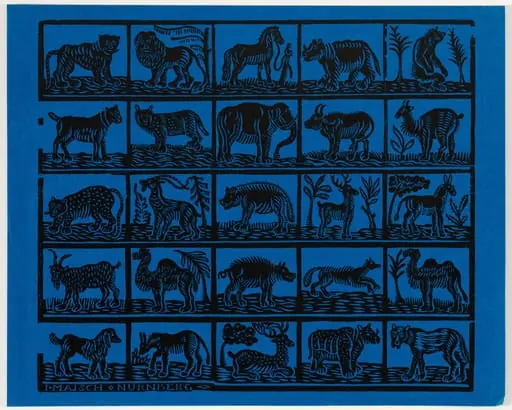
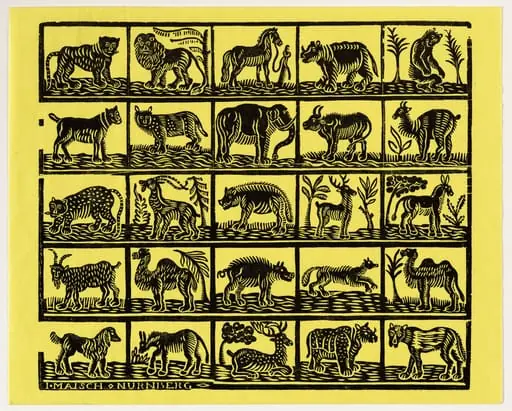
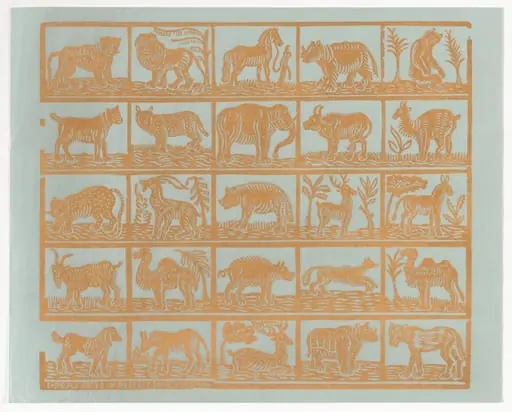
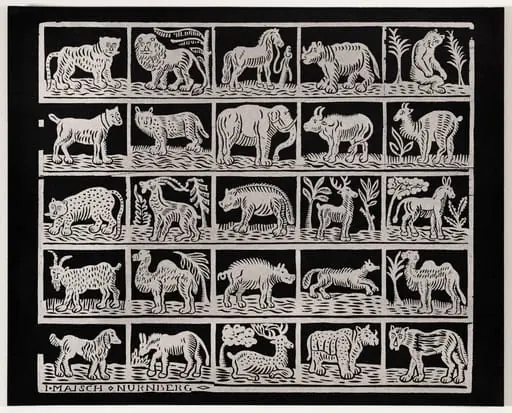
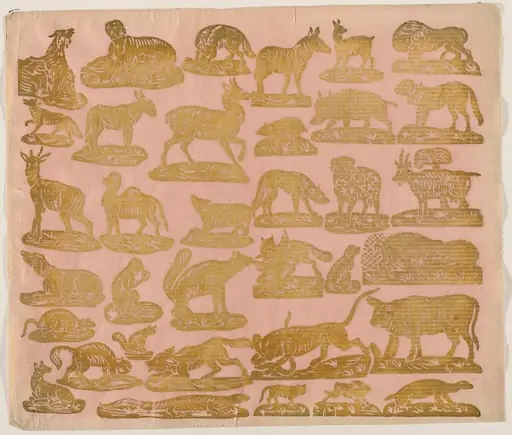
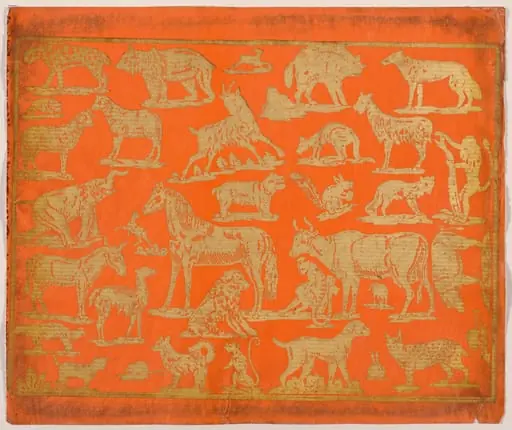
Endpaper with Animals is an ink print by the Romanticist artist Johann Maisch. It dates from 1824 and is held in the collection of the National Gallery of Art.
About this work
Overview
Johann Maisch’s 1824 woodcut, titled Endpaper with Animals, presents a repetitive tableau of animal silhouettes rendered in stark black against a vivid orange substrate. The composition consists of a regular grid in which each cell contains a single creature—ranging from lions and deer to cattle and birds—depicted in a minimalist, linear fashion.
Subject & Meaning
The work functions as a visual bestiary, cataloguing a variety of fauna in a systematic arrangement reminiscent of a puzzle or reference page. By isolating each animal within its own square, the print emphasizes the individuality of each species while also suggesting a collective order, inviting viewers to consider the diversity and classification of the natural world.
Technique & Style
Executed as a woodcut, the image relies on carved relief blocks to produce bold, unmodulated lines. The absence of shading and the exclusive use of black pigment on orange paper create a high-contrast effect, accentuating the graphic clarity of the forms. The flat, clean outlines reflect a utilitarian aesthetic typical of early 19th‑century printmaking.
History & Provenance
Originally produced as a restrike, the print was likely intended for inclusion as an endpaper in bound volumes, serving both decorative and illustrative purposes. Though specific ownership records are scarce, the piece is attributed to Maisch, a German printmaker active in the early 1800s, and exemplifies the period’s interest in natural history illustration.
Artist & collection