Artwork
Endpaper with Animals
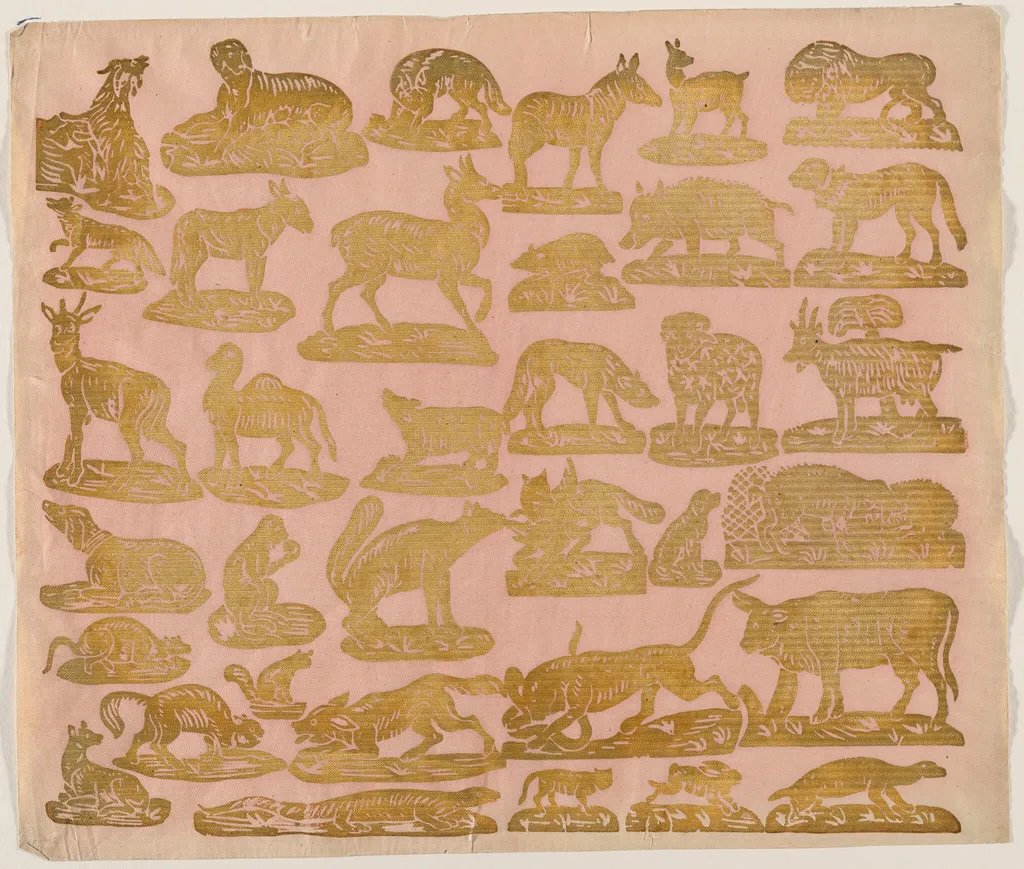
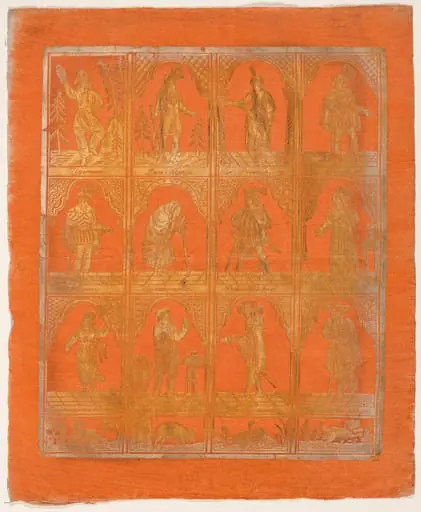
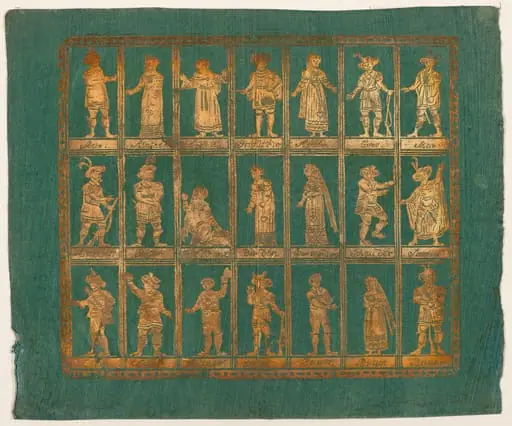
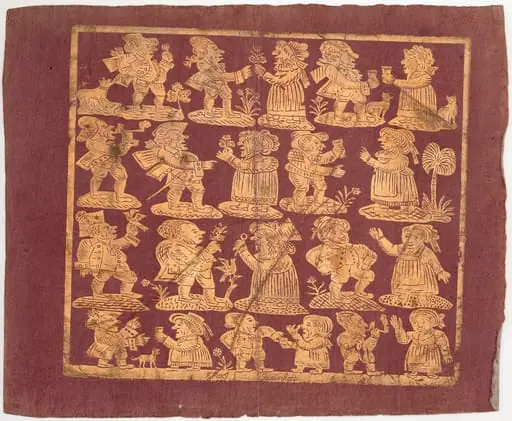
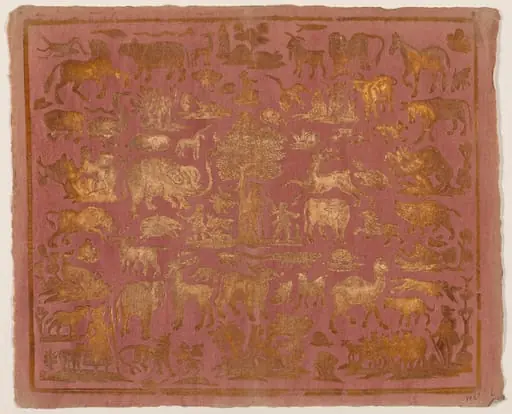
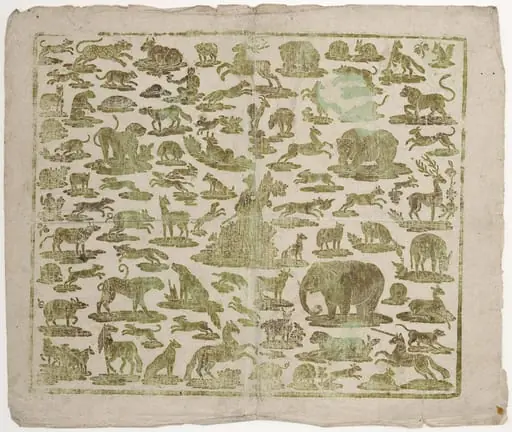
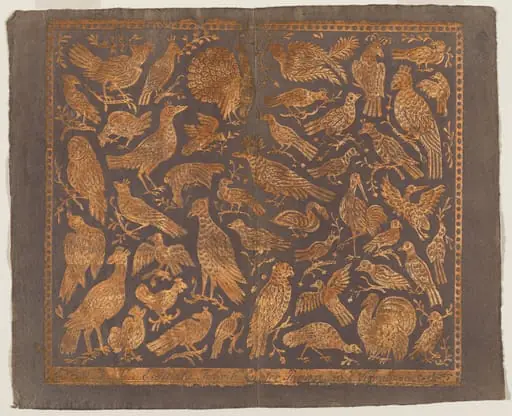
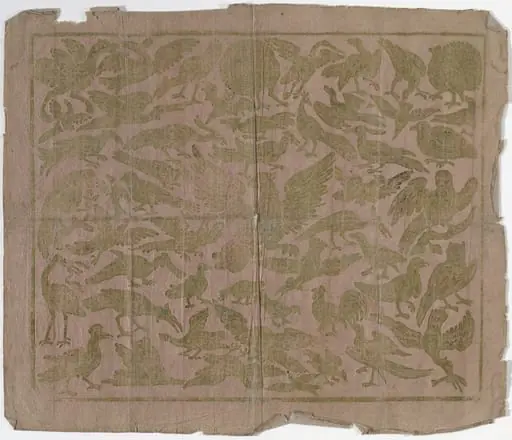
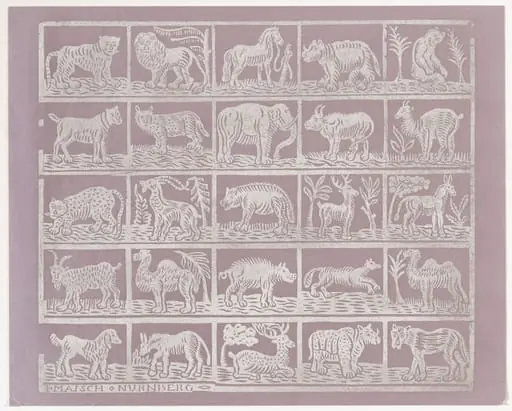
Endpaper with Animals is an ink print by the Baroque artist German 18th Century. It dates from 1750 and is held in the collection of the National Gallery of Art. This print features a repetitive pattern of small animal and human figures stamped in gold metallic ink on pink hand-washed paper.
About this work
Overview
This print features a repetitive pattern of small animal and human figures stamped in gold metallic ink on pink hand-washed paper.
This print features a repetitive pattern of small animal and human figures stamped in gold metallic ink on pink hand-washed paper. Created using the woodcut technique, the design relies on carved blocks to transfer the image uniformly across the surface. The contrast between the warm pink background and the luminous gold enhances the clarity of the forms, suggesting a decorative function rather than narrative intent.
Subject & Meaning
The composition includes deer, zebras, antelopes, and diminutive human figures, some holding signs or standing beside the animals. No clear story emerges, but the arrangement evokes a sense of harmonious coexistence. The figures, though stylized, convey movement and variety in posture, hinting at themes of nature, ritual, or symbolic procession without explicit religious or political context.
Technique & Style
The image was produced through woodcut printing, where carved wooden blocks were inked and pressed onto paper. Gold metallic ink was applied in a stamped manner, not hand-painted, indicating mass production potential. The figures are simplified yet dynamic, with minimal detail but clear outlines, emphasizing rhythm and repetition over individual expression.
History & Provenance
The work appears to be an endpaper, likely from a book or album produced in the early 20th century, when decorative printed papers were commonly used in binding. Its use of metallic ink and hand-washed paper suggests a craft-oriented, possibly European or American publisher aiming for elegance in commercial book design. No specific artist or date is documented.
Context
During the early 1900s, decorative prints like this were popular in illustrated books, stationery, and gift publications. The use of animals in repeating patterns aligned with Art Nouveau and Arts and Crafts aesthetics, which favored organic forms and handcrafted appearances—even when mechanically reproduced. Gold ink added a touch of luxury to otherwise modestly produced items.
Legacy
This piece exemplifies how industrial print techniques were adapted to mimic artisanal quality in commercial design. While not attributed to a major artist, it reflects broader trends in early 20th-century book arts, where pattern and material were used to elevate everyday objects. Surviving examples like this are now valued as artifacts of design history rather than fine art.
Artist & collection
Artist
This artist kept meticulous endpapers—like secret notebooks—filled with tiny gold figures standing in a row.