Artwork
James I
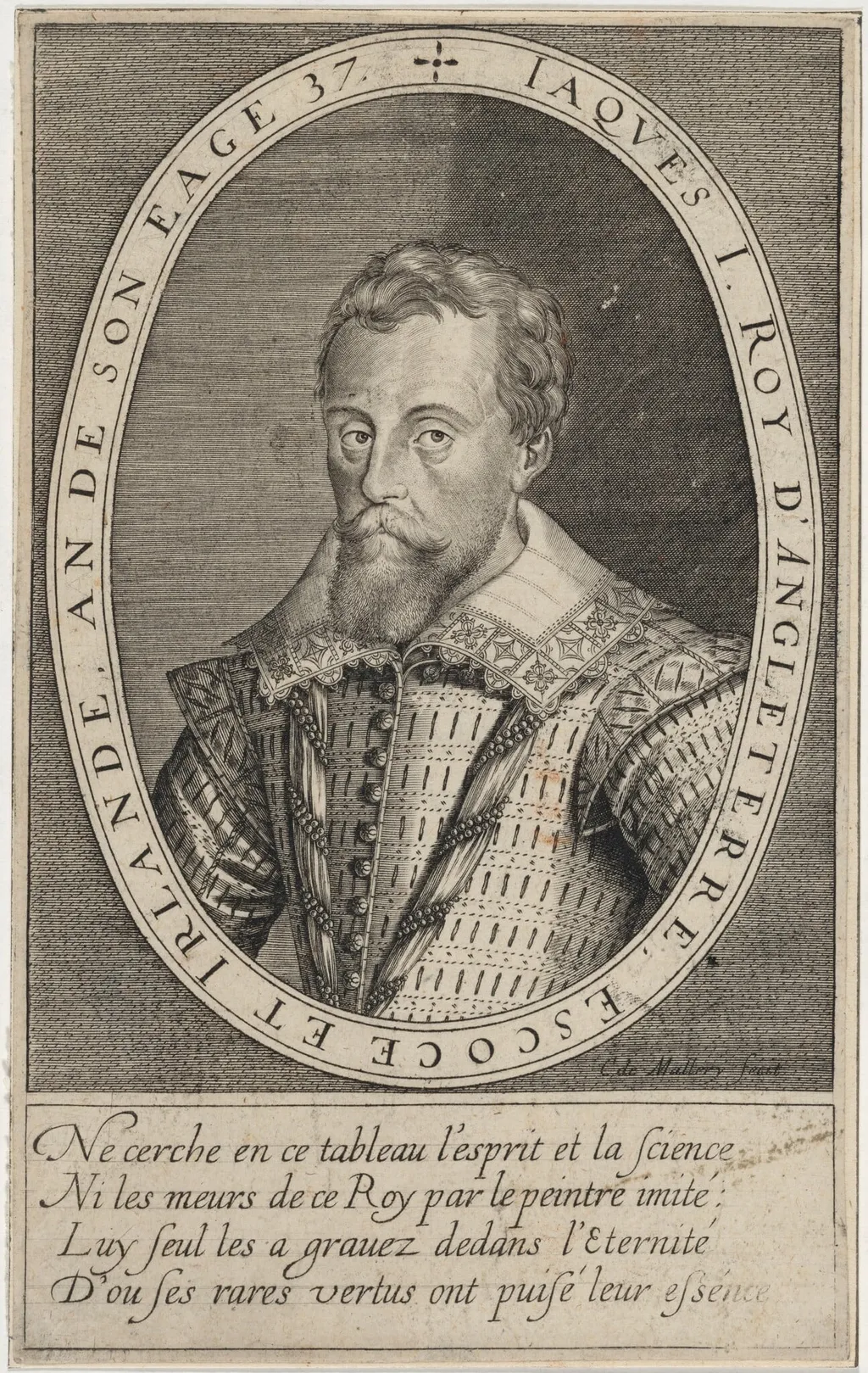
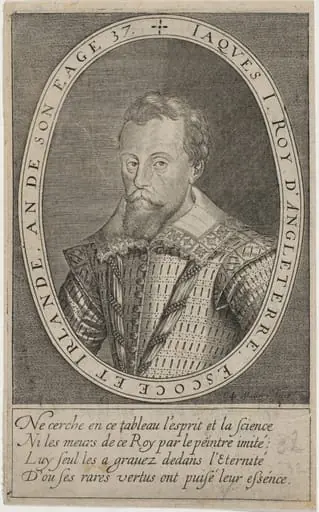
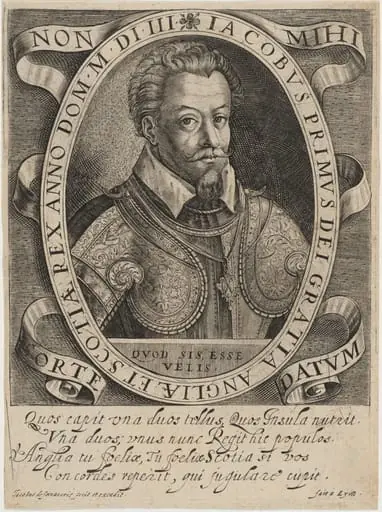
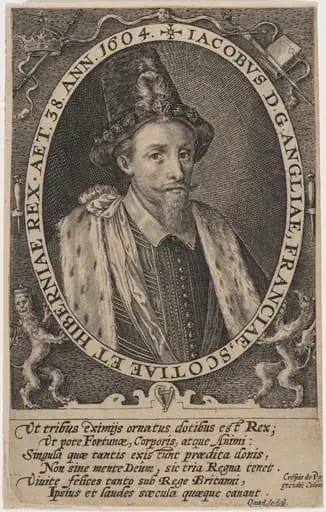
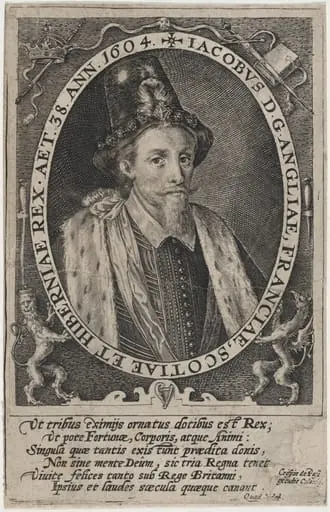
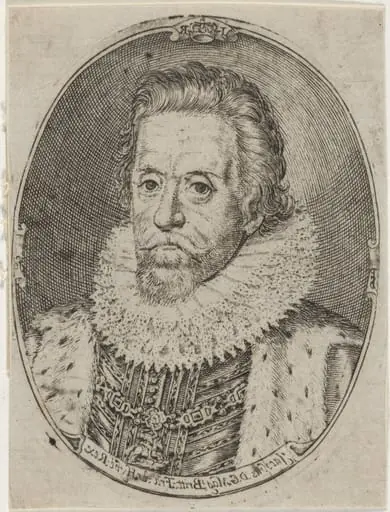
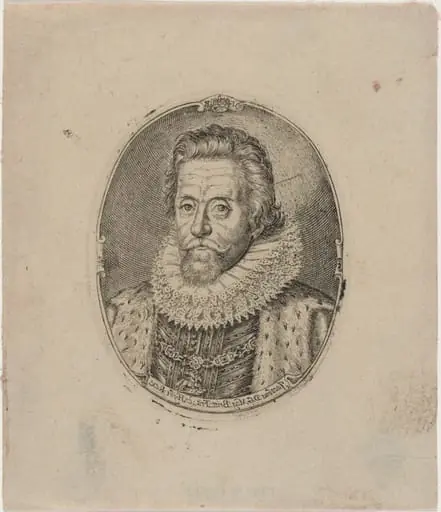
James I is an ink print by the Renaissance artist Karel van Mallery. It dates from 1603 and is held in the collection of the National Gallery of Art.
About this work
Overview
Karel van Mallery, a Flemish engraver active in Antwerp and Paris, produced this 1603 engraving of James I. Known for religious imagery and reproductive prints, Mallery translated existing portraits into detailed graphic form. This work belongs to a series of royal portraits he engraved during the early 17th century, reflecting his role in disseminating images of European nobility through print.
Subject & Meaning
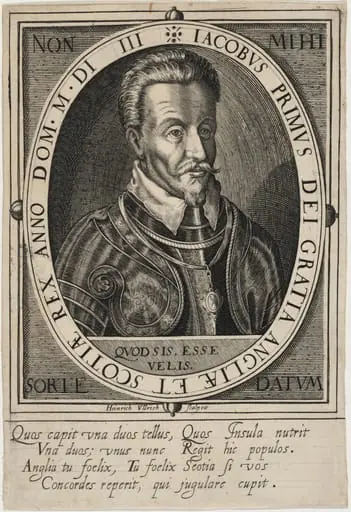
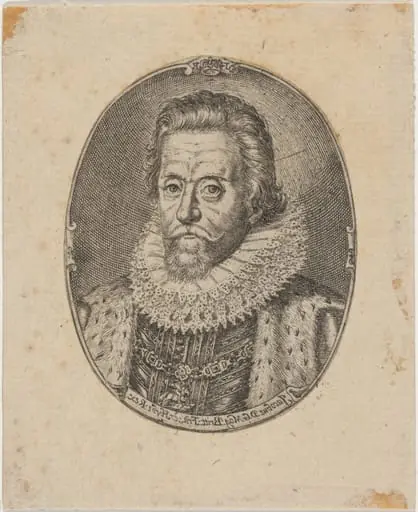
The portrait depicts James I of England in formal court attire, conveying authority through rigid posture and elaborate dress.
The portrait depicts James I of England in formal court attire, conveying authority through rigid posture and elaborate dress. The serious expression and static composition align with conventions of royal representation at the time, emphasizing legitimacy and dignity rather than individual personality. The image served as a visual tool for political recognition across Europe, where printed portraits circulated among elites.
Technique & Style
Mallery employed fine, precise lines typical of Northern Renaissance engraving to render the king’s lace collar, embroidery, and facial features. The meticulous attention to textile patterns and subtle gradations of shadow demonstrates mastery of the burin tool. The composition is tightly framed, focusing attention on the monarch’s upper body, a common approach in reproductive portraiture of the period.
History & Provenance
Created in 1603, the year James I ascended the English throne, the engraving likely circulated to affirm his legitimacy in continental Europe. Mallery, working in Paris, may have based the image on an English portrait now lost. No definitive early ownership records survive, but the print’s survival in multiple institutional collections suggests it was widely distributed among collectors and diplomats.
Context
During the early 1600s, engraved portraits of monarchs were key to political messaging, especially as print culture expanded. Mallery’s work fits within a broader trend of Flemish and Dutch engravers reproducing portraits for international audiences. His engagement with English royalty reflects the interconnected artistic networks between the Low Countries and the British court during the Union of the Crowns.
Legacy
Though Mallery is not among the most widely recognized engravers of his time, his portraits of James I contributed to the visual canon of early Stuart monarchy. The engraving remains a documented example of how print facilitated the spread of royal imagery beyond court circles, influencing later portrait conventions in Northern Europe.
Artist & collection
Artist
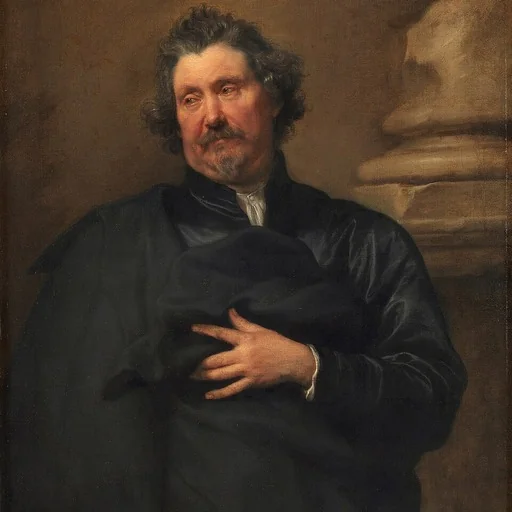
Karel van Mallery (1571–1635?) was a Flemish engraver who mainly worked on religious subjects and portraits and was also a reproductive engraver. He worked in Antwerp and Paris.