Artwork
James I, King of England
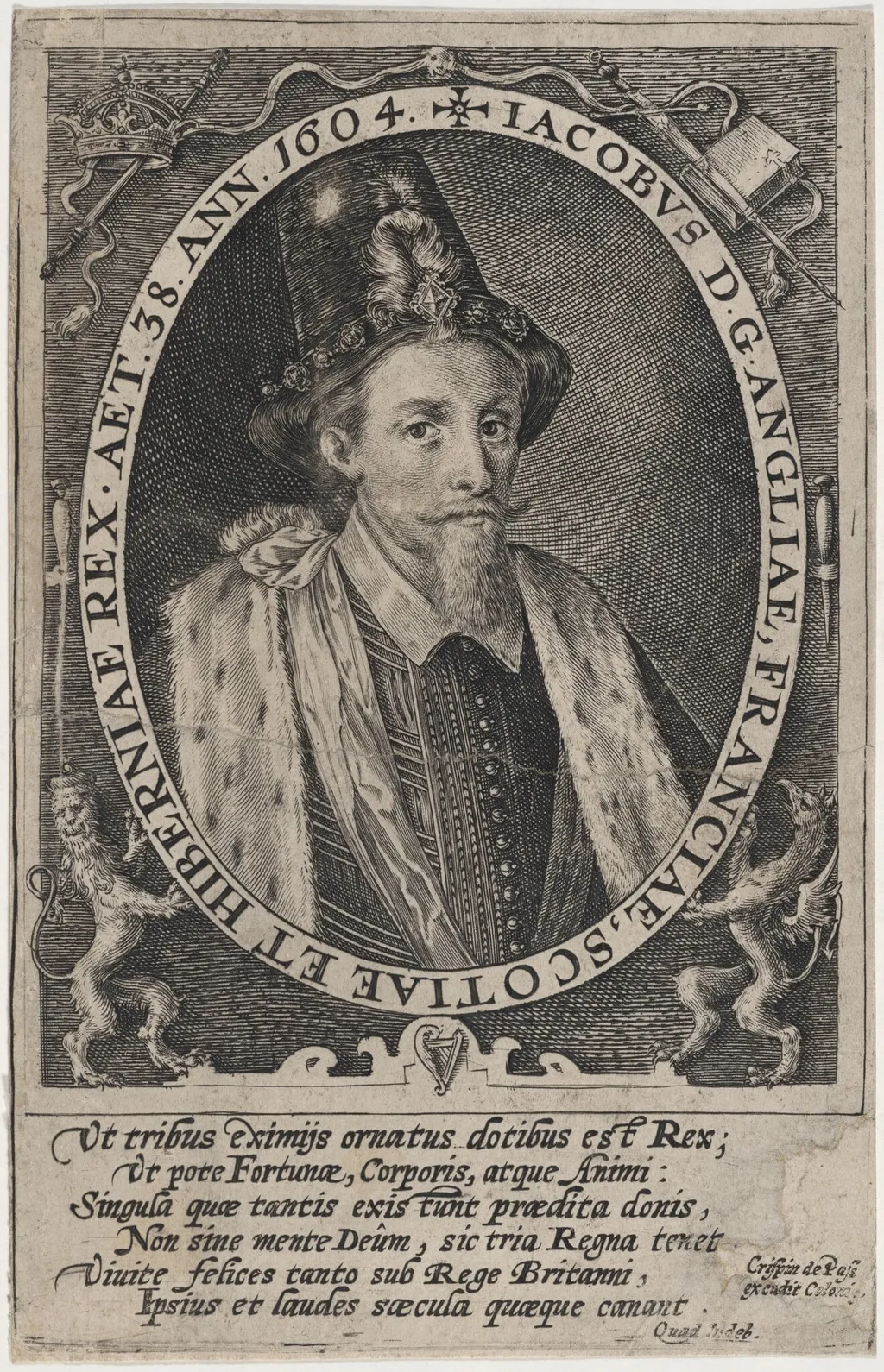
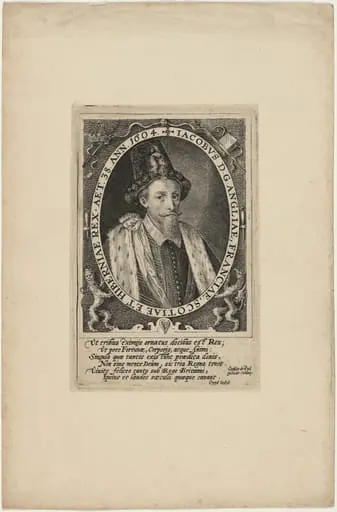
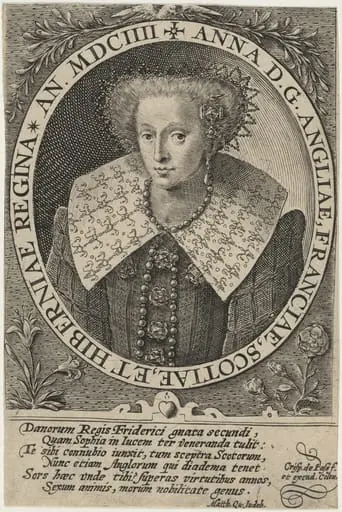
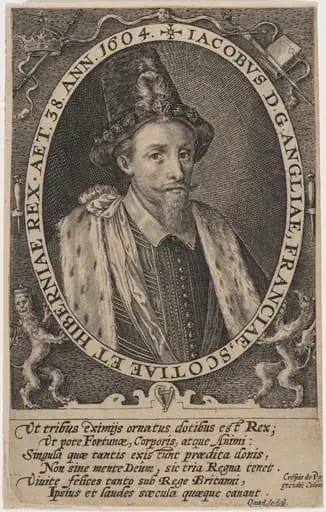
James I, King of England is an ink print by the Baroque artist Crispijn van de Passe I. It dates from 1604 and is held in the collection of the National Gallery of Art.
About this work
Overview
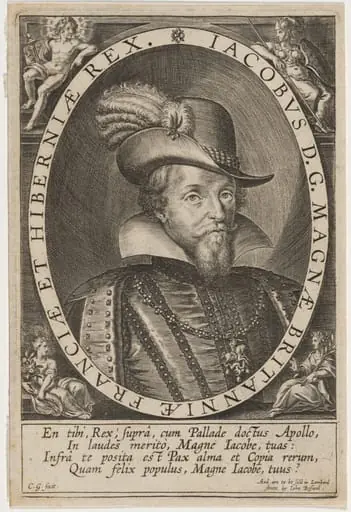
The image is framed within a circular border adorned with symbolic motifs, including a crown and a lion, reinforcing the subject’s sovereign status.
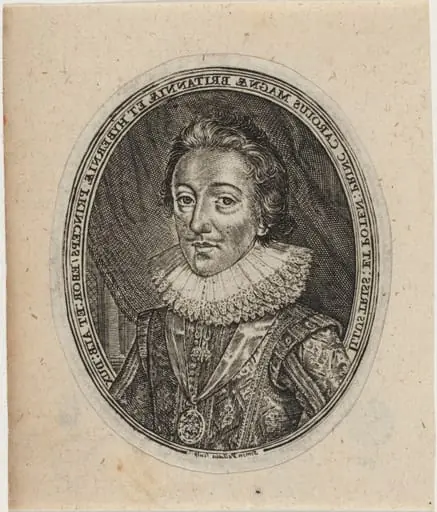
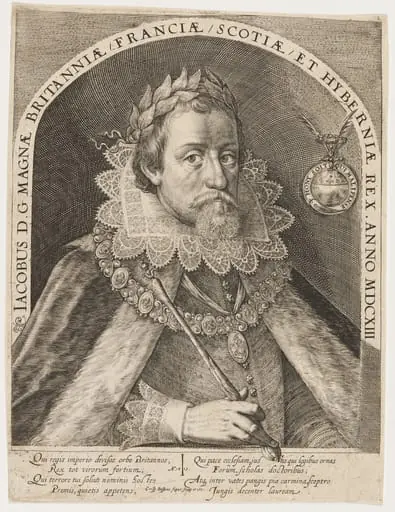
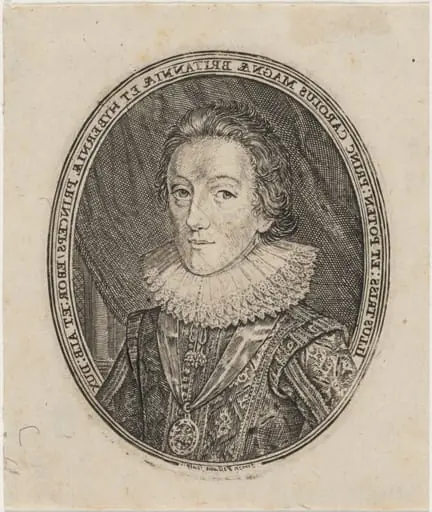
This 1604 engraving by Crispijn van de Passe I depicts James I of England in formal regalia. Executed in monochrome ink on paper, the portrait follows the conventions of early 17th-century royal portraiture. The image is framed within a circular border adorned with symbolic motifs, including a crown and a lion, reinforcing the subject’s sovereign status. The technique relies on fine linear incisions to render texture and volume, typical of Northern European printmaking of the period.
Subject & Meaning
James I is portrayed with the attributes of monarchy: a feathered hat, fur-lined cloak, and ornate collar, all signaling authority and wealth. His direct gaze and full beard align with contemporary ideals of regal dignity. The crown and lion in the border allude to royal power and national identity, while the surrounding inscriptions—though illegible—likely contain titles or dedications. The image functions as a propagandistic tool, projecting stability and legitimacy during the early years of his reign.
Technique & Style
The portrait is rendered using metal engraving, a method involving incised lines on a copper plate inked and pressed onto paper. Van de Passe employed fine, controlled strokes to define fabric folds, facial contours, and the texture of fur and feathers. The composition is symmetrical and tightly contained, emphasizing clarity and precision over emotional expression. This restrained, detailed approach reflects the Northern Renaissance tradition, with influences from Dutch and Flemish printmakers.
History & Provenance
Created in 1604, shortly after James I’s accession to the English throne, the engraving was likely produced for distribution among nobility and foreign courts to establish his public image. Crispijn van de Passe I, a Dutch artist active in the Netherlands and England, was known for producing portraits of European royalty. The print’s survival in multiple institutional collections suggests it was widely circulated, serving both as a political statement and a collectible object.
Context
This work emerged during a period of transition in British monarchy, following the union of the Scottish and English crowns. Portraiture in print became a key medium for shaping royal visibility, especially as literacy rose and visual culture expanded. Van de Passe’s prints were part of a broader trend in which rulers commissioned images to assert authority beyond the court, reaching audiences through reproducible formats rather than unique paintings.
Legacy
The engraving exemplifies how printmaking facilitated the dissemination of royal imagery across Europe in the early modern era. Van de Passe’s precise technique influenced later portrait engravers, and his depictions of monarchs became reference points for subsequent generations. Though not widely exhibited today, the work remains a documented artifact of early Stuart visual culture, illustrating the intersection of politics, art, and reproduction in the 17th century.
Artist & collection

Artist
Crispijn van de Passe I (1564–1637) was an artist, born in Arnemuiden.