Artwork
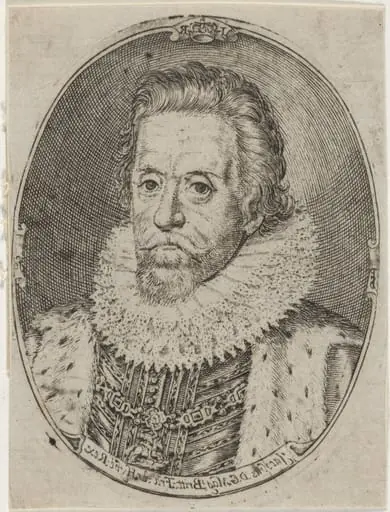
James I, King of England
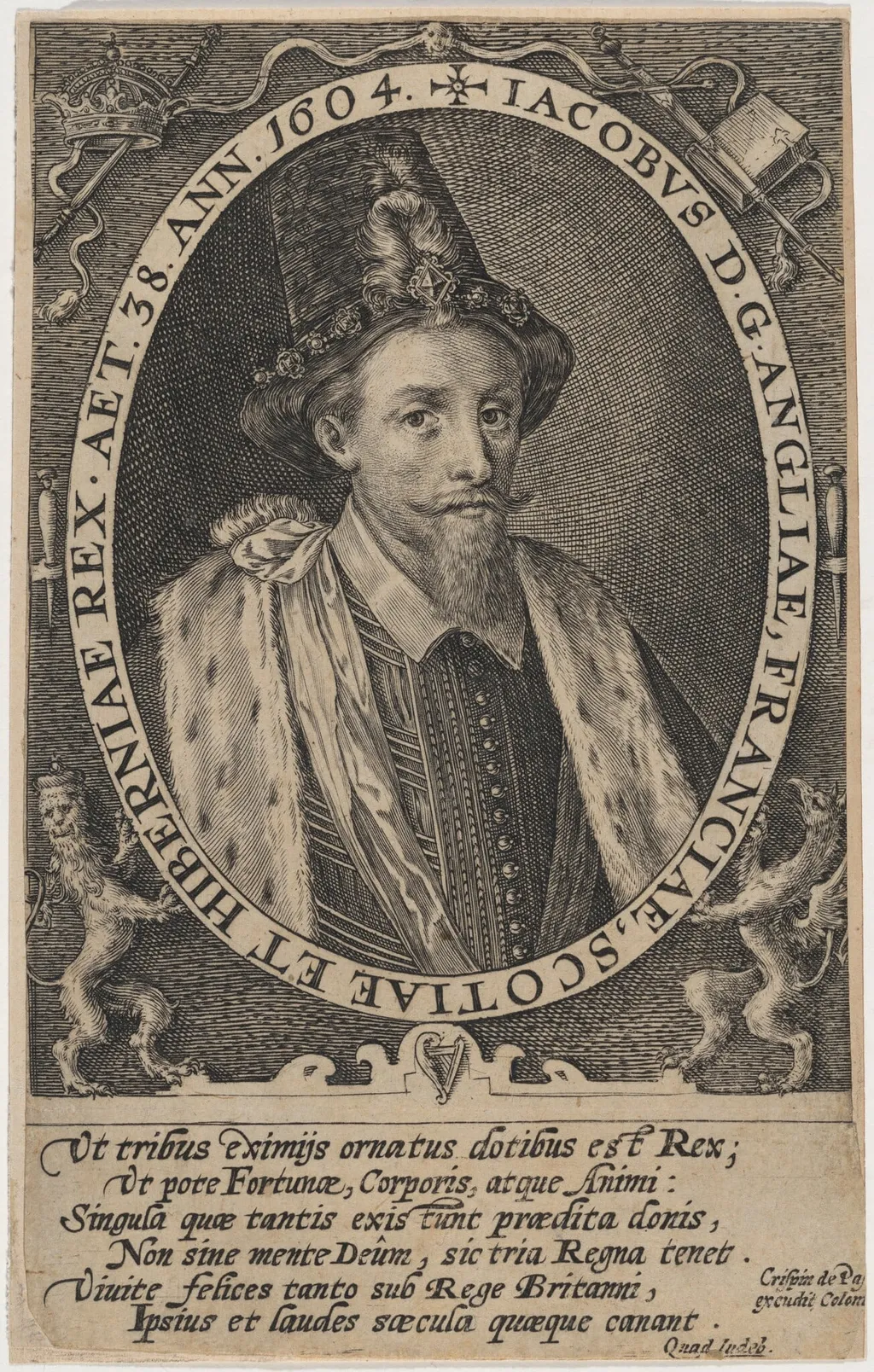
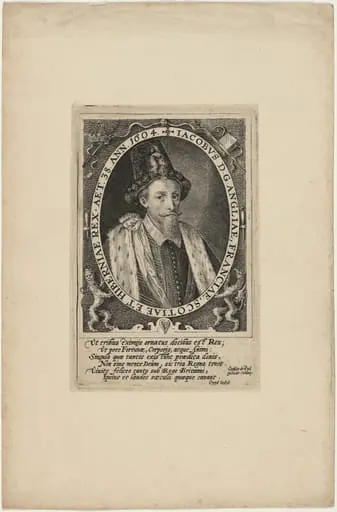
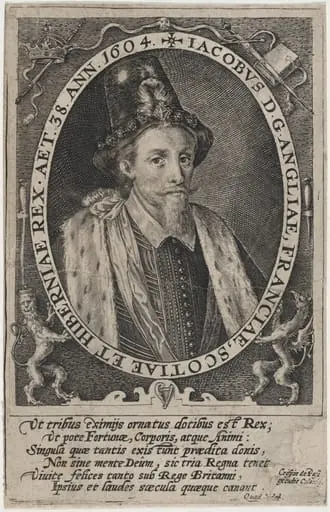
James I, King of England is an ink print by the Baroque artist Crispijn van de Passe I. It dates from 1604 and is held in the collection of the National Gallery of Art.
About this work
This is an example of engraving, a technique where lines are carved into metal to create prints.
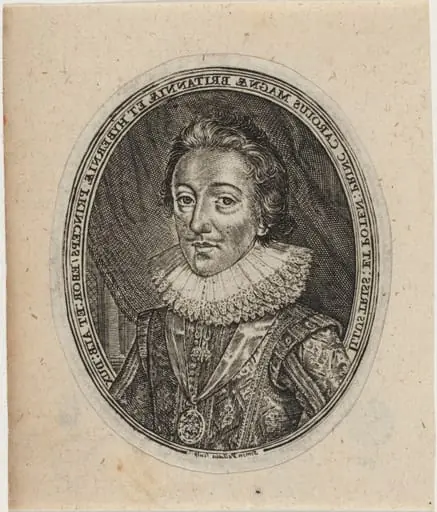
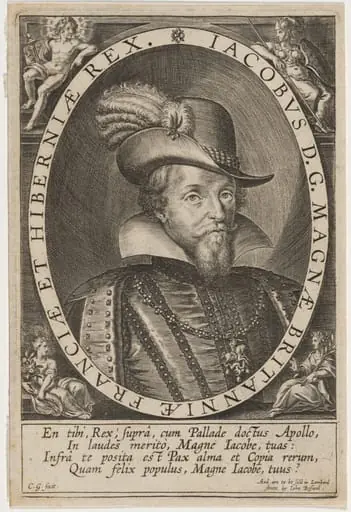
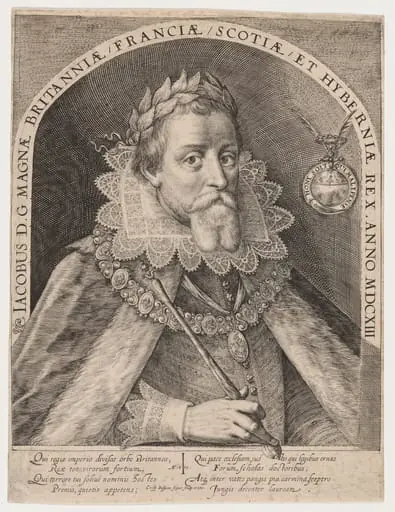
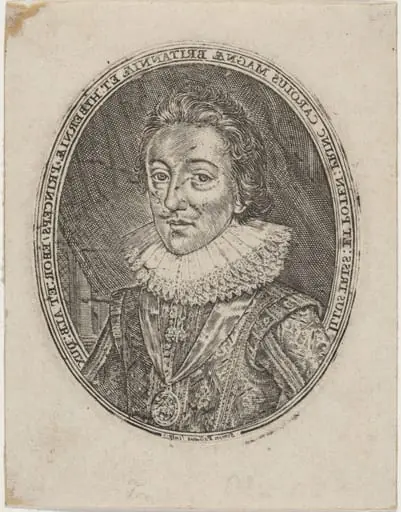
This is a black-and-white portrait of a man with a full beard and curly hair. He wears a fancy collar and a chain around his neck. The background is dark, and his face is framed by a decorative border with text.
The text around him reads *"IACOBVS DG. ANGLIAE SCOTIAE FRANCIAE REX"*—meaning he’s a king of England, Scotland, and France. The print was made in 1604, and the artist signed it at the bottom.
This is an example of engraving, a technique where lines are carved into metal to create prints.
Overview
Crispijn van de Passe I’s 1604 engraving presents a portrait of a bearded, curly‑haired monarch. He is dressed in an elaborate ruff and a jeweled chain, set against a dark field. A decorative frame surrounds his likeness, bearing a Latin inscription that identifies him as the ruler of England, Scotland, and France.
Subject & Meaning
The figure depicted is James I, who united the crowns of England and Scotland in 1603 and claimed the French throne through historic titulature. The inclusion of the Latin title underscores his political authority and the dynastic aspirations of his reign, while the ornate collar and chain signal royal status and ceremonial power.
Technique & Style
Executed in copper engraving, the image relies on finely incised lines to render texture, shading, and detail. Van de Passe’s hand is evident in the crisp rendering of facial features and the intricate border. The monochrome palette emphasizes tonal contrast, a hallmark of early 17th‑century printmaking.
History & Provenance
Created shortly after James I’s accession, the print was signed by van de Passe at its lower edge, confirming authorship. It circulated among collectors and court patrons, serving both as a visual record of the new monarch and as a propagandistic emblem of his claim to multiple thrones.
Context
The engraving belongs to a broader wave of portrait prints that disseminated royal imagery across Europe in the early modern period. Van de Passe, a prominent Dutch engraver active in the Low Countries, frequently produced portraits of European sovereigns, reflecting the era’s demand for portable, reproducible representations of power.
Legacy
While not a unique work, this print contributes to the visual historiography of James I and exemplifies the role of engraving in shaping public perception of monarchy. It remains a reference point for scholars studying the intersection of art, politics, and print culture in the early 1600s.
Artist & collection

Artist
Crispijn van de Passe I (1564–1637) was an artist, born in Arnemuiden.