Artwork
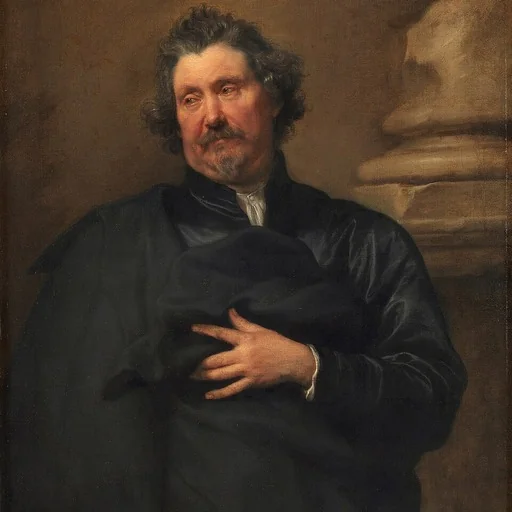
M. de Chalvel
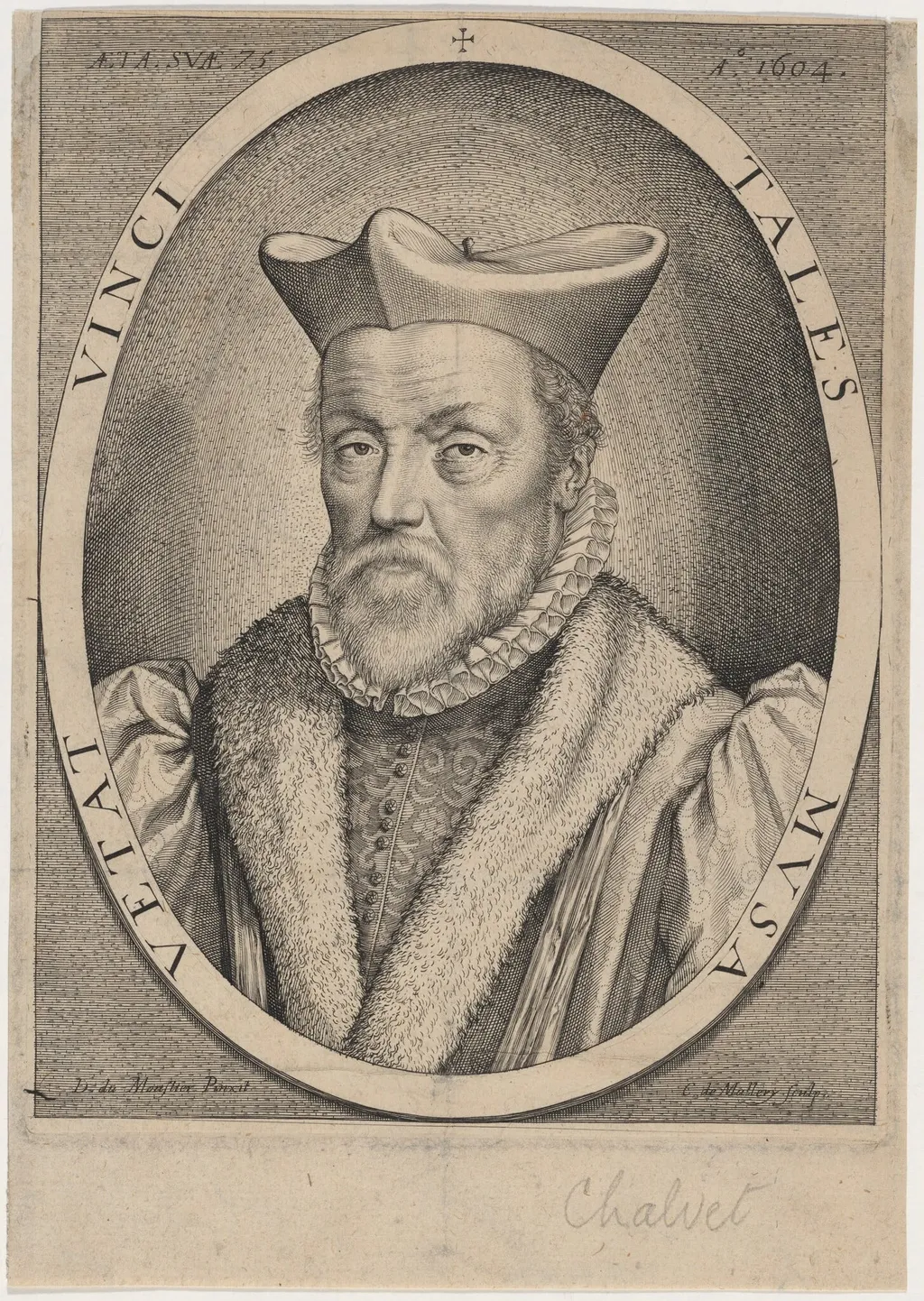
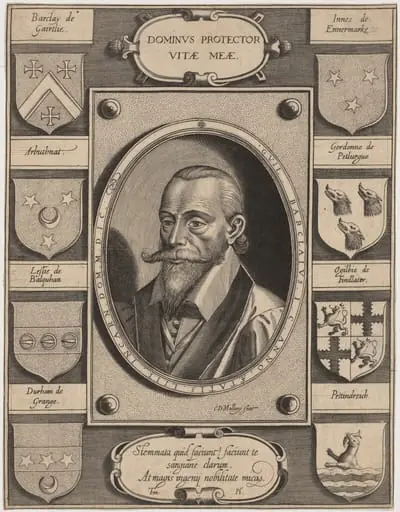
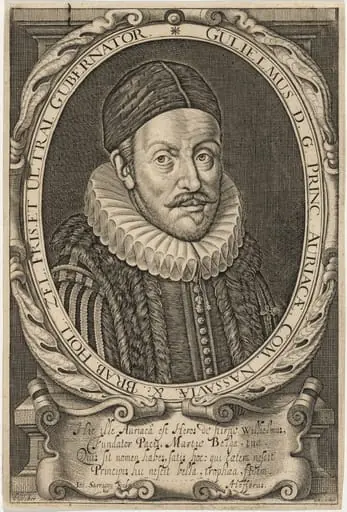
M. de Chalvel is an ink print by the Renaissance artist Karel van Mallery. It dates from 1603 and is held in the collection of the National Gallery of Art.
About this work
Overview
The work is executed in etching, a technique involving incised lines on a metal plate, allowing for fine detail in textures such as fur and skin.
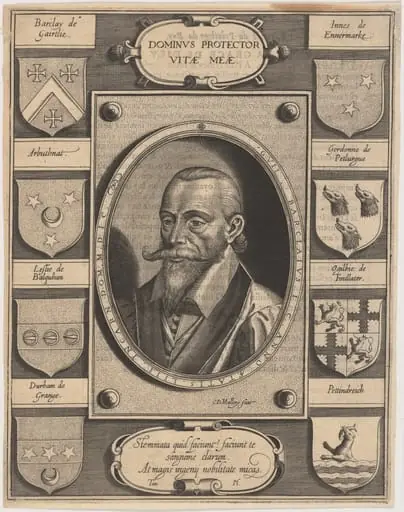
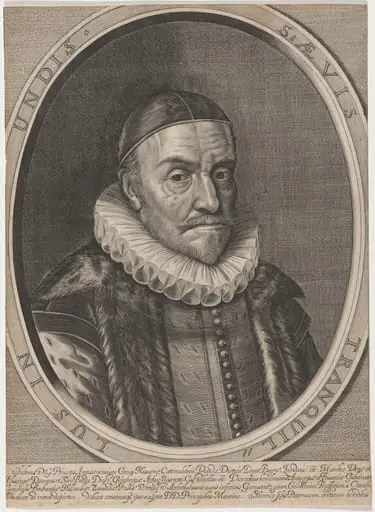
Created in 1603 by Karel van Mallery, *M. de Chalvel* is a black-and-white engraving portraying a gentleman of unknown identity. Van Mallery, a Flemish artist active in Antwerp and Paris, specialized in reproductive prints and portraiture. The work is executed in etching, a technique involving incised lines on a metal plate, allowing for fine detail in textures such as fur and skin. The portrait is framed within an oval, with the subject’s name inscribed in decorative script along the border.
Subject & Meaning
The sitter, identified only as M. de Chalvel, is depicted with quiet dignity: a full beard, ruffled collar, and wide-brimmed hat suggest status and refinement. His hands rest gently on his chest, conveying composure rather than action. The plain background focuses attention entirely on the figure, emphasizing individual identity over context. The inscription reinforces the portrait’s function as a formal record, typical of early 17th-century engraved likenesses used for personal or familial preservation.
Technique & Style
Van Mallery employed etching to render precise linear details, particularly in the texture of the fur collar and the subtle creases of the face. The lines are controlled and deliberate, avoiding heavy shading in favor of tonal variation through line density. The oval composition and ornamental lettering reflect conventions of the period, blending portraiture with typographic elegance. The absence of color or background elements underscores the print’s reliance on line and form to convey presence and character.
History & Provenance
Karel van Mallery worked primarily as a reproductive engraver, translating paintings into prints for wider circulation. While little is documented about the specific origins of *M. de Chalvel*, its creation in 1603 aligns with his active years in Antwerp and Paris. The print likely served as a private commission or a specimen of his portraiture skills. No known institutional provenance is recorded prior to modern collections, suggesting it circulated among private collectors or print dealers of the era.
Context
In early 17th-century Flanders, engraved portraits were valued for their reproducibility and precision, often used to disseminate likenesses of nobility, scholars, and merchants. Van Mallery operated within a network of printmakers who adapted painted portraits into prints for domestic and international markets. The absence of heraldic or symbolic elements in this work reflects a shift toward straightforward, individualized representation, distinct from earlier allegorical traditions.
Legacy
Though not widely exhibited today, *M. de Chalvel* exemplifies the quiet precision of Flemish reproductive engraving during the transition from Renaissance to Baroque aesthetics. Van Mallery’s work contributed to the broader circulation of portraiture before photography, preserving individual identities through mechanical reproduction. The print remains a modest but clear example of how skilled draftsmanship could convey character without color or elaborate setting.
Artist & collection
Artist
Karel van Mallery (1571–1635?) was a Flemish engraver who mainly worked on religious subjects and portraits and was also a reproductive engraver. He worked in Antwerp and Paris.