Artwork
Untitled
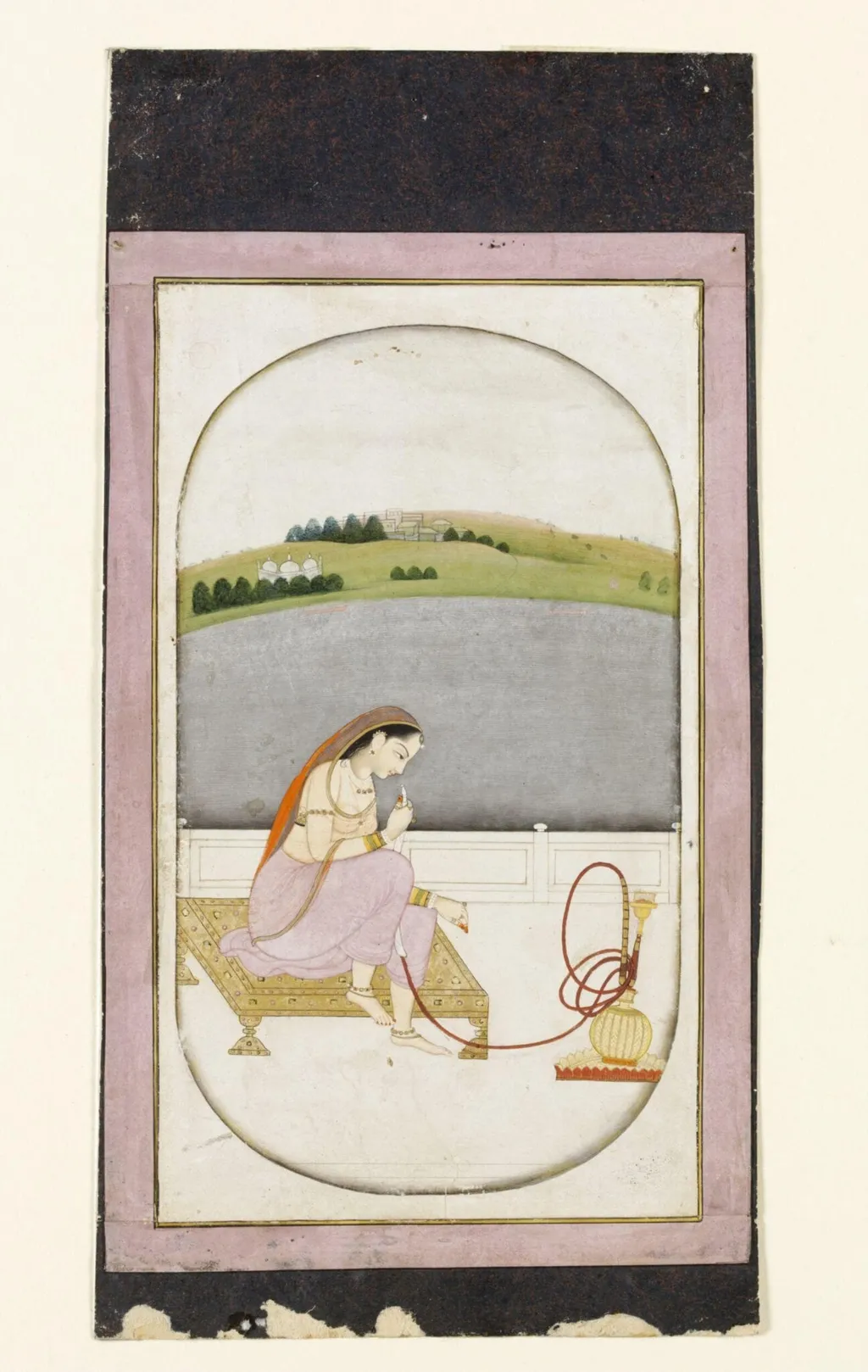
Untitled is a paint painting by the Patna School of Painting artist Manaku. It dates from 1760 and is held in the collection of the Victoria and Albert Museum.
About this work
Overview
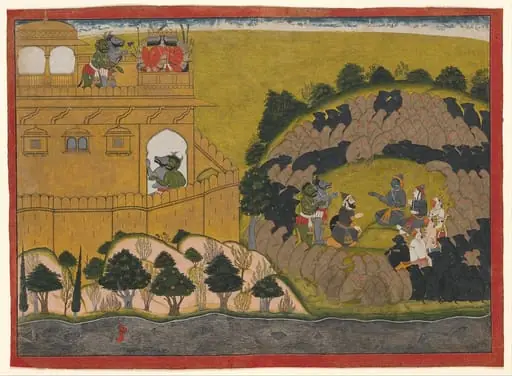
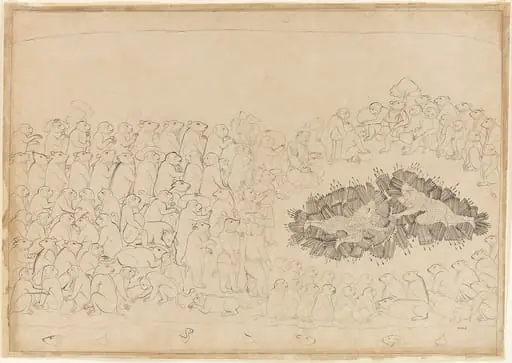
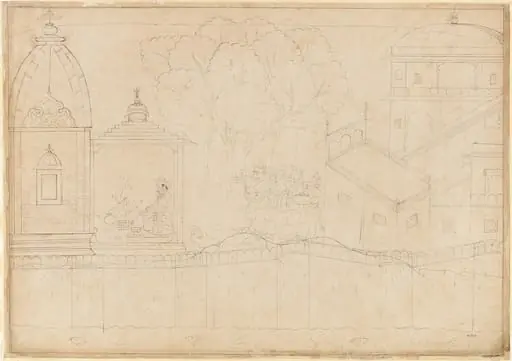
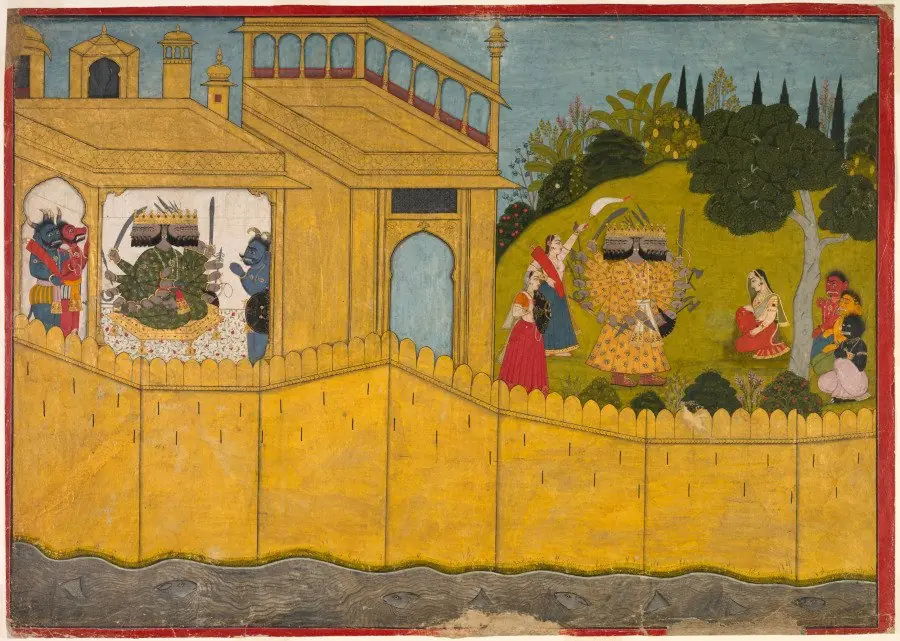
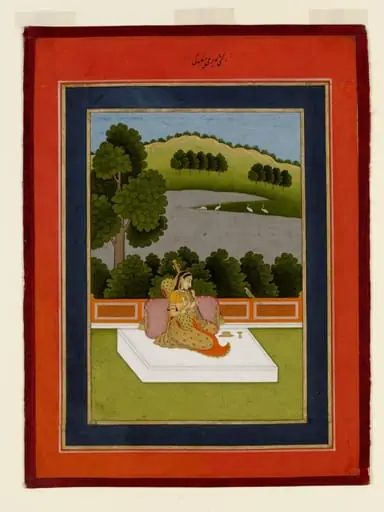
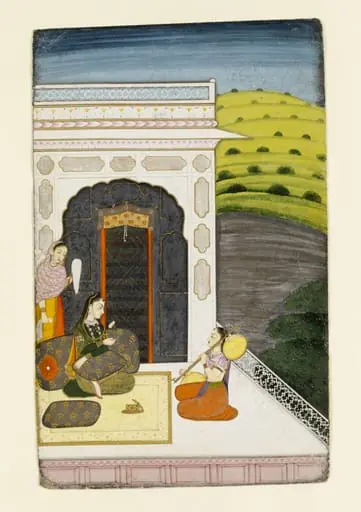
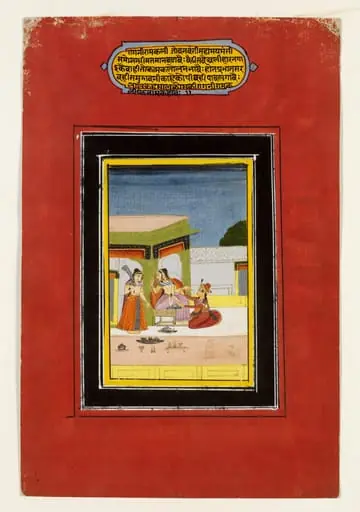
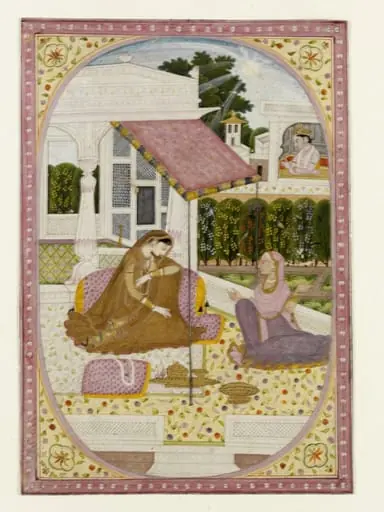
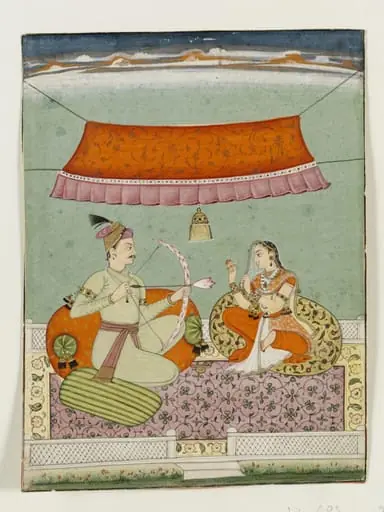
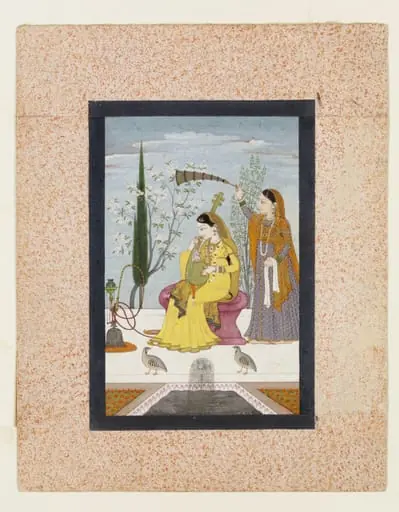
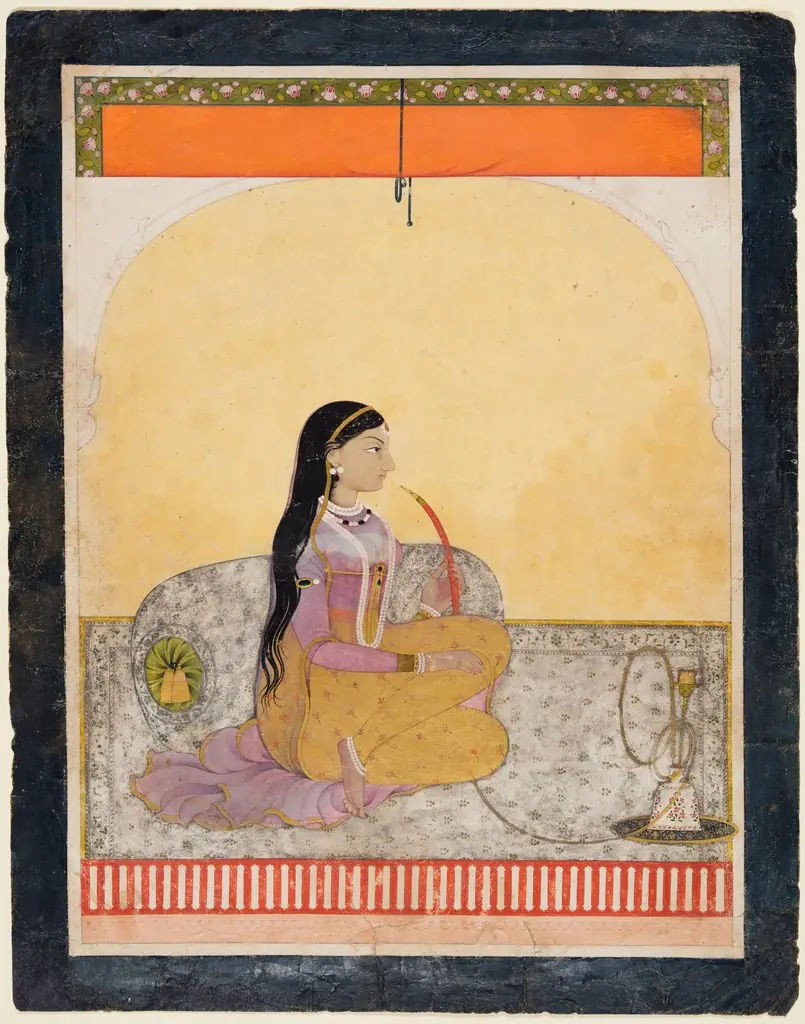
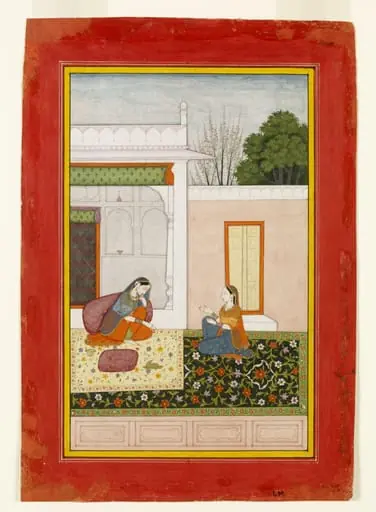
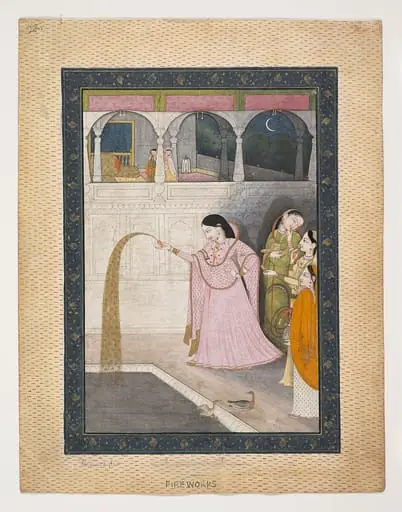
This 1760 painting by Manaku, created in opaque watercolour on paper, captures a solitary woman in a contemplative moment.
This 1760 painting by Manaku, created in opaque watercolour on paper, captures a solitary woman in a contemplative moment. The composition is restrained, with soft hues of pale pink, green, and blue dominating the palette. Gold accents highlight decorative elements, lending subtle richness without excess. The scene unfolds against a quiet, flat landscape, emphasizing stillness over narrative action.
Subject & Meaning
The figure, seated on a low platform, holds a small object while gazing downward, her posture suggesting introspection. A hookah rests beside her, its presence implying a moment of leisure or ritual. The absence of interaction or movement invites interpretation as a private, intimate pause—perhaps reflecting domestic solitude or the quiet rhythms of courtly life in mid-18th century Punjab.
Technique & Style
Manaku employed fine brushwork and layered opaque watercolour to achieve delicate tonal transitions. The figures and furnishings are rendered with precise detail, while the background remains simplified—flat planes of colour suggest distance without perspective. Gold leaf accents on the hookah and railing add luminosity, characteristic of Pahari miniature traditions that valued refinement over grandeur.
History & Provenance
Attributed to the Pahari artist Manaku, this work originates from the Himalayan foothills, likely produced in a royal atelier during the mid-1700s. Though its early ownership is undocumented, its stylistic ties to Kangra and Guler schools suggest it was made under aristocratic patronage. It entered institutional collections in the 20th century, where it is now preserved as an example of regional miniature painting.
Context
Produced during a period when Pahari courts fostered refined artistic traditions, this painting reflects the influence of Mughal aesthetics adapted to local sensibilities. Scenes of quiet domesticity, often featuring women in private settings, became common in this era. The subdued palette and intimate scale align with broader trends in Himalayan painting that prioritized emotional nuance over dramatic storytelling.
Legacy
Manaku’s work contributes to a broader corpus of Pahari miniatures that document everyday life with poetic restraint. This painting, like others from the region, continues to inform scholarly understanding of gender, leisure, and aesthetics in 18th-century North India. Its preservation in major collections ensures its role as a reference for the evolution of Indian miniature painting beyond courtly epic cycles.
Artist & collection