Artwork
The Departure of the Prodigal Son
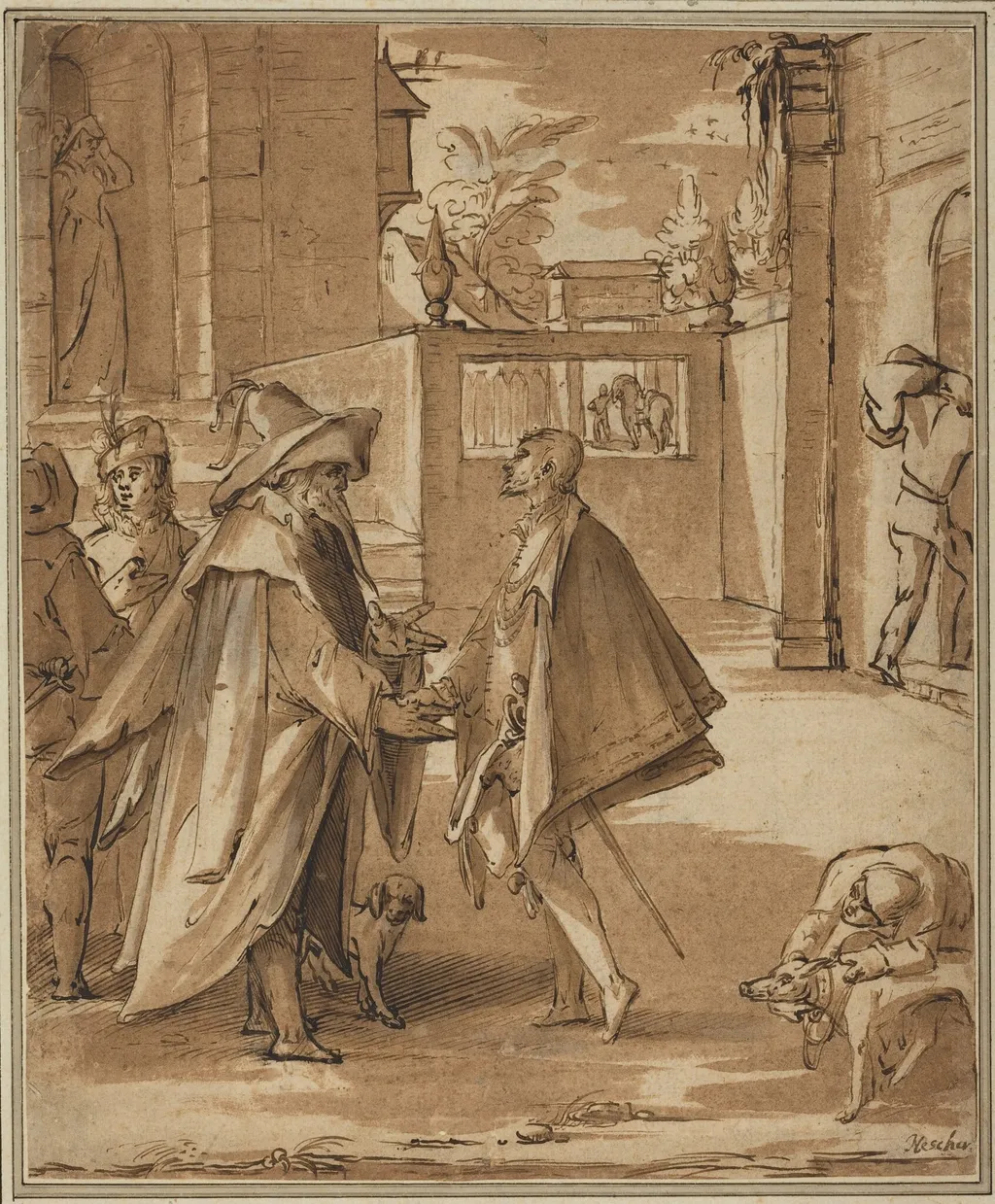
The Departure of the Prodigal Son is an ink drawing by the Renaissance artist Karel van Mander I. It dates from 1577 and is held in the collection of the National Gallery of Art.
About this work
Overview
Karel van Mander I’s drawing titled *The Departure of the Prodigal Son* was executed in 1577. Rendered on laid paper with pen, brown ink, and a brown wash that is intensified in places with white highlights, the work measures as a single sheet drawing. It records a moment of movement within an architectural courtyard, capturing a narrative episode through a compact, sketch‑like composition.
Subject & Meaning
The scene depicts a small procession exiting a courtyard: a man wearing a broad‑brimmed hat leads a dog, while another figure in a long cape walks ahead, and a woman in an elaborate dress observes from the periphery. The surrounding walls are adorned with miniature paintings and statues, and a balcony holds potted plants and vases, suggesting a domestic setting that frames the act of departure, possibly alluding to the biblical parable of the prodigal son.
Technique & Style
Van Mander employs rapid, gestural strokes of pen and ink, allowing the forms to suggest motion rather than detail.
Van Mander employs rapid, gestural strokes of pen and ink, allowing the forms to suggest motion rather than detail. Cross‑hatching creates tonal depth, while the brown wash provides a muted atmospheric background. Selective white highlights accentuate the figures’ outlines and the architectural elements, giving the drawing a sense of immediacy and emotional tension characteristic of late‑sixteenth‑century Northern European sketching.
History & Provenance
The drawing was produced in 1577, during the early phase of van Mander’s career when he was active in the Netherlands. Although its later ownership trail is not fully documented, the work has been catalogued among his surviving drawings and is referenced in scholarly inventories of his oeuvre, confirming its attribution to the elder Karel van Mander.
Artist & collection


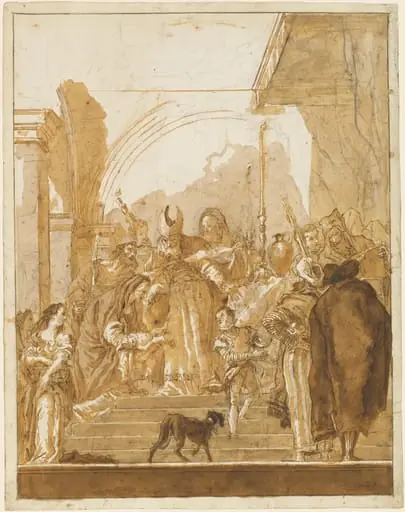 The Presentation in the Temple
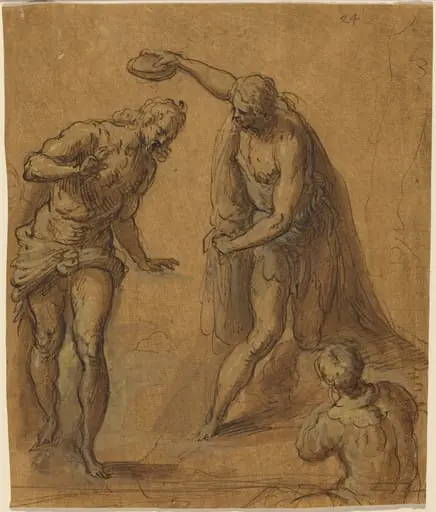 Sketch for a Baptism of Christ
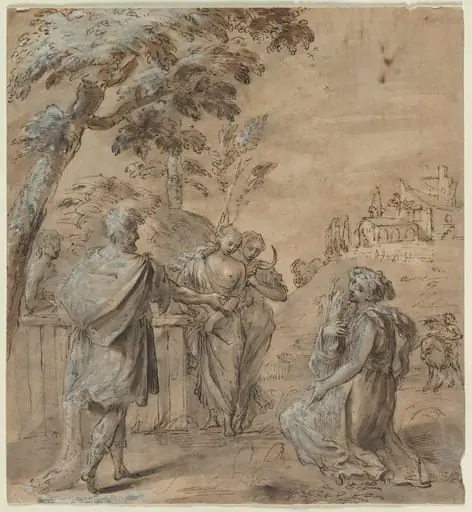 Ruth and Boaz (recto)
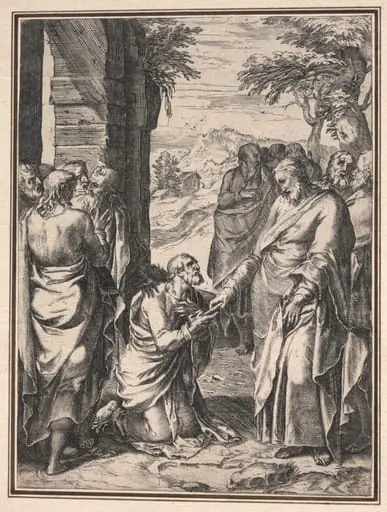 Copy of Cornelis Cort: Christ Giving the Key of the Church to Saint Peter
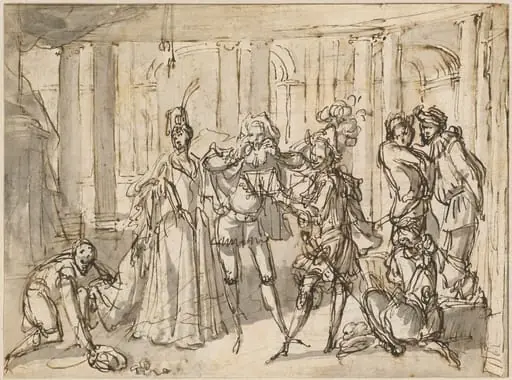 A Performance by the Commedia dell'Arte
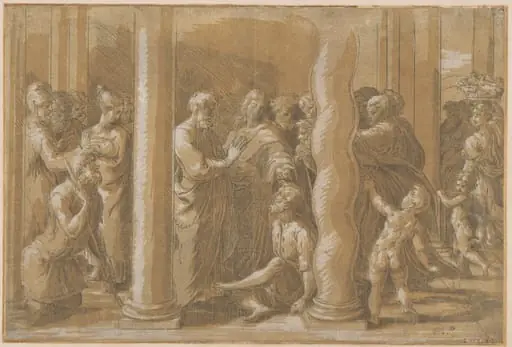 Saints Peter and John Healing the Lame Man at the Golden Gate
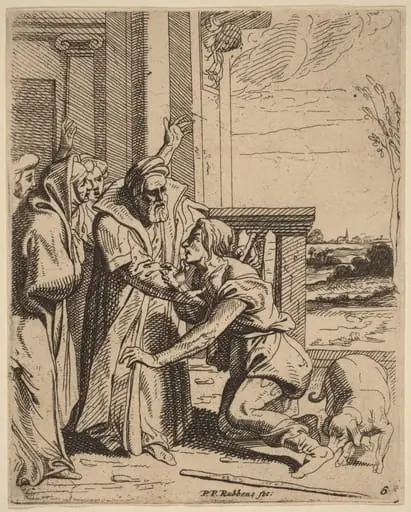 The Prodigal Son Received by His Father
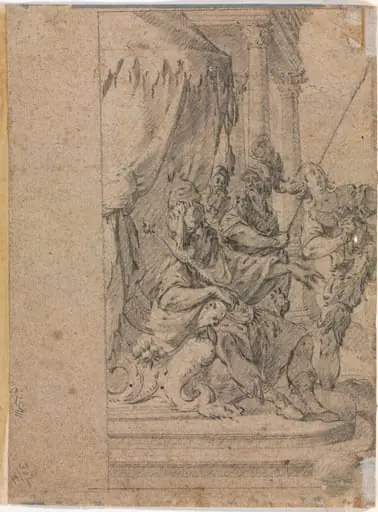 Panthea before Cyrus? (verso)
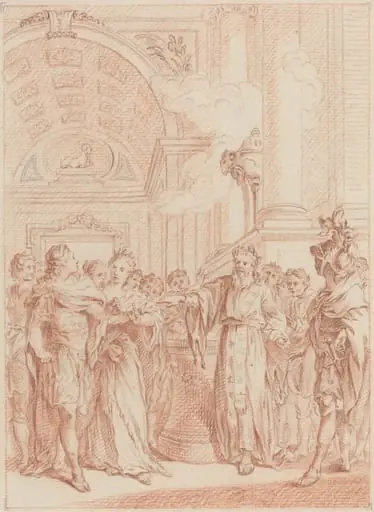 Tremblez malheureux Roi, votre Règne est passe
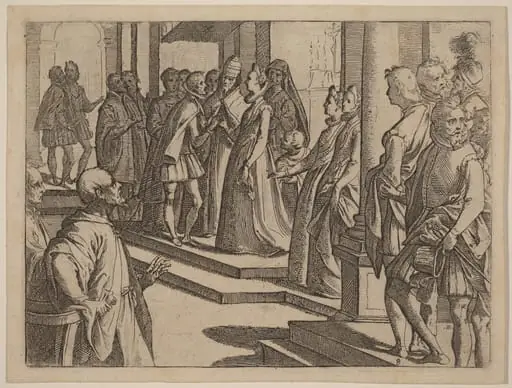 The Betrothal of Margaret of Austria to Philip III, King of Spain
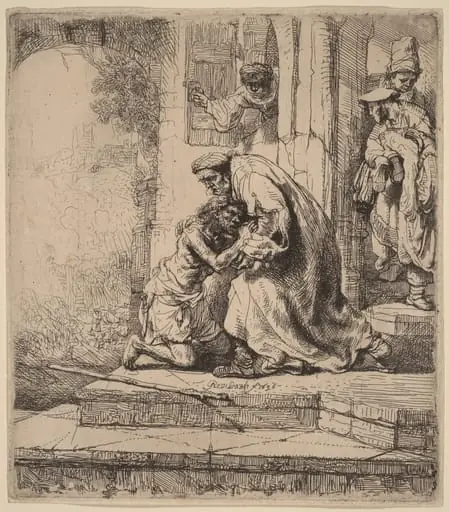 The Return of the Prodigal Son
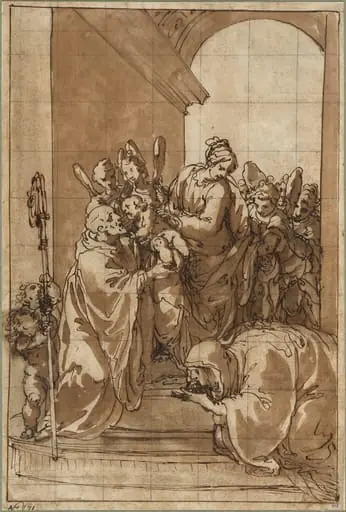 Madonna and Child with Angels, Saint Benedict, and Saint Scholastica