Artwork
Panthea before Cyrus? (verso)
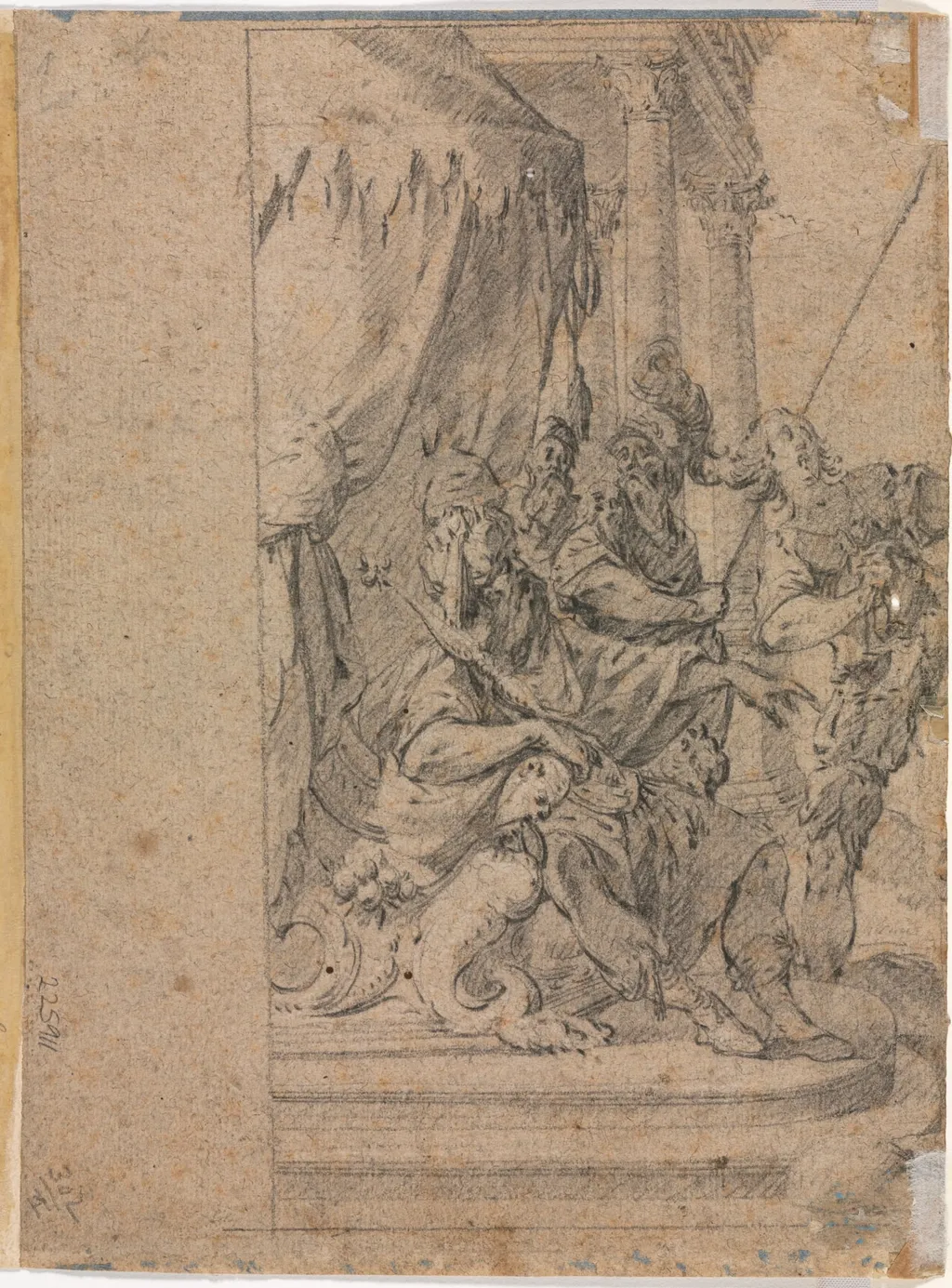
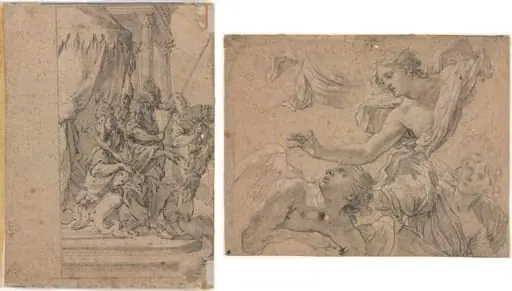
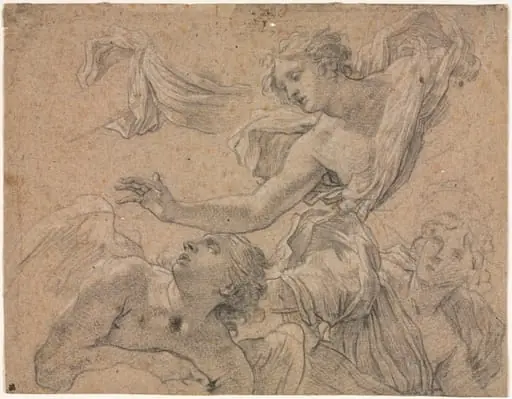
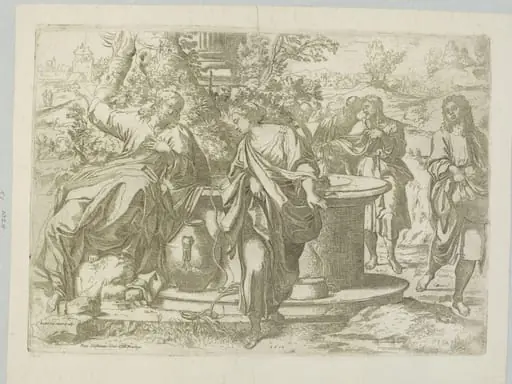
Panthea before Cyrus? (verso) is a drawing by the Baroque artist Michel Dorigny. It dates from 1658 and is held in the collection of the Cleveland Museum of Art.
About this work
You see a drawing of angels and a woman, likely from a biblical story.
The drawing is interesting because it was once thought to be by Simon Vouet, but is now attributed to Michel Dorigny. Dorigny's style is noticeable in the floating drapery and firm lines.
Check out the work of artist Michel Dorigny (French, 1617–1665) for more drawings like this.
Overview
This drawing, once attributed to Simon Vouet, is now recognized as the work of Michel Dorigny, his son-in-law and collaborator. Executed in black chalk, it features a group of angels and a female figure, likely intended as a study for a religious composition. The sheet’s verso suggests it was part of a working sketchbook, used to explore forms rather than as a finished piece.
Subject & Meaning
The figures suggest a sacred narrative, possibly drawn from biblical or apocryphal sources, though no specific scene has been identified. The presence of flying angels implies a divine intervention or heavenly vision. The central woman, though not clearly identified, may represent a prophetess or saint, her posture and drapery hinting at solemnity or revelation.
Technique & Style
Dorigny’s hand is evident in the precise, firm contours and the delicate, parallel hatching that models form without heavy shading. The drapery appears weightless, flowing with an airy rhythm that distinguishes his approach from Vouet’s more solidly modeled figures. These characteristics align with his known drawings, reflecting a refined, linear sensibility rooted in French academic tradition.
History & Provenance
The drawing was long misattributed to Simon Vouet due to stylistic similarities and their close professional relationship. Later analysis of draftsmanship—particularly the hatching patterns and drapery treatment—led to its reassignment to Dorigny. Its history before modern collection is undocumented, but its condition suggests it was preserved as a study rather than a public work.
Context
In mid-17th century Paris, religious themes dominated academic drawing practices, even in preparatory sketches. Dorigny, trained in the Vouet workshop, absorbed its classical ideals but developed a lighter, more fluid approach. This drawing reflects the era’s emphasis on compositional studies for altarpieces and frescoes, even when the final work was never executed.
Legacy
This sheet remains a key reference for understanding the transition between Vouet’s dominance and the emergence of individualized styles in French drawing.
The drawing exemplifies Dorigny’s role in sustaining the Vouet studio’s legacy while asserting his own stylistic voice. Though less celebrated than his mentor, his drawings reveal a nuanced command of line and movement that influenced later French draftsmen. This sheet remains a key reference for understanding the transition between Vouet’s dominance and the emergence of individualized styles in French drawing.
Artist & collection
Artist
A French painter and engraver from the mid-1600s, he turned biblical and mythological scenes into dramatic, candlelit dramas.

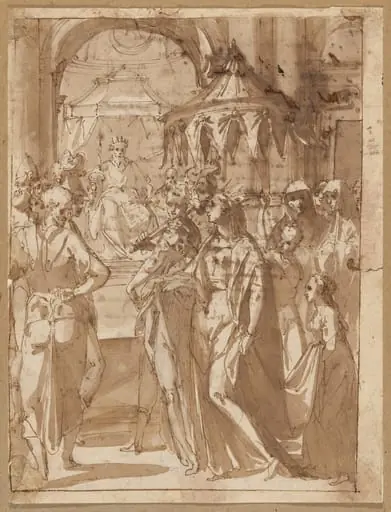 Esther before Ahasuerus
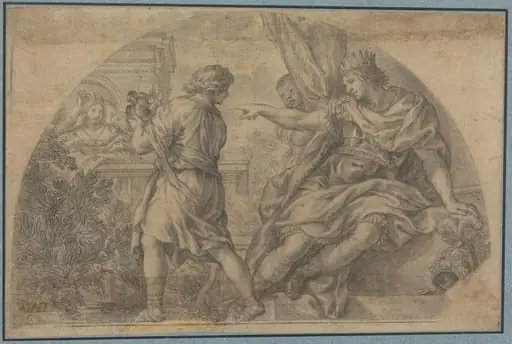 Masinissa and Sophonisba
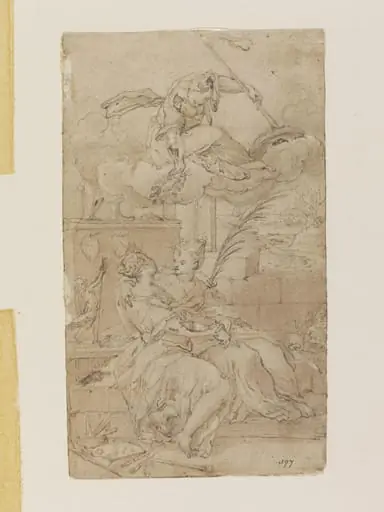 Allegory of the Union of Painting and Sculpture
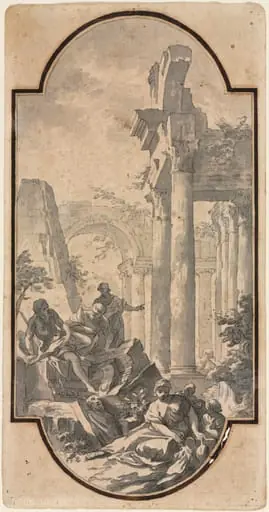 Figures Near the Ruins of a Corinthian Temple (recto)
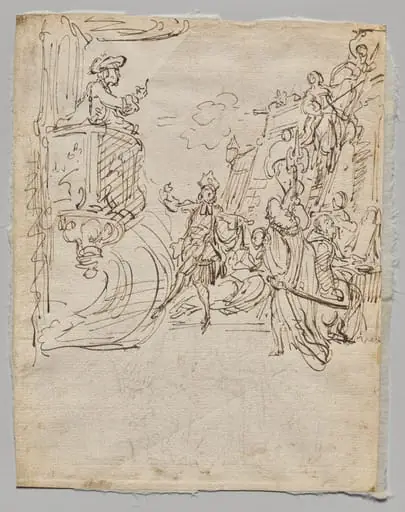 Lingerie Boutique and Conversation (verso)
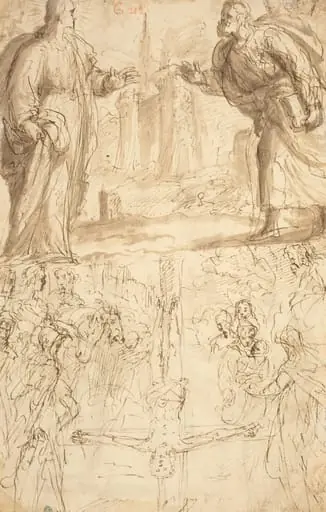 Crucifixion of Saint Peter
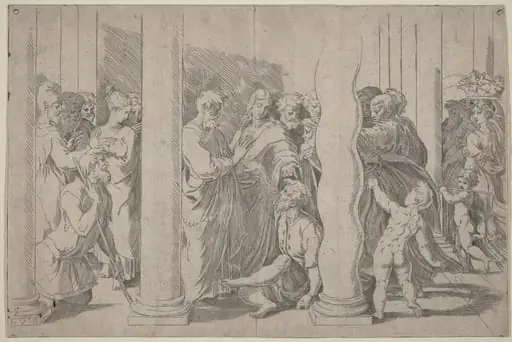 Saints Peter and John Healing the Lame Man at the Golden Gate
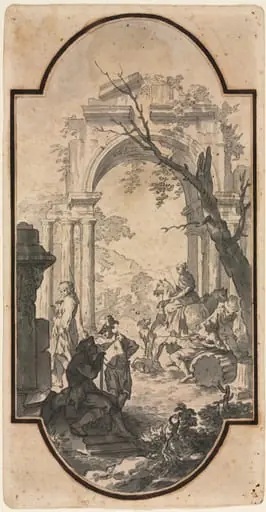 Triumphal Arch and Figures
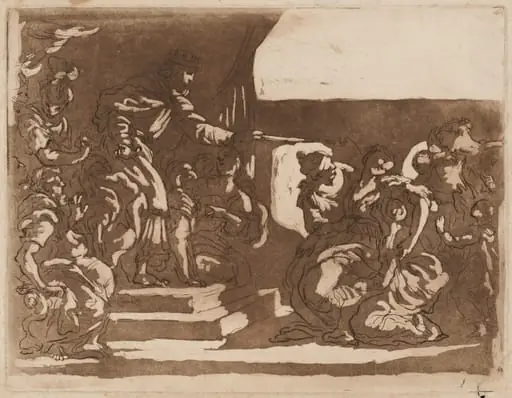 Esther before Ahasuerus
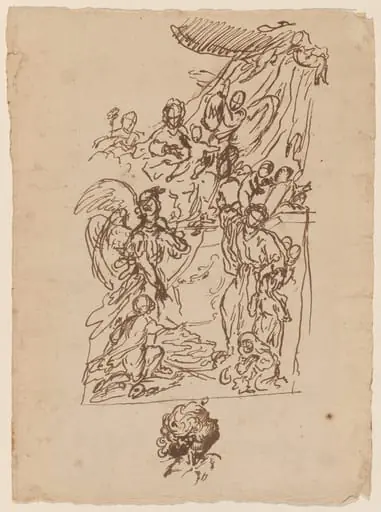 The Madonna and Child Seated on a Dais with Tobias and the Angel and a Saint Presenting Two Children
 Christ and the Woman of Samaria