Artwork
Mătușa Seiverth
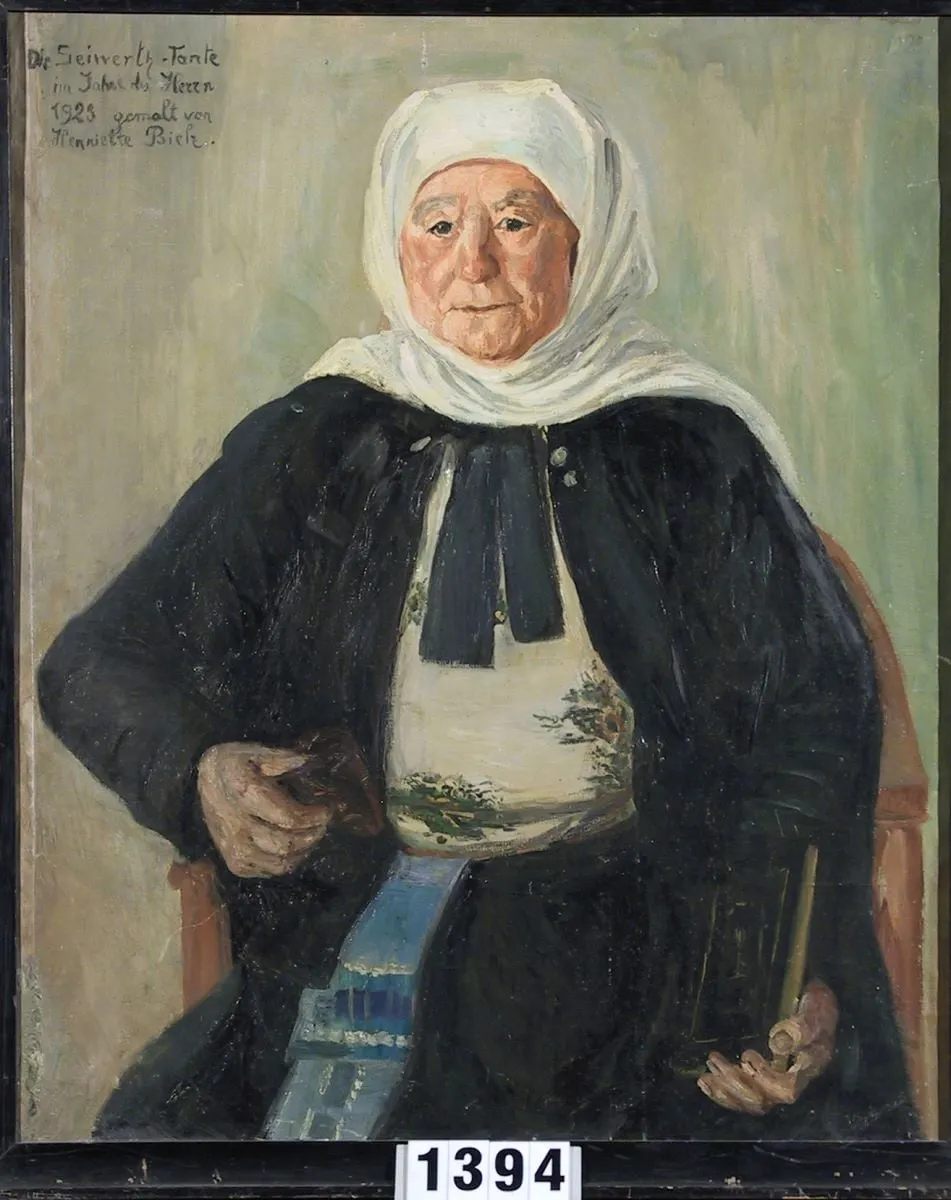
Mătușa Seiverth is a print by Henriette Bielz. It is held in the collection of the Brukenthal National Museum.
About this work
Overview
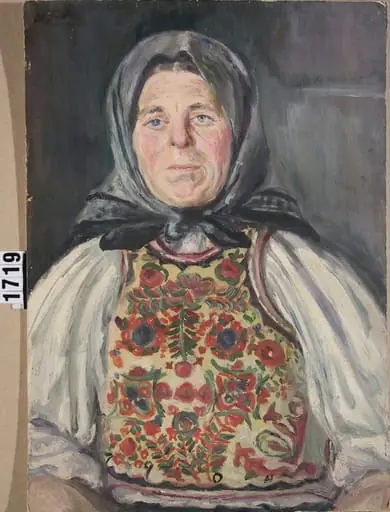
The work titled “Mătușa Seiverth” depicts an elderly woman seated in a simple chair. She is dressed in a white headscarf, a dark shawl, and a white apron that bears a painted motif. A small object rests in her hands, while a cane leans against the chair’s back. The background is uniformly muted, rendered in a soft greenish hue.
Subject & Meaning
The figure appears to be a domestic elder, perhaps a matriarch, suggested by the title’s reference to “Mătușa,” meaning aunt or older woman in Romanian. The modest attire and the presence of a cane emphasize age and modesty, while the tiny landscape painted on the apron may hint at a personal connection to the countryside or a nostalgic recollection of home.
Technique & Style
The artist employs straightforward brushwork, applying paint in direct, uncomplicated strokes that forgo elaborate detailing. The facial features are rendered with minimal modeling, creating a plain yet immediate presence. The apron’s miniature scene is executed with fine, precise lines, contrasting with the broader, more gestural treatment of the figure and background.
History & Provenance
The painting is catalogued under the name “Mătușa Seiverth,” though further documentation of its creation date, original owner, or exhibition history is not provided in the available sources.
Context
The work belongs to a broader series of portraits by the same artist, who also produced a piece titled “Bielz, Henriette.” These related works suggest an interest in portraying individual women from a particular cultural or regional background, focusing on everyday attire and personal objects to convey identity.
Artist & collection
Artist
Henriette Bielz painted scenes of everyday life in late-19th-century Transylvania.

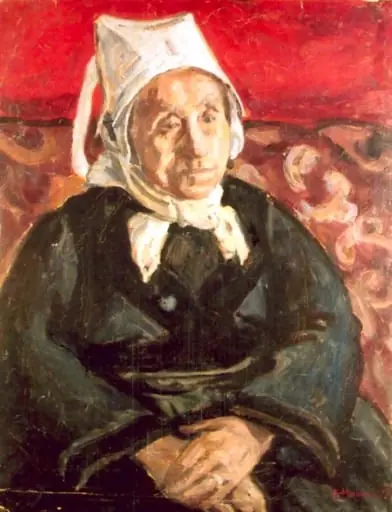 Portret de bătrână
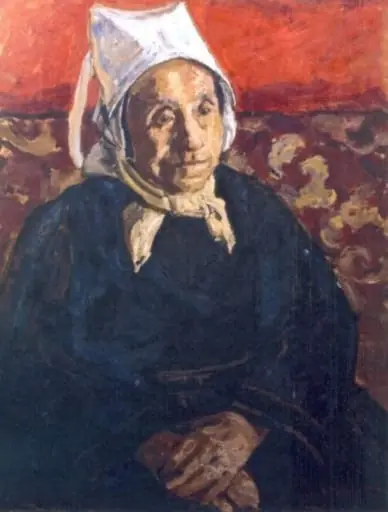 Bătrână din Finistère
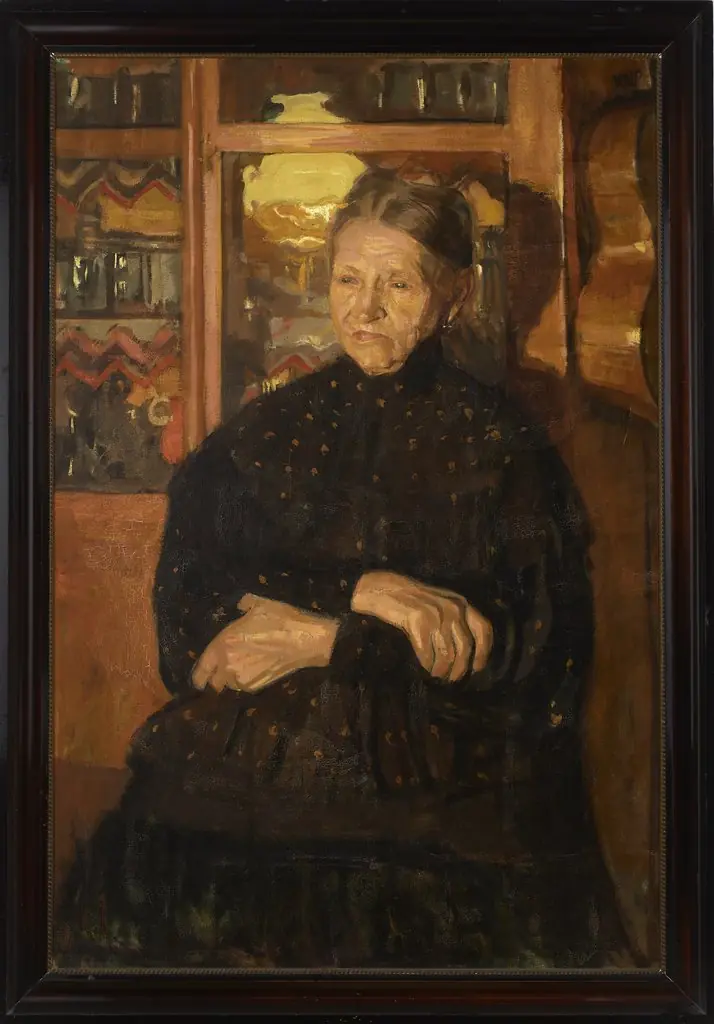 By Lightlamp – Portrait of Artist's Aunt
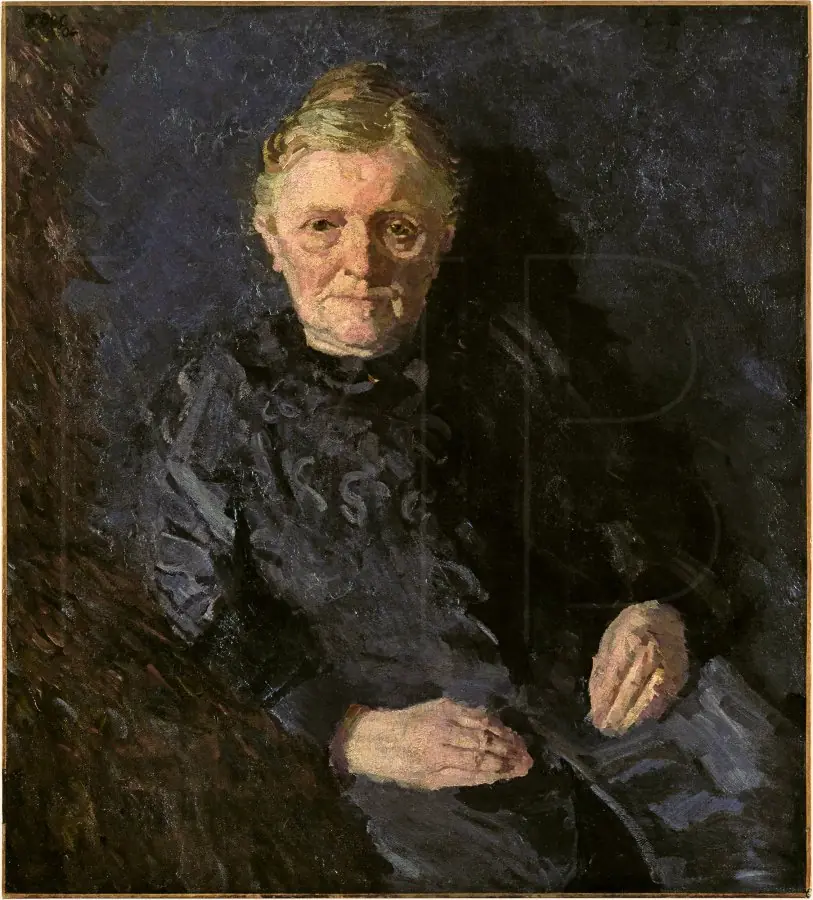 Portrait of His Mother
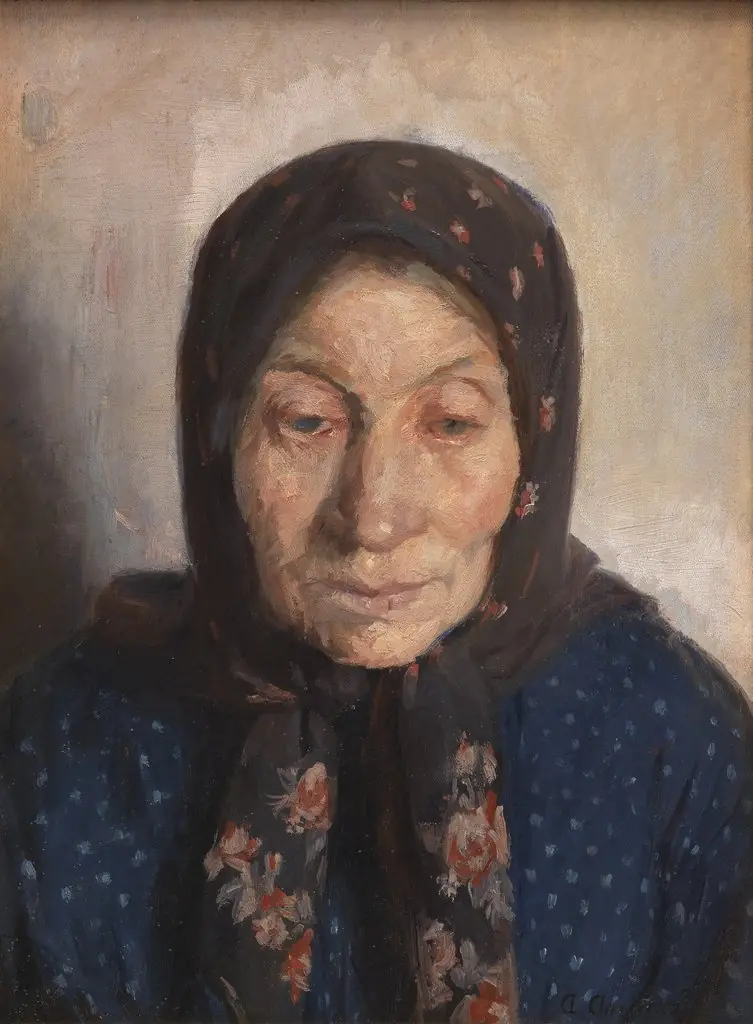 An Old Fisherman's Wife
 An Old Fisherman's Wife
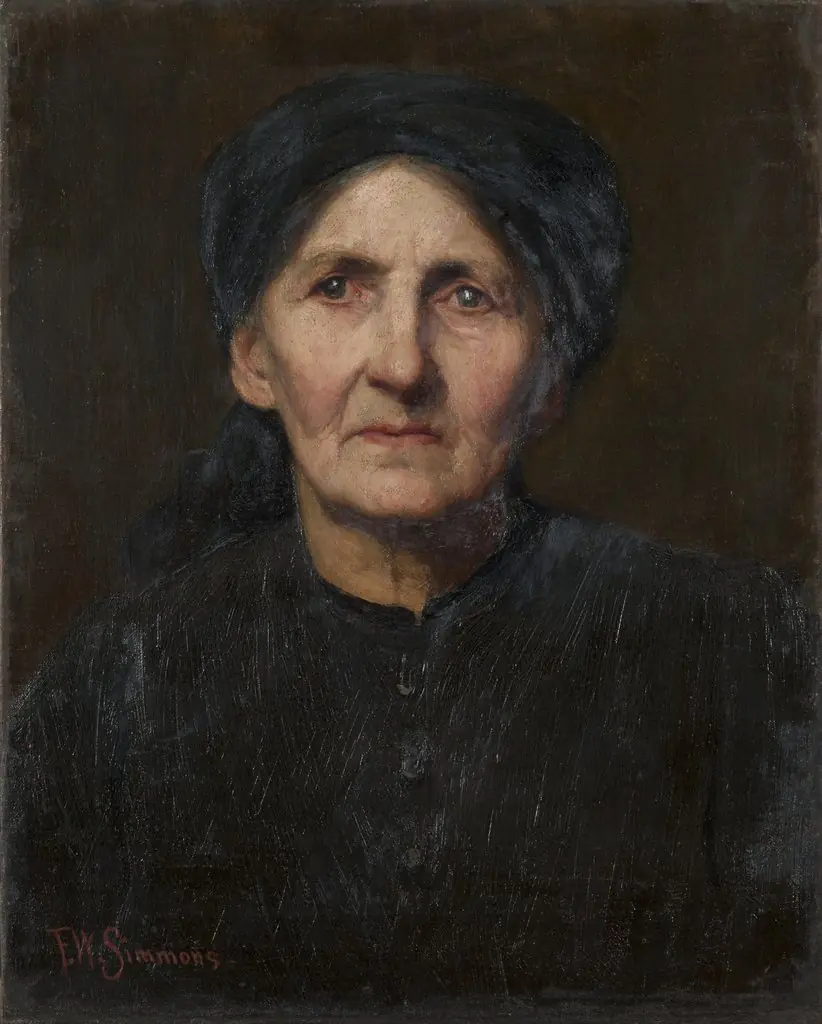 Old Peasant
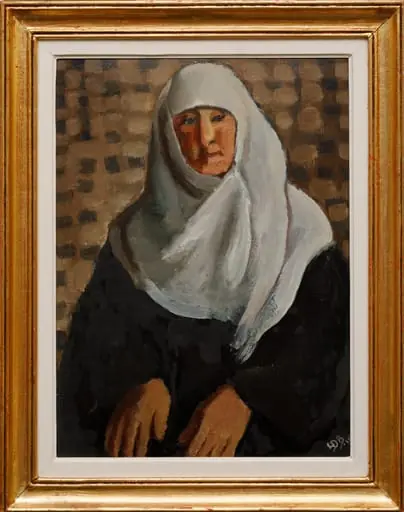 Turcoaica
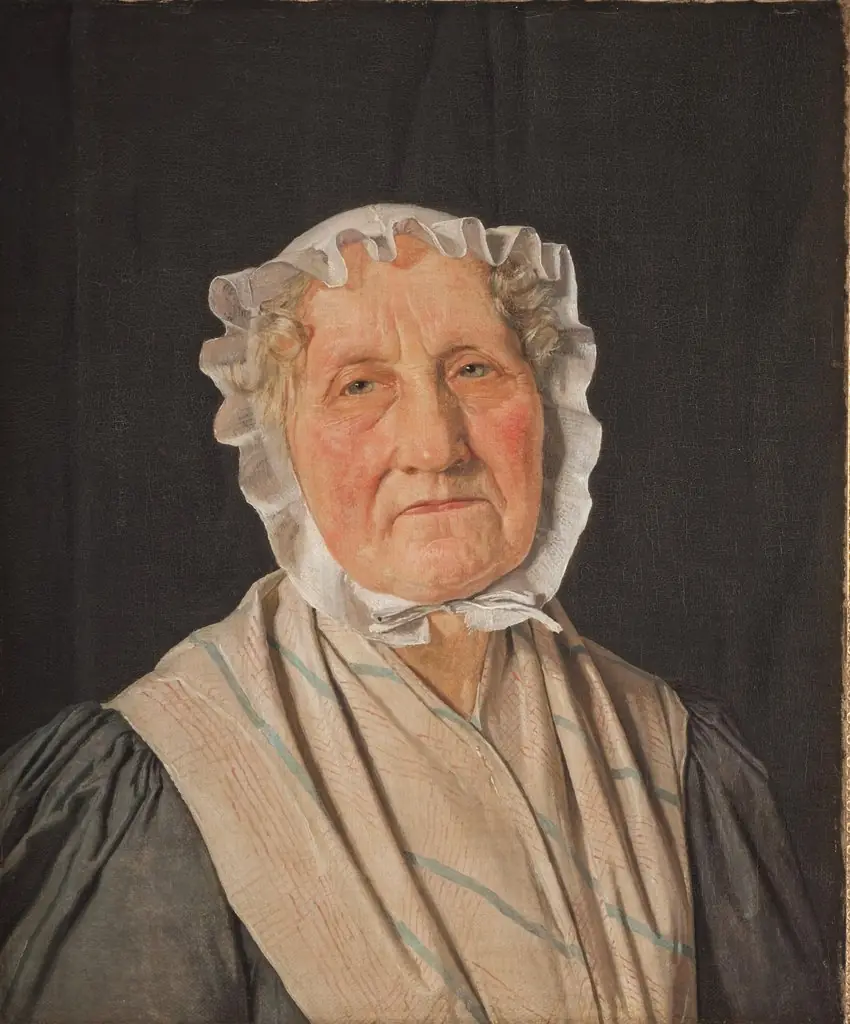 Portrait of Inger Margrethe Høyen, née Schrøder, the Mother of the Art Historian N.L. Høyen
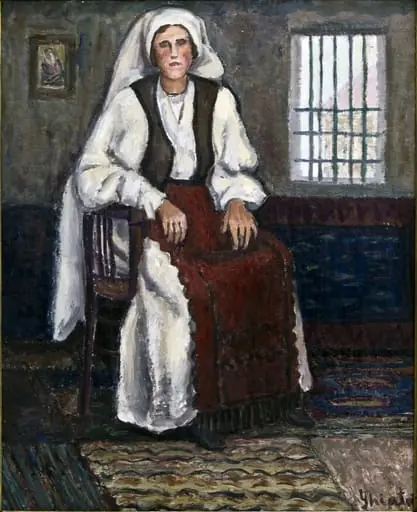 Țărancă pe laviță
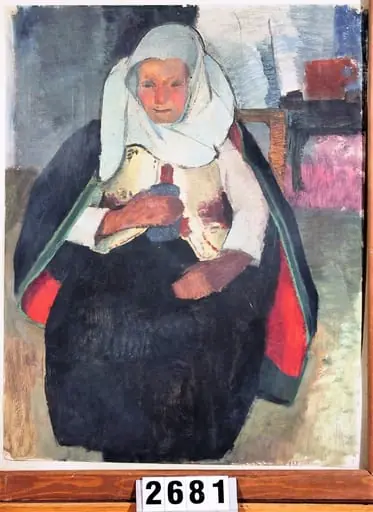 Țărancă săsoaică din Viscri