Artwork
Horse and Cart in Quarry
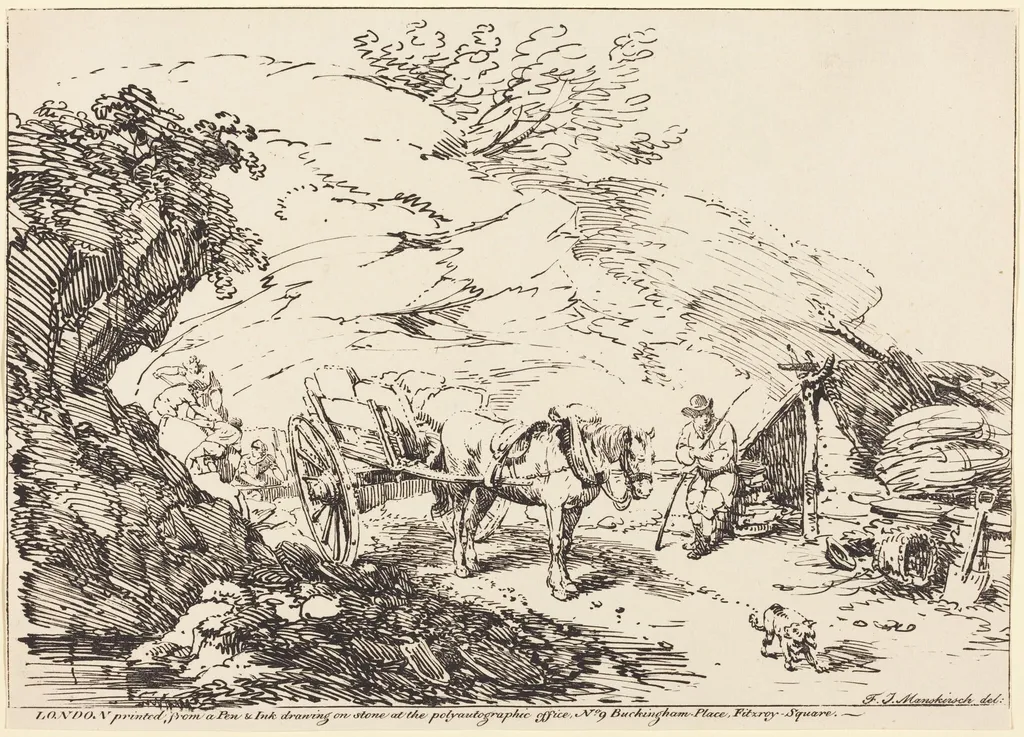
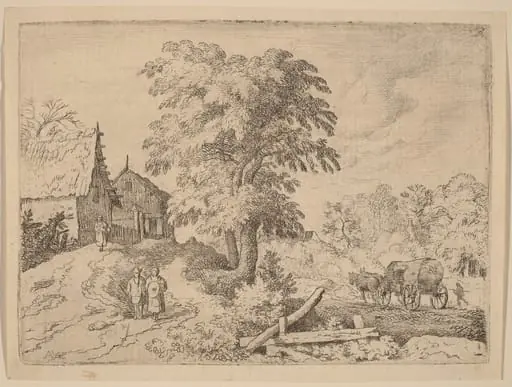
Horse and Cart in Quarry is an ink print by the Romanticist artist Franz Joseph Manskirch. It dates from 1806 and is held in the collection of the National Gallery of Art.
About this work
Overview
Horse and Cart in Quarry is a pen-and-tusche lithograph created by Franz Joseph Manskirch in 1806, depicting a scene of rural labor.
Subject & Meaning
The print shows a horse-drawn cart navigating a rugged, muddy path in a quarry, accompanied by two individuals - one guiding the horse with a stick and another seated in the cart. The scene conveys everyday rural activity, emphasizing the interaction between laborers, animals, and challenging terrain.
Technique & Style
Manskirch employed quick, expressive lines to capture movement and texture, particularly evident in the rendering of trees and rocky terrain. This sketchy approach imbues the static image with a sense of dynamism, achieved through the contrast of bold tusche and finer pen work.
History & Provenance
Created in 1806, specific details about the print's provenance and exhibition history are not provided in the available information.
Context
As a lithograph, the work leverages the medium's capability for widespread reproduction. Understanding the lithographic process - involving drawing on limestone with a grease-based medium (tusche) and pen, then transferring the image to paper - provides insight into how this sketchy, dynamic drawing was mass-produced.
Legacy
The legacy of 'Horse and Cart in Quarry' is not elaborated upon in the provided sources, suggesting its impact or influence on subsequent art movements or artists is either undocumented here or not widely recognized.
Artist & collection


 Valley View, Man with a Donkey and a Dog
 Le Christ au matin de rameaux
 Wooded Landscape with Two Country Carts and Figures
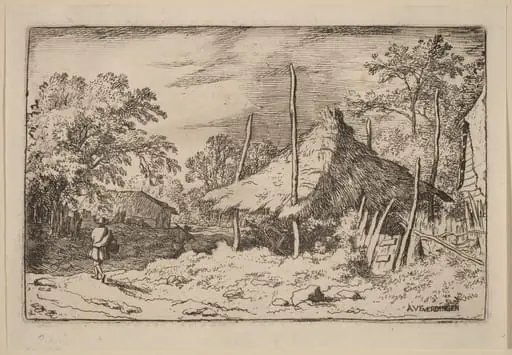 Wheel underneath the Hay Barn
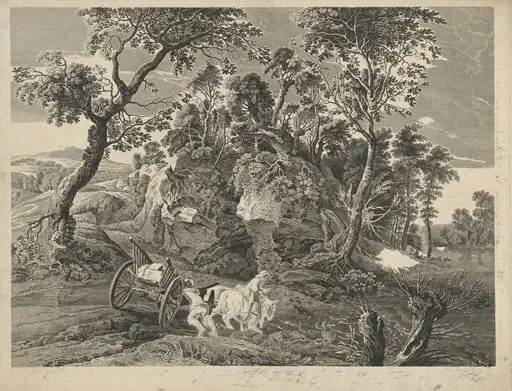 Landscape with Wagon
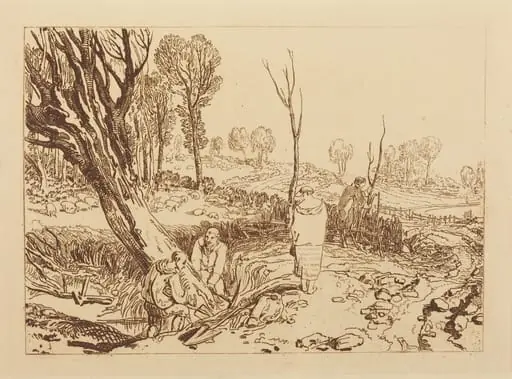 Hedging and Ditching
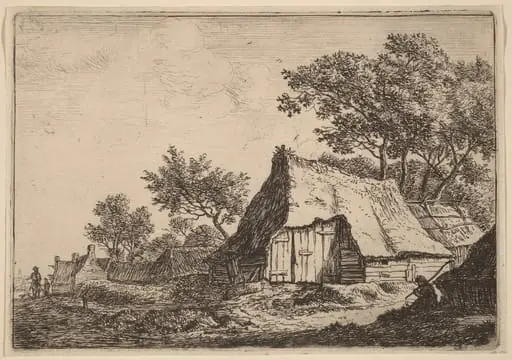 The Small Hamlet
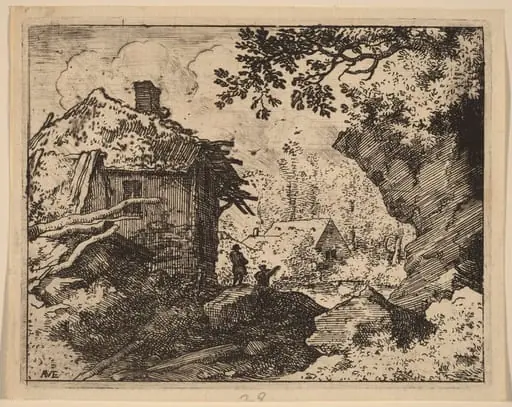 Straw Hut Seen from Behind
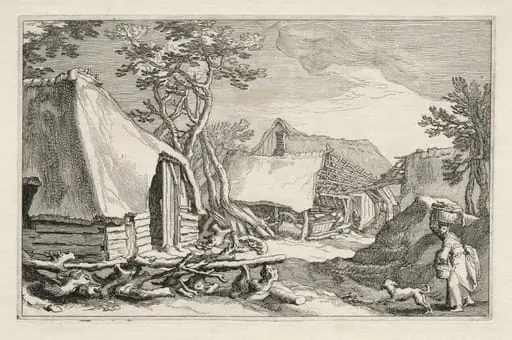 Landscape with Farmhouses
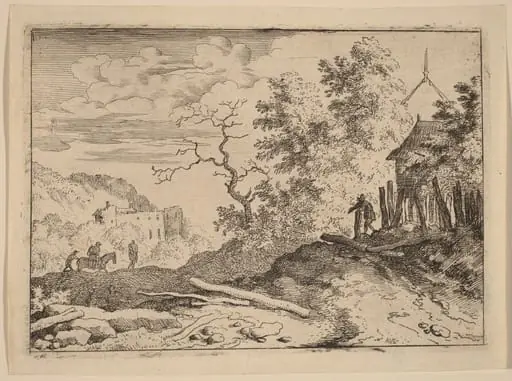 Hut with the Remains of a Hedge
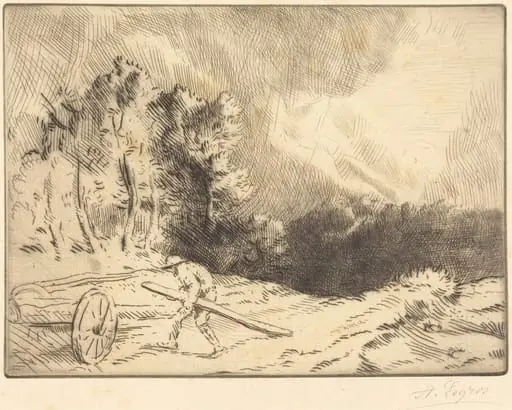 Edge of a Forest in Bourgogne (Un coin de foret en Bourgogne)
 Cart with Two Draft Horses