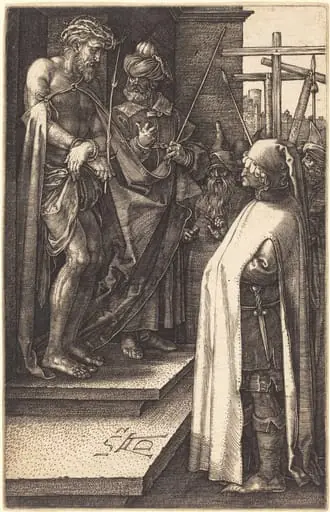
Artwork
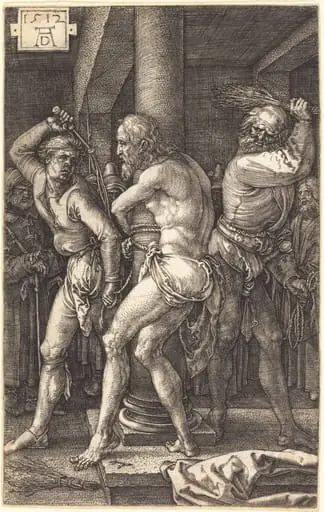
Flagellation of Christ, with the Pavement
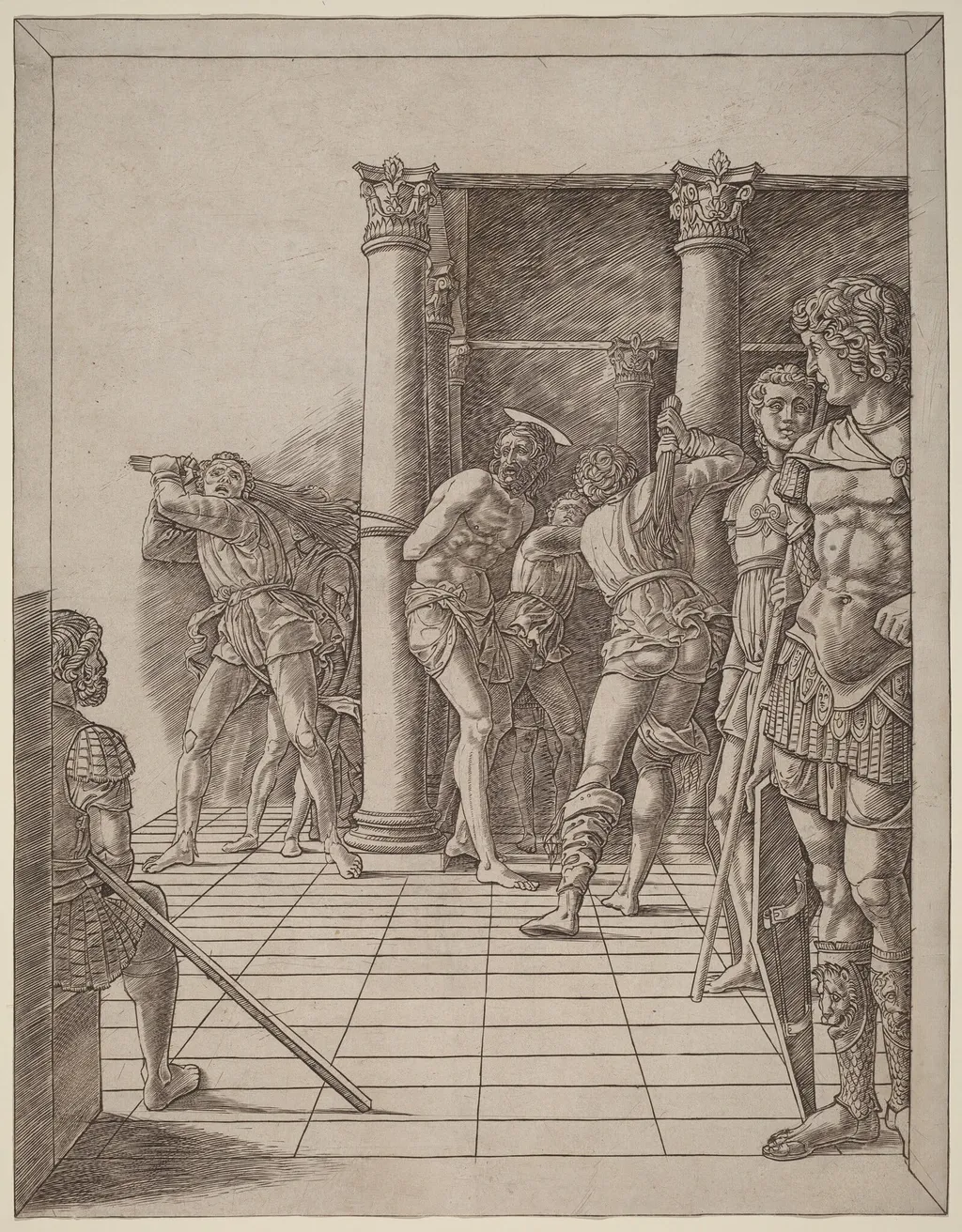
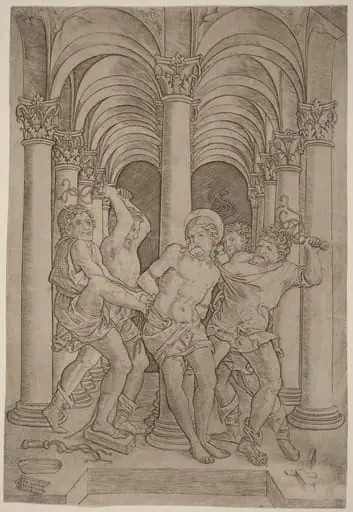
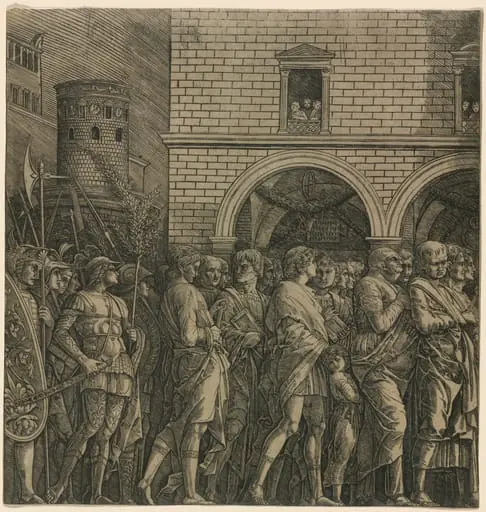
Flagellation of Christ, with the Pavement is an ink print by the Renaissance artist Andrea Mantegna. It dates from 1475 and is held in the collection of the National Gallery of Art.
About this work
Overview
This engraving, attributed to Gian Marco Cavalli but likely produced in Andrea Mantegna’s workshop, depicts the Flagellation of Christ on laid paper.
This engraving, attributed to Gian Marco Cavalli but likely produced in Andrea Mantegna’s workshop, depicts the Flagellation of Christ on laid paper. Created around 1475, it exemplifies the technical rigor and spatial awareness characteristic of Venetian printmaking in the late 15th century. The image is rendered in fine, controlled lines, emphasizing structure over atmosphere, and reflects the workshop’s role as a hub for innovative print production before 1500.
Subject & Meaning
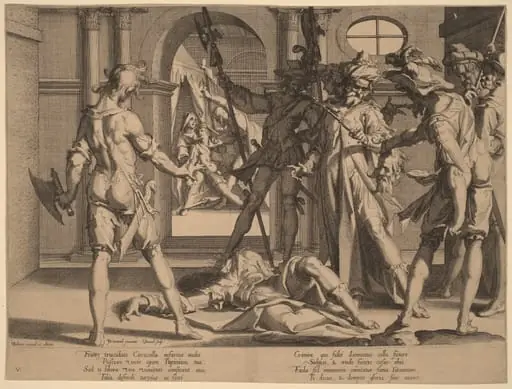
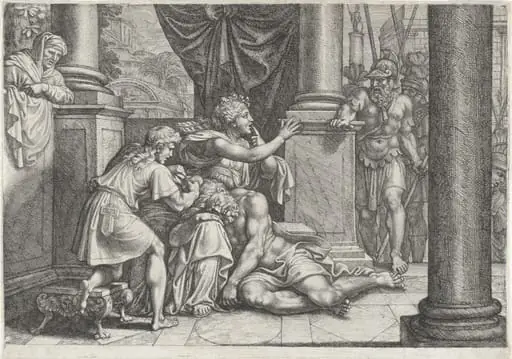
The scene portrays Christ bound to a column, undergoing scourging by a Roman soldier, while three other figures observe from the periphery. One stands with a staff, another gazes downward, and a third leans against a wall. The composition isolates the moment of suffering within a structured architectural setting, reinforcing the solemnity of the event. The figures’ stillness contrasts with the violence implied, inviting contemplation rather than emotional display.
Technique & Style
The engraving employs precise, parallel lines to model musculature, drapery, and stone surfaces, demonstrating a sculptural approach to form. Mantegna’s signature use of linear perspective is evident in the receding pavement tiles and arched colonnades, which create a shallow but deeply measured space. The horizon is lowered to elevate the figures against the architectural backdrop, enhancing their monumentality and grounding the scene in a tangible, almost archaeological environment.
History & Provenance
Though traditionally linked to Mantegna, the engraving may have been executed by a skilled assistant in his workshop, which was among the most active in Venice for printmaking during this period. The work circulated in limited numbers, likely used for devotional or educational purposes. Its survival in multiple impressions suggests it was valued for its technical precision and religious subject matter, though its exact early ownership remains undocumented.
Context
In 15th-century Italy, religious prints served both devotional and artistic functions, often disseminating compositions by leading painters to wider audiences. Mantegna’s interest in Roman antiquity informed the architectural details—columns, arches, and tiled floors—rendered with archaeological fidelity. This engraving aligns with broader Renaissance efforts to merge classical form with Christian narrative, using print to extend the reach of painterly innovation.
Legacy
The engraving contributed to the development of narrative printmaking in northern Italy, influencing later artists through its disciplined line work and spatial clarity. While not widely reproduced, it remains a key example of how Mantegna’s visual language—rooted in sculpture and perspective—transferred successfully to the medium of engraving. Its legacy lies in its quiet authority, bridging painting and print without sacrificing compositional integrity.
Artist & collection
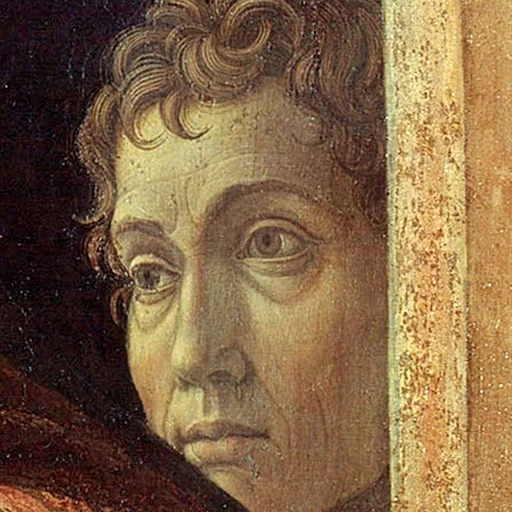
Artist
Andrea Mantegna (UK: , US: ; Italian: ; c. 1431 – September 13, 1506) was an Italian Renaissance painter, a student of Roman archaeology, and the son-in-law of Jacopo Bellini. Like other artists of the time, Mantegna…