Artwork
Flagellation
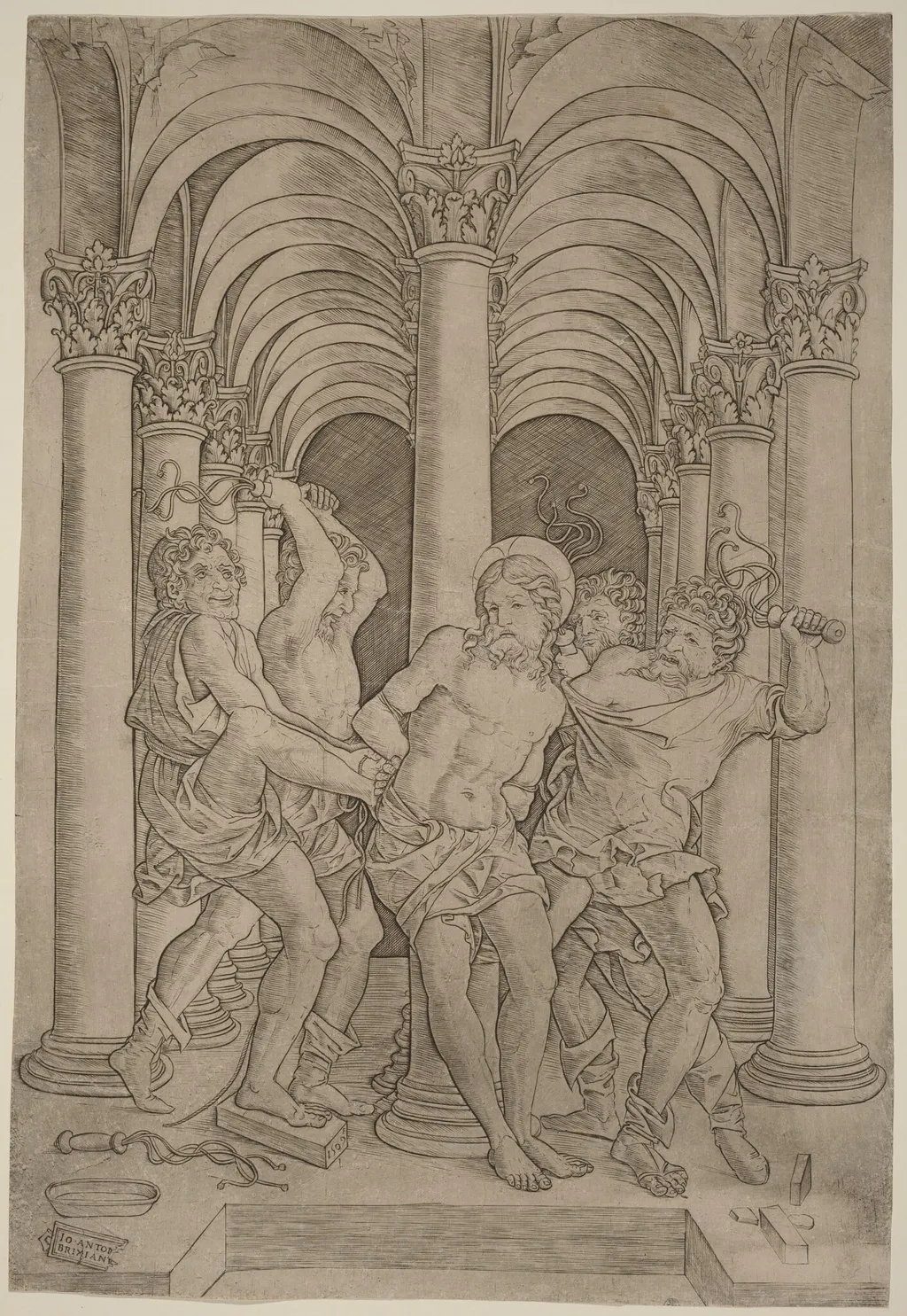
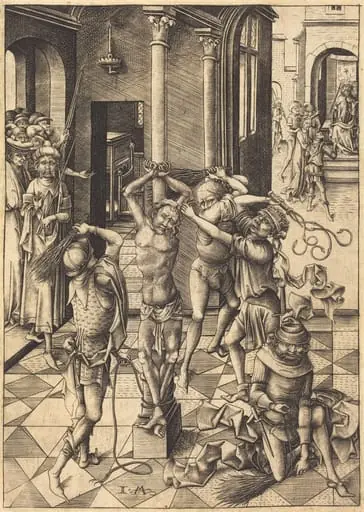
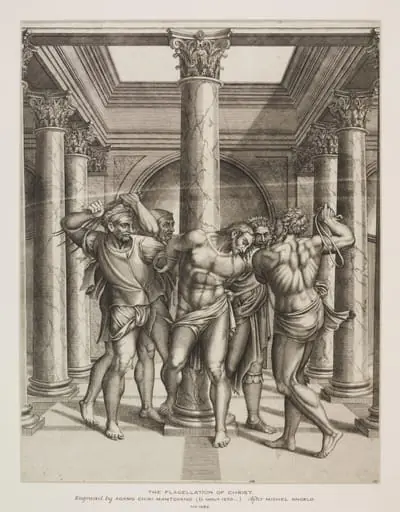
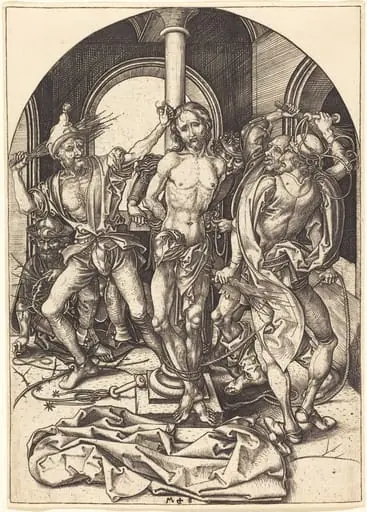
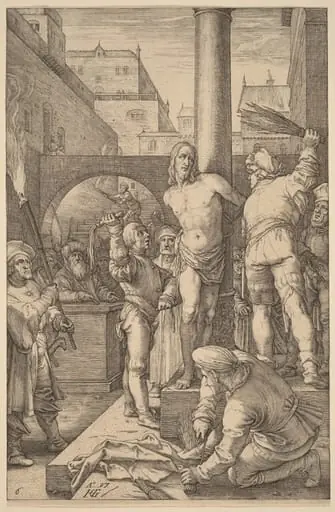
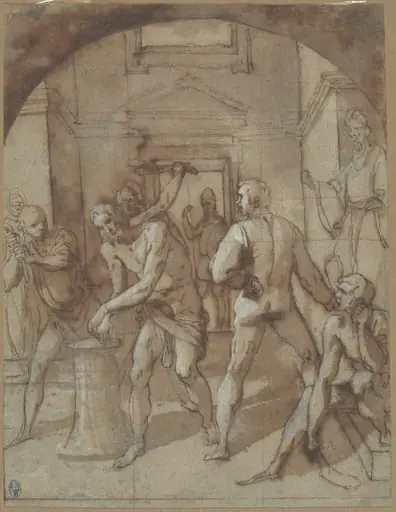
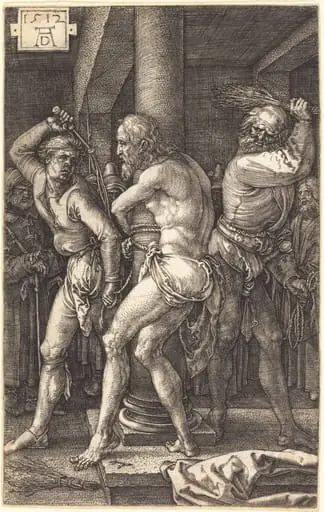
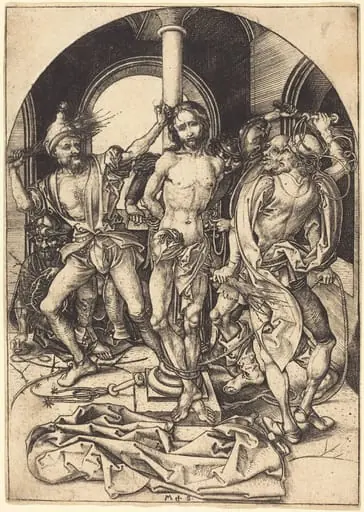
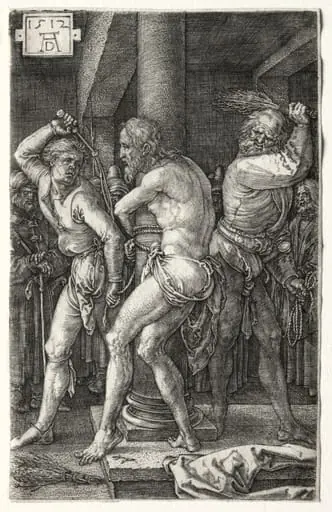
Flagellation is an ink print by the Renaissance artist Giovanni Antonio da Brescia. It dates from 1509 and is held in the collection of the National Gallery of Art.
About this work
Overview
Created in 1509, *Flagellation* is an engraved print by Giovanni Antonio da Brescia, an Italian printmaker active in the northern regions during the Renaissance. Executed near the middle of his known output, the work exemplifies the graphic conventions of early 16th‑century Italian engraving, employing line work and chiaroscuro to render a compact, dramatic scene.
Subject & Meaning
The image depicts three male figures within a vaulted, columned space. One figure is bound to a post, his arms outstretched, while the other two restrain him—one gripping the arms, the other the legs. The composition conveys a moment of physical coercion, suggesting themes of punishment or religious martyrdom common in contemporary visual narratives.
Technique & Style
Brescia achieved depth through dense cross‑hatching and fine incised lines, especially in the drapery folds and the shadowed walls. The use of strong chiaroscuro creates a sense of three‑dimensionality on the metal plate, a method typical of Renaissance engravers seeking to model volume and atmosphere within the limits of the medium.
History & Provenance
The print bears the early monogram "Z.A.", a signature style the artist employed before later adopting his full name. It dates from the midpoint of his documented career, situating it among his more mature works. Surviving copies are held in several European print collections, confirming its circulation among collectors of the period.
Artist & collection

Artist
Giovanni Antonio da Brescia was an Italian engraver of northern Italy, active in the approximate period 1490–1519, during the Italian Renaissance.