Artwork
Iphigenia Recognizing Her Brother
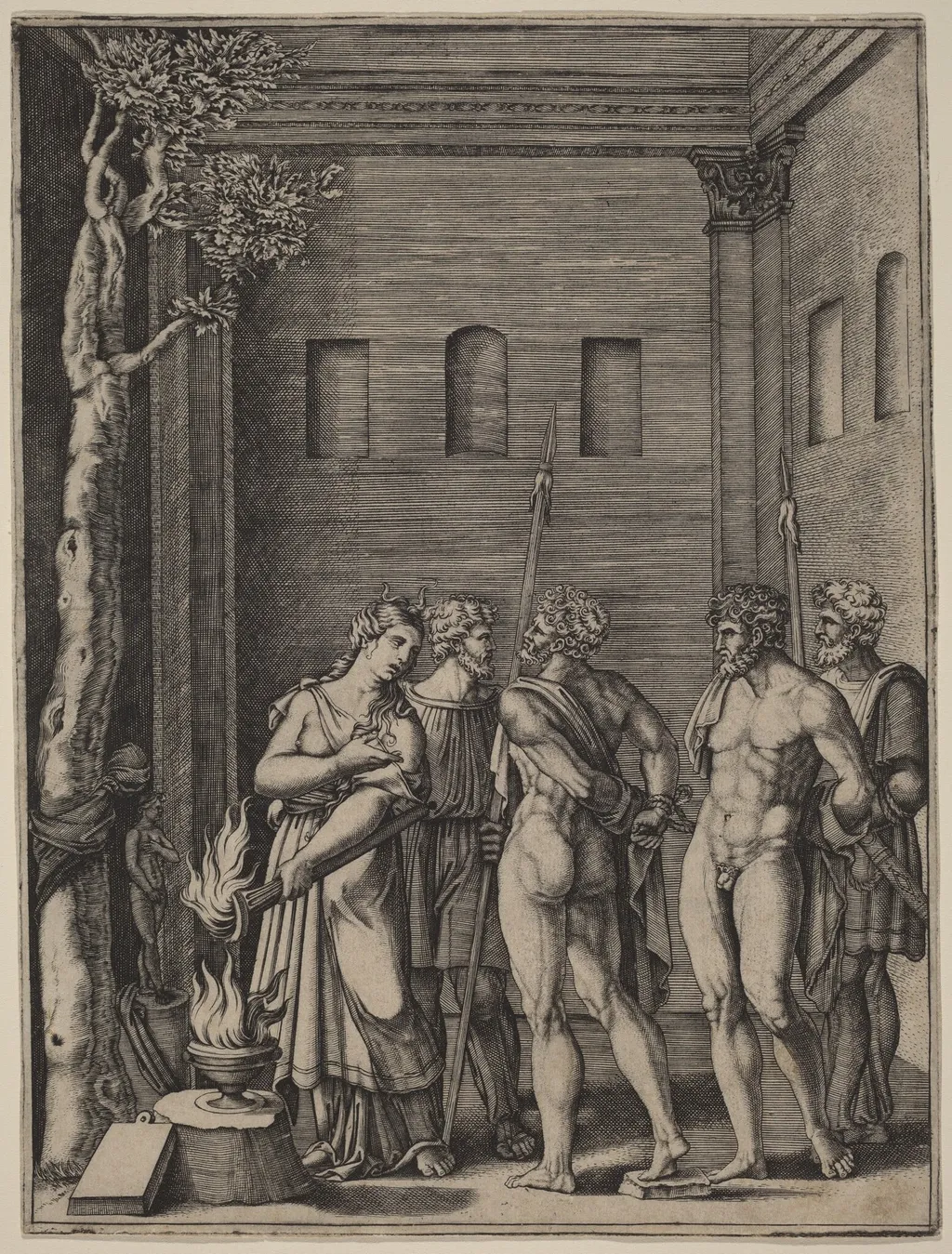
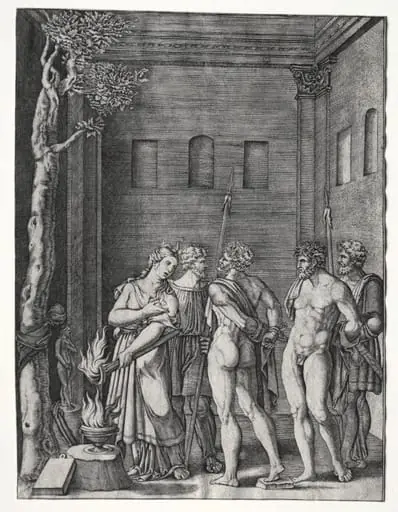
Iphigenia Recognizing Her Brother is an ink print by the Renaissance artist Agostino dei Musi. It dates from 1513 and is held in the collection of the National Gallery of Art.
About this work
Overview
Agostino Veneziano’s 1513 engraving *Iphigenia Recognizing Her Brother* captures a pivotal instant from the Greek legend of Iphigenia and Orestes. Executed in black ink on a copper plate, the print presents a dimly lit interior where five figures are arranged around a small fire, their gestures and expressions conveying a sudden, dramatic revelation.
Subject & Meaning
The scene illustrates the moment Iphigenia, serving as priestess, identifies her brother Orestes, whom she has not seen since childhood. The recognition is conveyed through a prophetic vision, a common motif in classical narratives that underscores themes of fate, familial bonds, and the restoration of lost kinship.
Technique & Style
Veneziano employed the fine line work characteristic of High Renaissance engraving, carving intricate details into a copper matrix.
Veneziano employed the fine line work characteristic of High Renaissance engraving, carving intricate details into a copper matrix. The contrast between the illuminated fire and the shadowed stone walls creates depth, while the precise rendering of drapery, musculature, and the tree branch visible through a window demonstrates his skill in translating complex spatial arrangements onto a flat surface.
History & Provenance
Produced in Rome, the print formed part of Agostino de’ Musi’s extensive series of mythological engravings that circulated widely throughout Italy and beyond during the early sixteenth century. Copies of the work entered private collections and later appeared in early print catalogues, attesting to its broad dissemination among connoisseurs of the period.
Context
The engraving reflects the Renaissance fascination with antiquity, reviving classical stories for contemporary audiences. By depicting a moment of divine insight, Veneziano aligns his work with humanist interests in moral exempla and the visual exploration of narrative drama, a trend prevalent among Roman artists of his generation.
Legacy
Although not as frequently reproduced as later prints, this engraving contributed to the diffusion of classical iconography in Northern European art. Its compositional clarity and technical finesse influenced subsequent engravers who sought to emulate the balance of narrative intensity and delicate line work characteristic of the High Renaissance.
Artist & collection
Artist
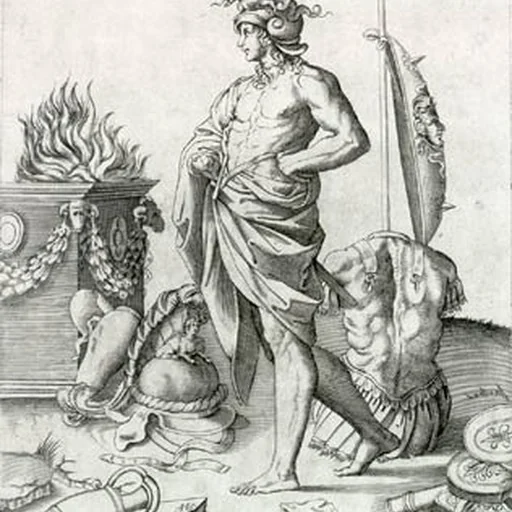
Agostino Veneziano ("Venetian Agostino"), whose real name was Agostino de' Musi (c. 1490 – c. 1540), was an important and prolific Italian engraver of the Renaissance.

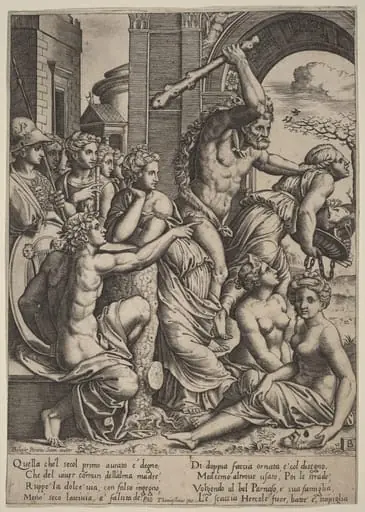 Envy Driven from the Temple of the Muses
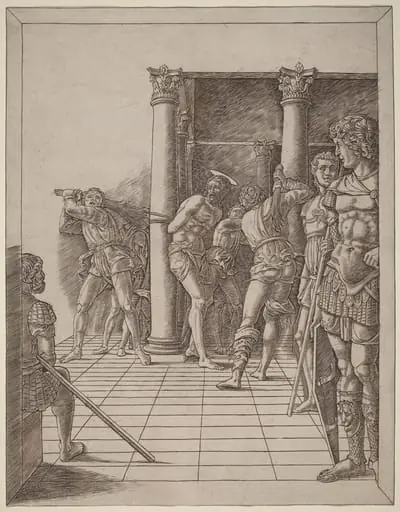 Flagellation of Christ, with the Pavement
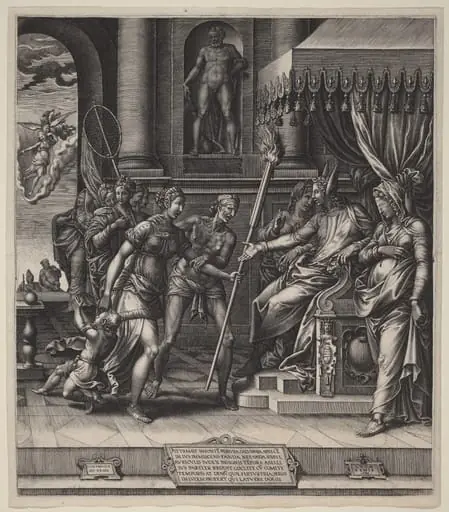 The Calumny of Apelles
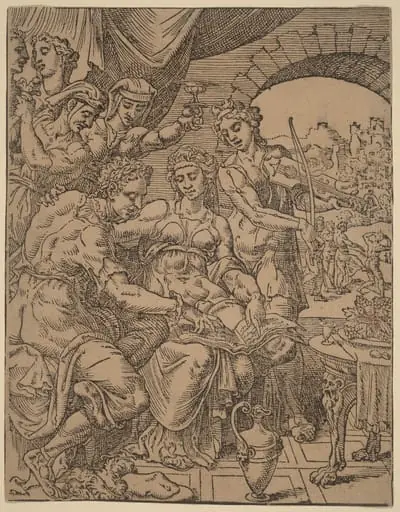 The Prodigal Son Squandering His Inheritance on Harlots
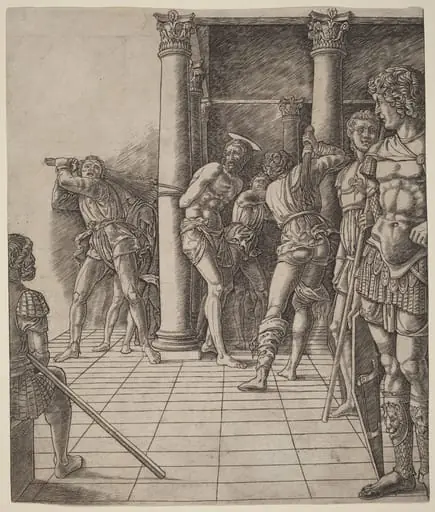 Flagellation of Christ, with the Pavement
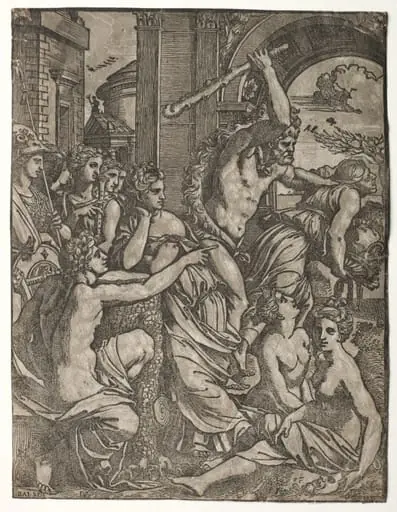 Hercules Driving Envy from the Temple of the Muses
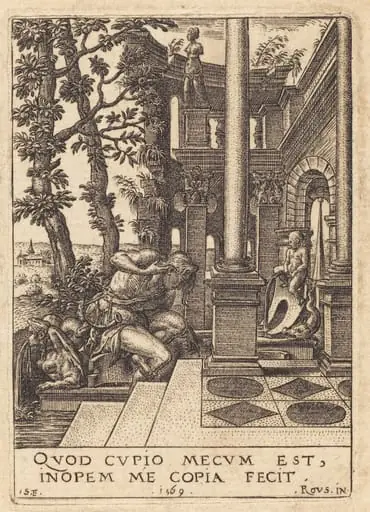 Narcissus at the Fountain
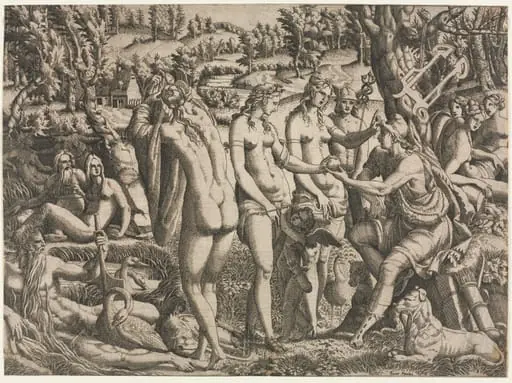 The Judgment of Paris
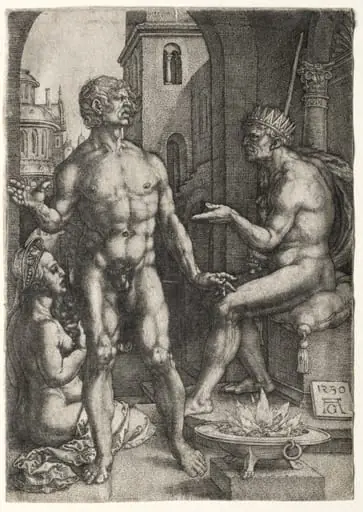 Mucius Saevola
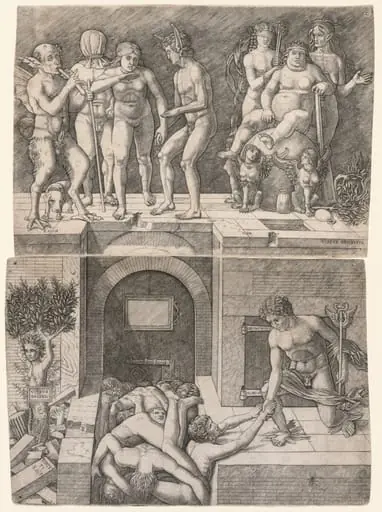 Allegory of the Fall of Ignorant Humanity
 Amphion and Zethus Tying Dirce to a Wild Bull
 Orestes and Pylades brought to Iphigenia for Sacrifice