Artwork
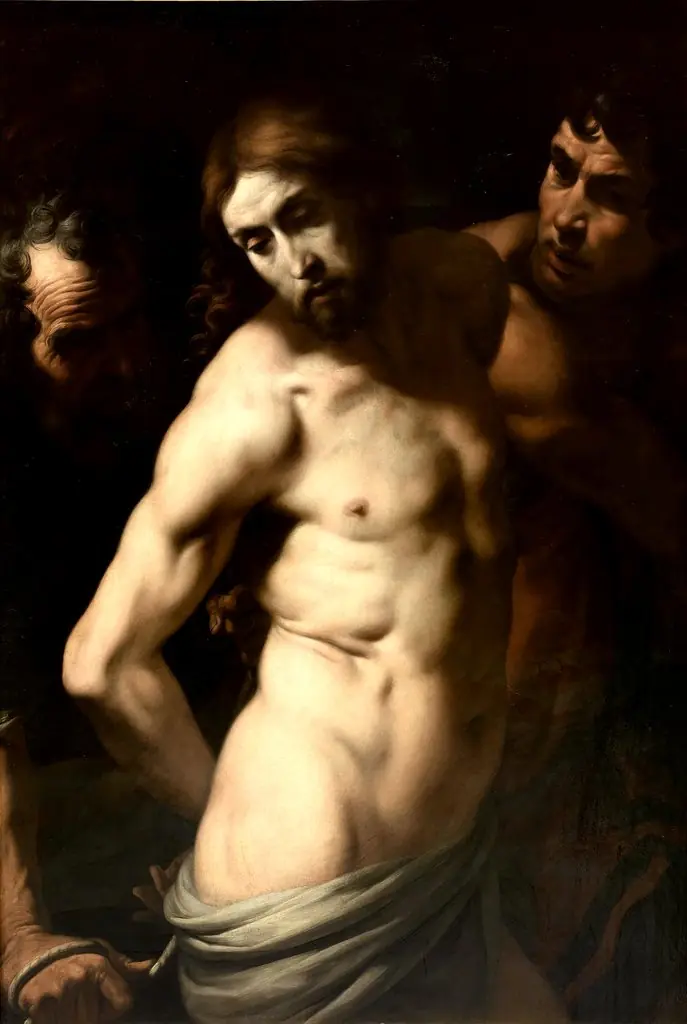
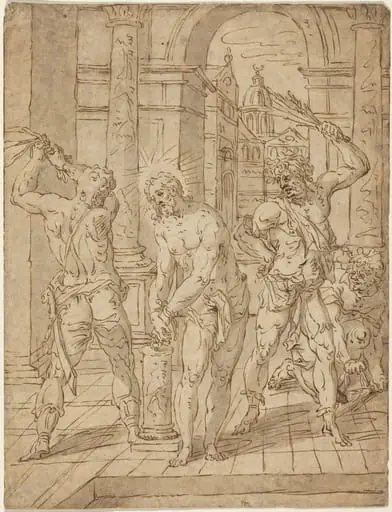
The Flagellation
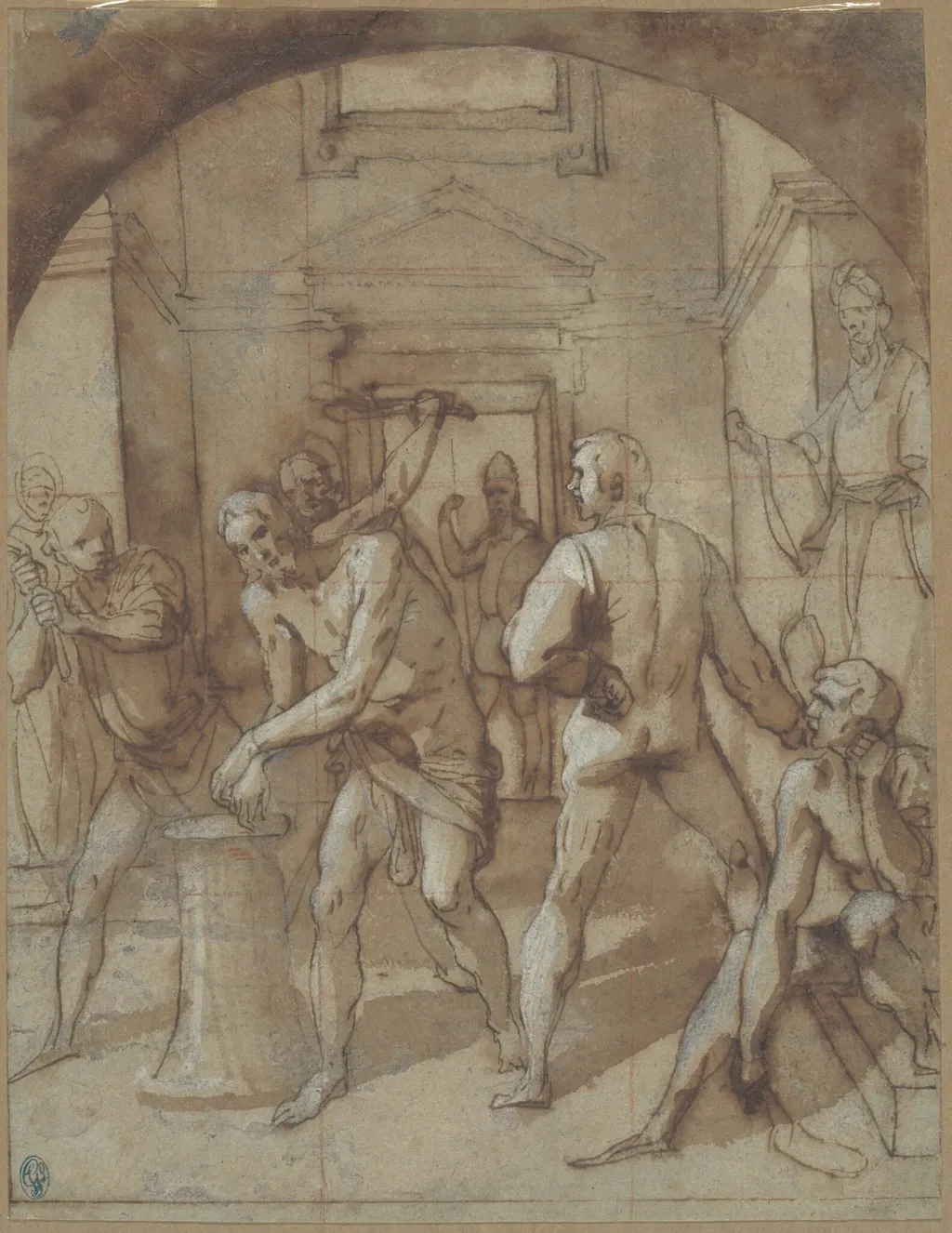
The Flagellation is a chalk drawing by the Baroque artist Daniele Crespi. It dates from 1629 and is held in the collection of the National Gallery of Art.
About this work
Overview
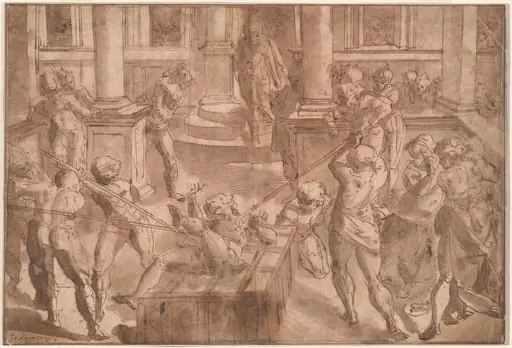
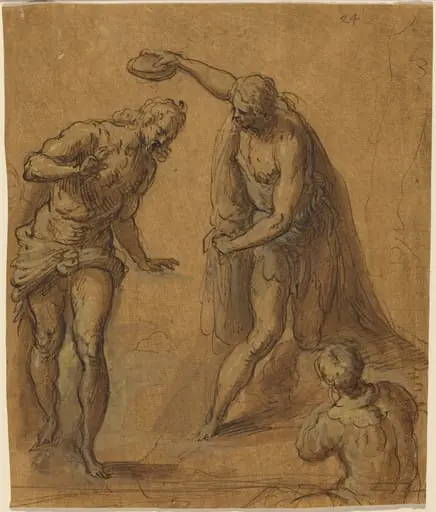
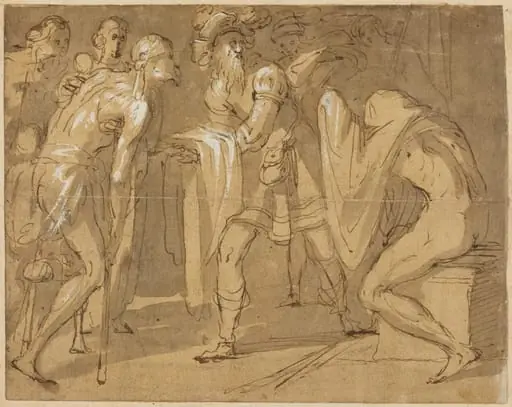
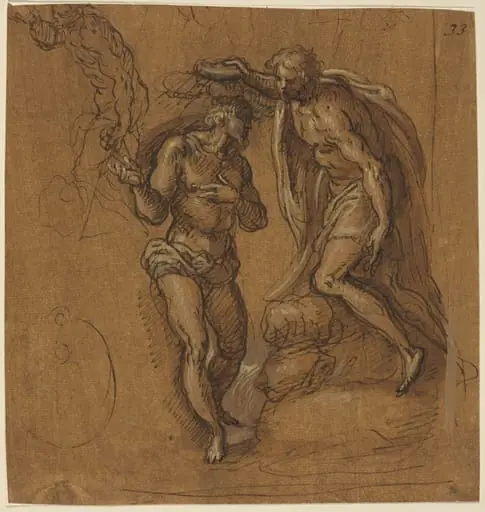
Created circa 1629, this drawing by Daniele Crespi records the biblical episode of Christ’s flagellation. Executed with pen, brown ink, and a brown wash over a black‑chalk underdrawing, the image is further highlighted with white gouache on a blue‑laid paper that has aged to a light brown hue. The composition is confined to a stone‑walled interior where a group of figures witnesses the scourging.
Subject & Meaning
The scene captures the moment of Christ’s beating, emphasizing the contrast between the central figure’s suffering and the varied reactions of the surrounding onlookers. Some observers avert their gaze, while others stand rigidly, suggesting a range of emotional responses to the violence. The uneven lighting and deep shadows reinforce the tension and solemnity of the episode.
Technique & Style
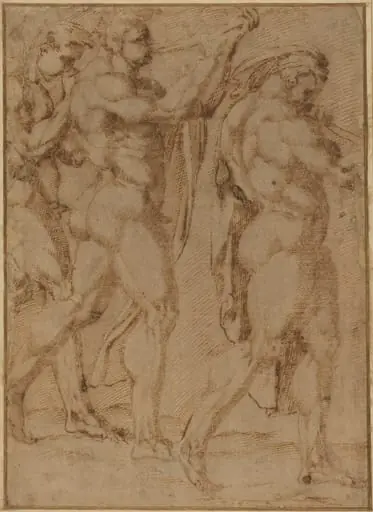
Crespi employed rapid, sketchy lines to suggest movement, allowing portions of the drawing to remain faint and atmospheric. The white gouache serves to illuminate key elements, particularly the faces and hands, against the darker ink washes. The use of blue laid paper, now partially visible through the wash, adds a subtle, ghostly underlayer that enhances the work’s depth.
History & Provenance
Active in Milan during the 1620s, Crespi was noted for shifting away from the prevailing Lombard Mannerist idiom toward an early Baroque approach marked by clearer forms and direct narrative content. This drawing exemplifies his transitional style and reflects his reputation as one of the period’s most original Milanese artists.
Artist & collection
Artist
Daniele Crespi (1598 – 19 July 1630) was an Italian painter and draughtsman. He is regarded as one of the most original artists working in Milan in the 1620s. He broke away from the exaggerated manner of Lombard…