Artwork
Self-portrait
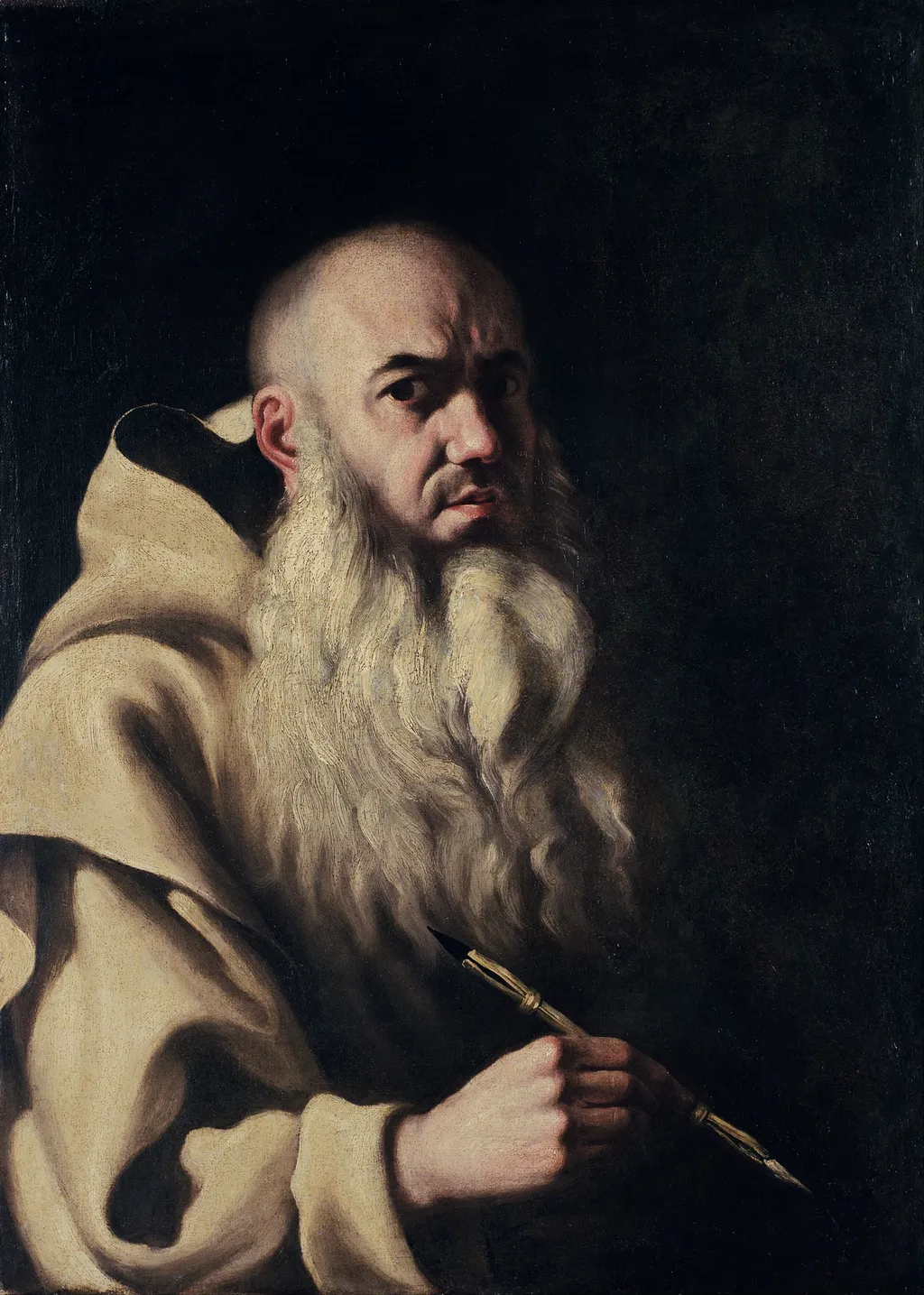
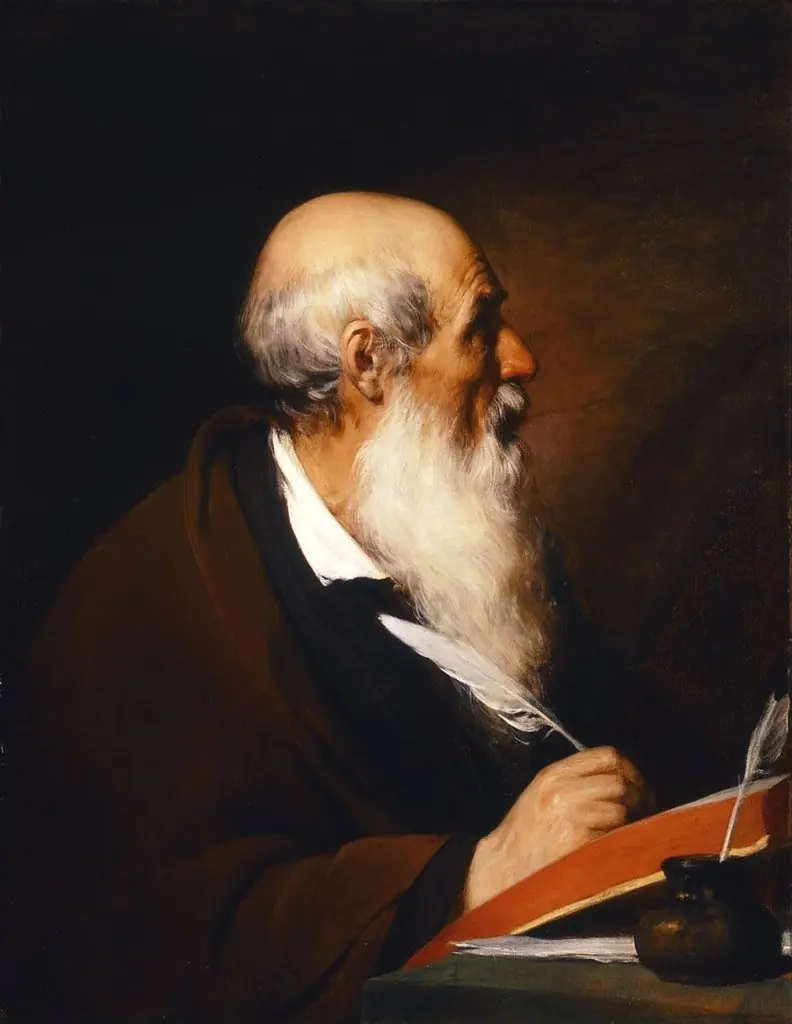
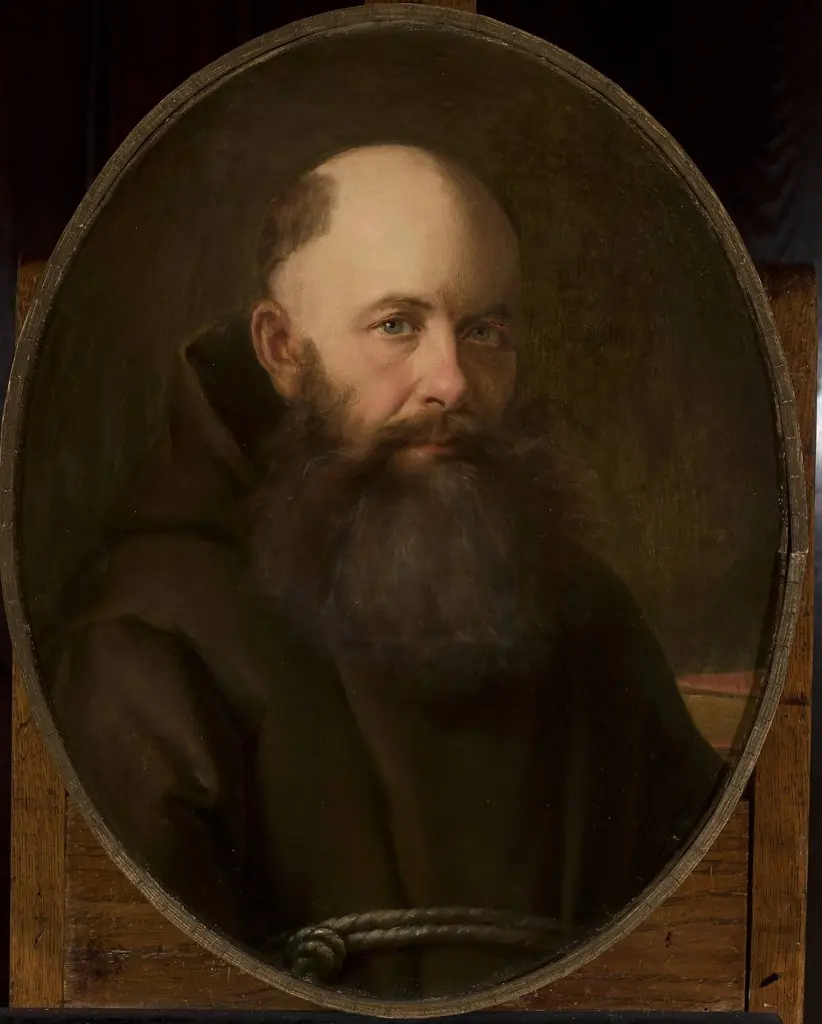
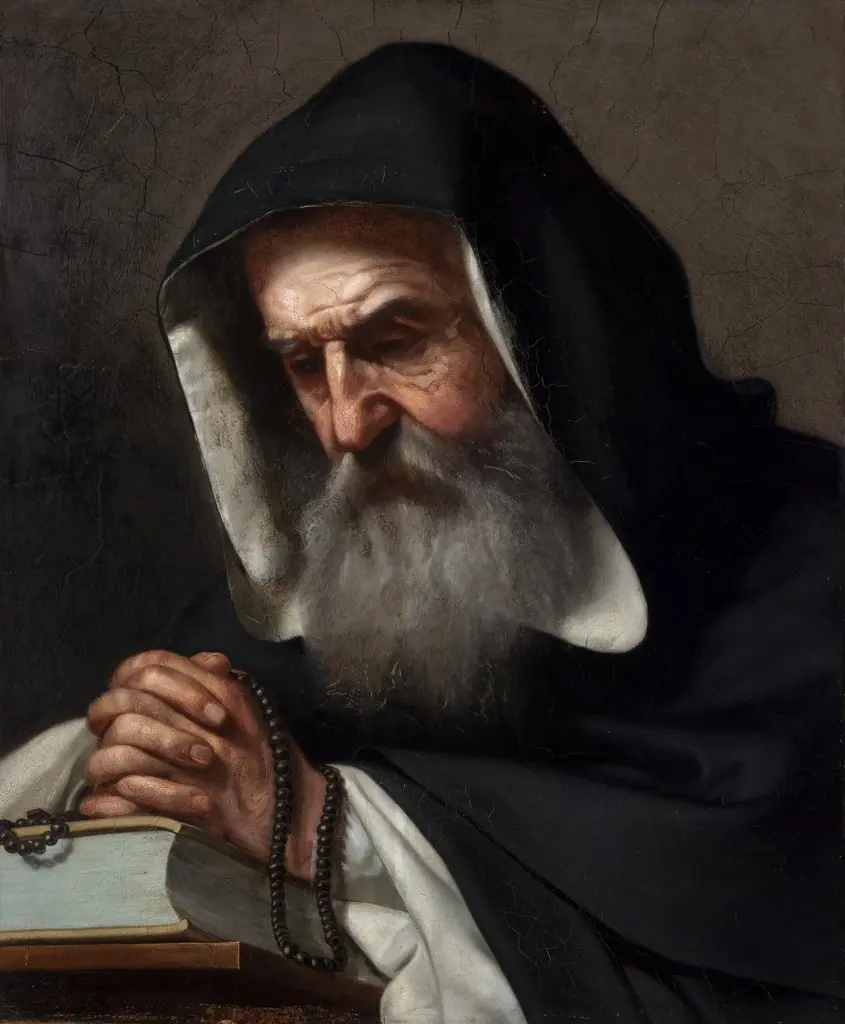
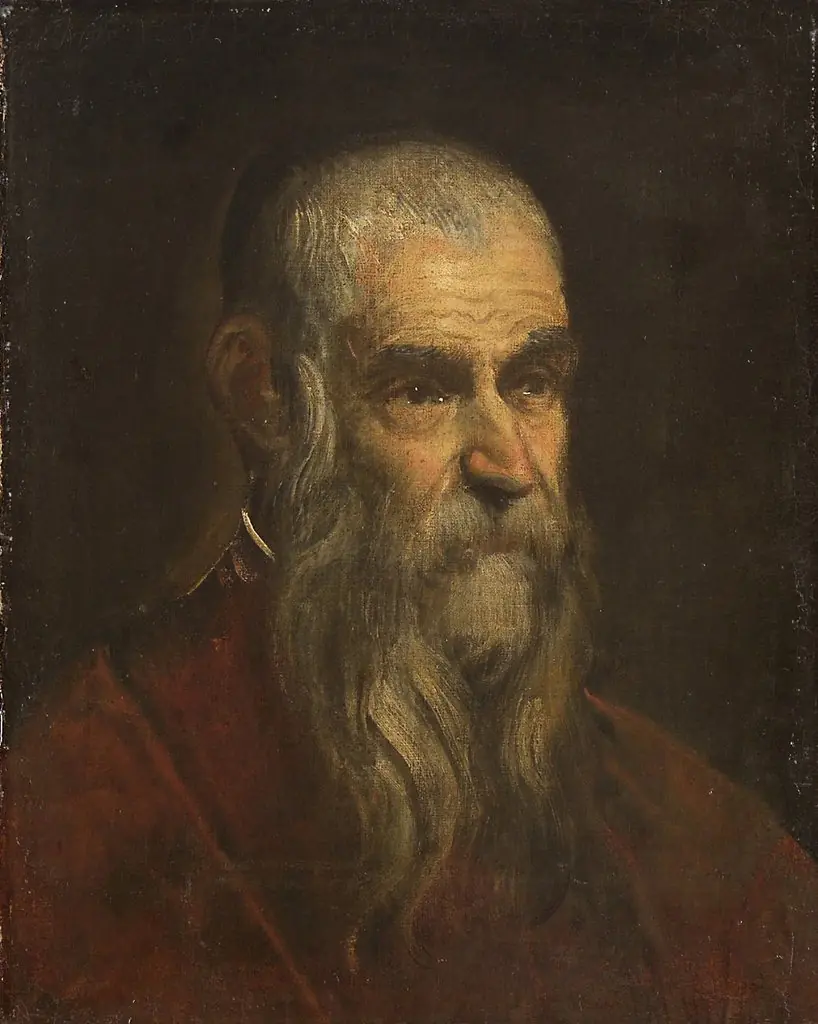
Self-portrait is an oil painting by Manuel Bayeu. It dates from 1800 and is held in the collection of the Museu Nacional d'Art de Catalunya.
About this work
Overview
Manuel Bayeu, a Spanish artist and Carthusian monk, painted this oil self-portrait in 1800. Born in Zaragoza in 1740, he was active in both religious and artistic communities. The work is now part of the collection at the Museu Nacional d'Art de Catalunya, where it serves as a quiet testament to his dual identity as a man of faith and a practitioner of the visual arts.
Subject & Meaning
The portrait presents Bayeu as an aging man with a long white beard and a bare scalp, dressed in the simple white robe of a Carthusian monk. His serious expression and direct gaze to the right suggest introspection rather than performance. The paintbrush in his right hand links his spiritual vocation with his artistic practice, implying that creation was an extension of his devotion.
Technique & Style
Bayeu employed oil paint with restrained brushwork, emphasizing texture over flourish. The dark, unmodeled background isolates the figure, focusing attention on his face and hands. The rendering of his beard and robe shows careful attention to light and volume, while the brushstroke remains unadorned, reflecting a practical, unpretentious approach aligned with monastic values.
History & Provenance
The painting was created in the final decade of Bayeu’s life, likely during his time at the Carthusian monastery. It remained within religious or familial circles until entering the Museu Nacional d'Art de Catalunya’s collection. Its preservation there suggests recognition of its value as a personal document rather than a public commission.
Context
In early 19th-century Spain, religious orders maintained artistic traditions even as secular movements gained momentum. Bayeu’s self-portrait reflects a quiet continuity within monastic culture, where painting served not for fame but for contemplation. His work stands apart from the grand narratives of his contemporaries, offering instead a personal, inward-facing record.
Legacy
Though not widely known outside regional art history, Bayeu’s self-portrait endures as a rare visual record of a monk-artist in late Enlightenment Spain. It contributes to understanding how religious identity and artistic practice coexisted in a period of social change, offering a modest but significant counterpoint to more celebrated figures of the era.
Own this work as a print
Artist & collection
Artist
Friar Manuel Bayeu y Subías (8 January 1740, Zaragoza - c. 1809, Zaragoza) was a Spanish painter, architect and Carthusian monk.