Artwork
"Madrid Fair in Cebada Square"
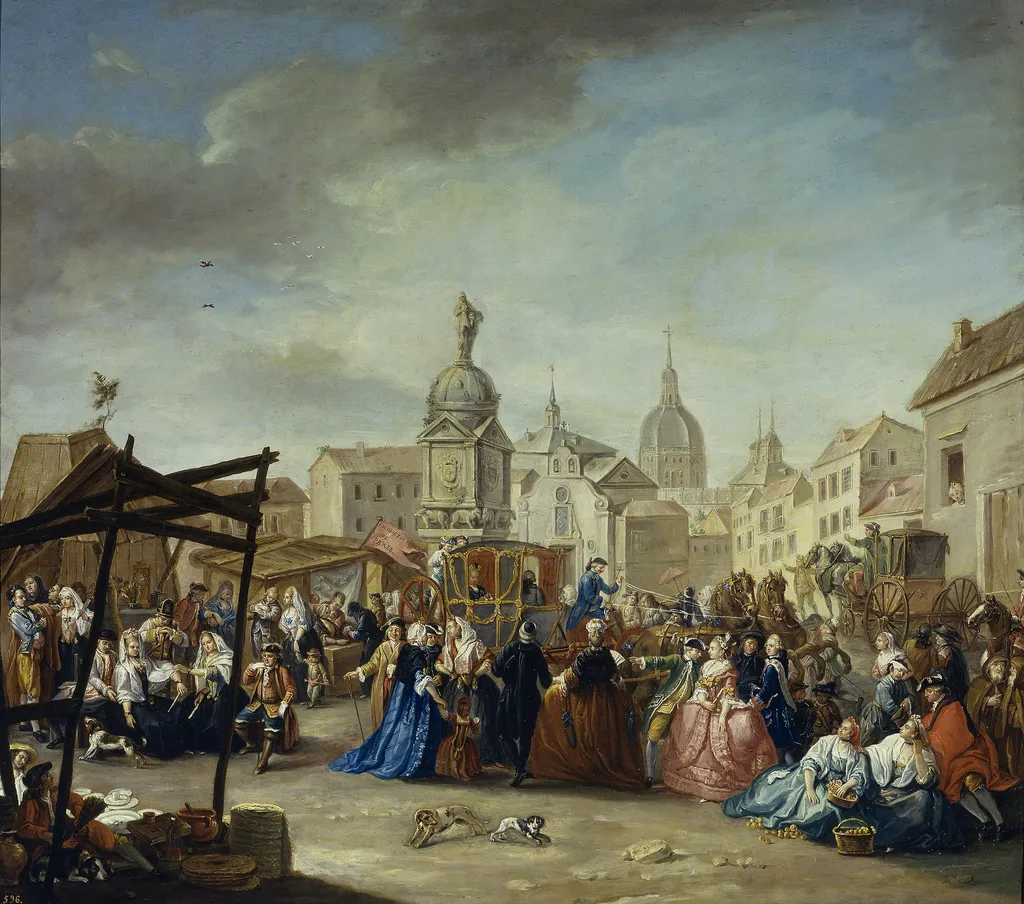
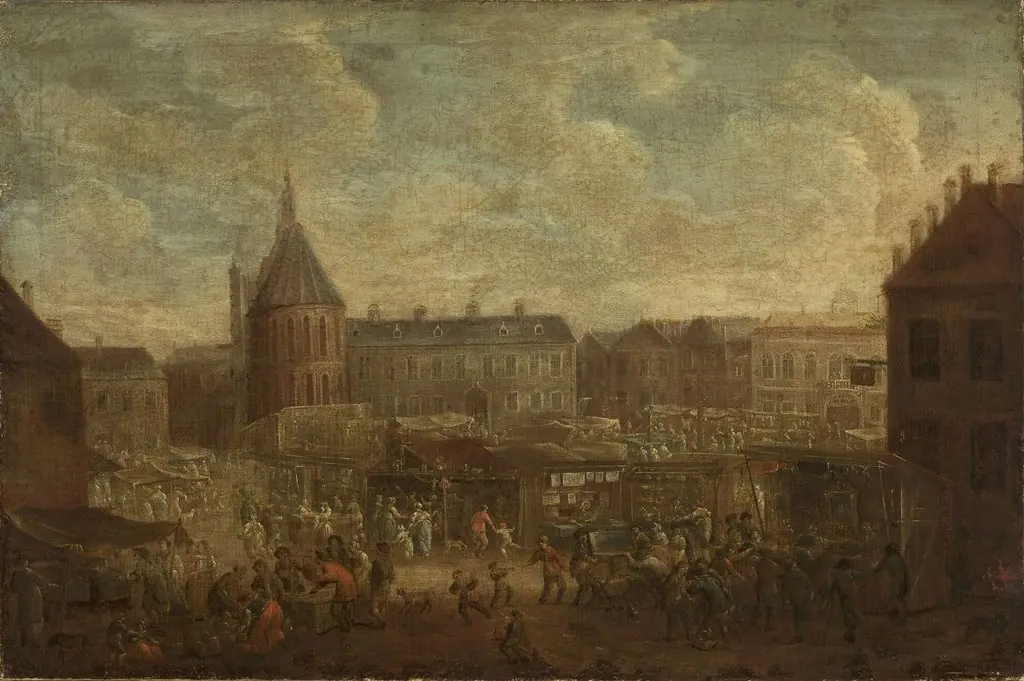
"Madrid Fair in Cebada Square" is an oil painting by the Rococo painting artist Manuel de la Cruz. It dates from 1770 and is held in the collection of the Museo del Prado.
About this work
Overview
The painting is held in the Museo del Prado’s collection, where it stands as a rare example of 18th-century Spanish genre painting focused on civic activity.
Painted in 1770 by Spanish artist Manuel de la Cruz, this oil-on-canvas work captures a bustling public fair in Madrid’s Cebada Square. Belonging to the Rococo tradition, the scene reflects everyday urban life rather than mythological or aristocratic themes. The painting is held in the Museo del Prado’s collection, where it stands as a rare example of 18th-century Spanish genre painting focused on civic activity.
Subject & Meaning
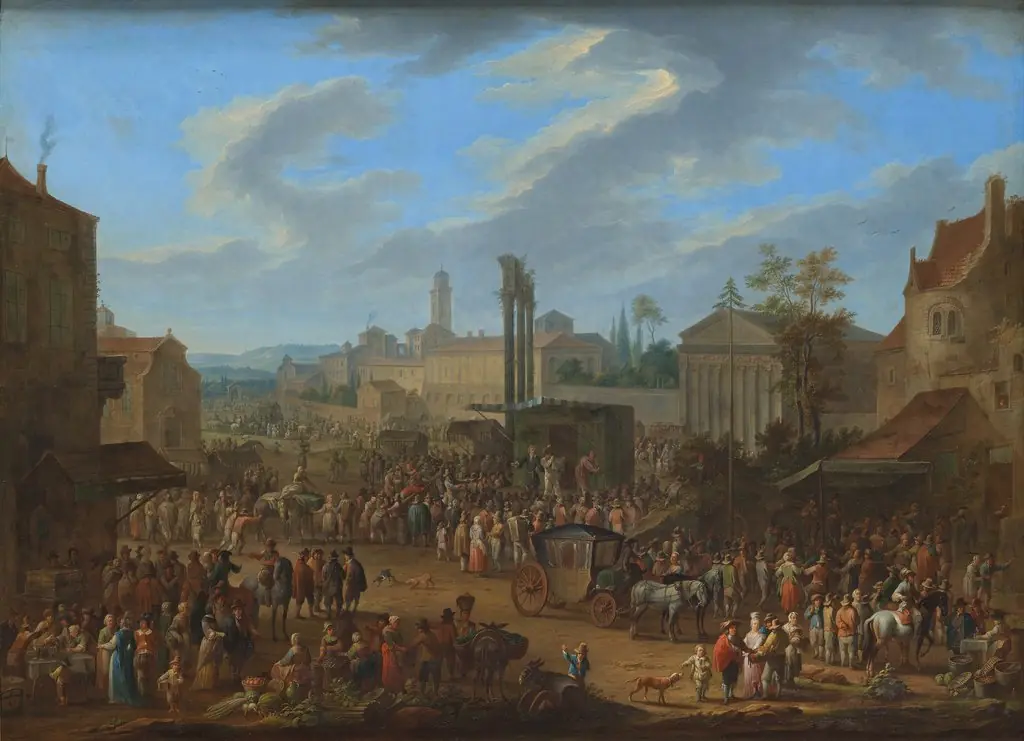
The composition centers on a gilded carriage, surrounded by a diverse crowd of nobles, vendors, and laborers. Figures are arranged to suggest social hierarchy: elegantly dressed individuals in the foreground contrast with modestly clad street dwellers in the background. Dogs, baskets, and scattered goods reinforce the scene’s spontaneity. The painting documents public festivity as a space where class lines intersect, without overt judgment or idealization.
Technique & Style
De la Cruz employed vibrant hues in clothing to draw attention to individual figures against the subdued architecture and overcast sky. Brushwork is precise yet lively, capturing textures of fabric, wood, and stone. Light falls naturally across the scene, modeling forms without dramatic contrasts. The shallow depth and crowded arrangement reflect Rococo’s preference for decorative detail over spatial illusion.
History & Provenance
Created during the reign of Charles III, the painting entered the Museo del Prado’s holdings in the 19th century, likely through royal or state acquisition. Its survival is notable, as many similar genre works from this period were lost or overlooked. Documentation confirms its attribution to de la Cruz, a lesser-known Madrid-based painter active in the latter half of the 1700s.
Context
Cebada Square was a commercial hub in 18th-century Madrid, known for markets and seasonal fairs. The painting aligns with a growing interest in depicting ordinary urban life, influenced by French and Flemish genre scenes. Unlike grand historical paintings, this work values observation over narrative, offering a snapshot of Madrid’s social fabric during a period of urban modernization.
Legacy
Though not widely exhibited, the painting remains a valuable record of Spanish urban culture in the late Enlightenment. It contributes to scholarly understanding of how local artists engaged with everyday subjects, diverging from dominant religious or courtly themes. Its preservation allows continued study of class dynamics, fashion, and public space in pre-industrial Spain.
Own this work as a print
Artist & collection
Artist
Manuel de la Cruz (1750–1792) was a Spanish painter. He was born and died in Madrid. He distinguished himself by his pictures in the cathedral of Carthagena and in the monastery of San Francisco el Grande at Madrid. In…