Artwork
The Holy Family with Angels
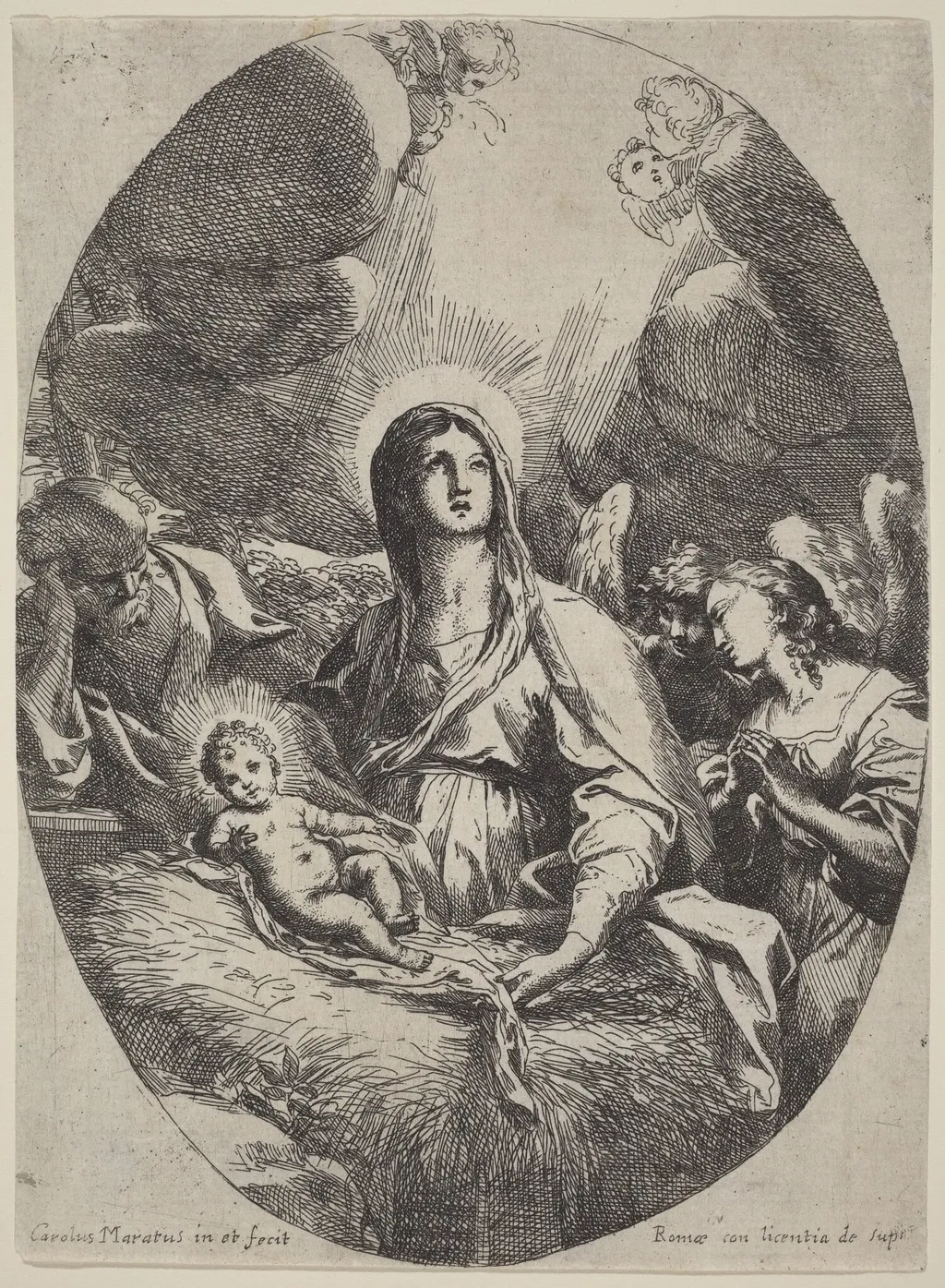
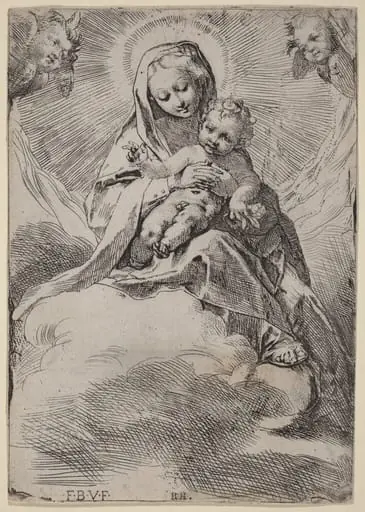
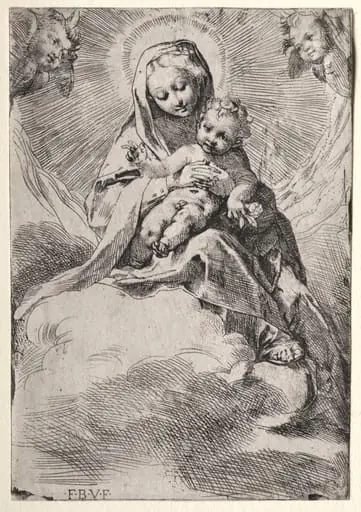
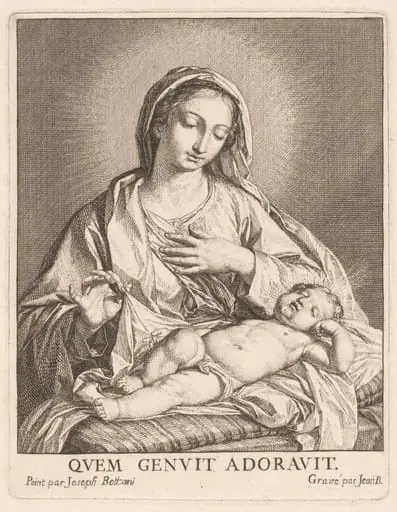
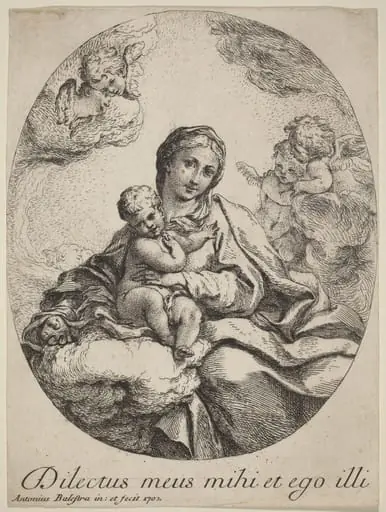
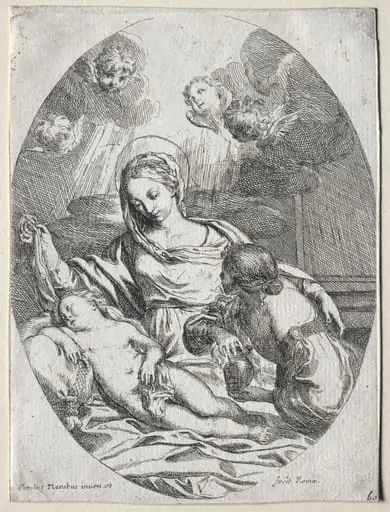
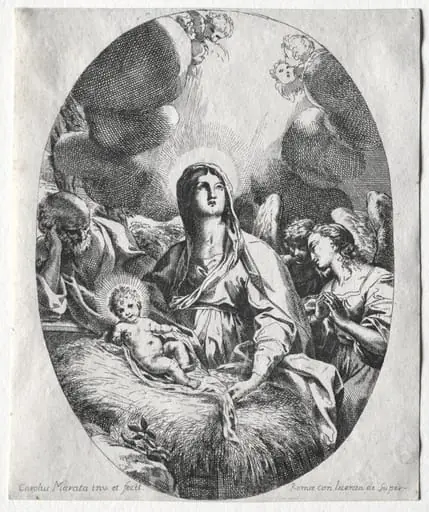
The Holy Family with Angels is an ink print by the Baroque artist Carlo Maratta. It dates from 1669 and is held in the collection of the National Gallery of Art.
About this work
Overview
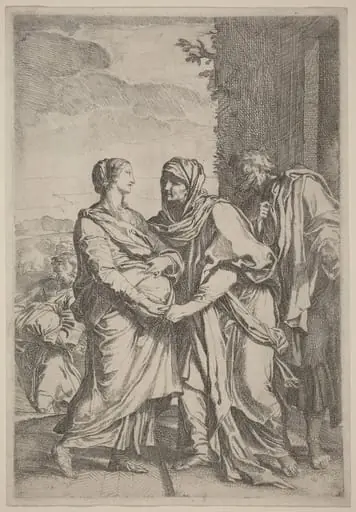
Created in 1669, this etching by Carlo Maratta depicts a sacred scene of the Holy Family surrounded by celestial figures.
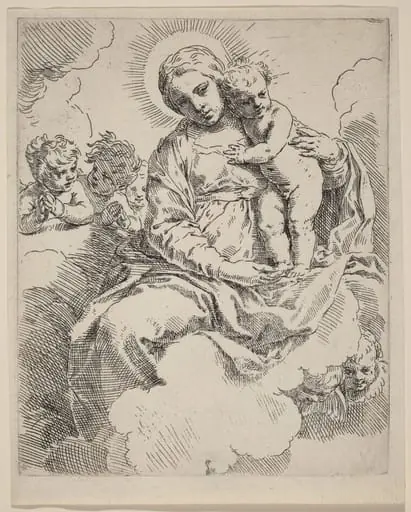
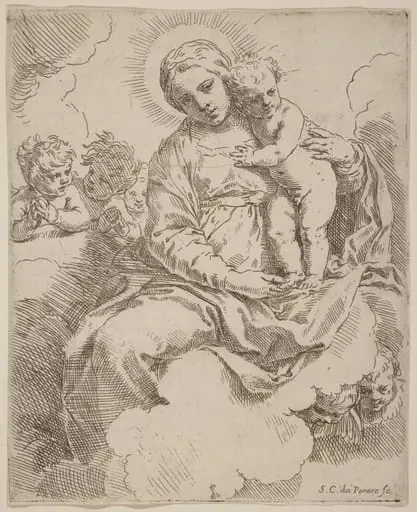
Created in 1669, this etching by Carlo Maratta depicts a sacred scene of the Holy Family surrounded by celestial figures. Executed in ink on paper, the work belongs to the printmaking tradition of the late Baroque period. Its composition centers on the Virgin Mary with the infant Jesus, framed by hovering angels and atmospheric clouds, all rendered through the precise, linear qualities of etching.
Subject & Meaning
The image portrays the Virgin Mary as a serene, contemplative figure holding the Christ Child, who reaches toward her with quiet curiosity. Angels encircle them, some bearing flowers or instruments, suggesting divine harmony and reverence. The absence of overt narrative action emphasizes spiritual stillness, aligning with Counter-Reformation ideals that favored quiet devotion over dramatic spectacle.
Technique & Style
Maratta employed etching to achieve fine, controlled lines that define form and movement. The ink, held in incised grooves on a metal plate, creates bold contrasts and textured depth. Delicate hatching and swirling contours suggest the ethereal quality of the angels and clouds, while the clarity of the figures grounds the scene in tangible presence, characteristic of Roman academic printmaking of the era.
History & Provenance
The print was made during Maratta’s mature period in Rome, where he was a leading figure in religious art. Though few records detail its early ownership, it circulated among collectors and ecclesiastical patrons who valued his refined style. Its survival in multiple institutional collections suggests consistent recognition of its technical and devotional merit in the centuries following its creation.
Context
In mid-17th-century Rome, etching was widely used for religious imagery, serving both private devotion and artistic dissemination. Maratta’s work responded to the Church’s emphasis on clarity and emotional restraint in sacred subjects. His etchings, though less monumental than his paintings, extended his influence by making devotional imagery accessible beyond the walls of churches and palaces.
Legacy
Maratta’s etching contributed to the enduring appeal of classical religious themes in print form. His precise line work and balanced compositions influenced later generations of printmakers in Italy and beyond. While overshadowed in popular memory by his paintings, this work remains a quiet example of how printmaking sustained spiritual imagery in domestic and scholarly settings well into the 18th century.
Artist & collection