Artwork
Animal Legend (Tierlegende)
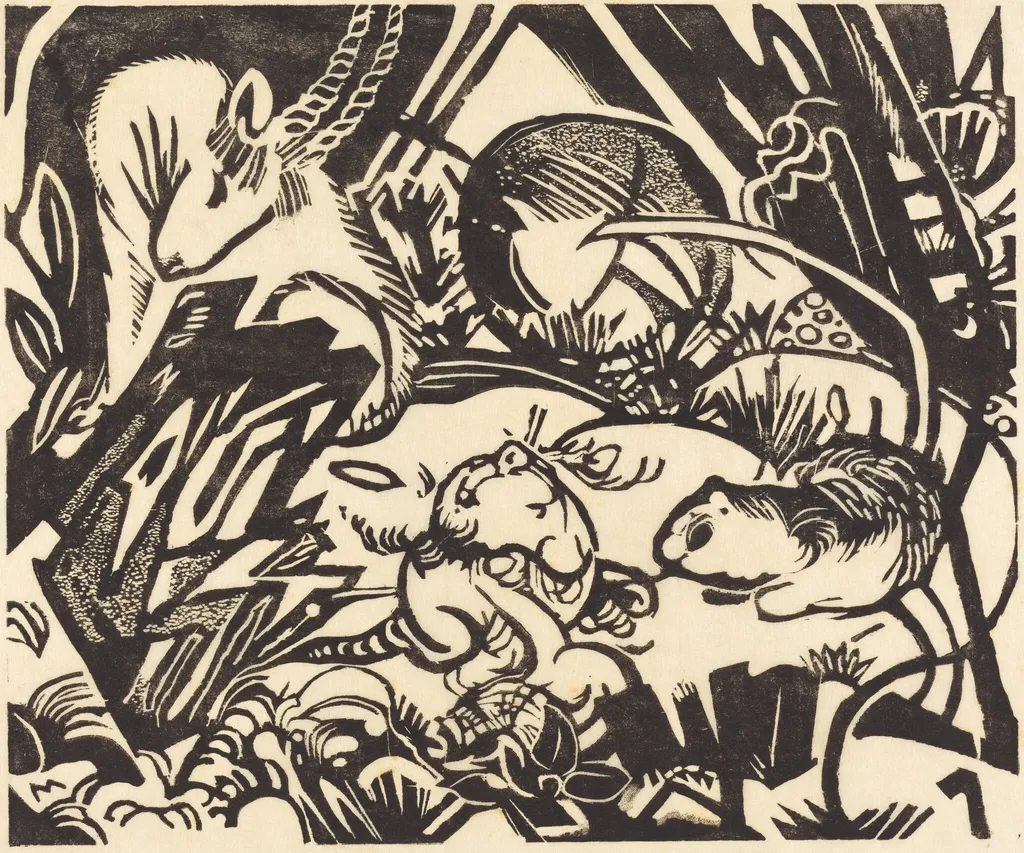
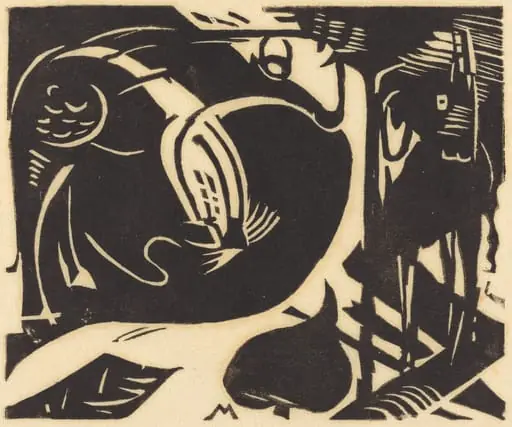
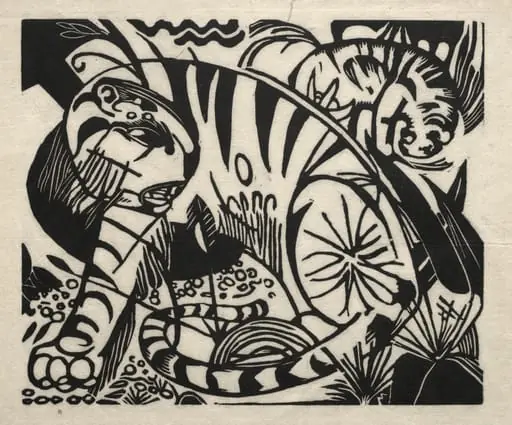
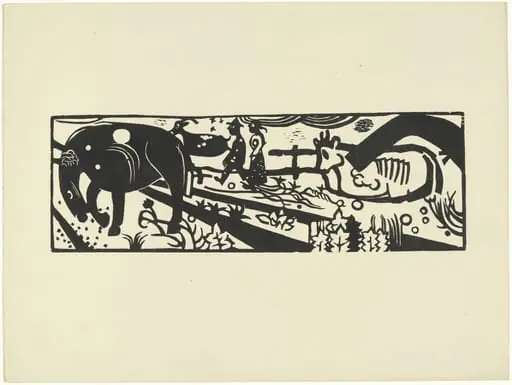
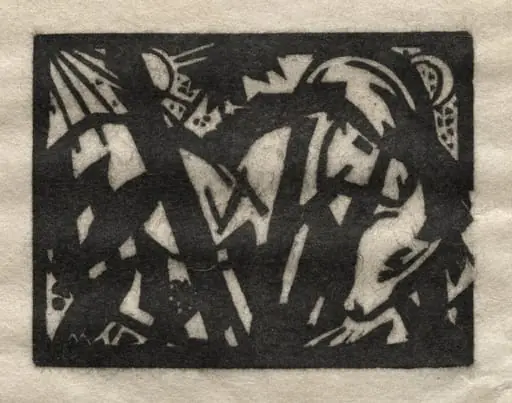
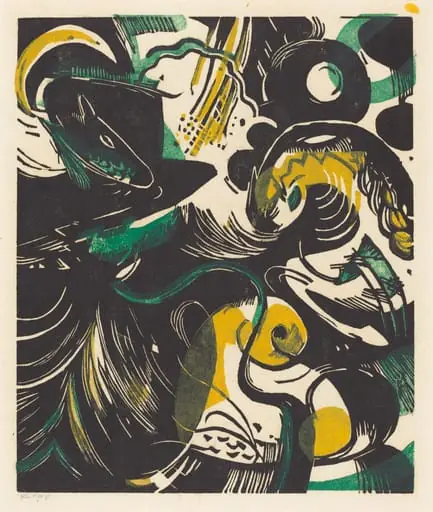
Animal Legend (Tierlegende) is an ink print by Franz Marc. It dates from 1912 and is held in the collection of the National Gallery of Art.
About this work
Overview
Franz Marc created *Animal Legend* in 1912 as a woodcut printed on Japanese paper. As a key figure in the German Expressionist group *Der Blaue Reiter*, Marc used printmaking to explore themes of nature and spiritual harmony. The work is part of a broader series in which he translated his painterly concerns into graphic form, emphasizing raw, elemental connections between living beings.
Subject & Meaning
The composition features a dense interweaving of animals—monkey, bird, fish—along with botanical elements, suggesting a primal, interconnected ecosystem.
The composition features a dense interweaving of animals—monkey, bird, fish—along with botanical elements, suggesting a primal, interconnected ecosystem. Marc avoided literal representation, instead using entangled forms to imply a mystical unity among species. The absence of human figures underscores his belief in nature’s autonomy and spiritual depth, free from industrial or societal corruption.
Technique & Style
Executed in bold black ink on light paper, the woodcut relies on sharp, carved lines that emphasize texture and rhythm. The rough, hand-printed surface reveals the grain of the woodblock, lending the image a tactile, organic quality. Marc’s style here is simplified yet dynamic, rejecting naturalism in favor of expressive abstraction, aligning with the avant-garde’s interest in primal forms and emotional intensity.
History & Provenance
Created during Marc’s most prolific period, *Animal Legend* emerged from his engagement with *Der Blaue Reiter* and its experimental print publications. It was produced shortly before his enlistment in World War I in 1914. Marc died in battle in 1916, leaving this work as part of his final creative phase. Its survival reflects its significance within early modernist print circles.
Context
In early 20th-century Germany, artists sought alternatives to industrial modernity by turning to nature and non-Western art. Marc’s animal imagery resonated with broader spiritual and philosophical currents, including Theosophy and animism. His woodcuts, like this one, were often distributed in artist journals, helping to disseminate Expressionist ideals beyond painting into the realm of accessible, reproducible art.
Legacy
Though Marc’s career was cut short, *Animal Legend* remains a defining example of Expressionist printmaking. Its emphasis on animal subjectivity and formal economy influenced later generations of artists exploring nature’s symbolic potential. The work’s survival in museum collections underscores its role as a quiet but persistent voice in modern art’s reimagining of the natural world.
Own this work as a print
Artist & collection
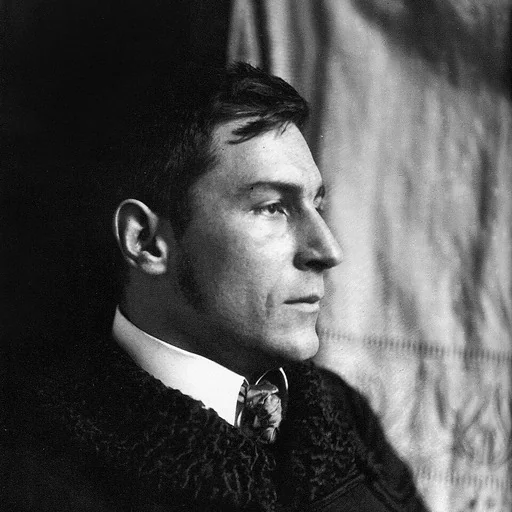
Artist
Franz Moritz Wilhelm Marc (8 February 1880 – 4 March 1916) was a German painter and printmaker, one of the key figures of German Expressionism.