Artwork
River Landscape with an Angler
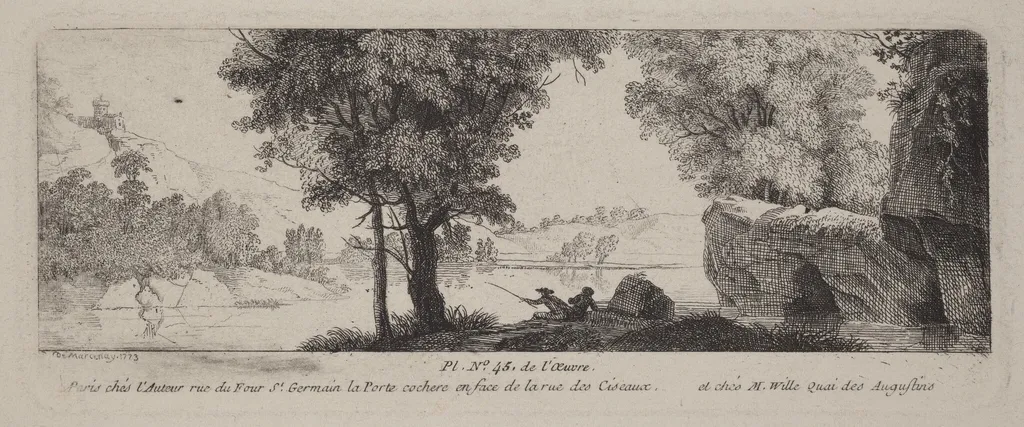
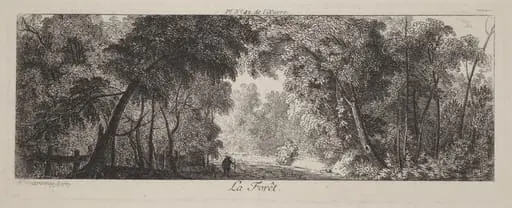
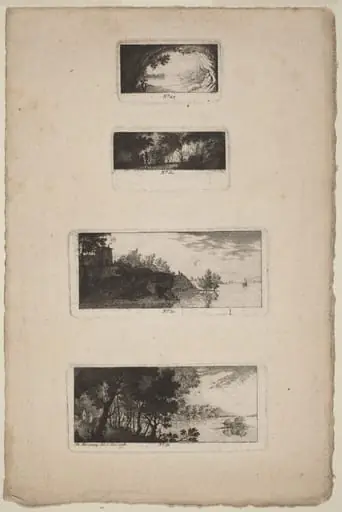
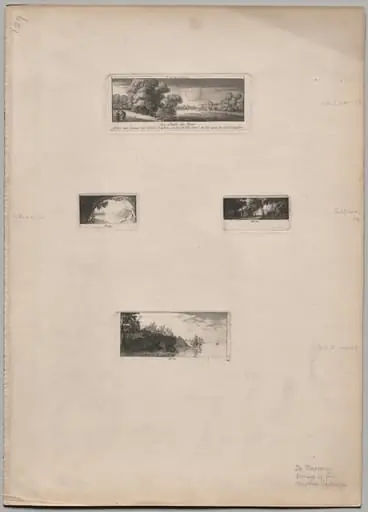
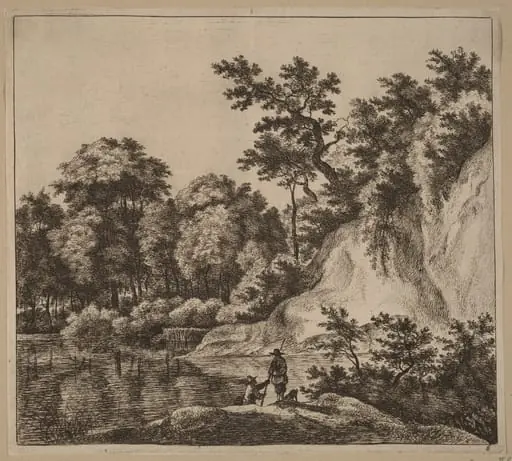
River Landscape with an Angler is an ink print by the Romanticist artist Antoine de Marcenay de Ghuy. It dates from 1773 and is held in the collection of the National Gallery of Art.
About this work
In the distance, a few buildings peek through the foliage, and the sky is just a faint line above the trees.
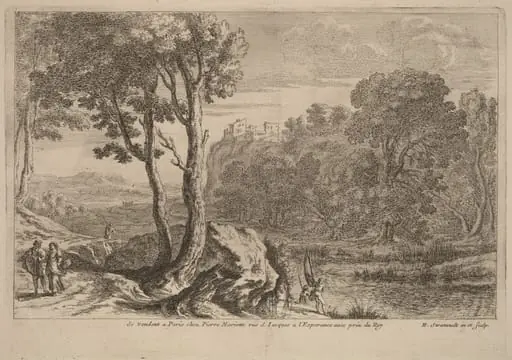
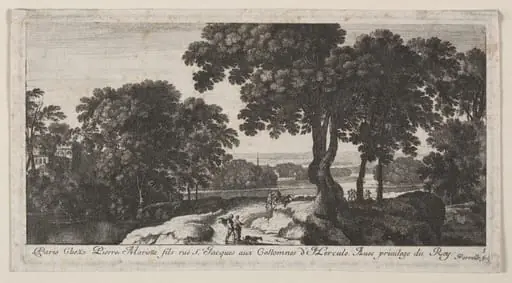
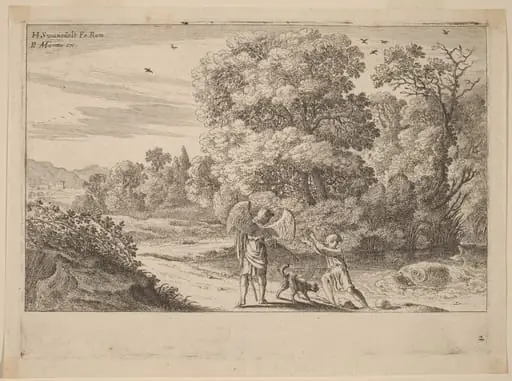
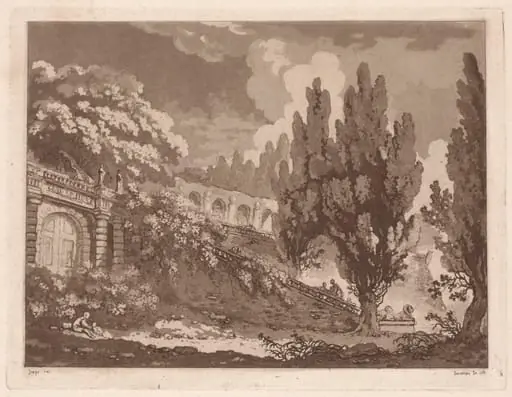
This black-and-white print shows a quiet river scene. A lone fisherman sits on the bank, casting a line into the water. Trees line the shore, their branches heavy with leaves, while a small boat floats nearby. In the distance, a few buildings peek through the foliage, and the sky is just a faint line above the trees.
The artist used fine lines to capture details like the ripples in the water and the texture of the trees. This was made in 1773 using a method that lets artists scratch directly into metal plates.
Next, look up *etching* to see how this technique works.
Overview
Created in 1773, this etching by Antoine de Marcenay de Ghuy depicts a tranquil riverside scene rendered in monochrome. The work is printed on wove paper using the etching technique, in which fine lines are incised into a metal plate with acid. The composition emphasizes stillness and solitude, with minimal detail in the background to focus attention on the water and its solitary figure.
Subject & Meaning
A single angler sits quietly on the riverbank, engaged in the patient act of fishing. His presence suggests contemplation rather than labor, reinforcing the scene’s meditative tone. The surrounding trees, distant buildings, and drifting boat contribute to a sense of quiet rural life, untouched by human urgency. The image evokes harmony between human activity and the natural world without overt symbolism.
Technique & Style
The artist employed fine, controlled lines to render textures: the ripples of water, the layered foliage, and the subtle gradations of shadow. Etching allowed for delicate detail by scratching through a wax ground on a metal plate, then exposing it to acid. The resulting print captures atmospheric depth through line density rather than tone, characteristic of 18th-century topographical prints.
History & Provenance
The print dates from 1773, a period when landscape etchings were valued for their precision and quiet realism. While specific ownership records are not documented, the work aligns with the broader European tradition of amateur and professional printmakers documenting rural scenes. Its survival in collections today reflects its endurance as a modest but refined example of its genre.
Context
In the late 18th century, landscape prints gained popularity among collectors interested in serene, unidealized nature. Unlike grand historical scenes, works like this focused on everyday observation. Marcenay de Ghuy’s print fits within this trend, reflecting a growing appreciation for quiet, localized views rather than dramatic or mythologized landscapes.
Legacy
Though not widely known today, the etching remains a representative example of pre-Romantic landscape printmaking. It contributes to the historical record of how artists captured rural life with restraint and technical care. Its preservation in institutional collections underscores its value as a document of 18th-century visual culture and printmaking practice.
Artist & collection

Artist
Antoine de Marcenay de Ghuy (1724–1811) was a French artist, born in Paris.