Artwork
Salmacis and Hermaphroditus
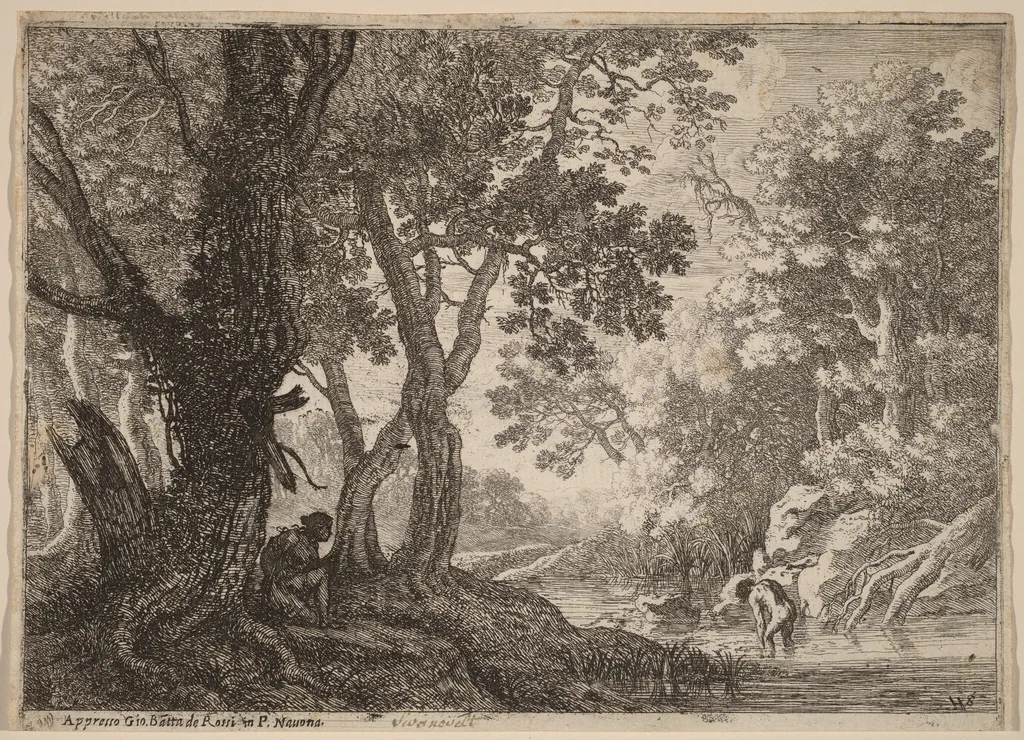
Salmacis and Hermaphroditus is an ink print by the Baroque artist Herman van Swanevelt. It dates from 1628 and is held in the collection of the National Gallery of Art.
About this work
Overview
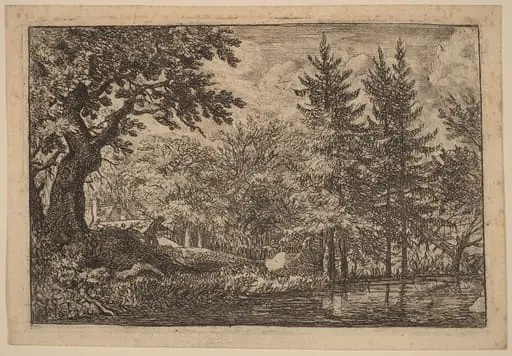
Herman van Swanevelt’s 1628 etching titled Salmacis and Hermaphroditus presents a wooded landscape split by a watercourse. A towering tree dominates the left side, while the right side opens onto a reflective pool. A crouching figure hides behind the trunk, and another figure emerges from the water, suggesting a narrative moment within a densely foliaged setting.
Subject & Meaning
The composition alludes to the classical myth of Salmacis and Hermaphroditus, in which the nymph Salmacis embraces the youth Hermaphroditus, leading to their union. The juxtaposition of the concealed figure and the one in the water evokes the encounter and the ensuing transformation, inviting contemplation of identity and duality.
Technique & Style
Executed in etching, the work relies on incised lines to render both the intricate bark of the trees and the gentle ripples of the water. Van Swanevelt manipulates tonal contrast, allowing the dark silhouettes of the forest to recede against the lighter, more luminous surface of the pool, thereby creating atmospheric depth.
History & Provenance
Created in 1628, the print reflects van Swanevelt’s early engagement with mythological subjects. While specific ownership records are scarce, the etching has been documented in several European print collections, indicating its circulation among connoisseurs of the Dutch Golden Age.
Own this work as a print
Artist & collection

 Devil Tempting St. Anthony
 Edge of a Wood with Peasants Going to Market
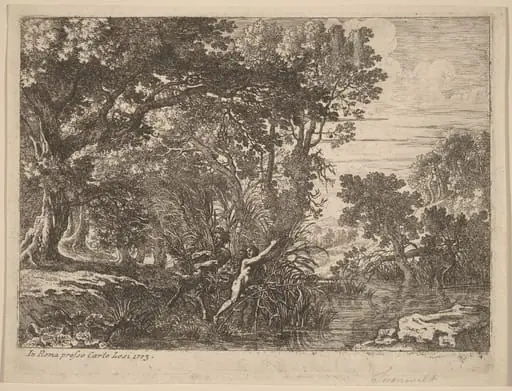 Pan and Syrinx
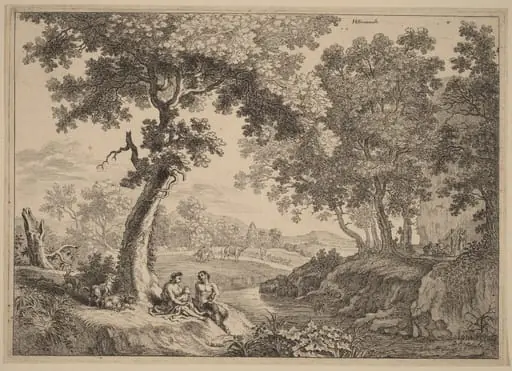 Satyr Family Seated under a Tree
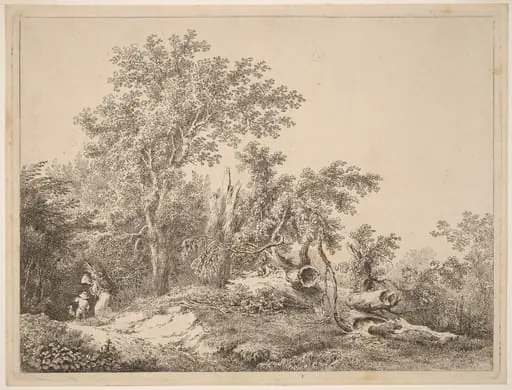 Landscape with Broken Tree
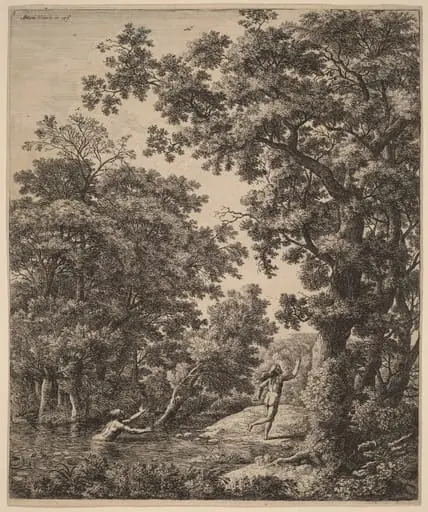 Landscape with Alpheus and Arethusa
 A Road through the Woods
 Landscape with a Waterfall and a Resting Family
 Winding River
 The Donkey Led to the River
 Fir Trees at the Water
 Landscape with Nudes Boarding a Boat