Artwork
Charles Duc Regnant de Brunswick
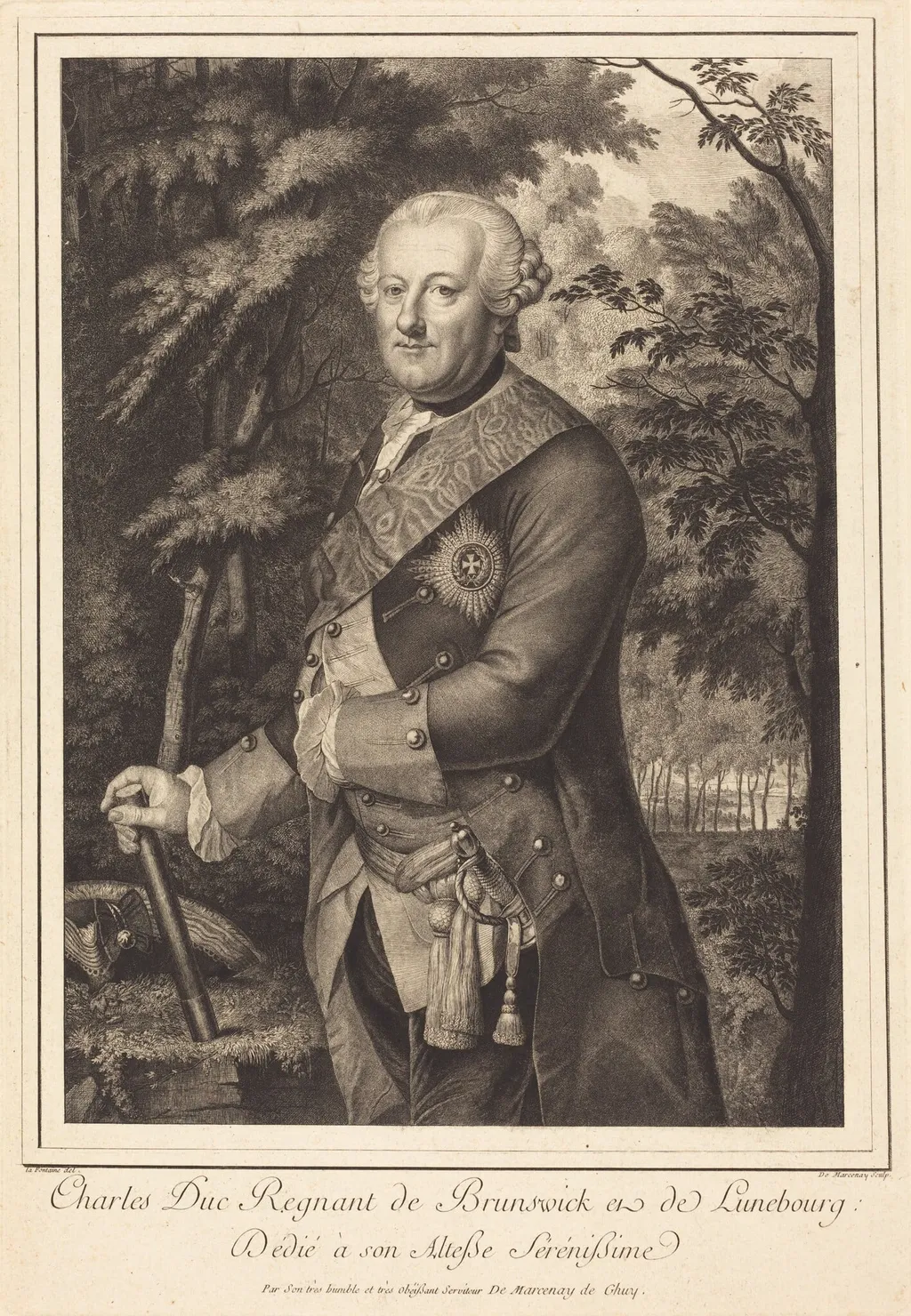
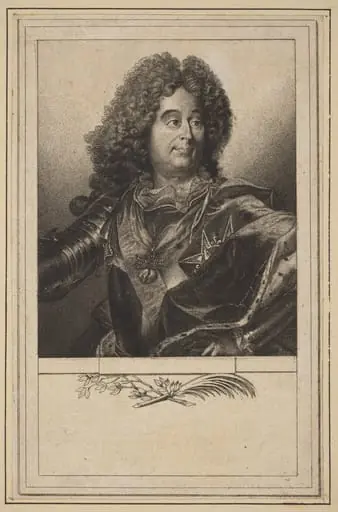
Charles Duc Regnant de Brunswick is an ink print by the Baroque artist Antoine de Marcenay de Ghuy. It dates from 1768 and is held in the collection of the National Gallery of Art.
About this work
Overview
This 1768 etching, executed by Antoine de Marcenay de Ghuy, depicts Charles, Duke of Brunswick, in a formal pose. The figure stands before a densely wooded backdrop, dressed in a dark coat with a sash, a medal on his chest, and holding a cane in his right hand. His expression is solemn, his gaze directed forward, conveying a dignified presence.
Subject & Meaning
The portrait presents the duke as a noble authority, emphasizing his rank through the medal and refined attire. The inclusion of the forest may allude to lineage, land ownership, or a connection to nature, reinforcing his status as a landholder. The upright stance and steady gaze reinforce ideals of leadership and composure expected of high aristocracy in the eighteenth century.
Technique & Style
Created as an etching, the work relies on incised lines on a copper plate, allowing fine detail in the clothing, medal, and foliage. The contrast between the dark figure and the lighter, intricate forest background reflects the late Baroque tendency toward dramatic chiaroscuro, while the precise rendering of textures demonstrates the artist's skill in printmaking.
History & Provenance
Antoine de Marcenay de Ghuy, a French engraver active in the mid‑1700s, produced this portrait shortly after the duke’s prominence in European courts. The print was likely issued for circulation among aristocratic patrons and collectors. Surviving copies are held in several museum collections, documenting its distribution as a commemorative image of the Brunswick ducal line.
Artist & collection

Artist
Antoine de Marcenay de Ghuy (1724–1811) was a French artist, born in Paris.

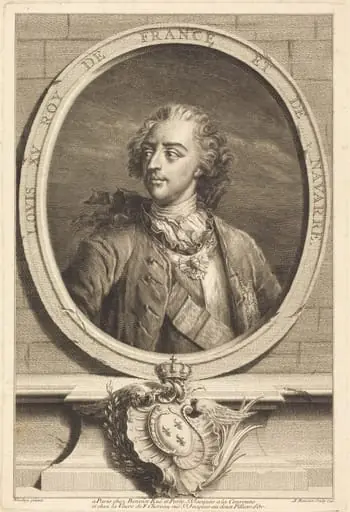 Louis XV, King of France
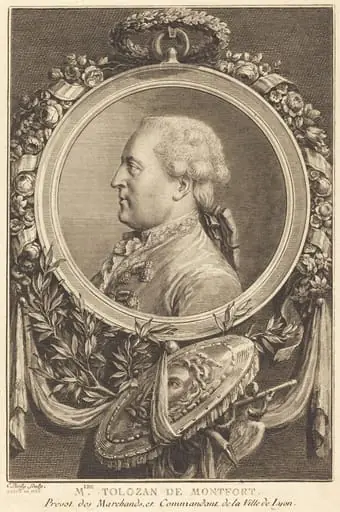 Tolozan de Montfort
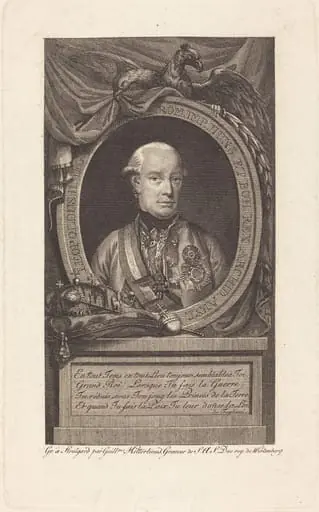 Leopold II, Holy Roman Emperor
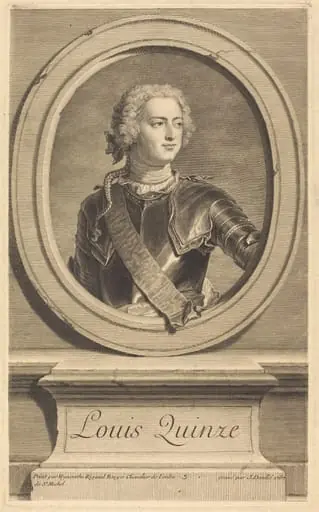 Louis XV
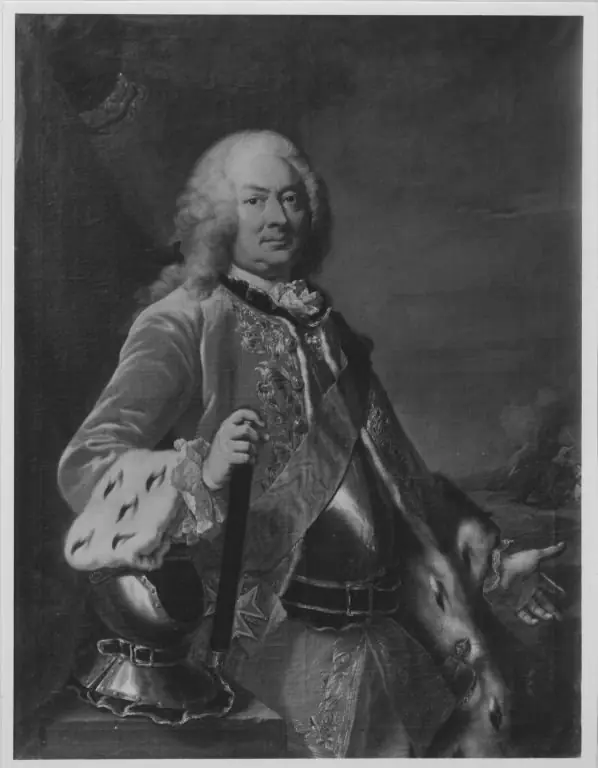 Landgraf Wilhelm VIII. von Hessen-Kassel
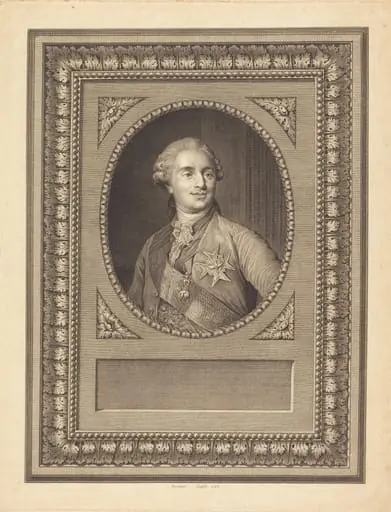 Louis XVI, King of France
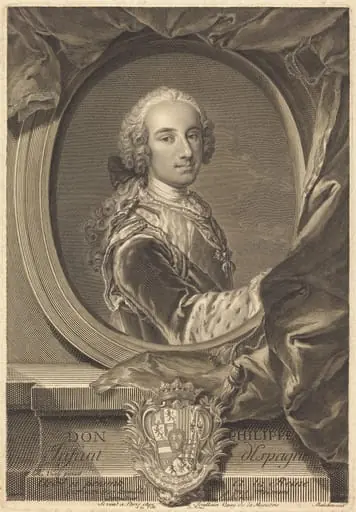 Don Philippe, Infant d'Espagne
 Bishop Hoadly
 Friedrich II. der Große
 Bildnis des Karl August von Pfalz-Zweibrücken-Birkenfeld
 Portrait of a German prince
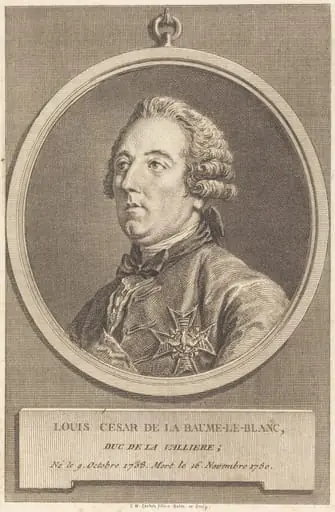 Louis Cesar de La Baume-le-Blanc