Artwork
Flowers – Nasturtiums
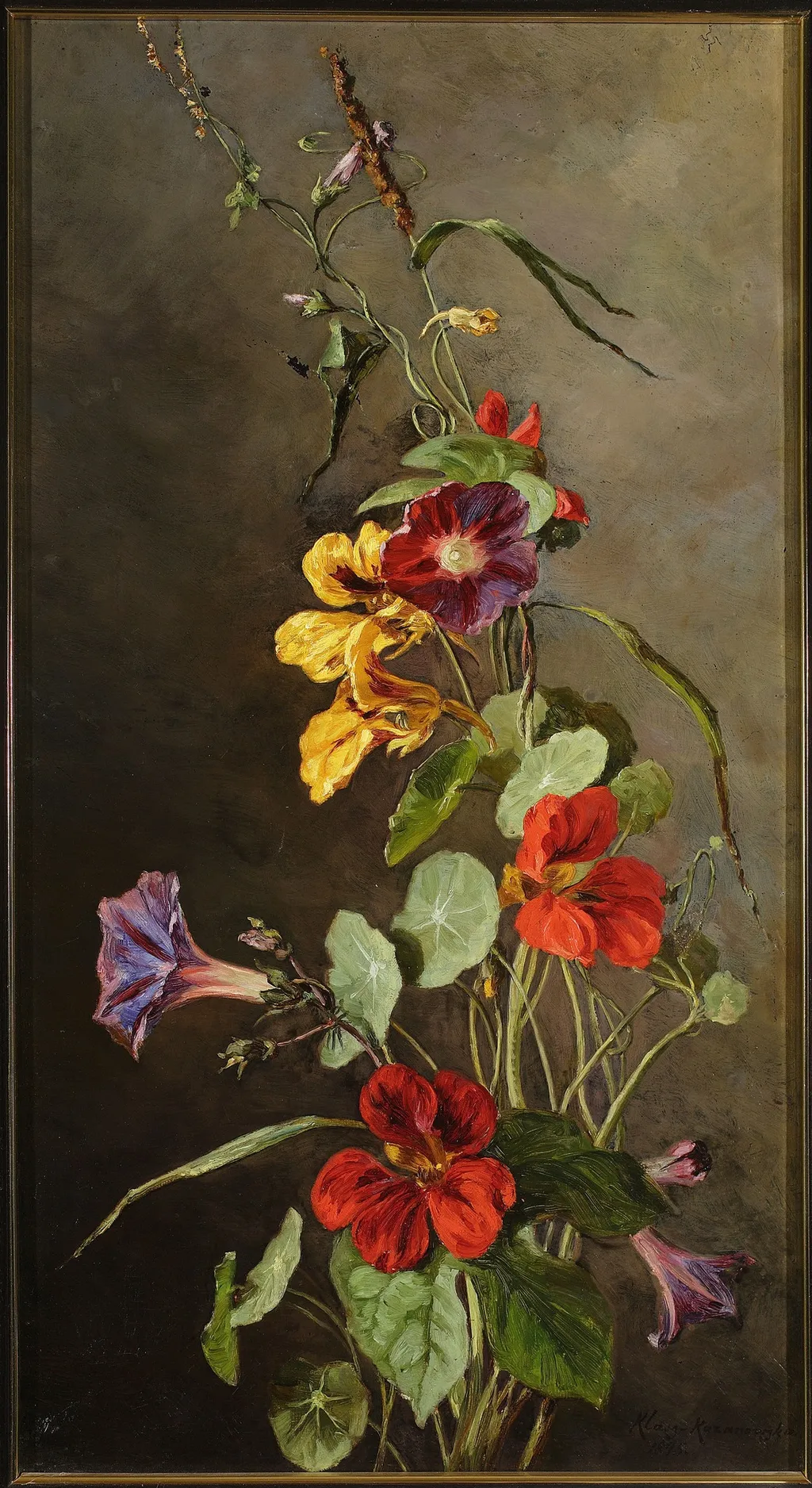
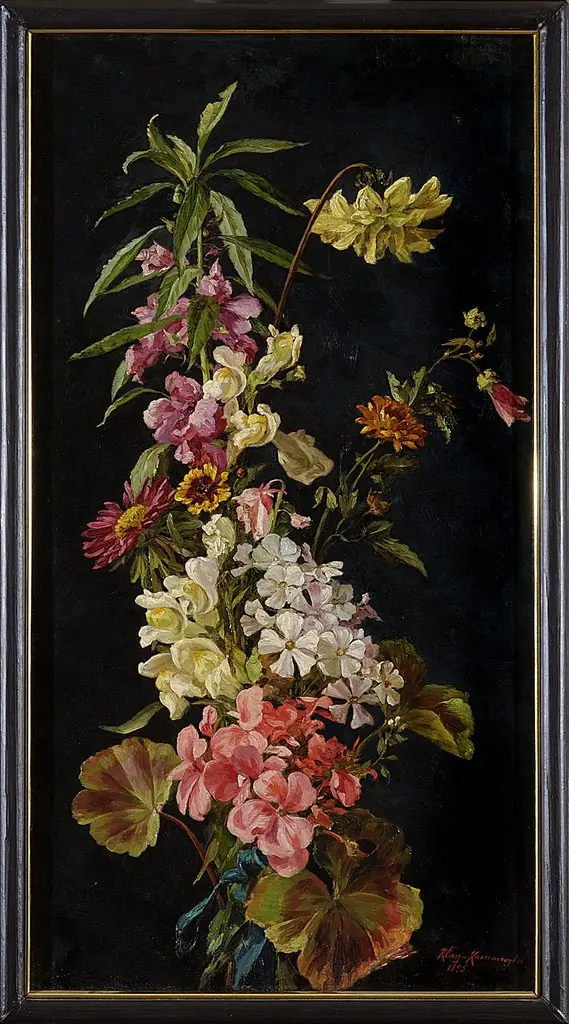
Flowers – Nasturtiums is an oil painting by the Impressionist artist Maria Klass-Kazanowska. It dates from 1898 and is held in the collection of the National Museum in Warsaw.
About this work
Overview
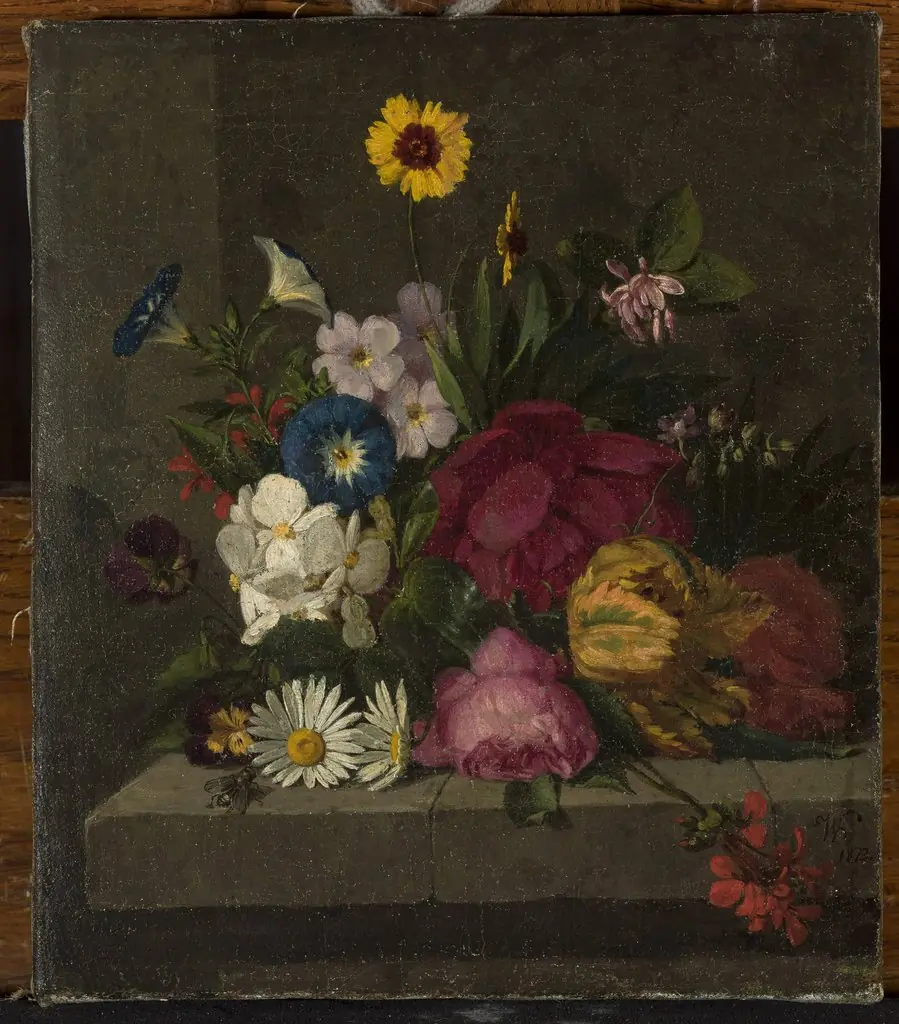
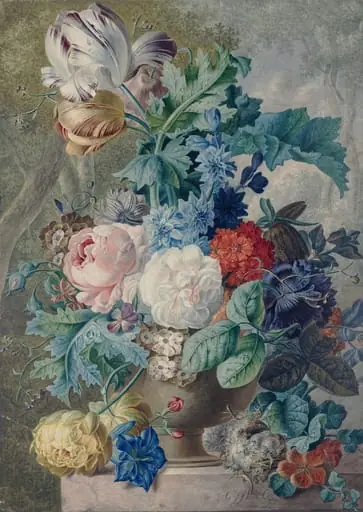
Painted in 1898, Flowers – Nasturtiums is an oil on canvas work by Maria Klass-Kazanowska. It depicts a loose bouquet of nasturtiums against a deep, unmodulated background. The composition is intimate and focused, emphasizing the natural form of the flowers without additional context or setting. The painting resides in the collection of the National Museum in Warsaw.
Subject & Meaning
The subject is a simple arrangement of nasturtiums, their vibrant red and yellow petals contrasting with lush green foliage.
The subject is a simple arrangement of nasturtiums, their vibrant red and yellow petals contrasting with lush green foliage. The choice of this common garden flower suggests an appreciation for everyday beauty rather than ornamental grandeur. The absence of symbolic or narrative elements points to a quiet celebration of natural form, typical of late 19th-century still-life traditions in Eastern Europe.
Technique & Style
Klass-Kazanowska employs a detailed, observational approach, rendering each petal and leaf with careful brushwork. The dark background enhances the luminosity of the flowers, creating a strong visual contrast. Paint application is precise yet fluid, avoiding excessive texture or impasto. The style leans toward realism without idealization, capturing the organic irregularity of the blooms.
History & Provenance
The painting was completed in 1898 and entered the National Museum in Warsaw’s collection shortly thereafter. Its provenance remains largely undocumented beyond its acquisition by the museum, suggesting it may have been purchased directly from the artist or acquired through a private donation. It has remained in the museum’s holdings without significant public exhibition history.
Context
Created during a period when Polish artists were increasingly turning to domestic and natural subjects, the painting reflects a broader trend away from grand historical themes. Klass-Kazanowska, like several female artists of her time, focused on still life and floral studies—genres often considered less prestigious but vital for artistic training and personal expression.
Legacy
Though not widely known outside Poland, the painting exemplifies the quiet dedication of late 19th-century women artists to botanical observation. It stands as a representative work within the museum’s collection of Polish still life, offering insight into the aesthetic values and technical skills of artists working outside the mainstream academic canon.
Artist & collection
Artist
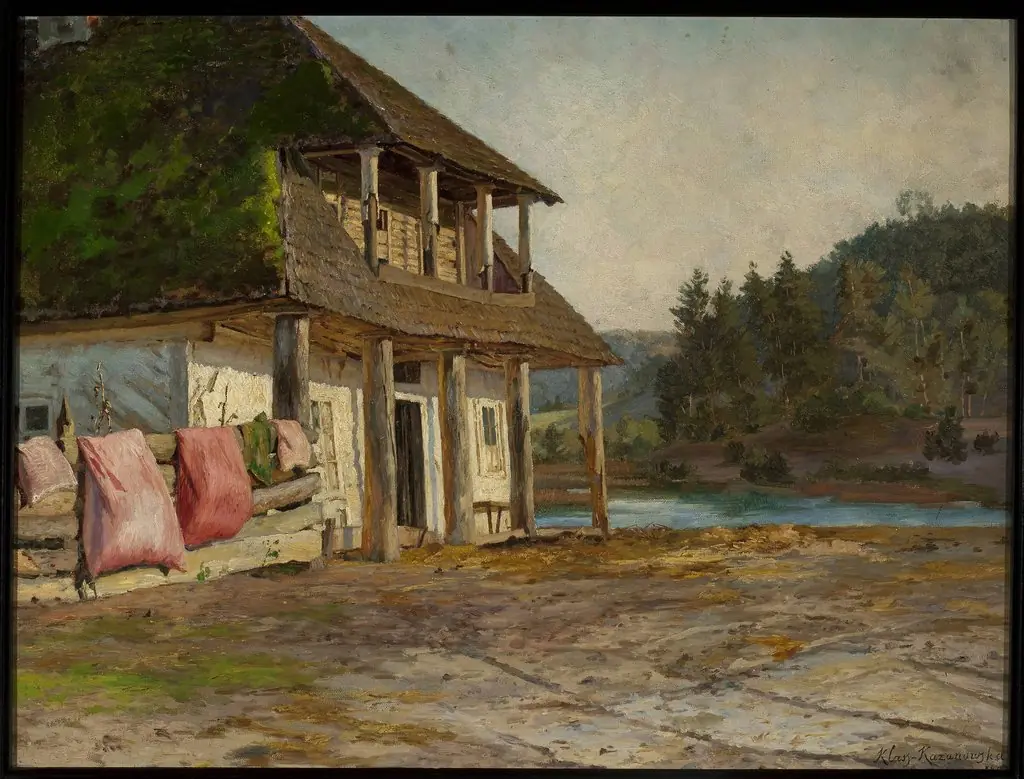
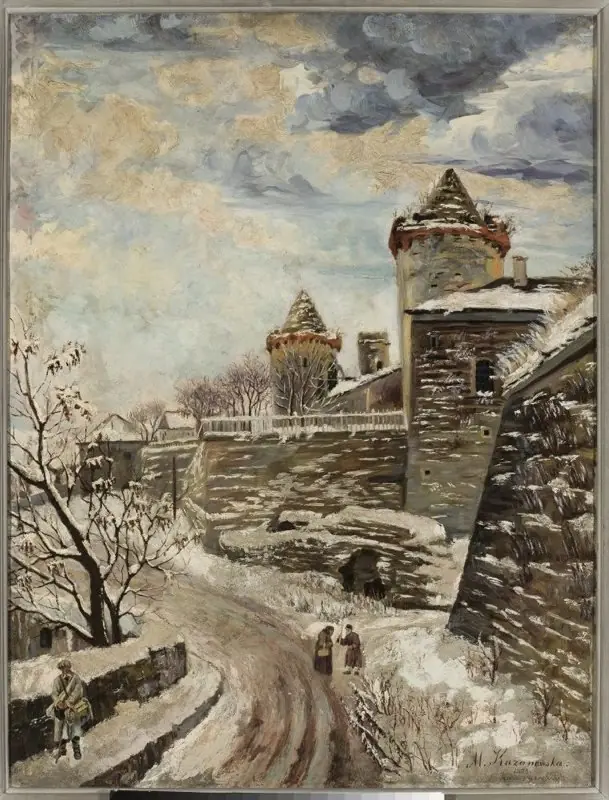
This artist painted scenes in oil: quiet houses, animals, and the city of Kamianets-Podilskyi in the 1890s.