Artwork
Łokietek in the Cave
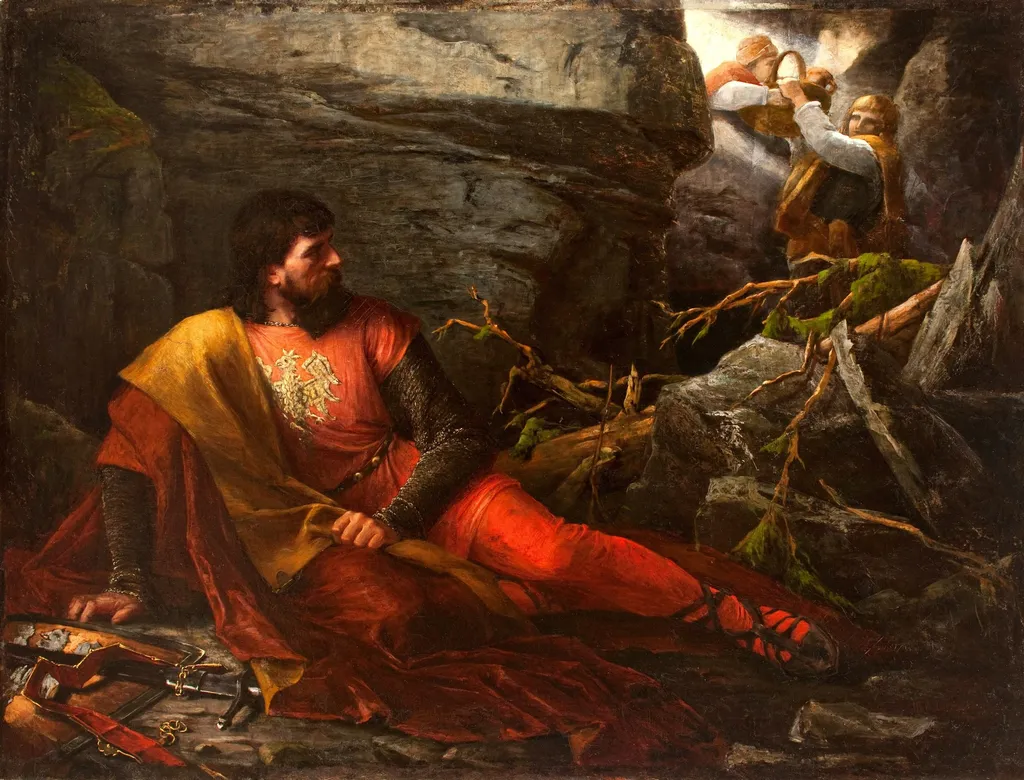
Łokietek in the Cave is an oil painting by Maria Magdalena Andrzejkowicz-Buttowt. It dates from 1891 and is held in the collection of the National Museum in Kraków.
About this work
Overview
Painted in 1891 by Maria Magdalena Andrzejkowicz-Buttowt, this oil work portrays a solitary figure in a rocky, dimly lit cavern. The painting resides in the National Museum in Kraków and reflects late 19th-century historical genre painting. Its subdued palette and focused composition emphasize mood over narrative, aligning with contemporary interests in psychological depth and medieval symbolism.
Subject & Meaning
The figure beside him, holding a basket, implies sustenance or support, reinforcing themes of endurance and hidden resilience during hardship.
The central figure, identified as Władysław Łokietek, is depicted in a moment of quiet solitude, dressed in a red tunic and yellow cloak. His posture and gaze suggest introspection, possibly referencing his historical exile in a cave before reclaiming the Polish throne. The figure beside him, holding a basket, implies sustenance or support, reinforcing themes of endurance and hidden resilience during hardship.
Technique & Style
The artist employs chiaroscuro to model the figure with strong contrasts between light and shadow, enhancing volume and directing attention to the central form. Earth-toned pigments dominate the scene, with muted greens, browns, and grays unifying the rocky backdrop. Brushwork is restrained, favoring smooth transitions over texture, contributing to the painting’s somber, contemplative tone.
History & Provenance
Completed in 1891, the painting entered the collection of the National Museum in Kraków shortly after its creation. It reflects the late 19th-century Polish interest in national historical figures, particularly those associated with resistance and survival. The work has remained in public ownership since its acquisition, with no documented private transactions or significant restorations.
Context
Created during a period of Polish cultural revival under foreign partition, the painting draws on medieval legend to evoke national identity. Łokietek’s story of exile and return resonated with contemporaries seeking symbols of perseverance. The artist’s choice of chiaroscuro echoes Renaissance precedents, but the emotional restraint aligns more closely with 19th-century realism than Baroque drama.
Legacy
While not widely reproduced, the painting remains a notable example of Polish historical genre painting from the late 19th century. It contributes to the broader effort of visualizing national myths during a time when historical identity was being redefined. Its quiet intensity distinguishes it from more dramatic contemporaries, offering a restrained meditation on solitude and resilience.
Own this work as a print
Artist & collection
Artist
Maria Magdalena Andrzejkowicz-Buttowt
Maria Magdalena Andrzejkowicz-Buttowt painted scenes of Polish history with thick, dramatic brushwork you can almost feel.

 Macbeth instructing the murderers employed to kill Banquo
 Jason in search of the Golden Fleece
 Agila I
 Donna Mencia in the Robber's Cavern
 Cordelia Parting from her Sisters
 Cordelia Parting from her Sisters
 Bloody feast of Count Gero
 Bandit Taking up His Post
 The Young François I of France Goes out Hunting
 Don Quixote and the Dead Mule
 Prins Buris, Liden Kirsten, Skøn Hulfrid og Stolt Ingefrid fanget af Ulf Svartskæg
 The Death of Julian Avenel