Artwork
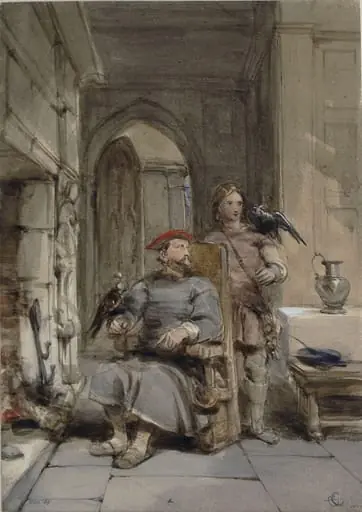
Macbeth instructing the murderers employed to kill Banquo
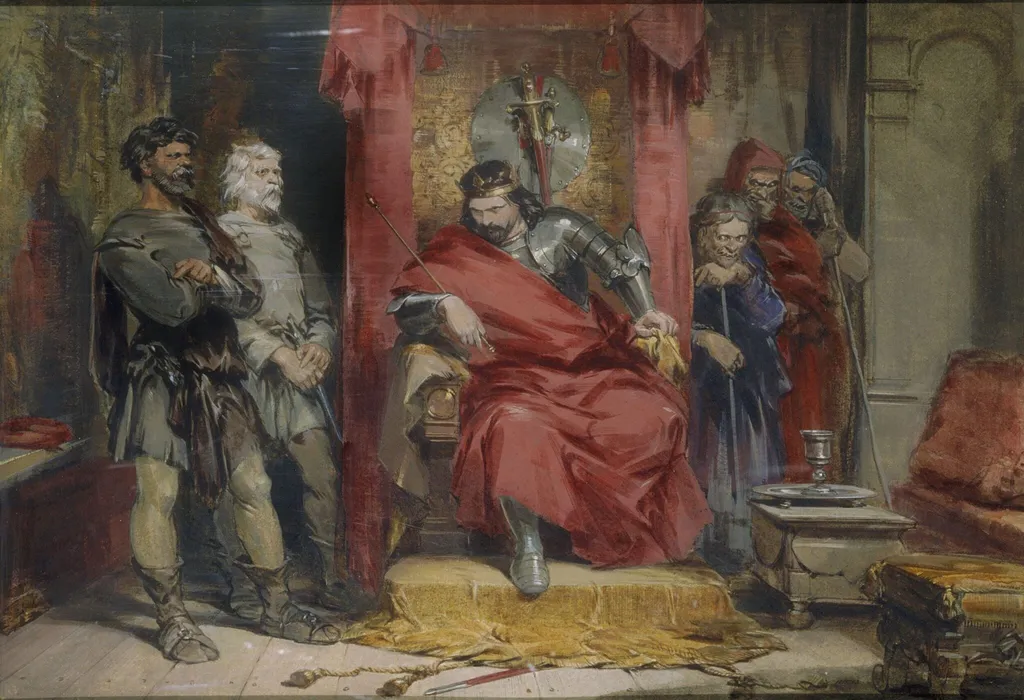
Macbeth instructing the murderers employed to kill Banquo is a watercolor work on paper by the British Romanticist artist George Cattermole. It dates from 1850 and is held in the collection of the Victoria and Albert Museum.
About this work
Overview
This watercolour illustrates a pivotal moment from Shakespeare’s Macbeth, capturing the moment the Scottish king commissions assassins to eliminate Banquo.
This watercolour illustrates a pivotal moment from Shakespeare’s Macbeth, capturing the moment the Scottish king commissions assassins to eliminate Banquo. Executed in translucent pigments, the scene avoids theatrical realism in favor of symbolic gesture and atmospheric weight. The composition centers on Macbeth’s commanding posture, surrounded by figures cloaked in stylized medieval attire, their stillness amplifying the gravity of the pact being made.
Subject & Meaning
The painting isolates the moral turning point where Macbeth abandons hesitation for calculated violence. His raised hand and drawn sword signal authority and menace, while the three hired men stand rigidly, their weapons hinting at impending bloodshed. The hooded figure behind him suggests unseen complicity. The scene is not a stage moment but a psychological crossroads, where power corrupts through silent collusion.
Technique & Style
The artist employs watercolour with restrained washes to build mood rather than detail. Deep crimson tones dominate the throne’s drapery, echoing the violence to come, while the background recedes into muted grays and browns, isolating the figures in a void of tension. Stylized folds in clothing and elongated gestures recall medieval manuscript illumination, rejecting naturalism to emphasize emotional gravity over historical accuracy.
History & Provenance
Created in the mid-19th century, the work was exhibited at the International Exhibition in Paris in 1855, where it joined other literary-themed artworks responding to Romantic and early Realist sensibilities. Its presence there suggests recognition within European artistic circles interested in Shakespearean drama as a vehicle for psychological and moral exploration, though its current whereabouts remain unrecorded in public archives.
Context
During the 1850s, European artists increasingly turned to literary subjects to explore inner turmoil and political decay. This watercolour aligns with a trend of reimagining Shakespeare not as spectacle but as moral allegory. Its avoidance of theatrical detail reflects a broader shift toward introspective narrative, paralleling contemporaneous literary realism and the growing interest in character psychology over external drama.
Legacy
Though not widely reproduced or studied today, the work exemplifies a quiet but significant strand of 19th-century British watercolour practice—where literary themes were rendered with somber restraint. Its emphasis on psychological tension over spectacle influenced later illustrators of Shakespeare who sought emotional truth in minimal gesture, bridging Romantic symbolism and early modernist understatement.
Artist & collection
Artist
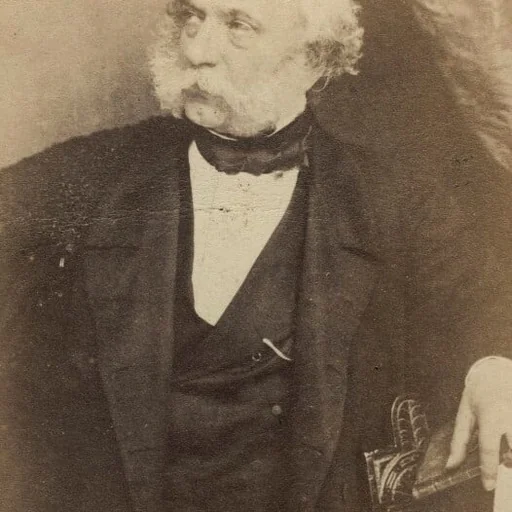
George Cattermole was a British painter and illustrator, chiefly in watercolours.

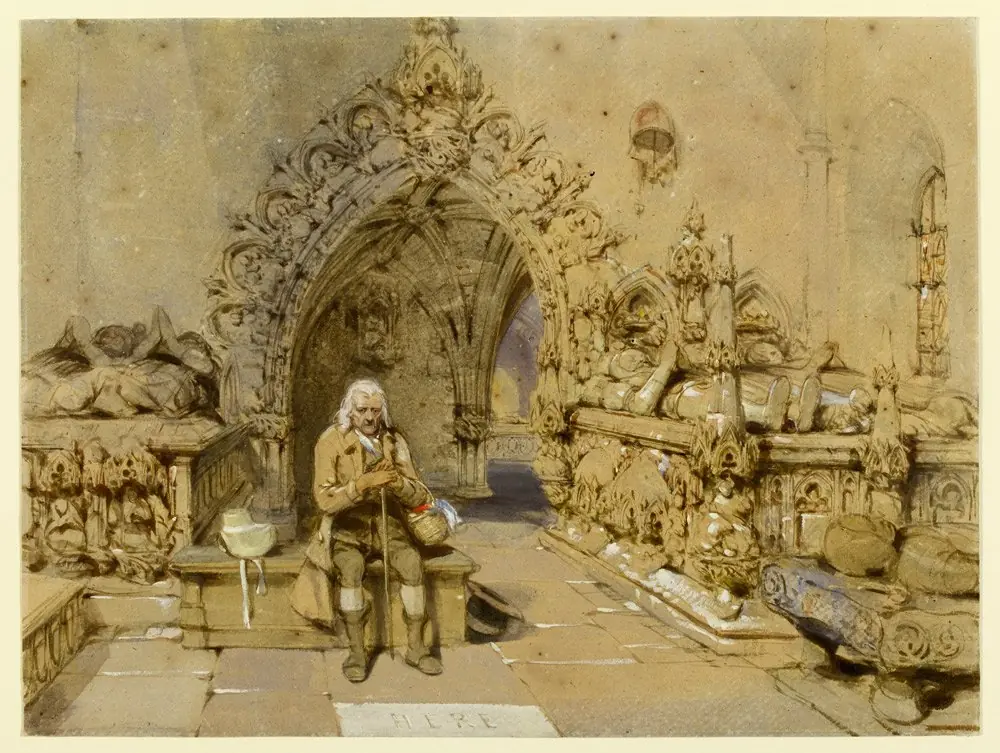
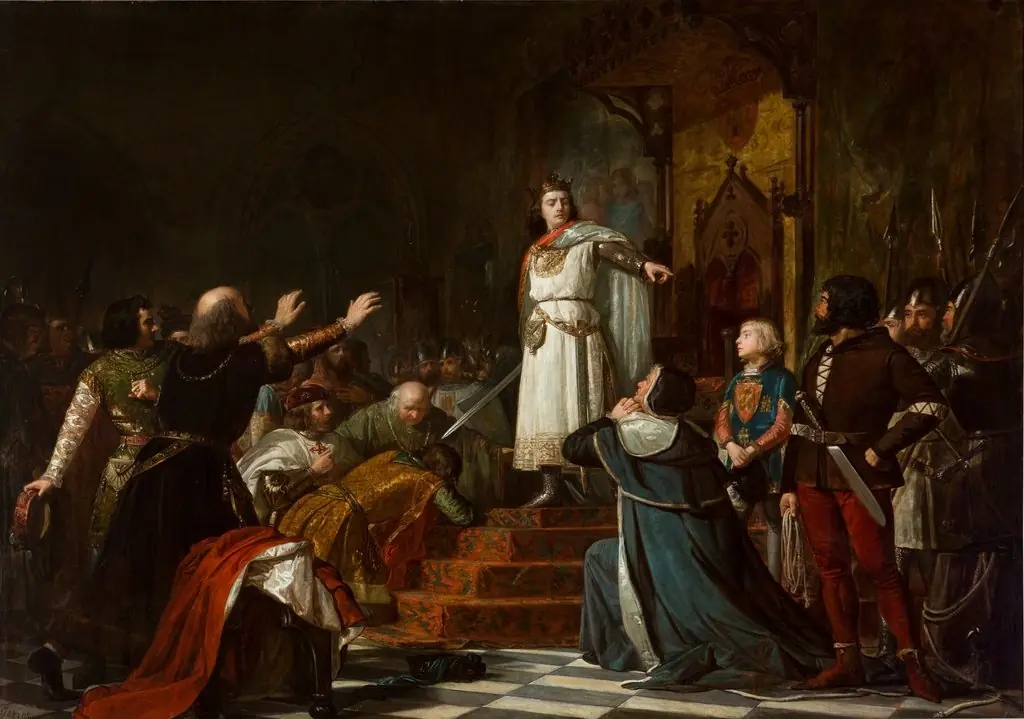 Episodio del reinado de don Enrique III de Castilla llamado el Doliente cuando al día siguiente de haber tenido que empeñar su gabán para comer corrige el orgullo y desmanes de los señores y ricoshomes de Castilla
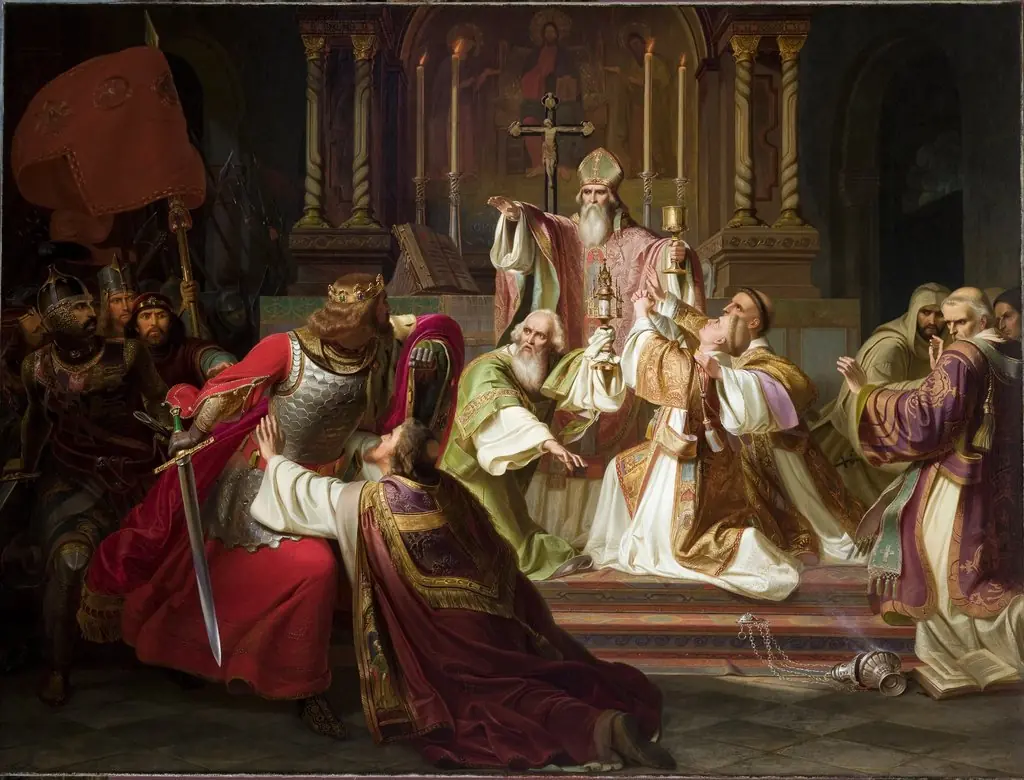 Bishop Stanisław Szczepanowski Putting a Curse on King Bolesław Śmiały
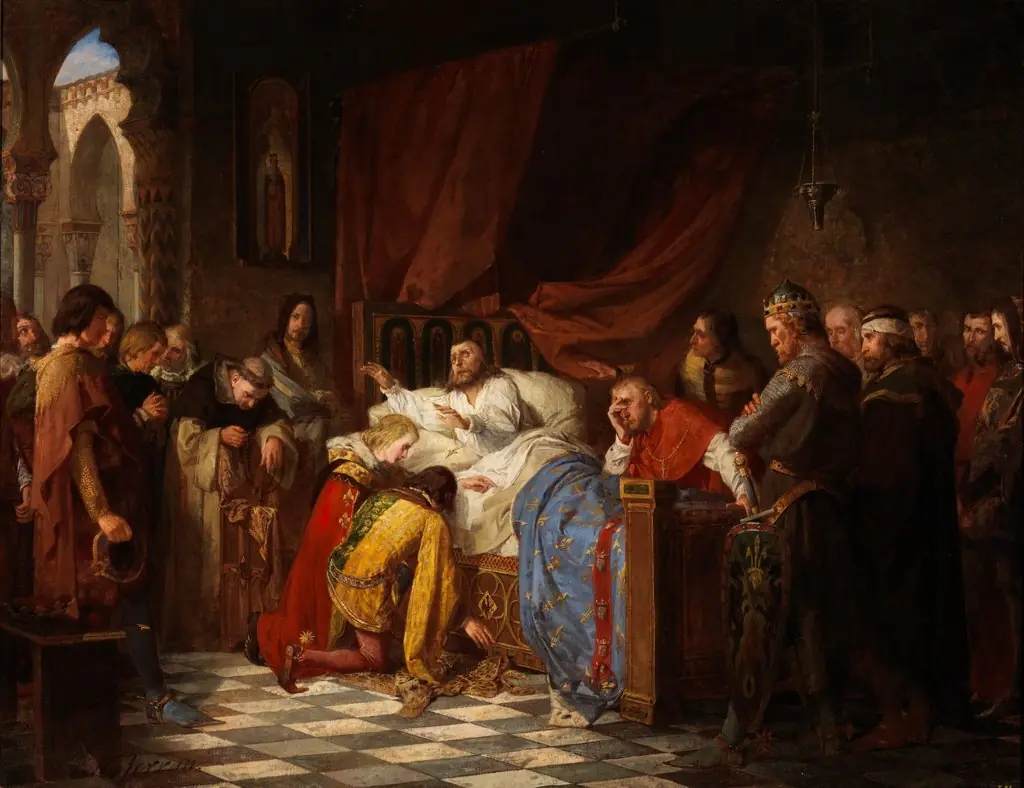 Felipe III de Francia moribundo bendiciendo a sus hijos
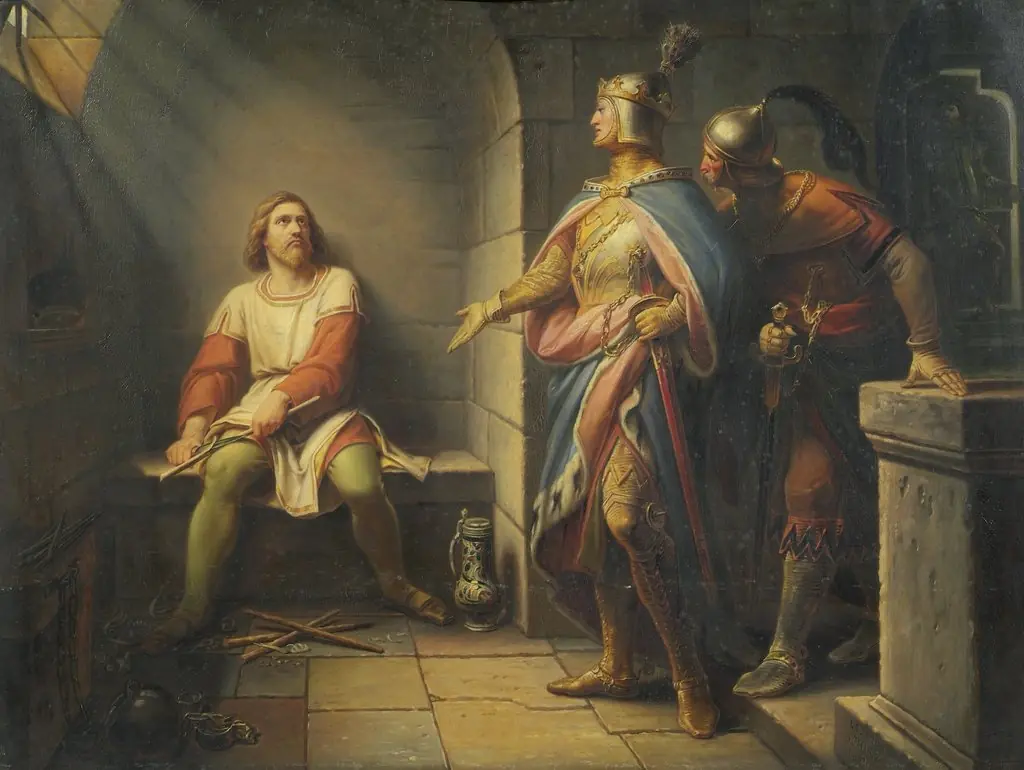 Ludwig der Bayer verkündet Friedrich dem Schönen 1314 seine Freilassung und bietet ihm die Mitregentschaft an
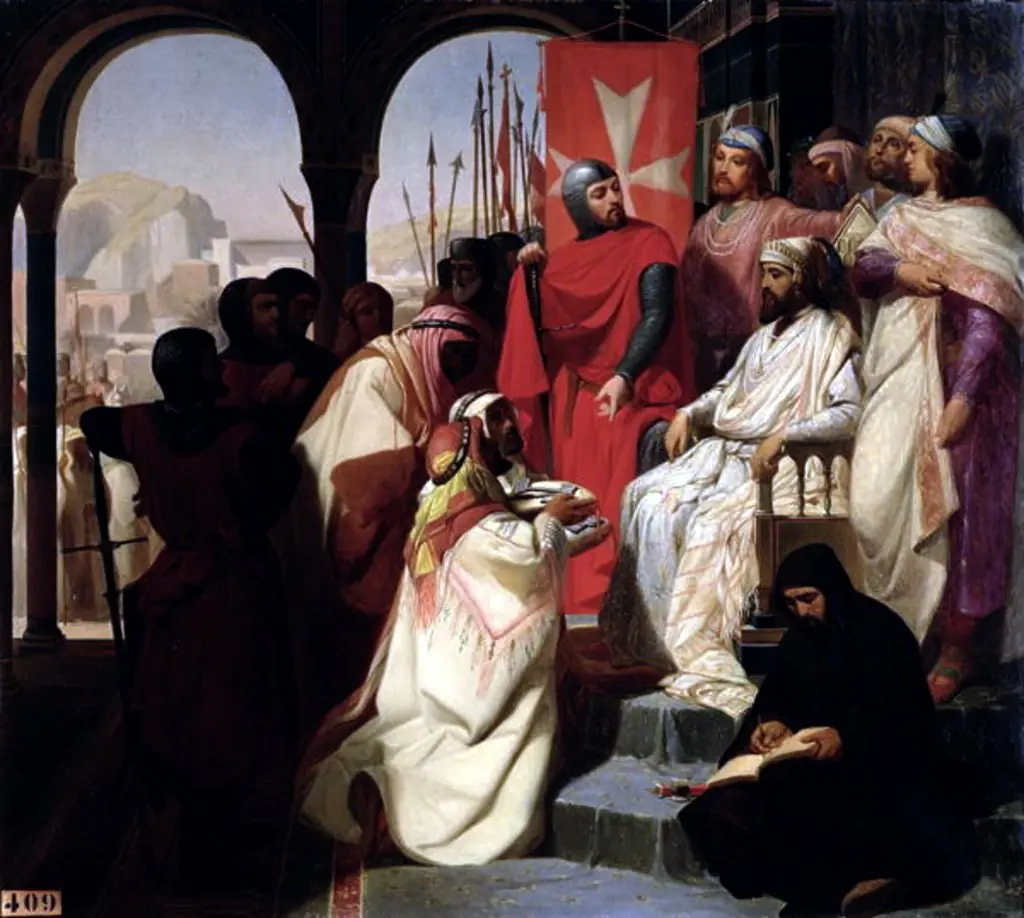 Knights of the Order of St. John of Jerusalem Restoring Religion in Armenia in 1347
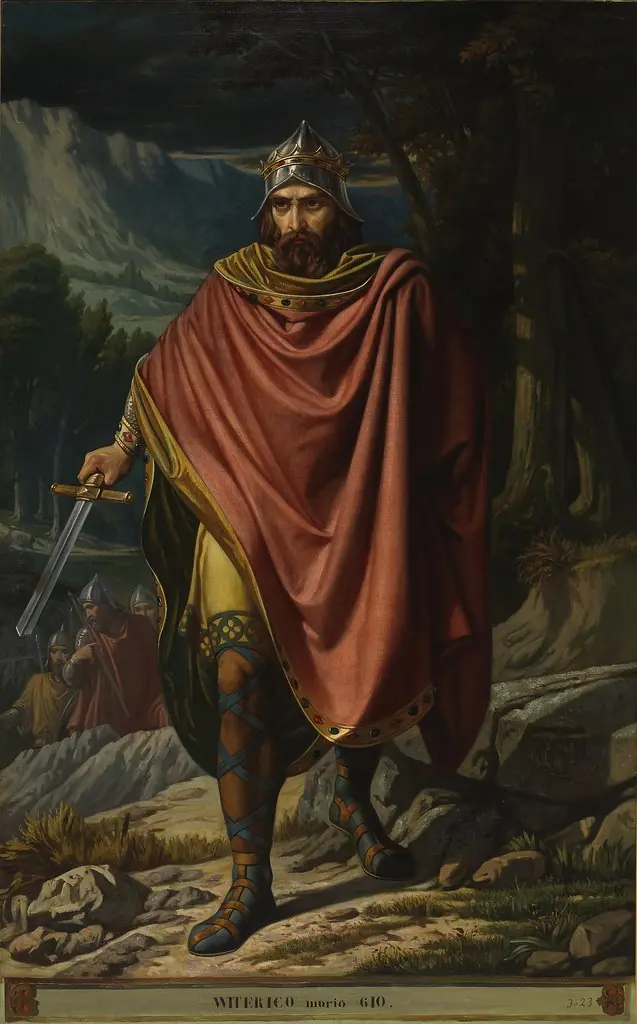 Witerico
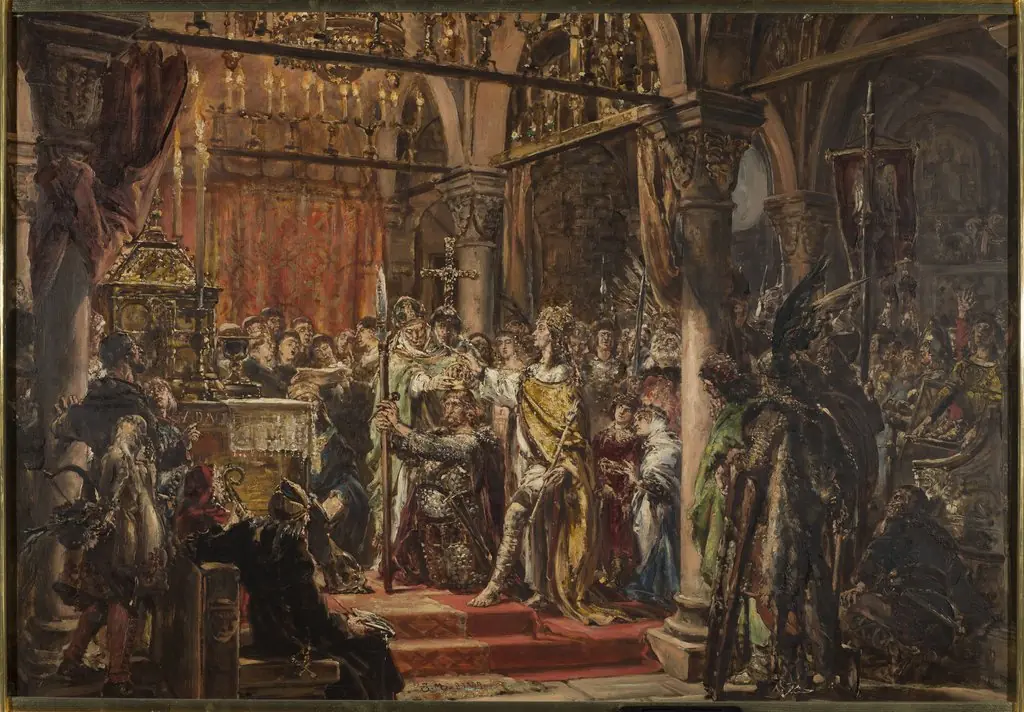 Coronation of the First King, 1001 AD, from the series “History of Civilization in Poland”
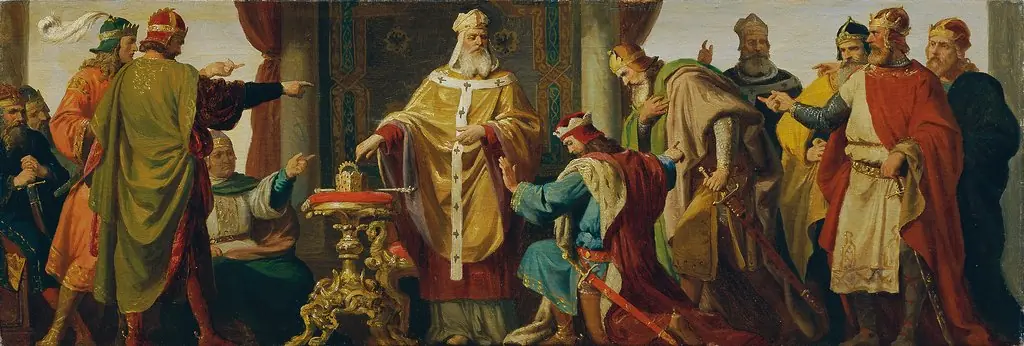 Leopold the Saint rejects the imperial crown
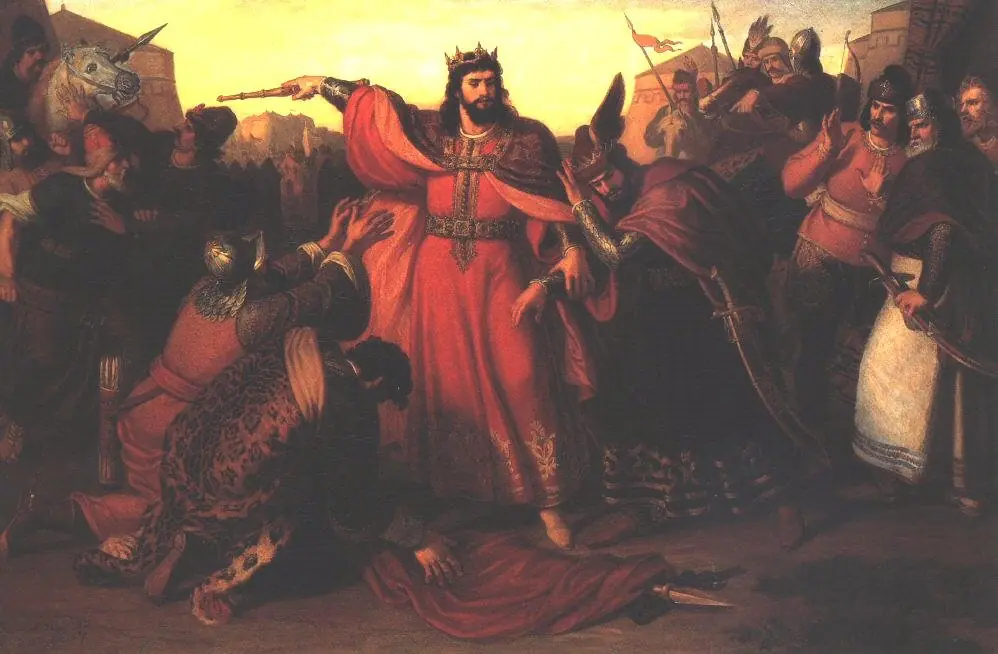 King Imre Captures his Factional Brother, Endre
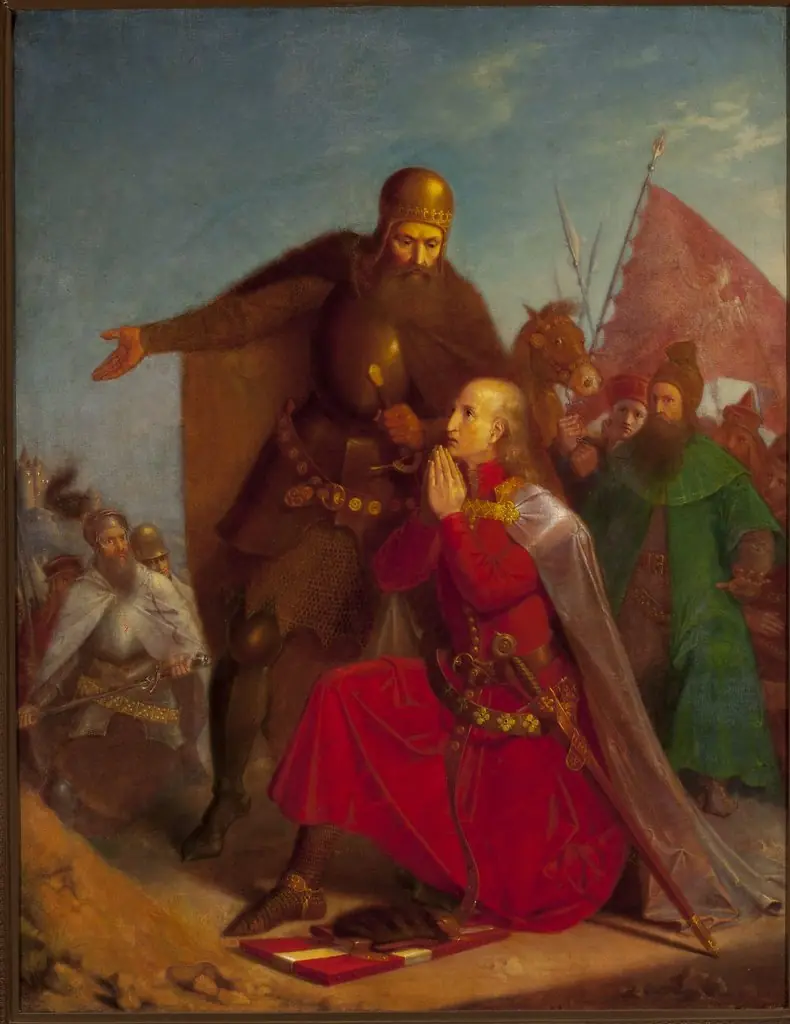 Władysław Jagiełło and Vytautas praying before the battle of Grunwald
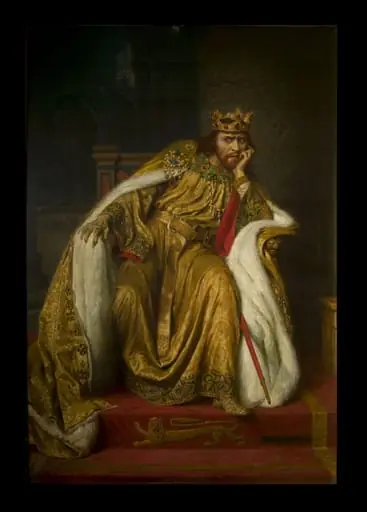 Herbert Beerbohm Tree as King John in <i>King John</i> by William Shakespeare